
The First Hundred Years of Avon Park, Florida (1976): full text
The First Hundred Years of Avon Park, Florida (1976), page 1. Avon Park Historical Society.[maxwell-1976]
THE FIRST HUNDRED YEARS of AVON PARK, FLORIDA
by
Leoma Bradshaw Maxwell [maxwell-1976]
The First Hundred Years of Avon Park, Florida (1976), page 1. Avon Park Historical Society.[maxwell-1976]
The First Hundred Years of Avon Park, Florida (1976), page 2. Avon Park Historical Society.[maxwell-1976]
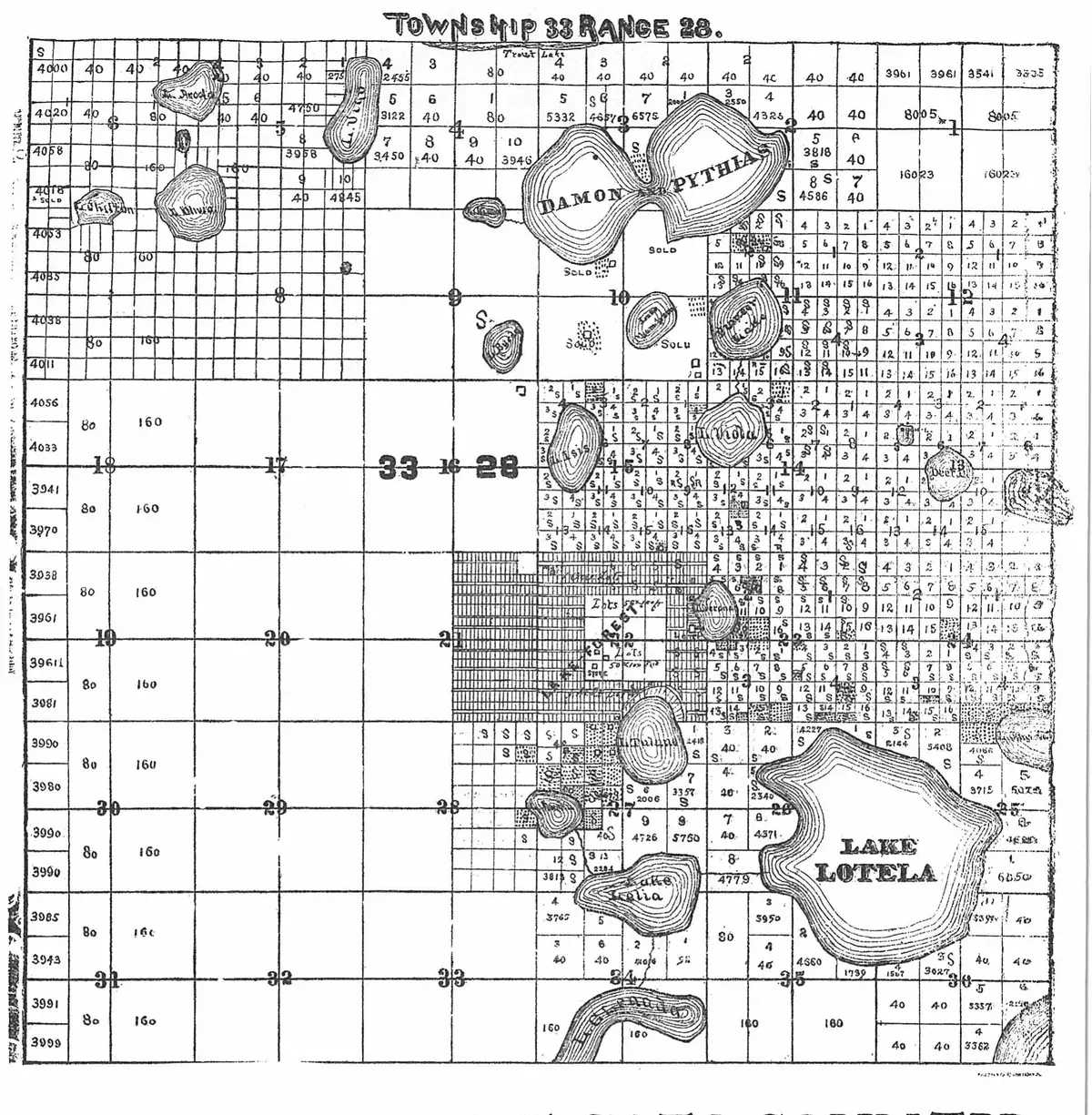
AVON PARK, DE SOTO COUNTY. The First Hundred Years of Avon Park, Florida (1976), page 3. Avon Park Historical Society.[maxwell-1976]
FLORIDA,
“THE MOST BEAUTIFUL TOWNSHIP IN SOUTH FLORIDA.”
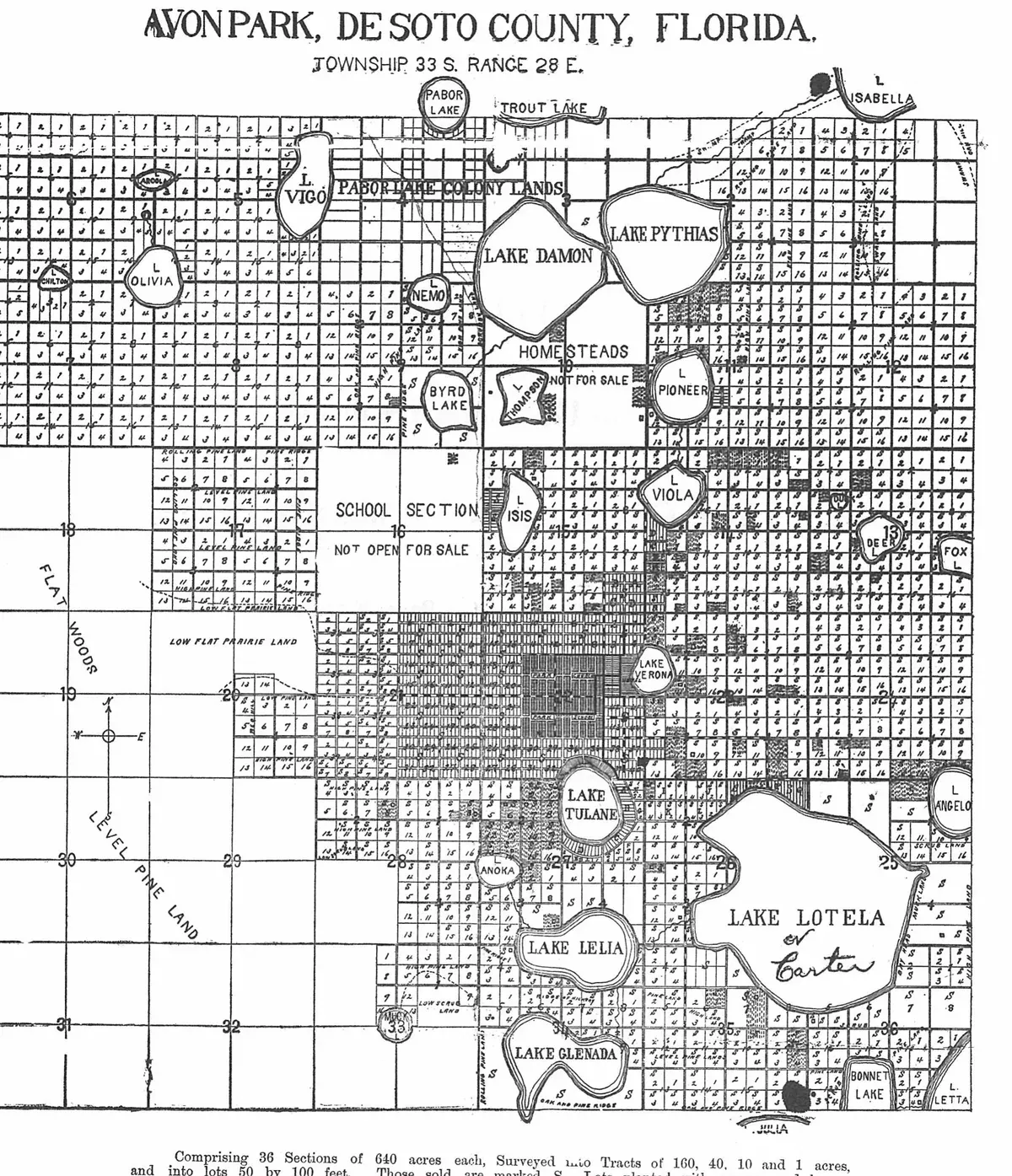
Comprising 36 Sections of 640 acres each. Surveyed into 160, 40 and 10 acre tracts. Lots sold are marked S: Lots planted with Orange and Lemon Trees marked ::::. Houses, □ : Section 22 is the Town site.
(See Special new Map of Section 22.) Best 10 acre tracts, $150. “ 40 “ “ 2500. Sold on Installments.
O. M. CROSBY, GENERAL MANAGER, 99 FRANKLIN STREET, NEW YORK.
“THE MOST BEAUTIFUL TOWNSHIP IN SOUTH FLORIDA.”
AVON PARK, DE SOTO COUNTY, FLORIDA.
TOWNSHIP 33 S. RANGE 28 E.
The First Hundred Years of Avon Park, Florida (1976), page 4. Avon Park Historical Society.[maxwell-1976]
Comprising 36 Sections of 640 acres each, Surveyed into Tracts of 160, 40, 10 and 1 acres, and into lots 50 by 100 feet. Those sold are marked S. Lots planted with orange and lemon groves are marked ::::. Houses are marked □. All streets in the township are 40, 50 and 60 feet wide. Streets on which sidewalks are laid are marked ——. Cleared streets are marked —– Sections 22 and 21 is the townsite. The following diagram shows the actual size on this map of a 40-acre block divided into 4 blocks of 10 acres each and a 40-foot street around each block.
O. M. CROSBY President Florida Development Company.
AVON PARK, FLORIDA.
Published
by
The Historical Society
of
The Old Settlers Association, Inc.
for
The City of Avon Park, Florida
Shultz Printing, Inc., Sebring
The First Hundred Years of Avon Park, Florida (1976), page 6. Avon Park Historical Society.[maxwell-1976]
THE FIRST HUNDRED YEARS of AVON PARK, FLORIDA
by
Leoma Bradshaw Maxwell
The First Hundred Years of Avon Park, Florida (1976), page 6. Avon Park Historical Society.[maxwell-1976]
The First Hundred Years of Avon Park, Florida (1976), page 7. Avon Park Historical Society.[maxwell-1976]
DEDICATED
to
my husband
THOMAS HAYES MAXWELL
PREFACE
There have been three histories written about Avon Park, but only one of these was published as a book, which was “History of Avon Park, Florida, 1886-1956” by Horace J. Fenton.
Samuel D. Lee wrote “Avon Park’s Pioneer Days” in 1919 and Oliver M. Crosby, founder of Avon Park, wrote “Avon Park’s History 1885-1896.” Both of these Histories appeared in installments in the local newspaper, “The Highlands Pilot” in 1919.
Fenton says that he gathered much of information from Lees history and from some of the early settlers who were living in Avon Park at that time. He also gathered information from The Florida Homeseeker, a newspaper published by O.M. Crosby in 1886-1893.
Many oldtimers have told me that Fenton’s history was incomplete, and in fact incorrect in some details. He portrayed Mr. Crosby as being less than an honest man in his business dealings, even calling him a “pious rascal.”
Mr. Fenton was a relatively newcomer and he wrote his history at the request of the Florida Power Corporations Community Development project in 1956.
This history, “The First Hundred Years of Avon Park” is compiled to make a more factual and complete record, and to show the true character of Mr. Crosby, giving his reasons for settling this area, and to show the causes of his financial failures; and as Mr. Crosby says, “to give the reader some facts not here-to-known.”
I make no claim to being a scholar, and my attempt to compile this book is largely because many people have wanted to see the facts clearly presented about Oliver M. Crosby, founder of Avon Park, and also information about Avon Park that has never before been published.
AUTHOR
I came to Avon Park for a visit in 1929 and returned as a bride in September of 1931 from my home state, Georgia. My husband T. Hayes Maxwell, and I have lived in the same house on our orange grove since 1935, where we reared our four children, Thomas Hayes, Jr., Bertha Jane, Leoma Claire and William Stephen. Tom married Betty Hoffman of New Jersey, Jane is Mrs. Walter R. Day, Claire is Mrs. Kenneth C. McGraw and Steve married Margo Rigsby . All of our children were educated in the Avon Park schools, are married and have provided us with eight grandchildren.
Hayes was an only child. His parents, Charlie and Bertha Maxwell, moved to Avon Park from their farm in Georgia in 1927. They came with R.I. Harris, who was promoting land sales here. Charlie and Mr. Harris’ associates hauled clay in a two-horse wagon from the first clay pit ever opened here, and clayed the roads around Lake Anoka development where they first lived.
There were no paved roads except in the downtown area and the clay was a great improvement over the sand roads, especially after automobiles came. These large deposits of clay are unique to the ridge section of Florida. It was our good fortune in later years to purchase the land where Hayes’ father had hauled the clay from one of these pits, and our children and their friends played in these deep holes which have since been filled in and are now covered with tall pine trees.
I feel that our family is a product of Florida, its soil, climate and culture. Tom is a graduate mechanical engineer, having a private consulting engineering practice, Jane obtained a PhD in math and became a college professor, Claire is an elementary school teacher and Steve is continuing his father’s business in the citrus industry.
ACKNOWLEDGEMENT
The inspiration for this effort has come from the committee which was appointed by The Historical Society of the Old Settlers Association, Inc. of Avon Park, to compile a scrapbook of the many original pictures we have. This was to have been one of the Bicentennial Projects of the organization for 1976. The Historical Committee is composed of Mildred Waddell, Grace Boney, Eunice Haynie, Katie Davis and Leoma Maxwell.
I am indebted to many people, especially Ed Carter, editor and publisher of the Avon Park Sun, who has encouraged me and financed some of this project from the beginning. Also, the Rev. H.D. Graetz, president of the Old Settlers Historical Society, and the late Cora M. Wray, who had collected and preserved manuscripts, materials and pictures during her lifetime, and persuaded me to become custodian of these museum artifacts in her possession.
The following people reproduced pictures: Harold Walker, Eloise Sharpe, Albert Najarian and Betty Amburn. The color photographs and aerial views were made by Lew Miller, Joe Johnston and Jimmy Renfro, who owns the airplane. Xerox copies of the Lee and Crosby histories from the 1919 newspaper The Highlands Pilot were made by Dr. Dan Davis, Highlands County School Superintendent and Mary Garrett, vice-president of the Avon Citrus Bank. Carolyn McFarland, Mills Memorial Library, Rollins College, Winter Park, Fla. and Bob Burkhart, librarian for the Avon Park Library, each assisted me in gathering information. Bill and Hettie Hetherington who helped to edit this manuscript and to the many other people who have read and offered suggestions and helped me.
My deepest gratitude to all of these people, and others not mentioned here, but most of all to my family who has given me support in many ways and persevered with me in my research for facts.
David Preshur of Nichols, N.Y., brought to Avon Park for the Historical Society, several family albums which had belonged to his mother, Mrs. Ruth D. Preshur, who had lived with her aunt and uncle, the late Dr. Mary McCartney and her husband, Dr. J.M. McCartney, one-time owners of the Verona Hotel. The Verona Hotel was built in 1889. Ruth was 12 years old when she lived with the McCartneys in Avon Park.
Many others, too numerous to mention here, have contributed pictures and information for this book. Their names will appear as the story is told. As history unfolds, it becomes more complex, but I have tried to avoid a dreary recital of facts and figures by recording the vital roles that people have played in this drama of life in Avon Park. For the names of those I have missed, it is my human error.
It is my intention to include those people who have lived in Avon Park long enough to have survived the freezes, hurricanes, and lean years as well as the good ones, and have helped to make Avon Park what it is today.
In my research for this book I have found no evidence that Mr. Crosby, the founder of Avon Park, was careless or unscrupulous in any of his business dealings, as Lee and Fenton indicated in their histories. Instead I found that his creditors had unlimited confidence in his ability to handle their investment money. Indeed he was an ingenious salesman, and carefully reported facts about his new development here, both good and bad. From his personal observation he described the natural beauty of Florida scenery and the ideal climate for healthful living but he also warned of the hardships to be faced in developing his dream for a ‘model community’
At a time when very little had been published about Florida, Crosby had the courage to come and see Florida, the ability to publish his findings, and plenty of encouragement to follow his dream. He cannot be blamed for the world money crisis nor for the ’95 freeze; accumulated circumstances which deterred him from enjoying the success of his efforts.
It is my opinion that Avon Park is today a “Model Community” bearing out the fact that Crosby’s dream has come true.
At the Florida State Archives building in Tallahassee I found the two books that Mr. Crosby published in 1887, namely, “Common Sense About Florida information regarding Lake Forest and Avon Park” and “Florida Facts, Both Bright and Blue, a guide book to intending settlers, tourists and investors.”
Some of the information used in my history will be taken from the above named sources and also from the writings of William A. King, Byrum Shockley and Cora Wray.
It has been my privilege to know some of the old-timers, most especially Mrs. King, and to observe the growth of the city, and to have the support of many people for the writing of this book.
Most of the pictures used in this book are from the collection of the late Mrs. Cora Wray, historian and charter member of the Old Settlers Association, Inc. of Avon Park which was organized in 1947. Mrs. Wray had preserved many family albums and records of the original settlers of Avon Park including the Kings, Marshalls, Pabors, Putneys, Nettletons, Shockleys and many others. Mrs. Lillian Hood, contributed family albums of the Canfield and Coy families. Peggy Mandis Caraberis furnished many of pictures and newspapers that had belonged to her mother, Mrs. Margaret Woodruff Mandis, and also some that had belonged to Mrs. Wm A. King, the first woman to come to Avon Park.
INTRODUCTION to AVON PARK and BACKGROUND
From the beginning, Avon Park was an original and unique settlement, the dream of one man, Oliver Marvin Crosby; a human drama of success, happiness, tragedies and great losses caused by events beyond the control of man.
Almost a century later the writer of this book and the citizens of Avon Park are proud to honor the pioneer heritage of her ancestors. We want not to forget the names of those men and women who have labored to make Avon Park live and grow and we have high anticipation of celebrating the future of Crosby’s dream for a “Model Community.” The names of many of the families who stayed after ’95 freeze are still appearing on records of the City of Avon Park, and second and third generation members of these families are prominent residents today.
The Avon Park Idea newspaper published in 1896 reported that Avon Park was “the most perfectly organized development business in Florida, if not in the entire South.” The editor, A.L. Blue, says that “Mr. Crosby established the colony under difficulties that would have discouraged most men from the start, but under Crosby’s straighforward and successful business methods he has seen a steady and prosperous growth. . . .95 homes, 600 acres under cultivation, a 60-room hotel, 3 stores, a postoffice with daily mail, school, club house, Union Evangelical Church, and one of the finest printing offices in the State. “
We must note that this was within one year after the Big Freeze of ’95, but it was a different story for Crosby personally. His financial obligations were becoming overwhelming as payments on property purchases had stopped coming in, and his own note payments were falling due. Crosby was a victim of accumulated circumstances that forced him to leave the land with which he had fallen in love. Crosby had given all of his earthly possessions and his health in order to found the “City of Avon Park,” only to lose it all as by one fatal stroke.
No records are available of the earliest business of the town, but when it was first incorporated in 1897, The Florida Homeseeker newspaper reported it to be the third largest town in DeSoto County. The Town boasted seven miles of plank sidewalks, a drug store, barber shop, meat market, bakery, millinery and dress shop, livery stable, tube well and pump works, a sawmill and many professional people including a tin smith, jeweler, lawyer, doctor, carpenters and architects, painters and real estate agents.
The Avon Park Brass Band furnished good entertainment from the bandstand, which was built about 1897, and stood in front of the Verona Hotel overlooking Lake Verona. (This bandstand was later moved to its present location on the Mall.)
It is true that the population dropped after the ’95 freeze but people kept coming, and today they still come to this beautiful area called Avon Park.
A later chapter in this book will tell of the reason for Crosby’s coming and the cause of his failure, and also how he brought Mr. and Mrs. William A. King from England. Mr. King continued to be the business manager for the town until his death.
In the years that followed the ’95 freeze we find that many other men lost their fortunes in Florida, and some took their own lives as a result of their failures.
A few unmarked graves in Bougainvillea Cemetery are silent reminders that some who came never returned to their former homes.
During the decade following the freeze the town grew slowly, in fact it was not until the close of the first World War that Avon Park began to awaken to its full potential.
To review a brief summary of Florida, it was in 1856 that The Florida Historical Society was organized. Ninety years later “The Old Settlers
Association of Avon Park was incorporated and it was from this organization that The Historical Society of Avon Park emerged in 1976.
In 1856 the entire population of Florida was less than 88,000 people, including both whites and colored slaves.
Because of the Civil War in 1861, Florida seceded from the Union. At this time there were no roads in the State of Florida, only trails through the forests. The Homestead Act of 1862 permitted a settler to qualify for 160 acres of land at no cost and to obtain title, provided he built a home and tilled the soil for five years.
On July 4, 1868 Florida was re-admitted to the Union.
By 1870 the population of the State had increased to nearly 250,000 people with 90,000 of this number being colored.
The vast wilderness was slowly changing as homesteaders came, seeking free land and a warmer climate. Settlements were springing up in the central part of the state, as far south as Orlando.
Tallahassee and Jacksonville were the nucleus for business and the railroads slowly pushed their way south along with business and people. There was a total of 416 miles of railroad tracks in the State. Yet it was the general opinion that South Florida was nothing but a wilderness of swamps, fit only for snakes, alligators and mosquitoes.
It was during the 1850’s that the State of Florida created the Internal Improvement Fund to supervise and control 20,000,000 acres of public lands and the Trustees of the Internal Improvement Fund pledged these lands to underwrite railroad bonds. Following the Civil War the railroads failed and with the failure of the railroads these lands had reverted back to the State, contributing to the State’s finanical crisis.
In January of 1881 William D. Bloxham was inaugurated as Governor of Florida. He inherited a shakey financial condition of State affairs. Immediately he set about to relieve some of the financial stress by offering large tracts of Florida land for sale, cheap for cash.
One such transaction was in June 1881 when a prominent Philadelphia manufacturer, Hamilton Disston, founder of the Disston Saw Company purchased 4,000,000 acres of land for one million dollars in cash. The Disston Company opened a branch office in Jacksonville and was the largest single land owner in the State of Florida.
Prospectors from the North and West as well as from England and Europe were lured to Florida by the cheap land and also the fact that phosphate had been discovered in Florida, principally in the Peace River Valley area.
The known sources of phosphate in the United States were being depleted, and because of its many uses such as making of fertilizer and ammunition, the would-be prospectors poured into Florida, bringing what some called “the phosphate boom.” Some said it was equal to the Pennsylvania oil boom or the California gold rush. In Crosby’s early writings he stated that “phosphate is king in Florida.”
As capitalists’ money brought prosperity, along came saloons, brothels, dance halls, prostitution and outlaws. Liquor and guns resulted in much violence and bloodshed in the boom towns that were being settled during this period. Prosperity does have its handicaps, and progress brings pollution of various kinds.
Considering these conditions, it is understandable that Crosby, who was already promoting a colony at Belleview, in Marion County, would make inquiry about a suitable location in Florida for those people who were seeking to settle in a quiet community and a warmer climate. The boom towns would hardly interest these people, plus the fact that the freeze of 1884 had proven that Crosby’s colony at Belleview was too far
north, which prompted Crosby to begin his search which eventually led to the settlement of Avon Park.
The growth of big business was following the railroads as they moved farther south, from Bartow to Charlotte Harbor by 1890 but the Ridge section of the state was practically untouched.
OLIVER MARVIN CROSBY is listed in WHO WAS WHO IN FLORIDA, a book published by Henry S. Mackey, 1973.
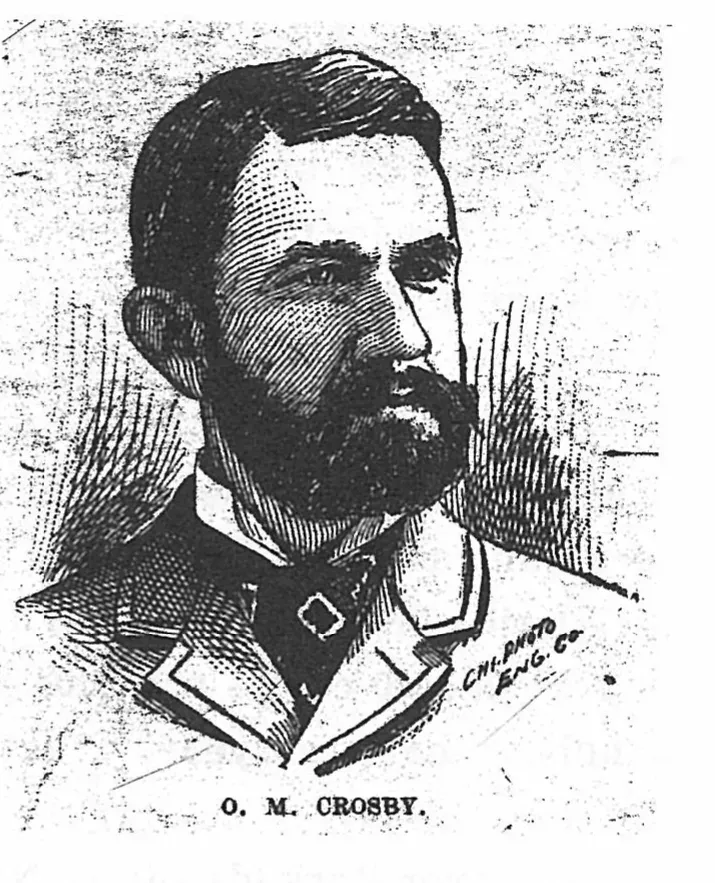
O. M. CROSBY. The First Hundred Years of Avon Park, Florida (1976), page 18. Avon Park Historical Society.[maxwell-1976]
EARLY HISTORY OF AVON PARK’S FOUNDER
It was during the early 1880’s that Oliver Marvin Crosby, founder of Avon Park, entered the Florida Developers’ market.
Mr. Crosby was under a five-year contract with Obadiah A. Clough of New York City, as the Florida editor of “The South”, a handsomely illustrated New York publication owned by Clough.
Mr. Clough was a native of the heart of Yankeeland, coming from the rugged hills of New Hampshire. Crosby’s contract with Clough included a one-fourth interest in a development at Belleview, Marion County, Florida, where they had planted orange groves and also had phosphate interests.
In addition to “The South”” publication, they produced on an exclusive basis, high grade illustrated booklets and folders for resort hotels, railroads, steamboats and towns, principally in the southern states. These, from the early seventies to the late eighties, were attracting a great deal of attention across the nation. People from the North and West swarmed into Florida for “speculation as well as a favored clime for those who dreaded the blustering and dreary winters of the North and West.”
Crosby was also from the heart of Yankeeland, a native of Danbury, Connecticut, where he owned and operated an 18 acre nursery as a seedman and florist. He says in later writings that he sold this to pay off the Florida development when he took over from Clough, and also in 1887 to publish 5000 copies of “Florida, Lake Forest and Avon Park” and a handbook that same year, “Florida Facts, Both Bright and Blue.”
The Avon Park Idea dated November 12, 1896, reported that Oliver M. Crosby, founder of Avon Park, made his first trip south in 1883 to explore the wild regions of Manatee County. (This was before Manatee County was divided to make DeSoto County.) It was during the first week of his travels that he signed a contract with Obadiah A. Clough to become the Florida editor of his publication “The South” and also to become a partner in the Belleview colony.
Crosby maintained a Florida office under the Everett Hotel in Jacksonville. His first trip to England was in the summer of 1885 to advertise “The South” publication and to seek investors for their Florida Settlements, promoting phosphate as well as citrus and Florida’s healthful climate.
It was on this trip that he met William A. King of Birmingham, England. King had answered some of Crosby’s advertisements that had reached England. King agreed to return to America with Crosby, unaware of course, of the major role he was to play in the development of Avon Park. He first went to Belleview where he worked in the orange groves there. It was later that he came farther south to the township 33, range 28 east, first known as Lake Forest, and later to be named Avon Park.
Crosby reports that in the winter of 1884-85, while he was still in the employ of Mr. Clough, a hard freeze had killed all of the citrus as far south as Belleview, and their investors were becoming very discouraged and many left the colony.
Hampered by this situation and remembering his earlier trip into the southern regions, Crosby set out to explore the area 100 miles south of Belleview, which eventually led to the development of Avon Park.
From the old newspaper accounts it appears that Crosby made his first trip into southern Florida via Punta Rossa and Charlotte Harbor, as did many other promoters.
The Florida Historical Quarterly, October 1936, reports “published material about Florida was scarce, and a person had to rely on personal observation and be able to translate the beauty of nature and climate into words.” Crosby proved his ability to do this in his writings describing his Florida trips
Sidney Lanier, a well known poet and writer, also wrote about his travels into the uncharted areas of Florida. He was commissioned by the Atlantic Coast Line Railroad to prepare a guide book for Florida and he made two trips from Philadelphia to Florida in 1875-76. Later he made other trips from Jacksonville, going as far south as Lake Okeechobee. Lanier was a consumptive and thought the Florida climate was healthful for him.
An article by D.B. Givins of Tampa gives the account of Lanier’s visit to Tampa in the winter of 1876-77. It was during this winter that he and his wife left their children at home and came to Tampa for the benefit of his health. From Tampa they made a trip to the area of Wauchula, traveling by ox-cart. They camped in a tent in the pine forest near two lakes for about a month. In Lanier’s own words “we camped between two lakes and my greatest delight was the daily rides on a shaggy gray mare through the great pine forests. . . . much to my delight to see the green leaves, gold oranges, glitter of the great tranquil waters, the liberal friendship of the sun. . . . sunsets through the pine woods is glorious.”
The lakes were not yet named when Lanier was in this area and Avon Park had not even been thought of, but where else in this area of Florida could one find such great beauty and tranquility, and the tall pine trees, which were to be cut later for the homes for this new settlement.
It is reasonable to assume that Lanier had this beautiful experience in mind when he wrote “A Ballad of Trees and The Master” in 1880, and it has been an accepted legend among old timers that Lanier wrote the poem sitting on the banks of either Lake Tulane or Lake Verona. But the fact is that he wrote this poem, among the last lines he pinned, as he lay on his death bed in a high fever from his consumption. Lanier was known to ponder on the Bible and the perfection of Christ. He visioned nature as the trees and man as the Christ. His memory dwelt on the tall pines and the tranquil lakes. This poem was one of many that surged through his mind for utterance as he lay dying. He scratched the lines on a scrap of paper and sent them by his nurse to his wife, which disproves the legend that Lanier wrote the poem while sitting on the shores of the lake in Avon Park. This fact was verified from research done in the Sidney Lanier Museum in Macon, Georgia.
CROSBY’S DISCOVERY
One day Crosby walked into the Disston Company’s office in Jacksonville and asked Capt. C.F. Adams, manager of the office and also the company’s surveyor, “what is the best township site you have found in your surveying South Florida?” Adams replied, “if you want to see the prettiest township in the state, go and see township 33, range 28 east.
When Crosby reported this to Mr. Clough, he advised him to go and look it over. Henceforth, Crosby made his plans for a trip which began on May 25, 1885.
Taking the train to Kissimmee from Jacksonville, Mr. Crosby was met by Colonel Dunn, the manager of the Disston Company’s office there. Colonel Dunn urged him first to look over property in and around St. Cloud, which he did. But Crosby says he thought this land too “low and unhealthful” and he wanted to travel on farther south.
Colonel Dunn sent a man to accompany him as a guide. They took the train to Bartow, which was the end of the line for the narrow gauge Florida Southern Railroad. Next morning the guide hired a two-horse livery rig, put in saddles and a camp cooking outfit and they drove to Fort Meade.
Next day they drove southeast as far as the buggy could go, or to the end of the trail. They camped for the night in a deserted log cabin, probably a cabin left by some disappointed homesteader who had decided to leave Florida.
Crosby states that he believed this to be the frontier of civilization. Next morning, May 26, 1885, the men left the buggy, each one saddling and mounting a horse, and they followed the compass toward township 33, range 28 east.
Crosby’s own words written in 1919, “passing Red Hill, as we left the flat woods, we rode into the highlands, or the backbone ridge, where your West Main Street now must be, and suddenly we were looking over your Lake Tulane, then known as Tiger Lake. We made coffee and had our lunch. Taking out the map that was furnished us by Capt. Adams, I said ‘if this is Tiger Lake then there is a much larger lake over yonder.’ We rode on and found Carter Lake, which is now Lake Lotela, and we knew that we were not lost.”
“I exclaimed, ‘what a beautiful spot’ — and fell in love with the place as many there have done since. We moved on to explore Lake Lelia, where we had a swim, and thence to Lake Glenada. I did not name the lakes as Mr. Lee states in his history, but Mr. Clough wrote the names, as they occurred to him, on the new map we were later to publish.
“Strange to say, I did not see Lake Verona on this trip at all. It was not on the original survey map, as it did not hit a section or quarter-section line, but I did see the lovely Lake Pioneer, Viola and Pythias. As Capt. Adams told me, the township was indeed the MOST BEAUTIFUL I had ever seen. But what courage and nerve was needed to even consider development of this area being more than forty miles from a railroad!”
Back in Jacksonville, Crosby reported to Mr. Clough, who said, “Crosby, if it is as attractive as you say, we will buy it, as we can get easy terms.”
Crosby wrote later, “had I realized that I alone, and not Mr. Clough was to find the capital, to make all the sales — and yet to have but one-fourth of the profits, if any, how much slower would I have been in making this contract for 20,000 acres of land for $50,000, which I did in Clough’s name in the Philadelphia Disston Comapny’s office January 14, 1886.
This transaction was for the entire township, excepting the following parcels, 160 acres in section 6, one of about the same size south of Lake Damon, and one of about 80 acres at the east end of Lake Pythias and section 16, the school section. Lee says these parcels were picked out by Henry Disston’s agent as part of the 4,000,000 acres he bought from the State of Florida for $1,000,000. Soon after Clough’s contract with the Disston Company he began to fail financially and had to relinquish his interests which Crosby explains hereafter. In the fall and winter of 1886-87 Crosby made many sales of lands at Avon Park, also known as Lake Forest, from the office he maintained in Jacksonville. The sales were made with Obadiah A. Clough’s name appearing on the deeds and abstracts as the seller. Crosby says he personally escorted many would-be customers here, often entertaining them in tents, being assisted by Mr. King, who had come from England in the summer of 1885 with Crosby, and had worked at the Belleview settlement before coming to Avon Park.
Crosby’s contract with Clough was to end in June 1887. He had not as yet received any profits from the sale of lands in Avon Park and Clough owed him $4,600 in back salary and commissions. Crosby asked for a settlement and told Clough that he must quit, but Clough insisted that he continue with the contract to the very end. He wanted Crosby to go to Philadelphia and renew the contract, which he did. But in the Philadelphia office Mr. Disston informed Crosby that “We will gladly renew the contract with O.M. Crosby, but never again with O.A. Clough.” They notified Mr. Clough that his contract was ended and it was several months later that they made a new contract with Mr. Crosby.
Crosby had to assume the debts of O.A. Clough, which explains Lee’s statement that “Crosby was always short of capital.” He started off in debt and soon had to borrow money to finance his undertaking.
In the fall of 1887 Crosby opened a Bureau of Florida Information at 99 Franklin Street, New York City, which he kept open for seven years. It was from this office that he began to publish “The Florida Homeseeker” which he later moved to Avon Park for publication. In 1887 he published two books, “Florida Facts, Lake Forest and Avon Park” and “Florida Facts, Both Bright and Blue” as well as many pamphlets and brochures about Florida.
He advertised in many popular magazines, including Century, Cosmopolitan and the New York Sunday World. The Florida Homeseeker, published from 1886-1893 was a 12-16 page monthly newspaper, with a circulation that finally reached 10,000 and went into every state in the Union as well as England, Wales, Ireland and Canada. The subscription rate was 50 cents per year.
Mr. Crosby says he spent $25,000 in advertising Avon Park. Lee was right in stating that “Crosby was a real estate salesman, successful beyond the average.” But Lee was wrong in assuming that “his ultimate failure was caused by his careless methods.”
This author has found nothing to suggest that Crosby had any intention to defraud in any of his business dealings.
CROSBY’S DESCRIPTION OF HIS FIRST TRIP INTO MANATEE COUNTY
An article he wrote for the first pamphlet he published in 1886.
“One hundred miles south from my home into what has been described (by those who have never been there) as a ‘region of snakes, alligators and torrid heat, a veritable graveyard for white men in summer, etc.’ I now write in the glow of a tropical sunset from the midst of this much abused region, seated on a piazza of a deserted log cabin, surrounded by orange trees and flowers. Though almost mid-summer, the crackling fire on the hearth inside has a cheerful sound after the refreshing shower, and as the twilight deepens I shall find it more comfortable to be near it. The horses that have drawn us 30 miles below the extent of the southernmost railroad in the United States, toward the Everglades, are munching on their corn nearby. “For scores of miles in every direction is the boundless and almost tractless forest, with no postoffice for a hundred miles east, and with but a small feeble settlement south and southwest, I’m far from the ‘maddening crowd.’ And it may well be inquired what might be my mission in such a forsaken place. I answer, we are the advance guards of a multitude of settlers for whom there must be first explorers, then surveyors and after these, usually the irrespressible land agent. The first two are here represented by the writer and his companion, and the latter an intelligent engineer of one of the great drainage companies who has had experience in the fields of Florida, whose love of adventure would furnish the necessary ground work for the sales. “The quiet of the great solitude is upon the evening air. Weary from the day’s journey, I wrap myself in a blanket and lie down to pleasant dreams. “A strict regard for the truth compels me to add that my dreams were not altogether pleasant or undisturbed. The mosquitoes I found too numerous and aggressive and the plank I rested upon not too soft as my customary bed; but it is a poor pioneer that will grumble about little things like these.
“An hour’s drive, after coffee and canned beef, took us to the last settler’s cabin, beyond which there was no road, and we left the easy buggy for a saddle, while making the change, scraping acquaintance with the ‘cracker’ settler, who first was inclined to look upon us with suspicion. Though his nearest neighbor is miles away and only one at that, he is afraid of being crowded, or as he terms it ‘hemmed in.’ “Being born in the back woods, he and his children never saw one hundred different people all told, knew nothing of books, and never saw or heard a locomotive. It will not surprise the reader to learn that this citizen of the backwoods is an expert with the rifle and is not at all particular whether he uses it to rid himself of a pork hunting bear or a thievish Negro.
“It was comparatively easy to allay his suspicion regarding us, however, and obtain his permission to return to his ranch at night and sleep on the floor of his corn crib. Soon after starting into the woods, angry looking clouds appeared in the west, which quickly overtook us, emptying their moist contents over our unprotected heads as well as on the thirsty earth.
“It was no use to ride harder to find shelter which was nowhere to be found, but as calmly as possible to take the shower, comforted with the assurance that in Florida getting wet does not hurt anyone, which in our case repeatedly proved the case; for from this on we hardly knew what it was to be dry, but night after night slept in damp clothes and soggy feet, without shelter.
“Meanwhile we realized that we had entered a very attractive country. The flat woods, scrub and palmetto, by degrees had given way to rolling pine and oak covered hills, and our eyes were delighted to see from an elevation the clear sparkling water of one of the numerous lakes, the fame of whose peculiar beauty had reached us and drawn us hither. “The high, graceful and sloping banks of the cellucid reservoirs and the utter absence of marsh and sawgrass will in a short time make them to be eagerly sought after as building sites, where the settler, weary of battling the Northern blizzards, may find haven where even frosts
scarcely ever come and where the summer days and nights are tempered by refreshing rains and balmy breezes.
“As we rode towards the ocean on horseback we came within easy shot of wild turkeys, while foxes and much smaller game we met frequently, but no bear, wild cat nor other animals molested us or made us afraid.
“As the tide of immigration in Florida tends Southward continually, we were anxious to explore the ‘jumping off place’ or beyond which travel would not go, and I believe we nearly reached that point in a Southeasterly direction; but the wilderness back of Charlotte Harbor and the flat woods of Punta Rossa will doubtless, in course of time have their share, while the tropical shores of the Caloosahatchee will be covered with the coconut, bananas, pineapples and the products of the tropics.
“The region above described is now devoted to cattle ranges, (a la Texas and wild west.) We saw huts of the cowboys at wild intervals and beheld their system of ‘rounding up’ with the aid of their marvelous dogs. Cattle here had a healthy, plump look, suggestive of the tender steaks, which later we found at the hospice board of the landlord of the hotel at Fort Meade, where Sabbath ended our pilgrimage into the wild woods of Manatee.” (Now DeSoto County.)
Comparing this account with the trip that Crosby tells about in his history published in the Highlands Pilot in 1919, it is the opinion of this writer that Crosby made at least two trips south from Jacksonville, searching out a site for a new colony.
DEWEY and OTHERS
In the winter of 1885-86 an old man named Dewey entered Crosby’s office in Jacksonville. He told Crosby that he had come from Kansas and that he had studied the maps and pamphlets about Avon Park and he had come to settle here. Dewey said, “I was the first settler in my country, Kansas, and I would like to be the first settler in your Avon Park,” adding, “I have a carload of two horses, four cows and goods on the way here now.” Crosby wrote Mr. King at Belleview to “meet Dewey at Fort Meade and escort him and his entourage to Township 33, and to become the manager there. In King’s writings, he was employed by Mr. Clough and Mr. Crosby as the superintendent in this new settlement which was later to become Avon Park. But it was soon after this move that Clough failed and Crosby took over both Avon Park and the Belleview settlement. Myron T. Blythe wrote an account in The Florida Homeseeker later about meeting the entourage of Dewey en route to Avon Park.
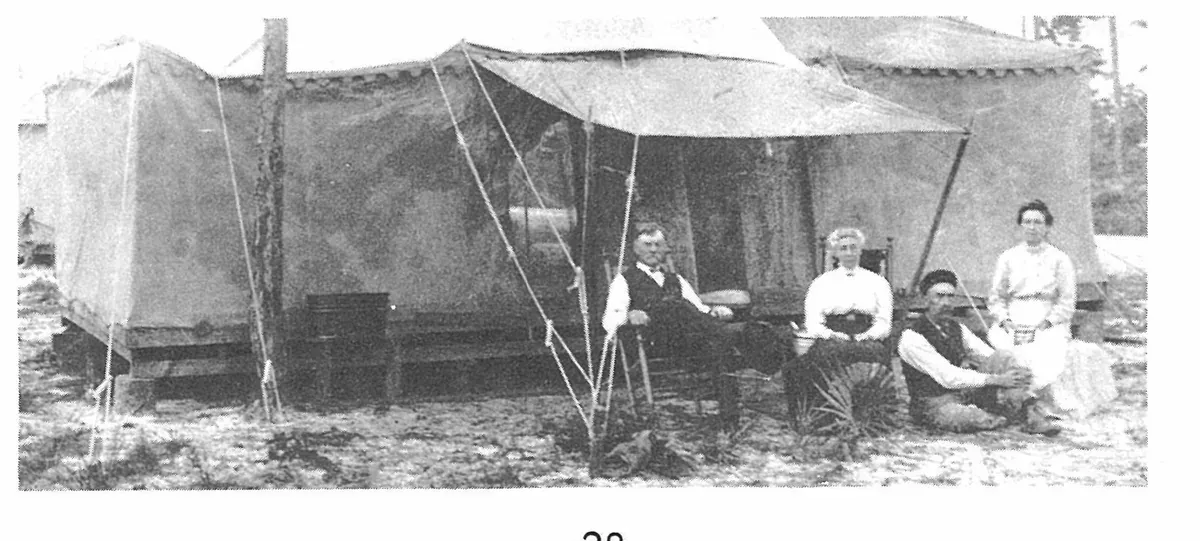
Mr. Crosby gave Mary and A. B. Dewey 10 acres of land on the north shore of Lake Tulane for $1.00 because he was the first to come to settle here. But Dewey had bad luck with his animals. They all died one by one with “acclimating fevers.” Crosby paid Dewey for his land and he moved away. But early records show that A.B. Dewey taught the first school ever held here, and it believed that his class was held in a log cabin. Mr. King wrote about living in a tent while they built the log house, and after Mrs. King arrived, they entertained the visiting prospective buyers in tents because there were no other places for them to stay.
The First Hundred Years of Avon Park, Florida (1976), page 29. Avon Park Historical Society.[maxwell-1976]
COPIES OF DEED’S FROM ABSTRACT
Sheet No. 11 Entry No. 17
Catherine S. Crosby, by Oliver M. Crosby, her Attorney in fact, of New York, New York,
to
Mary A. B. Dewey of Avon Park, DeSoto County, Florida
WARRANTY DEED.
Dated July 12, 1888
Filed August 13, 1888
Deed Book 3, page 559
$1.00
Grant, bargain, sell and convey to the second party, her heirs and assigns:
NE¼ of NE¼ of NW¼ of Section 27; In Township 33, South, Range 28 East, as shown on map of Avon Park, on file in the office of the Clerk of DeSoto County, Containing 10 acres, more or less.
Liquor Clause
Second party shall devote a strip of land 20 feet wide surrounding each lot when required for roadway without compensation.
Signed and sealed. One witness.
Acknowledged before a Commissioner for Florida in New York. Official seal.
The first deed made by Crosby in Clough’s name. Second deed given to Mary A. B. Dewey, by Crosby, for $1.00, because Dewey was the first arrival to buy land. Catherine S. Crosby, mother of Oliver Crosby, furnished the money for the transaction. This property was later purchased by the Lawhon family. Other home owners were the M. T. Suggs family and present home owners in this area are Mr. and Mrs. P. C. Boney and Mr. and Mrs. (Alva and Mable) Smith.
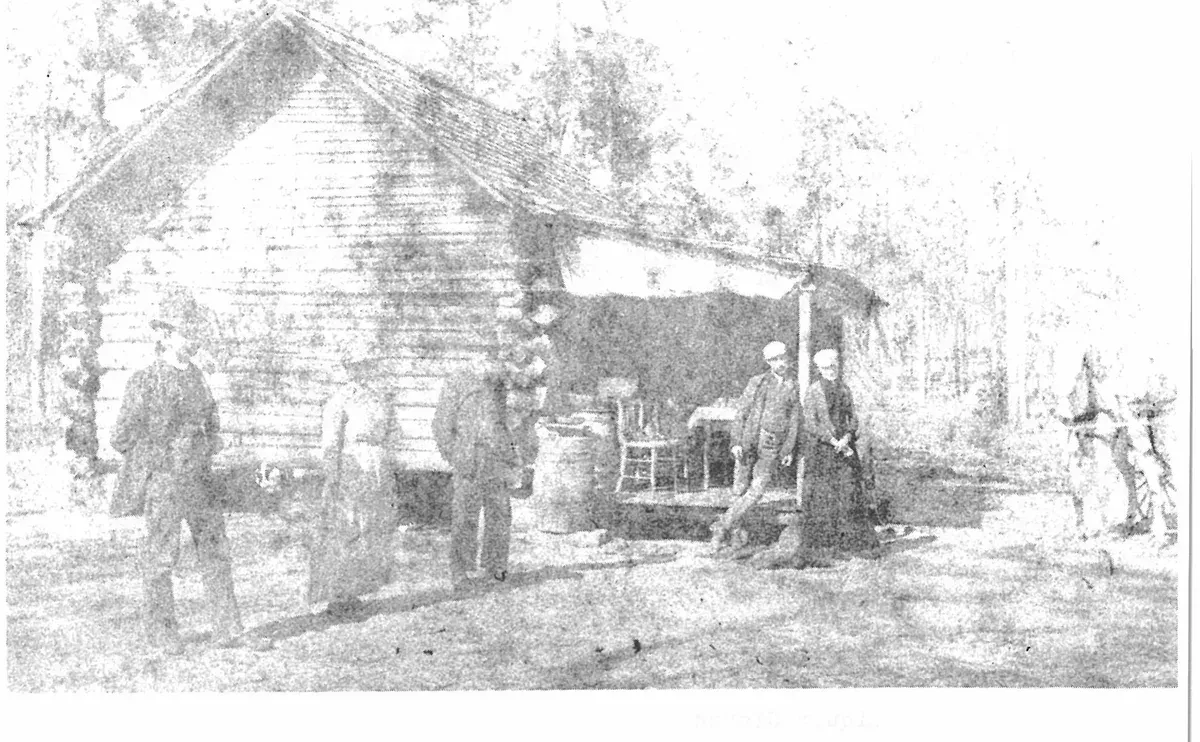
The first log cabin built on Lake Tulane by William A. King 1886. The First Hundred Years of Avon Park, Florida (1976), page 31. Avon Park Historical Society.[maxwell-1976]
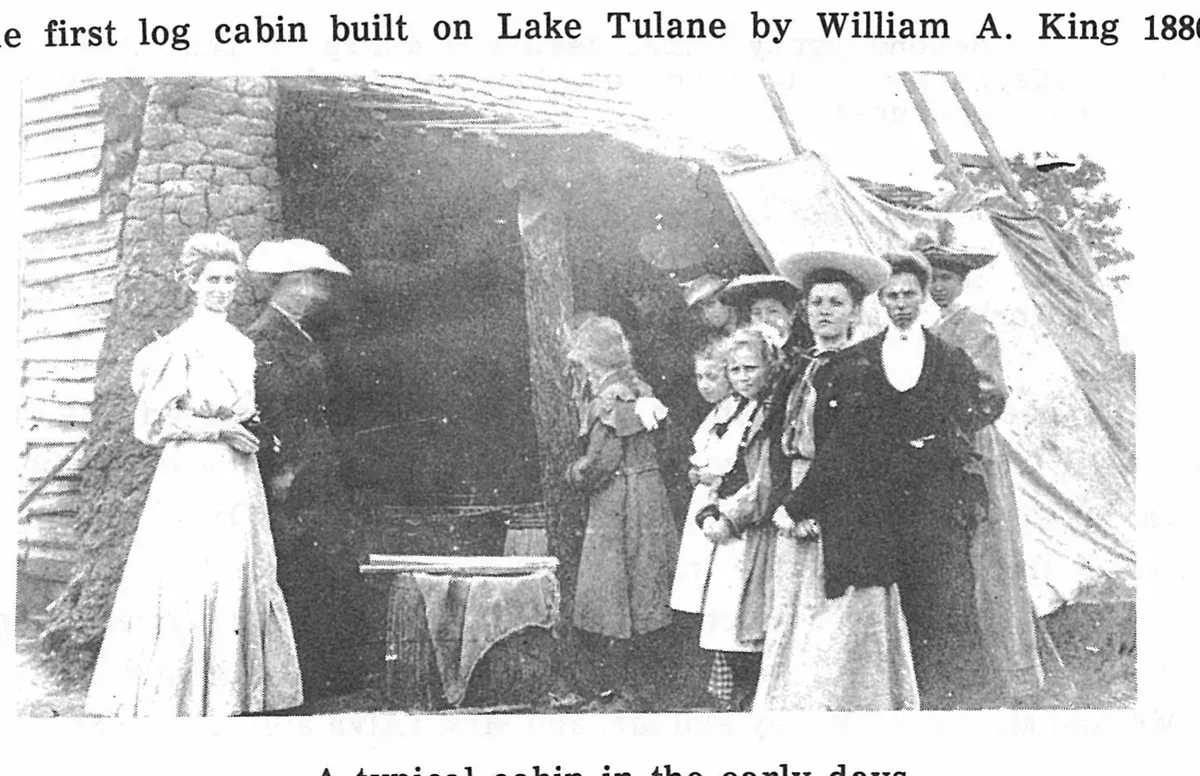
A typical cabin in the early days. The First Hundred Years of Avon Park, Florida (1976), page 31. Avon Park Historical Society.[maxwell-1976]
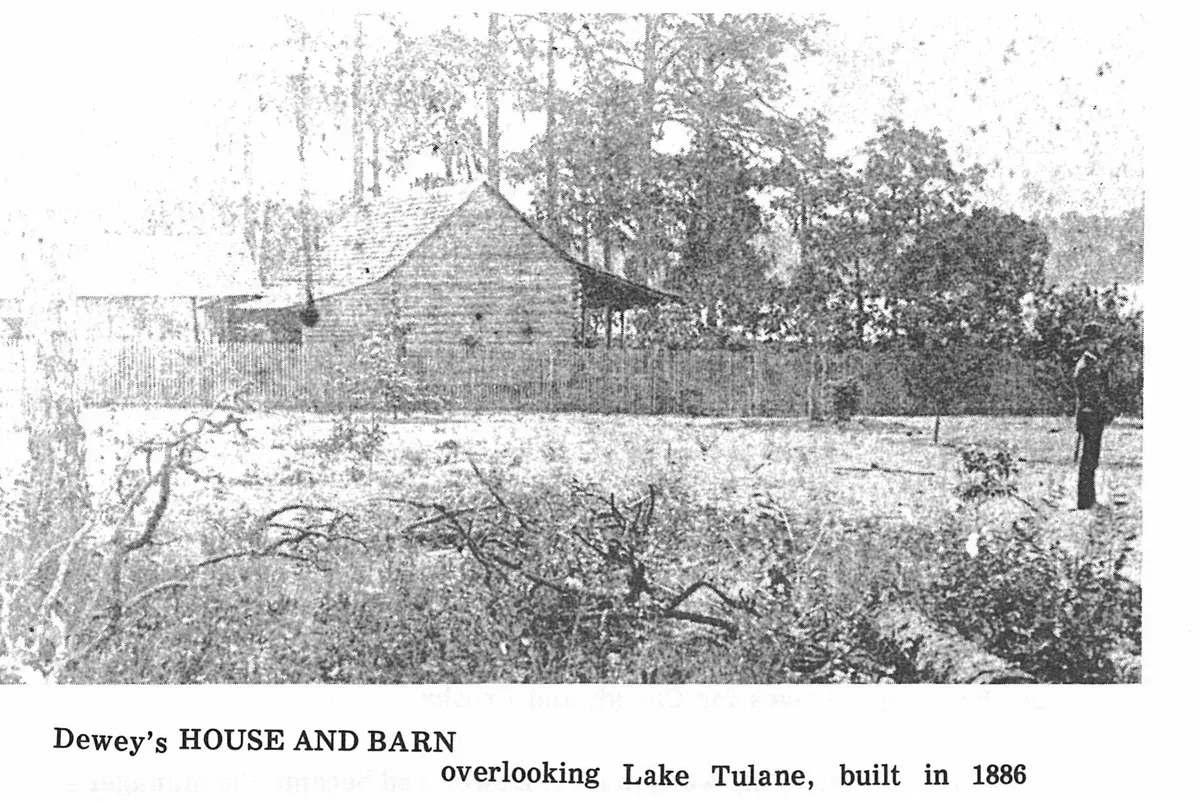
Dewey’s HOUSE AND BARN. The First Hundred Years of Avon Park, Florida (1976), page 32. Avon Park Historical Society.[maxwell-1976] overlooking Lake Tulane, built in 1886
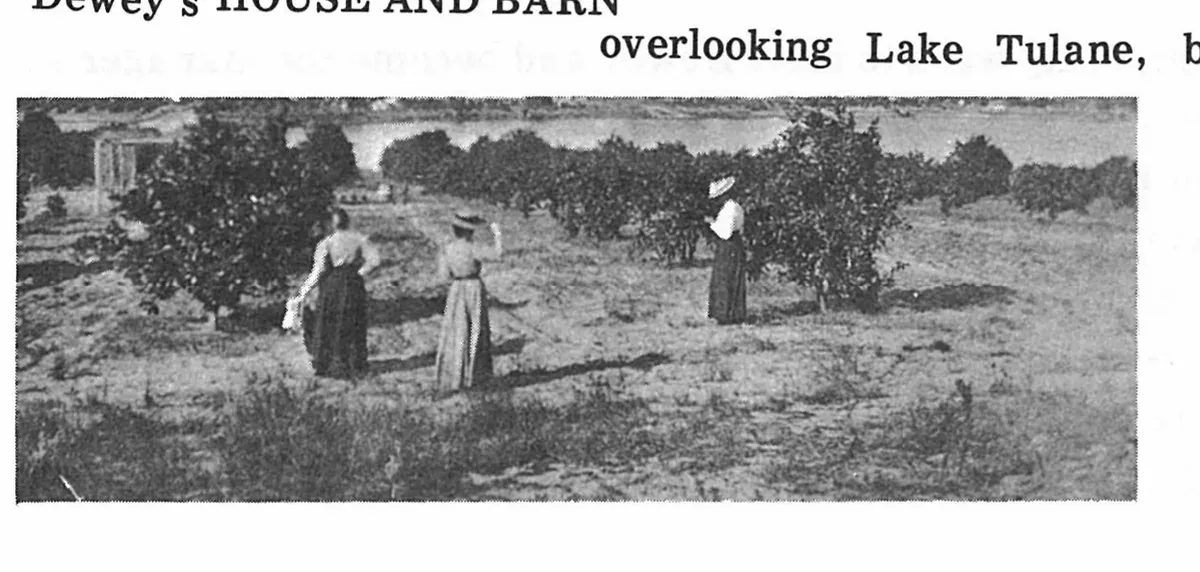
The First Hundred Years of Avon Park, Florida (1976), page 32. Avon Park Historical Society.[maxwell-1976]
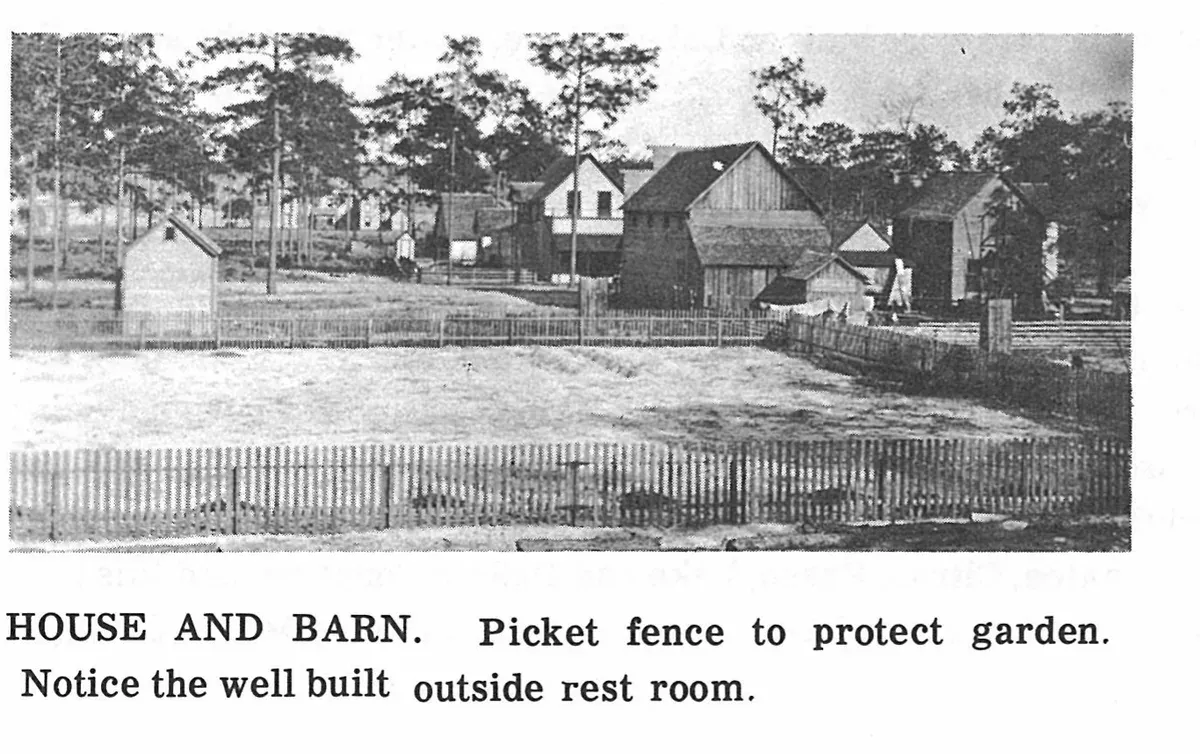
HOUSE AND BARN. Picket fence to protect garden. Notice the well built outside rest room. The First Hundred Years of Avon Park, Florida (1976), page 32. Avon Park Historical Society.[maxwell-1976]
THE KINGS
Mr. and Mrs. William A. King were indeed the first permanent settlers of Avon Park. He was from Birmingham, England and she from Shakespear’s village of Stratford-on-Avon in Warwickshire. Mrs. King told friends in later years that Mr. King was from the royal lineage of England and she, a commoner. She said he knew the hardships that would be facing a young woman in this new and undeveloped territory, and that this kind of a life would hardly be suitable for royal blood. From Crosby’s writings, Mr. King had been attracted by some of the advertisements about Florida that had been reaching London, and when Crosby went to London in 1885 he reported that King returned with him on the same boat to America and went first to Belleview, where he worked on the orange groves for Clough and Crosby.
Mr. Crosby sent King word to meet Dewey and become the manager at the new settlement, and in some of King’s writings he says that he arrived here on February 9, 1886. Crosby wrote that “in the meantime, Mrs. King having joined her husband, the young bride entered wholeheartedly into carving out a livelyhood in this beautiful wilderness of stately pines and clear lakes.” Mr. King’s writings say that Mrs. King and two cousins, Johnstone and MacGregor, from Scotland came May 6, 1886, and that they lived in tents until the log cabins were finished.
The first log houses were built on Lake Tulane. Later when the sawmill was turning out lumber the Kings built a large two-story home on the east side of Lake Verona in 1892. He planted a 20 acre grove and installed an irrigation system with a windmill.
Because the rustic beauty of Florida reminded Mrs. King of her English homeland, she suggested that the name of this new settlement be Avon Park, instead of Lake Forest, which name Crosby had been using in his advertisements. The name Lake Forest in Manatee County appears on the original maps. In 1887 Manatee County was divided into five counties, Manatee, Citrus, Pasco, Lake and DeSoto Counties, and this put Crosby’s new settlement of Lake Forest or Avon Park in DeSoto County.
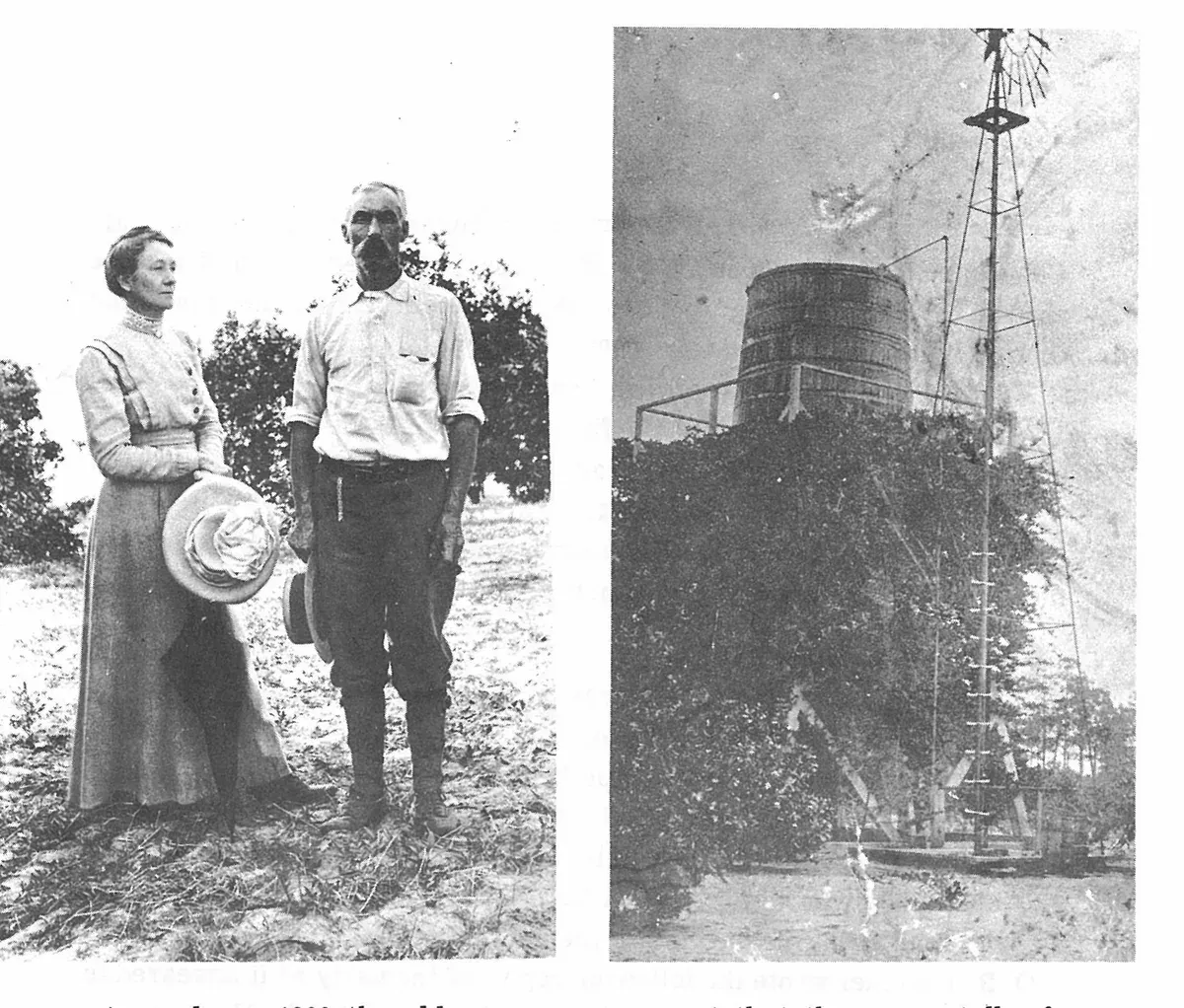
The First Hundred Years of Avon Park, Florida (1976), page 34. Avon Park Historical Society.[maxwell-1976]
As early as 1900 the old newspapers report that there was talk of dividing DeSoto County, but it was not until 1921 that the Florida Legislature unanimously passed the five county division, making Highlands, Hardee, Glades, Charlotte and DeSoto Counties.
King had been serving as chairman of the Board of County Commissioners for DeSoto County, and was immediately elected as Commissioner from District One of the newly formed Highlands County. For the remaining years of his life he served the County as well as the City of Avon Park on many boards and held many offices.
He organized and managed the first citrus packing house “The Avon Park Citrus Exchange.”
King was first elected mayor of Avon Park in 1919 and served until 1922. He was again elected mayor in 1925 and served until his tragic and untimely death February 11, 1929.
The Kings and Crosbys were among the founders of the Evangelical Congregational Church in 1893. Mr. Crosby donated the land for the church. The Kings later became charter members of the Episcopal Church when it was founded in 1895. Mr. King had a tube well drilling business along with his other business interests. Mrs. King acted as the first hostess for the Verona Hotel at its beginning. She was the first woman to register to vote in an Avon Park election, held September 10, 1921. This was the first city election following the adoption of the Nineteenth Amendment August 20, 1920 by the U.S. government, giving women the right to vote.
On April 30, 1906 a delightful occasion took place at the Verona Hotel, when Dr. and Mrs. McCartney, owners of the hotel, entertained the entire town of Avon Park in honor of the 25th Wedding Anniversary of Mr. and Mrs. William A. King. Their friends and neighbors marked the occasion with a gift of 25 silver dollars, presented to them by the Rev. E. L. Richardson, who humorously referred to the gift as a “compensation, a dollar year, being about right for their services to the community.” O. R. Thatcher wrote the following report of the party as it appeared in the DeSoto County News. “Far away over the sea in Merrie Old England, April 19, 1881, in an old Parish Church in Warwickshire, built about the year of 1100 in the time of Thomas Beckett, a large congregation assembled, and the chime of the bells peel forth. It is the occasion of the religious solemnization of a Christian marriage. “Before the chancel rail stand the bride and groom, Miss Mary A. Chinn and William A. King. The noble and impressive marriage service of the Church of England, is said, the solemn vows are taken and words spoken that join the two together in holy matrimony, by bonds that can only be severed by death. “In the parlor and office and on the spacious East porch of the Verona hotel, Dr. and Mrs. McCartney served cake and lemonade to the 80 guests who spent a pleasant evening dancing to music furnished by Mr. Sargent and his Zon-o-phone with a large number of new and splendid records, and Mr. Sessions who had his phonograph and gave some special selections.”
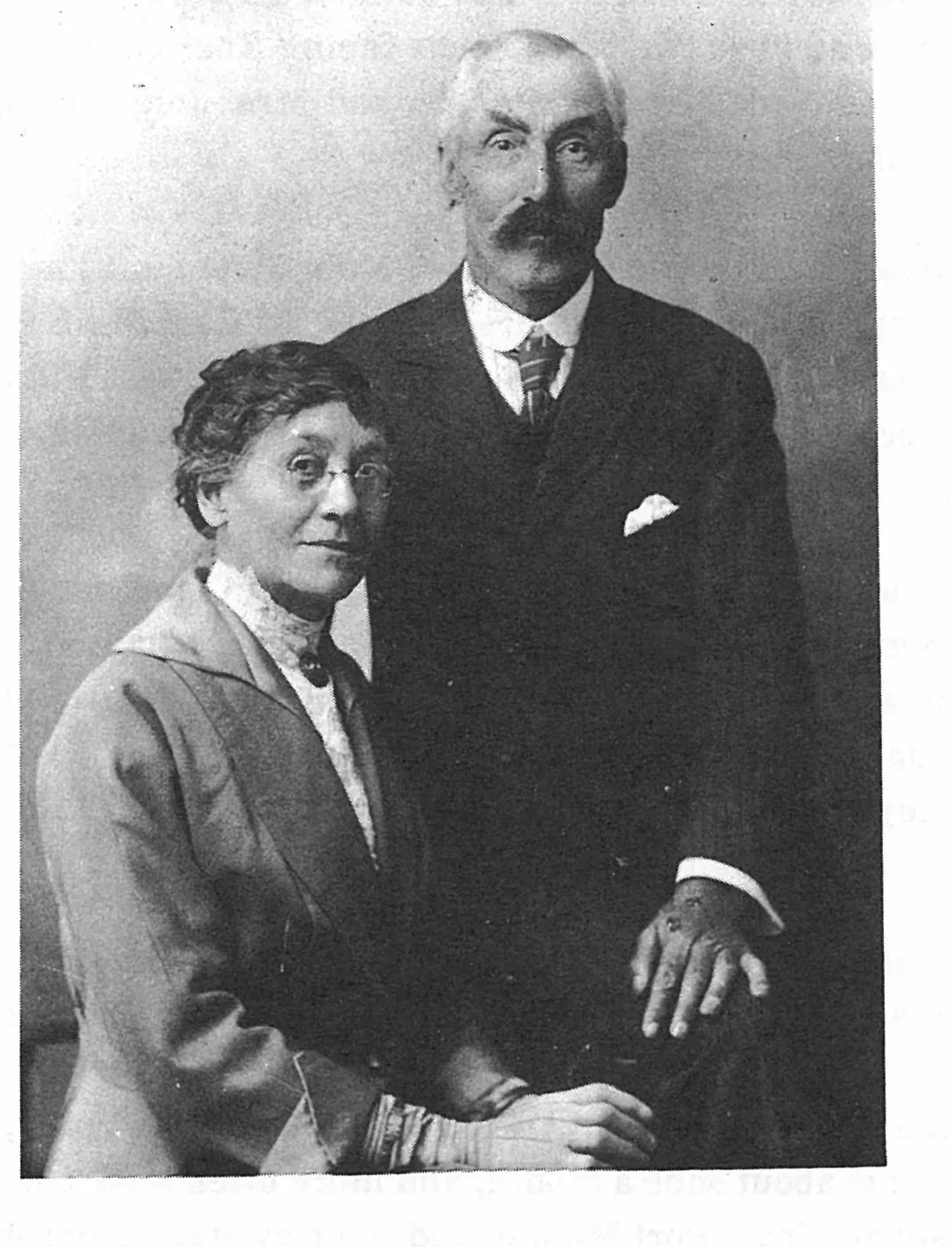
Mr. and Mrs. William A. King, celebrating their 25th Wedding Anniversary April 30, 1906. The First Hundred Years of Avon Park, Florida (1976), page 36. Avon Park Historical Society.[maxwell-1976]
Without a doubt, the Kings were the most influential couple ever to come to this territory. Following the Big Freeze in 1894-95 when this rapidly growing community began to deteriorate, the future looked dark and morale was low, it was Mr. King who helped the discouraged citizenry back to prosperity. The Kings were the stabilizing force for the few disheartened settlers who chose to remain here and re-plant their groves and gardens.
In later years some of these left, but the names of many still appear on property deeds in Highlands County, down through second and third generations.
The Kings sold the first home they had built on the hill overlooking Lake Verona, and built another two-story house facing East Main Street. The original home was owned by the late Mr. and Mrs. John Phillips of the Phillips East End Grocery Store.
Mrs. King lived in the house facing East Main Street until her death in 1937. This property as well as the area corner of East Main Street and South Highlands Avenue was always referred to as Kings’ Hill or Kings’ Court, until recent years when the developers changed the name to Forest Hills.
Mr. King divided his time between Avon Park and the Belleview colony as well as meeting prospective buyers and making business trips, which left Mrs. King alone for weeks at a time in her cabin near the lake. She told of the Indains who would come by, and she would be so frightened, but usually they were in need of food and she would give them whatever she might have on hand and they would leave without trouble.
At first she had to carry her water in buckets from the lake. She said that many times she was so lonely she wished she could jump in the lake and drown. But after the first year she said other people began to come, and the mail would arrive about once a month, and more often later on. The mail came by horseback from Fort Meade, and later by stage from Wauchula, until the train came through in 1912.
According to Miss Mattie Tompkins, attorney for the King’s estate, Mrs. King’s only living relative was a neice, Mrs. Charles (Bertha) Nichols, who lived in Longwood, Florida at the time of Mrs. King’s death.
Mrs. King is buried beside her husband in Bougainvillea Cemetery. In her later days she reminisced of the hardships she had encountered in her early life in this rugged frontier, as the only white woman for miles around.
Friends who remember Mrs. King in her 80th year before her death, say she was truly “The Mother of Avon Park.”
MR. KING and ARTHUR CREWS, City Clerk, started on a business trip and stopped by the office of Charles Clements to ask him to go along, but Clements was unable to leave and they proceeded on their way. As they approached the S.A.L. railroad track the northbound Orange Blossom Special was also approaching. Mr. King was driving a new Buick car and the gear shift was different from the car he had been accustomed to driving. According to an eye witness to the accident, King thought he had stopped too close to the track and intended to put the car in reverse, instead he accidently put the car in second gear and lunged forward directly in front of the engine. Crews was killed instantly and Mr. King died shortly afterwards.
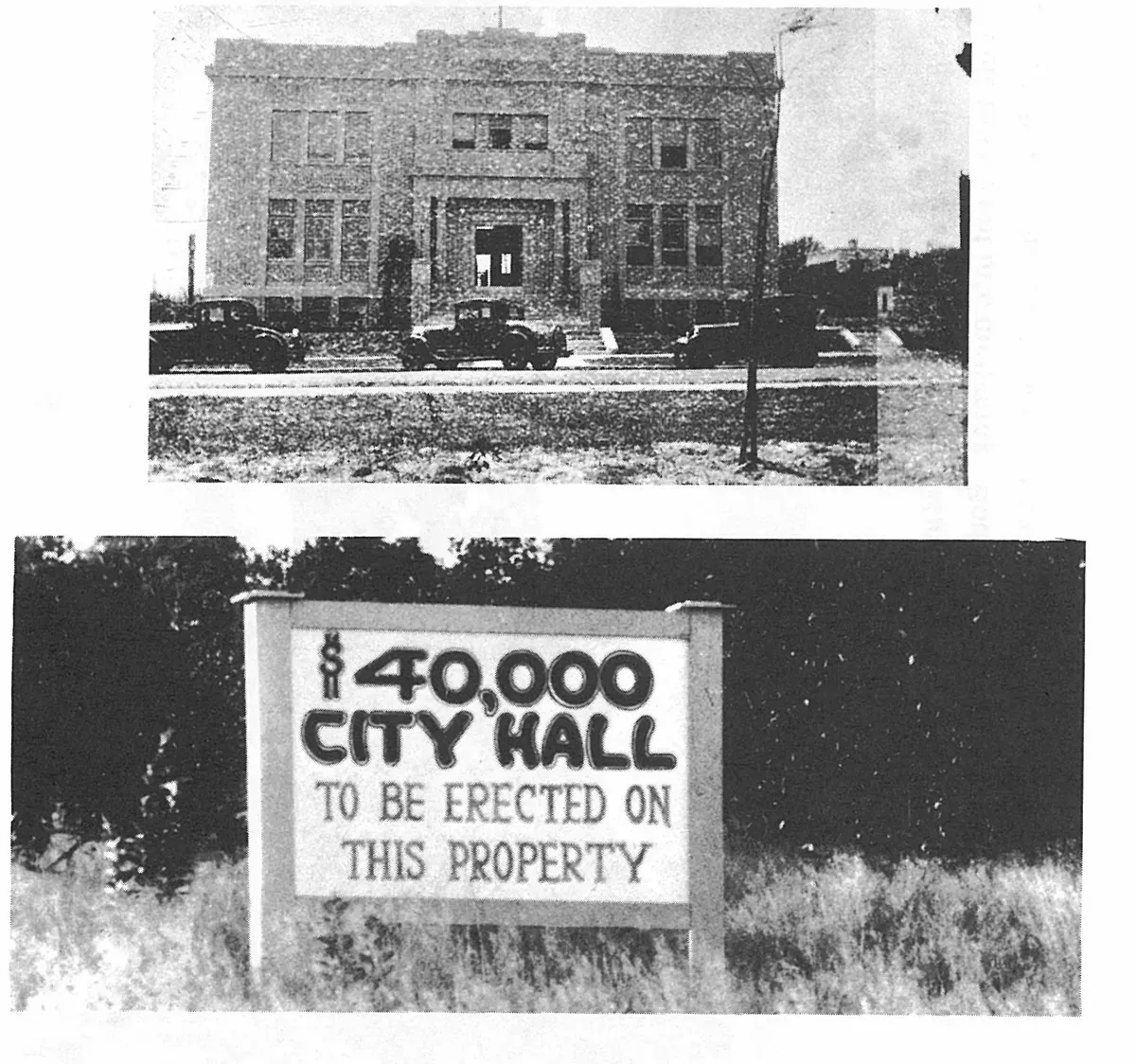
THE NEW CITY HALL as it looked April 6, 1929. The First Hundred Years of Avon Park, Florida (1976), page 38. Avon Park Historical Society.[maxwell-1976]
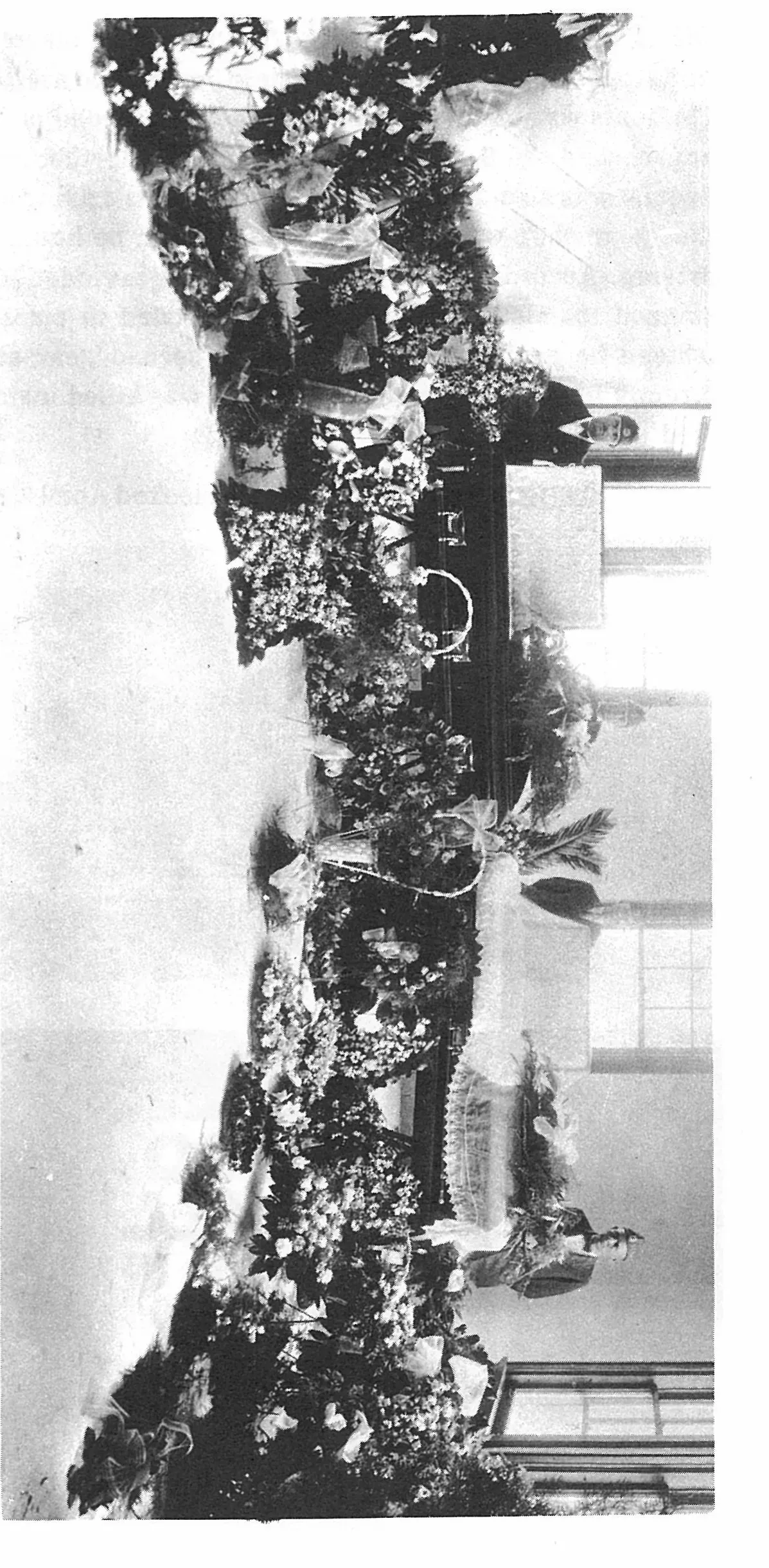
The First Hundred Years of Avon Park, Florida (1976), page 39. Avon Park Historical Society.[maxwell-1976]
The bodies of Crews and King lay in state in the new city hall on East Main Street, which had not as yet been opened for official business. The whole town went into mourning. Both men are buried in the Bougainvilea Cemetery. Without a doubt, this was the most shocking event ever to happen in Avon Park, including the Big Freeze of 1895.
The freeze of the winter of 1894-95 caused great consternation and panic among the people as well as severe damage to the area. The people were completely unprepared because few had ever heard of a freeze in Florida because communications at that time were not very good, and the 1884 freeze had not been publicized in the north.
The settlers here lost all of their citrus, pineapples and their gardens. They began to leave Avon Park by every means possible. Some left on foot, other climbed on the first wagon leaving for Fort Meade, the nearest railroad, sometimes leaving food on the table and clothes hanging. Their houses were left to the weather and wild animals, and most such buildings were eventually ravaged by wild fires. It was a sad situation, but Avon Park did not become the ghost town that some had predicted it would be. Some of those who left returned later and also others kept on coming to this beautiful and fascinating place, called Avon Park.
It is interesting to note that Col. Davidson of Hollyhurst, told in later years how he saved some of his oranges from freezing by arousing all of his family in the middle of the night to pick oranges. The women picked in their large aprons and the men dug a long trench and buried the fruit. These were the only oranges saved during the ’95 freeze.
The First Hundred Years of Avon Park, Florida (1976), page 40. Avon Park Historical Society.[maxwell-1976]
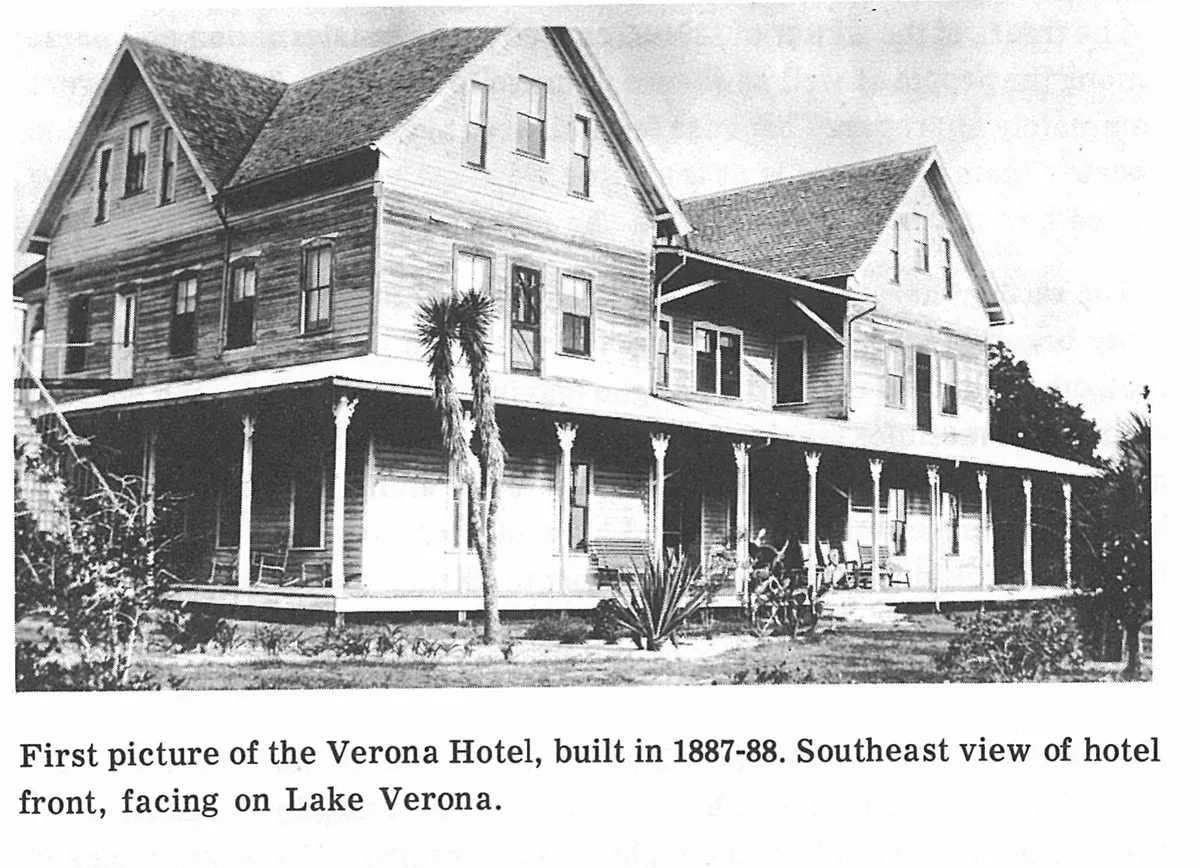
First picture of the Verona Hotel, built in 1887-88. Southeast view of hotel front, facing on Lake Verona. The First Hundred Years of Avon Park, Florida (1976), page 41. Avon Park Historical Society.[maxwell-1976]
VERONA HOTEL
The 35-room hotel wasbegun in 1887, built from standing timber by the ingenious J. H. Nettleton of Connecticut. Crosby says he made a contract with Nettleton and that they secured a ‘cracker’ sawmill that broke down often, but Nettleton managed to cut and kiln-dry 200,000 feet of lumber from virgin timber and build the hotel, as well as most of the furniture. It was finished in the fall of 1889 but was occupied before it was finished.
Herbert Seaverns said when he came the hotel was filled and that Mrs. King arranged for him to sleep on the floor. The first hotel on the ridge.
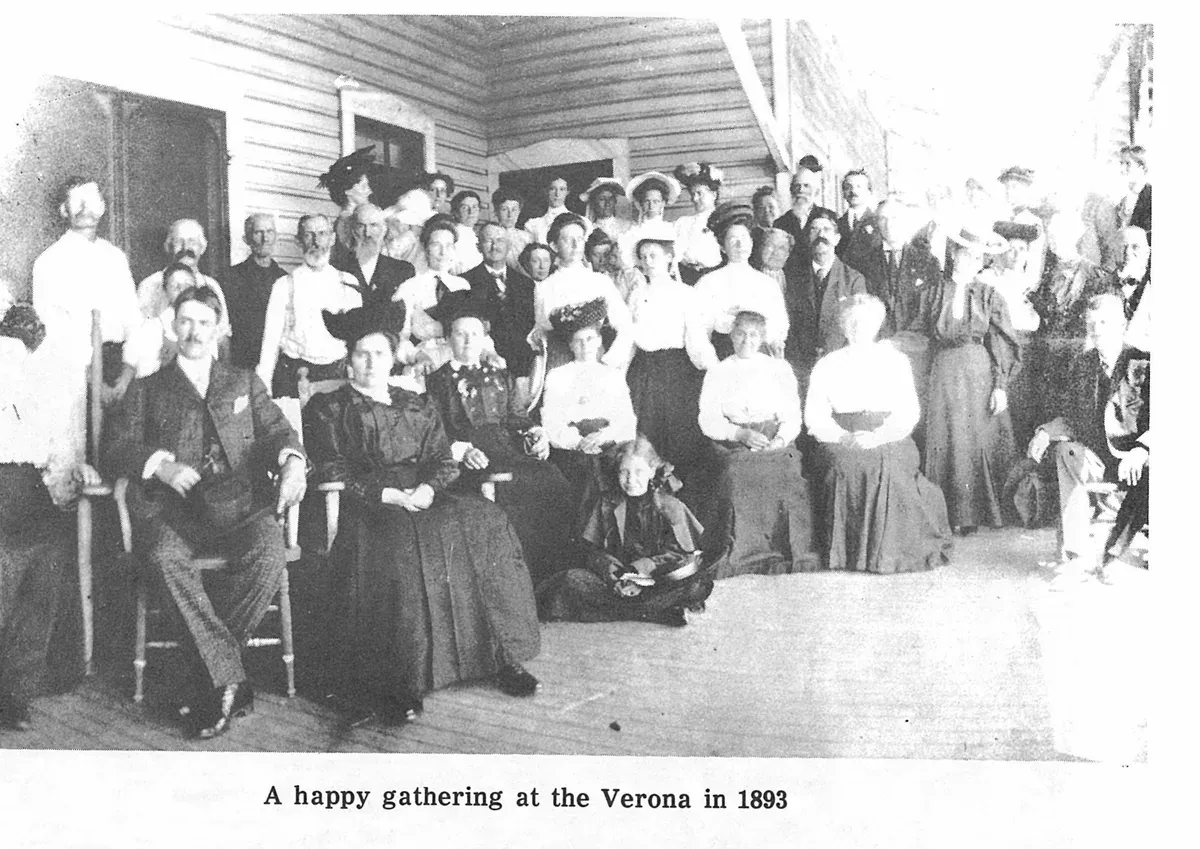
A happy gathering at the Verona in 1893. The First Hundred Years of Avon Park, Florida (1976), page 42. Avon Park Historical Society.[maxwell-1976]
A large hotel, two and one-half stories, in the middle of a forest of tall pine trees did look strange. Some called it “Crosby’s Folly”, but the alluring ads that Crosby placed in northern newspapers filled the hotel the first winter, and Crosby says he sold enough lots that first winter to pay for the hotel.
An excursion from New York, round trip including one week room and board at the Verona Hotel, brought many people by steamship to Jacksonville, railroad to Fort Meade and stage coach to Avon Park, all for $75 for those who bought property. To those who came for vacations only, the board was $1 a day, and later $1.50 per day.
Lots were sold on easy terms, $100 down and $1 a month for one acre or 10 acre tracts of land for $50 down and $10 per month.
The Verona Hotel became the center of social life for this new community. Each evening there was music and dancing and a card game of “twist.” Light for the veranda was furnished by a large locomotive headlight. Food was excellent and everyone seemed to enjoy their stay.
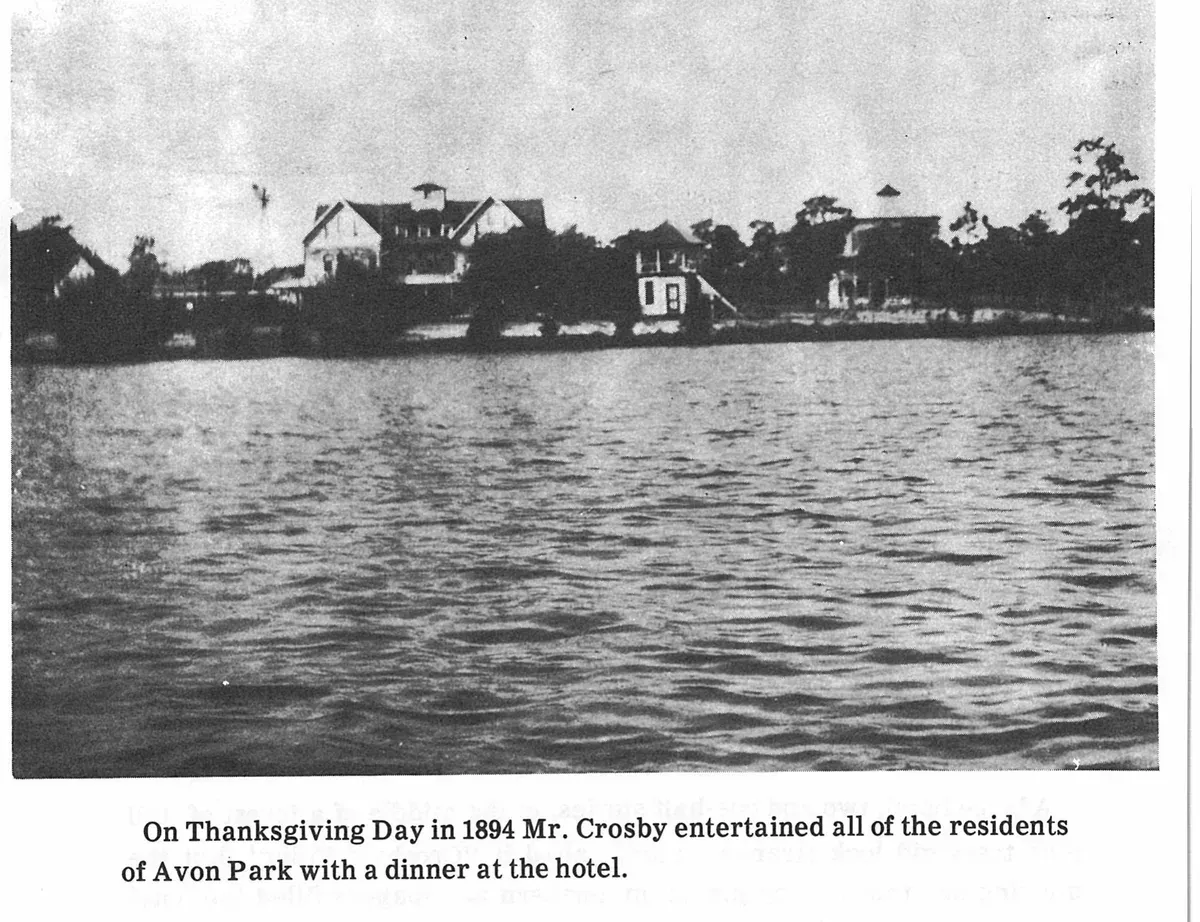
On Thanksgiving Day in 1894 Mr. Crosby entertained all of the residents of Avon Park with a dinner at the hotel. The First Hundred Years of Avon Park, Florida (1976), page 43. Avon Park Historical Society.[maxwell-1976]
Crosby wrote that religious services were held in the parlor each Sunday afternoon and if no preacher was present, a “Talmadge sermon” was read.
A bandshell was built in front of the hotel and the Avon Park Concert Band, composed of 13 members, entertained often.
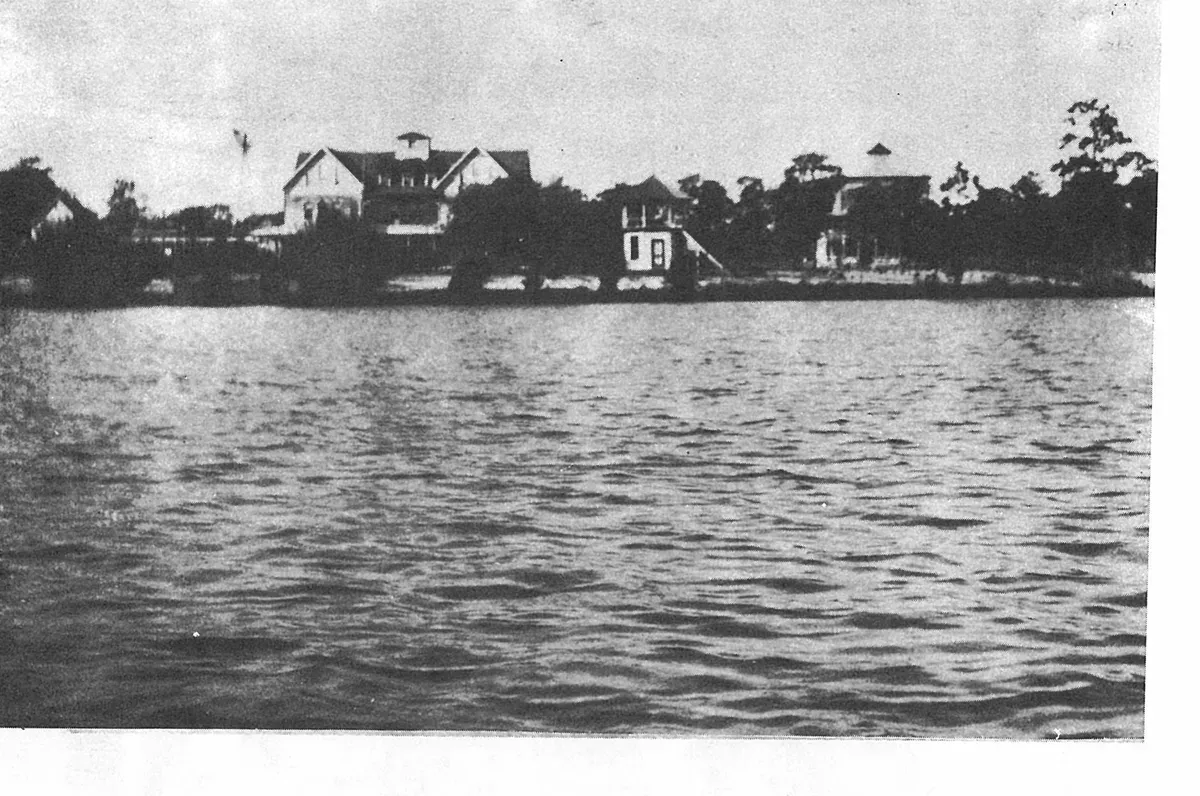
Looking west across Lake Verona shows the bandstand when it was built in 1897, in front of the Hotel. The First Hundred Years of Avon Park, Florida (1976), page 44. Avon Park Historical Society.[maxwell-1976]
Boating and swimming and fishing were available since the hotel was built on the shores of Lake Verona. In 1901 Dr. J. H. McCartney advertised in The South Florida Sun “Drink the water from Lake Verona, lose from 3 to 7 pounds of flesh per week, for a time.”
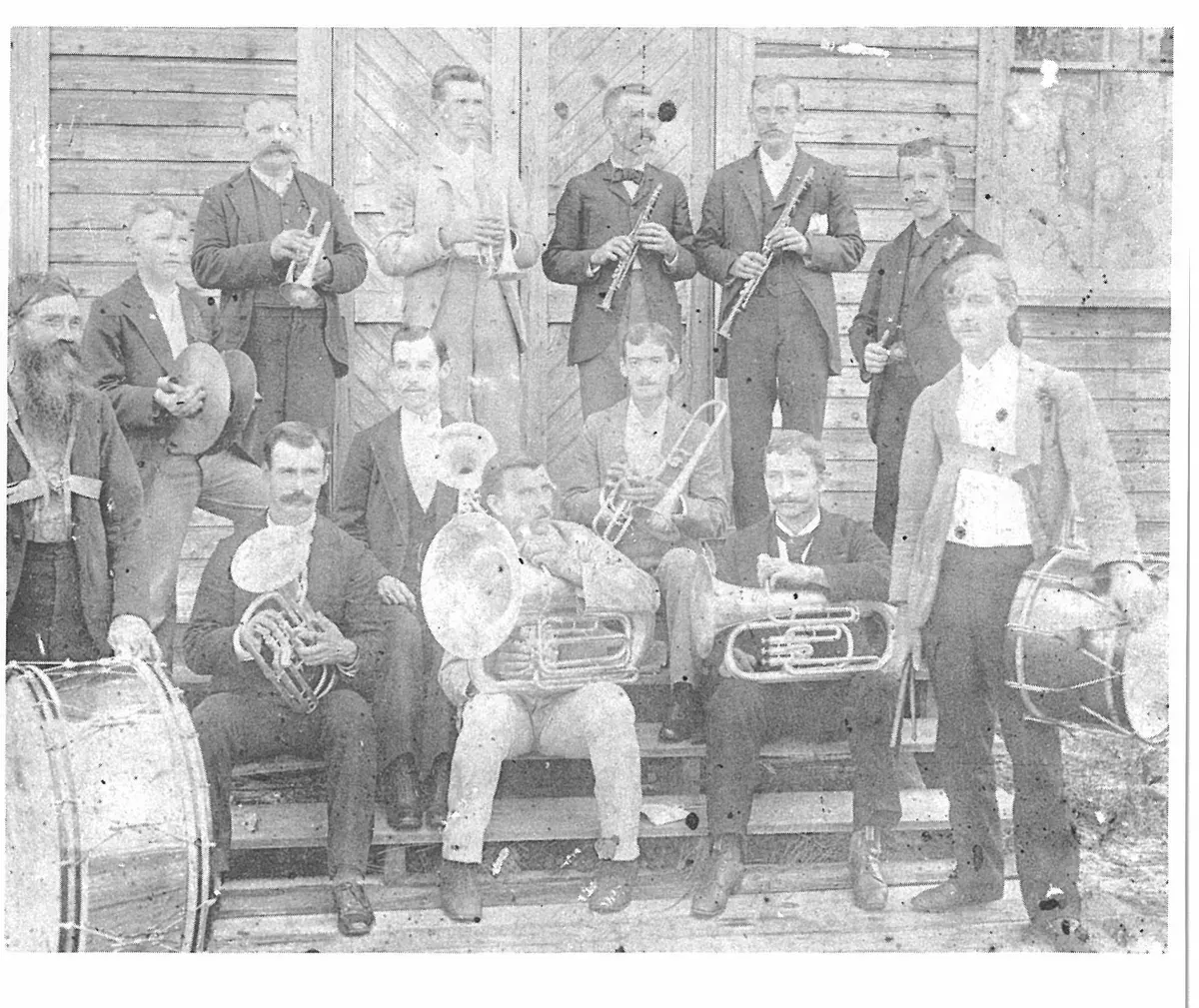
The First Hundred Years of Avon Park, Florida (1976), page 45. Avon Park Historical Society.[maxwell-1976] 1894 Concert Band Standing: Frank Thompson, Charlie Thompson, Fred Prior, Will Minor, Mr. Goodell, Dan Budd, Billie Barr, (band leader) Seated lower row: Henry Hancock, Al Bennett, Henry Frentz, Loyd Bleum. Middle seated: Ed. Gonzalas and Homer Eaton.
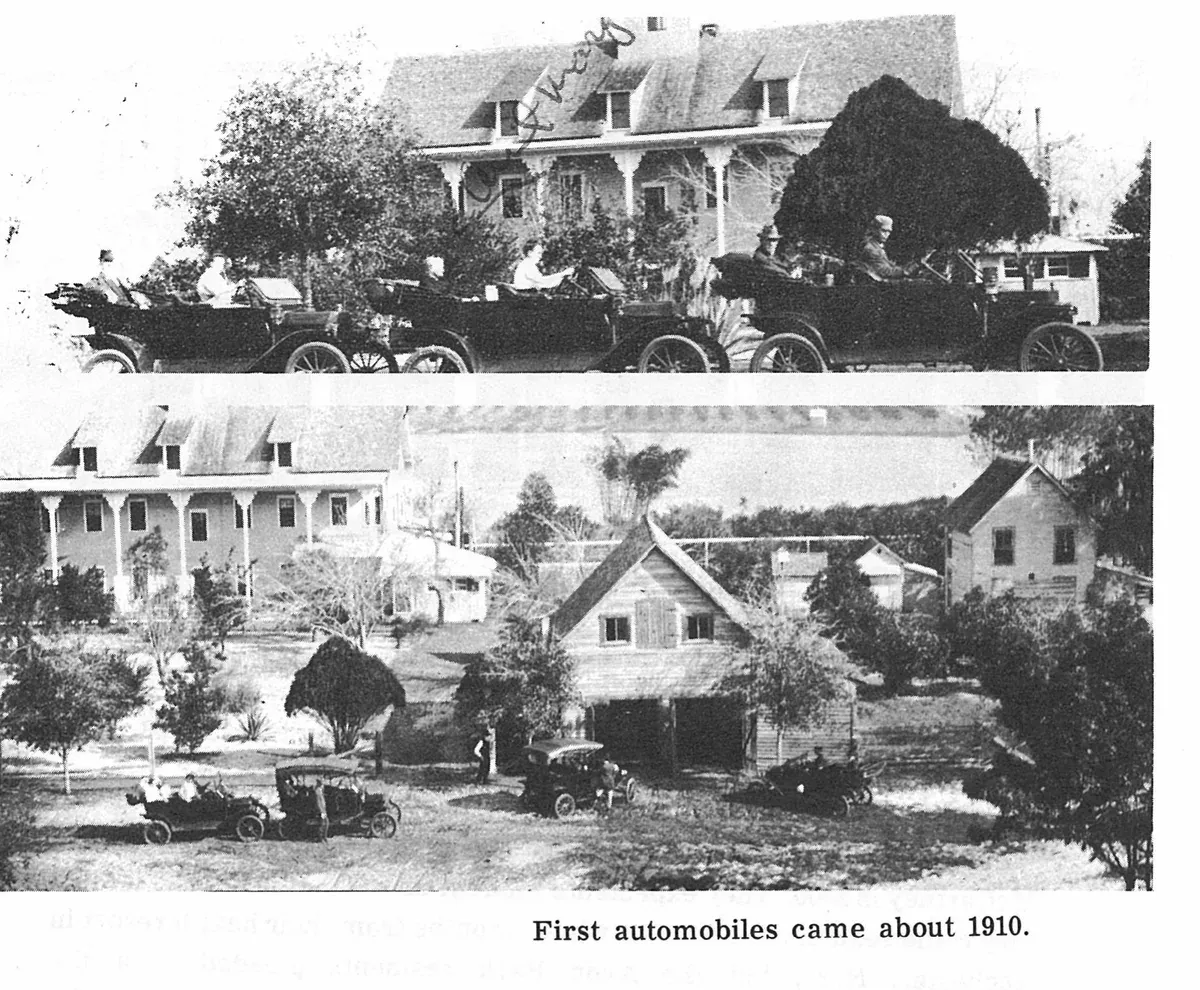
First automobiles came about 1910. The First Hundred Years of Avon Park, Florida (1976), page 46. Avon Park Historical Society.[maxwell-1976]
In 1893 Mr. Crosby secured T. M. McCreary of the James Hotel, Ashtabula, Ohio as the manager. In 1894 Mr. and Mrs. M. T. Mervin of Blue Mountain, N. Y. came as managers. They were the most popular couple ever to be at the hotel: After it was sold, the Mervins retired and stayed to make their home in Avon Park.
Mr. Crosby says that in the winter of 1892-93 business was on a steady increase, and that a party of people were in Fort Meade wanting tocome to Avon Park, and the hotel could not find accommodations for them. He found Mrs. Crosby on a step-ladder looking through the trap door into the attic. She could see where they could make 15 more rooms by adding some dormer windows in the roof.
They called Mr. Burleigh, owner of the saw mill, ordered doors and windows and Mrs. Crosby went to Jacksonville to purchase furniture. As soon as one room was finished and the shavings swept up, it was occupied. The guest register that winter included 24 ministers and 26 doctors.
The First Hundred Years of Avon Park, Florida (1976), page 47. Avon Park Historical Society.[maxwell-1976]
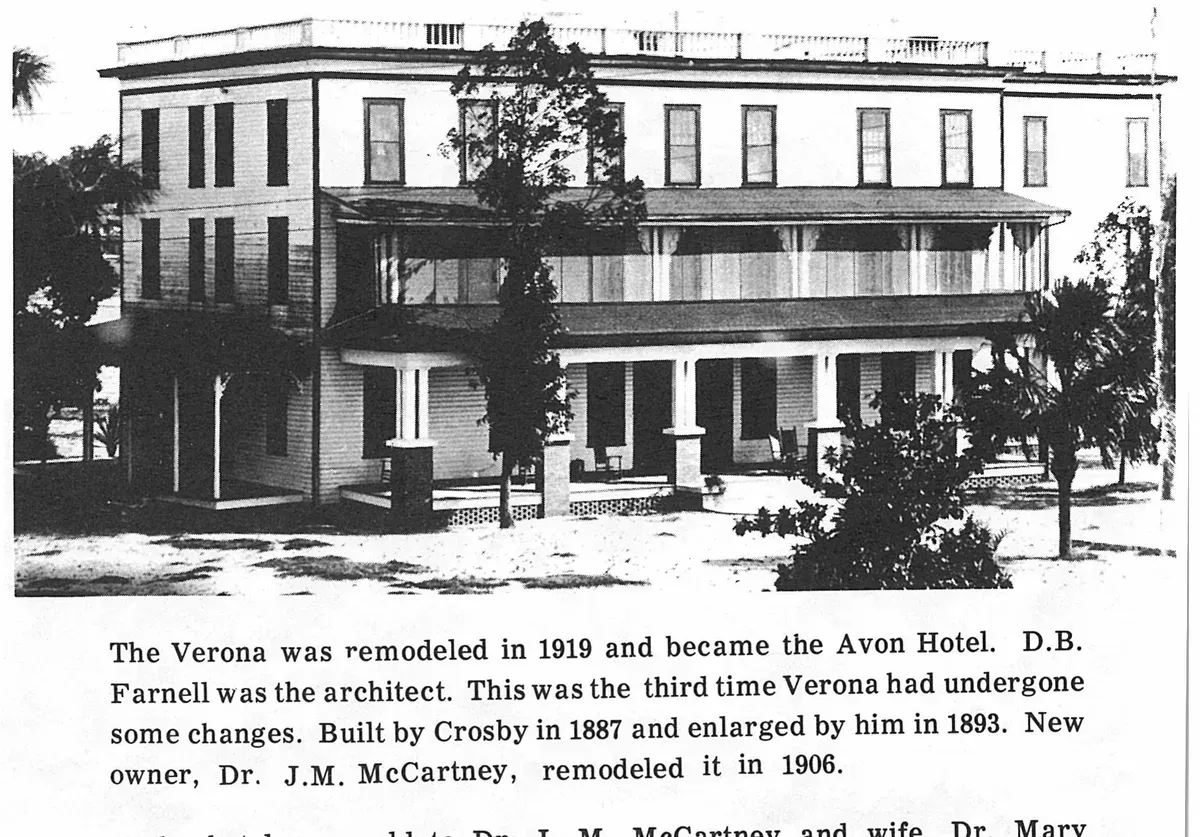
The Verona was remodeled in 1919 and became the Avon Hotel. D.B. Farnell was the architect. This was the third time Verona had undergone some changes. Built by Crosby in 1887 and enlarged by him in 1893. New owner, Dr. J.M. McCartney, remodeled it in 1906.
The hotel was sold to Dr. J. M. McCartney and wife, Dr. Mary McCartney in 1900. They expectedto make it into a health resort to which they could send patients for the winter months from their health resort in Rochester, N.Y., but the Avon Park residents pleaded with the McCartneys not to close the hotel, so they sent Samuel Brown here to be the manager and kept the hotel open to the public.
The McCartneys proceeded to invest a great deal of money in the town. Dr. McCartney and W. S. Butler bought several pieces of property and improved them, which brought some stimulation to the economy . They remodeled the Verona hotel at considerable expense. The roof structure was changed, making it into a three-story building with large porches on three sides of the first and second stories. This was the second time the hotel had been remodeled since it was built in 1887.
Dr. Mary’s neice, Mrs. Ruth D. Preshur of Nichols, N.Y., who had lived here with her aunt and uncle when she was a young girl of 10 or 12 years, wrote to the author of this book in 1977, and related some of her experiences while she lived at the hotel. She said that as they made the trip from Fort Meade and stopped for lunch the big wild hogs, known as razor backs with long snoots, frightened her so badly she would not leave the wagon, when the others got out to eat a lunch they had brought along.
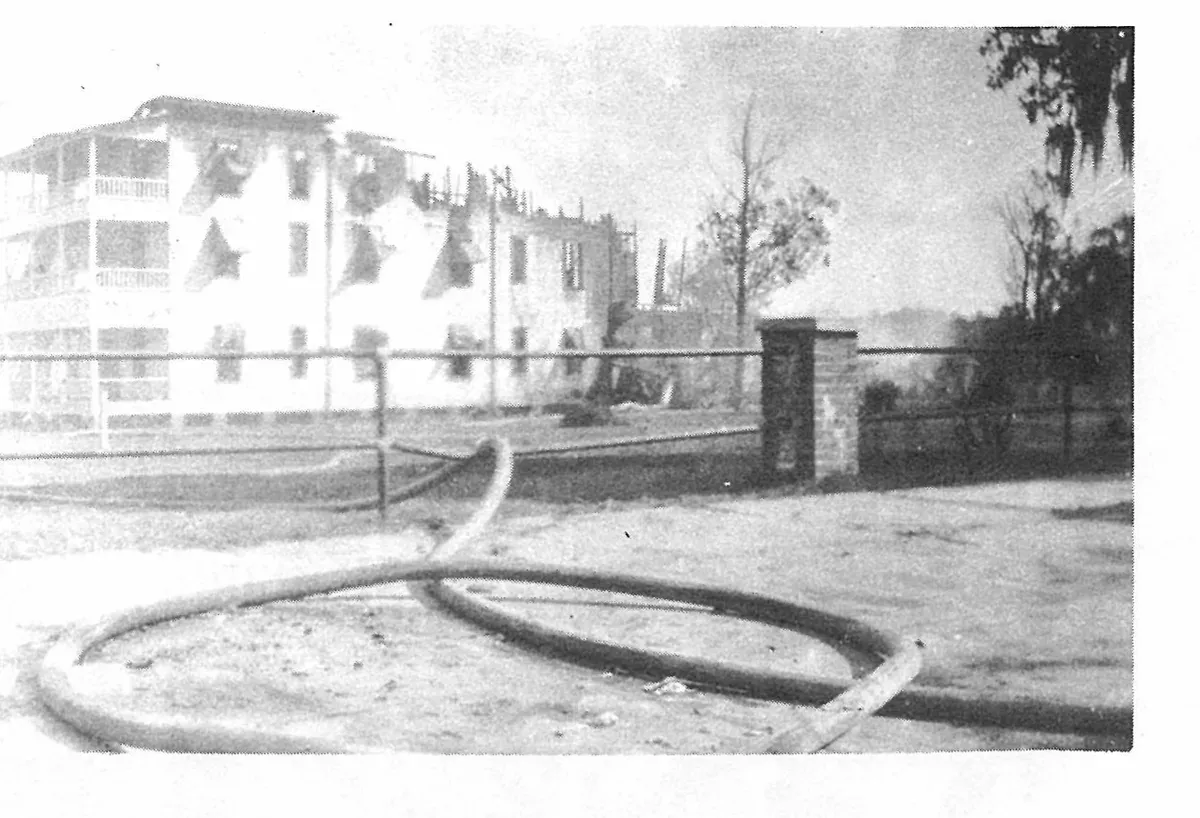
Ruth said her uncle always worried about fire in the hotel and one of her responsibilities was to see that all of the lamps and lanterns were accounted for and cleaned each morning, and oil refilled for the next night. The First Hundred Years of Avon Park, Florida (1976), page 48. Avon Park Historical Society.[maxwell-1976]
Both the McCartneys are buried in Bougainvillea Cemetery and a small metal cross marks their graves. Ruth wrote that because the cross kept sinking into the sand, it was finally seated in a cement slab. The McCartney’s names are written in the cement, but almost obliterated now by the weather.
The Verona continued to be open and was remodeled again in 1919. D. B. Farnell was the carpenter-architect for adding a new north wing.
In the Twenties it became known as The Avon Hotel, and was the largest commercial hotel on the Ridge. It was owned by Henry Lander in 1923 and later by the Golf and Country Club, whose members included practically everyone in Avon Park. Mrs. Mary E. Wilcox was the manager in 1924. One of the last big affairs that is remembered by Avon Park residents was the banquet of the Junior-Senior Class of 1920 of the Avon Park High School.
The Verona finally burned in February 1927. Some of the large timbers and lumber that was salvaged from it were used in other structures around town.
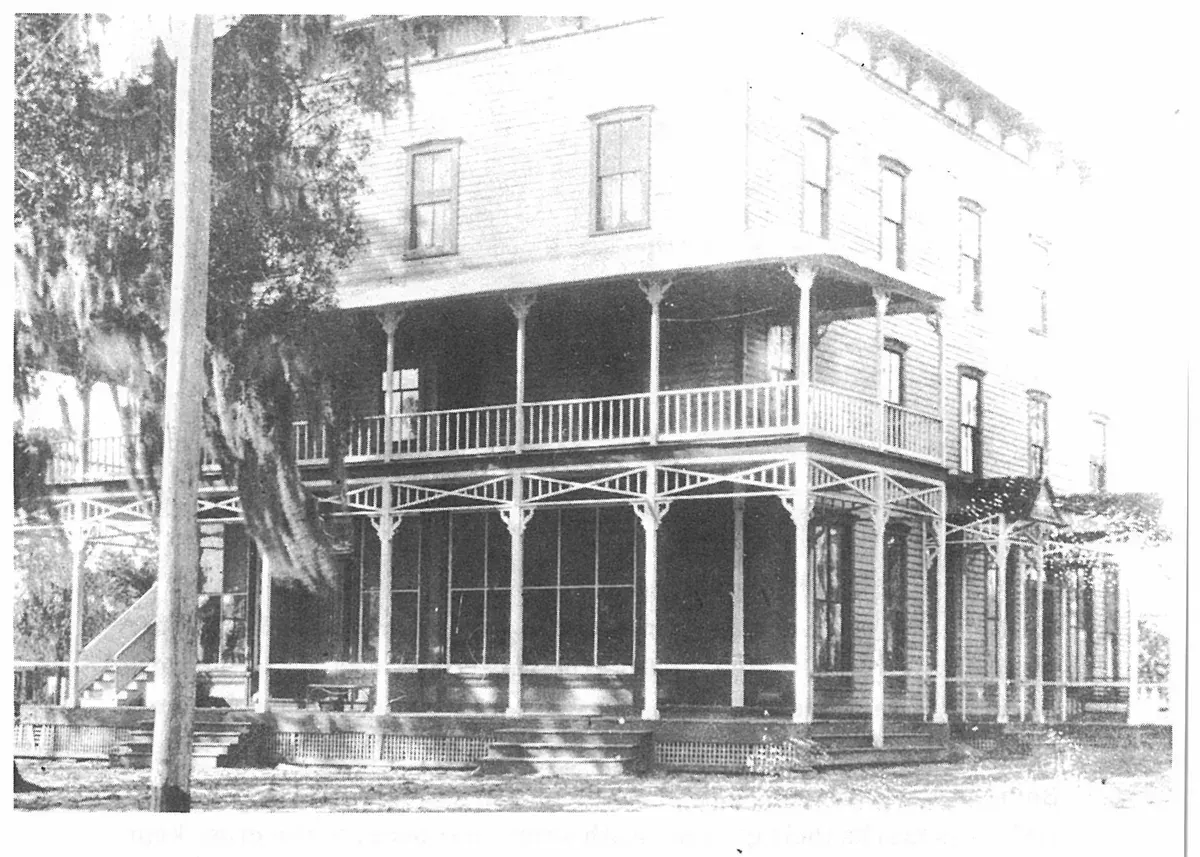
MASONIC TEMPLE BEFORE IT WAS RAZED IN 1961. The First Hundred Years of Avon Park, Florida (1976), page 49. Avon Park Historical Society.[maxwell-1976]
The Avonian Block was built next to the Verona Hotel in 1893 by Perry Haines at a cost of $7,200. It was also known as The Annex because the third floor had 20 rooms that were to accommodate the overflow of hotel guests. The second floor was used for office space.
The first floor was occupied by the Florida Development Company, The Bank of Avon Park and Dr. Lander’s Drug Store.
The Avonian Block or Annex became known as The Masonic Temple in later years. The last owner of the Masonic Temple was S. C. Pardee, a local attorney, who made part of the first floor into apartments.
The old Masonic Temple was finally demolished in 1961. A parking lot and the National Guard Armory occupied the space where this building once stood.
A new Masonic Temple was built on West Main Street and the new National Guard building and headquarters are located on U. S. Highway 27 South of Avon Park.
AMONG THE FIRST SETTLERS
Some of the earliest settlers were H. H. Penrose, a surveyor for the United States government, who was a stalwart Irishman. He later moved to Bartow where he lived out his life, Charles Krause, who was born in Germany, helped Penrose with surveying. The Byrd Brothers, for whom Lake Byrd is named, came from Ireland. Tobe Henry, of the firm of Carter and Henry of Fort Meade, operated a store. D. D. Kinney later bought the Henry store and became the postmaster after Mr. King.
George and Henry Wray came from Perry, N.Y.George Wray was a photographer and a merchant. B. F. West, who bought the stock of goods from Wray and also opened a banking business in his store. H. F. Nettleton of Connecticut who built the Verona Hotel. Other business men were W.S. Butler, H.R. Price, D.F. Gorman, H. E. Coy and Lt. H. B. Todd. Among the English families were Eric Cheape, John Lancaster, John Barker of Nottingham and John C. Davies of Wales.
Johnstone and MacGregor, cousins from Scotland, came to Avon Park with Mrs. King. Other English settlers were E. H. Thompson, Dr. Chase, Fred S. Pryor and George H. Bunbury. The oldest continuous residents next to the Kings were Richard Bennett and J. F. Williams.
Names that continued to appear in the early newspapers after the freeze of 1895 were E. D. Putney, George Edminister, Ellis West, J. C. Burleigh, Clark. D. Knapp, J. C. Clark, S. S. Turner, H. E. Kellog, E. H. Bristol, F. E. Spearing, Joseph and Eunice (Ma) Bell, Sidney Perkins, C. C. Chollar, Dr. H. N. Caldwell, A. E. Nestor, Major Clark, W. H. Kempton, William Hampton, Jr., Frank Thompson, John L. Stoddard and many others.
The population increased from 6 people in 1886 to a total of 20 in 1888, and by January, 1894 the total had reached 500 people.
CROSBY’S FINANCIAL WOES
1886-1896
Crosby says he assumed and paid Clough’s debts when he took over the colony of township 33, range 28 east, from the Hamilton Disston Company in Philadelphia in 1887, as well as the colony at Belleview in Marion County. During the winter of 1888 he had to remain in New York because of a yellow fever epidemic in Jacksonville. To meet his payrolls at the Belleview colony and in Avon Park, he sold his 18 acre nursery in Connecticut and also borrowed $1,000 from his hometown friends, Berckerle, Schuldice & Fay, hat manufacturers in Danbury, Conn.
As his needs increased they loaned him $5,000 more and suggested a partnership, allowing them $30,000 for a two-thirds interest in twp 33, range 28 east, which was to be a total of $45,000. As a result of this partnership they signed many deeds here. But after they had paid $17,000 of the agreed $45,000 they wrote Mr. Crosby that they could not furnish any more money because of financial difficulties in their own business.
Later Mr. Fay’s premature death complicated matters further, because he had left several heirs who were under age. Fay’s money was to have been used for building the Verona Hotel. So to meet the carpenters bills Crosby borrowed $1,000 from a George E. Frost of Boston, Mass. The hotel was finished and opened in October 1889 and Crosby wrote that he filled it the first winter, and sold enough lots to pay off the debts.
To those who had called the hotel “Crosby’s Folly” it did look odd to see such a fine big building in the woods so many miles from the railroad, but this was the evidence of Crosby’s ingenious methods and foresight to build his dream community. From his first trip into the tall pine forest he had seen building materials for homes. Therefore, his first effort was to secure a sawmill to saw lumber. All of this was accomplished in less than
three years after he had made his first trip to England and his trek into the wilds of Manatee County.
In 1889 G.W. Bacon, a map publisher from London, England was visiting America and he became interested in the Avon Park development. He persuaded Crosby to put his enterprise into a stock company for $150,000. Crosby was to keep $75,000 and from the sale of stock they would pay off the $17,000 debt owed to Berckerle, Schuldice & Fay. They agreed that Bacon was to go to England and raise $75,000.
Since the urgent need was for a sawmill that could turn out lumber to build homes, and the ‘cracker sawmill’ that Crosby has first secured to cut lumber for the hotel, stayed broken down so much of the time, Bacon urged Crosby to buy a new outfit immediately. So Crosby went to Jacksonville and purchased a new sawmill outfit on credit, representing a $10,000 debt, and Bacon went to England in 1891to raise the $75,000.
Before Bacon reached London a financial panic had begun in London and New York. This became a world money crisis, the worst depression in the United States up to this time. The peak came late in 1892-93, but financiers and developers felt the pressure before this time. Clough was one of the first and it is possible that Berckerle, Schuldice & Fay were also victims at the beginning of this money crisis. We read that during this time Hamilton Disston, who had first purchased the land in Florida, was also one who fell under the blow of monetary duress.
An eminent banker-economist of Fort Lauderdale, Fred Millsaps, has researched the history books of our country over the past 200 years. He explains the chain of events that brought about the world money crisis, as a combination of factors, including the bank failure in England of Baring Brothers of London, 1890, one of Briton’s great banking houses, and this started a run on gold in the European cities and drained off much of the U.S. reserve from our gold supplies, giving the U.S. the worst end of the deal because our problems went far beyond the gold question.
A great political struggle in the United States over the monetary system, as to whether it should be on the silver or the gold standard, a high rate of unemployment, and labor unions trying to gain strength for bargaining purposes, were only a part of our problems. For ten years the
U.S. farmers had been mechanizing their operations. The price of their products had not increased from the ‘Walking farmers’ pace to cover cost of machinery payments, which had created a devastating condition in the United States, and had also contributed to a lack of confidence in the government’s ability to manage the economy. The value of the U.S. currency dropped drastically.
Bacon wrote to Crosby that nis friends were involved in the money crisis, but if he would be patient the money would come. Meanwhile, Crosby was hard pushed to meet his payments on the new sawmill outfit and his other obligations.
In May 1891 Crosby went to London to aid Bacon in raising the money. This was his second trip to London. Crosby returned to the States in October feeling sure that the money would come soon. Consequently he instructed the secretary of the Board of Trade, Charles H. Smith, to draw up the Charter and By-Laws for the Florida Development Company, Limited, and authorized a total of 1,000,000 shares. Crosby’s salary was to have been $2,500 annually plus 10 percent of sales, and the $75,000 in shares. He says he never took more than $1,000 and that he took stock until he owned $91,000 in shares.
The articles of incorporation filed October 23, 1891 in the office of the Courts of Duval, Marion and DeSoto Counties respectively, listed the developments of lands in Avon Park in DeSoto County, the Belleview Hammock Gardens in Marion County, the miningofphosphate near the same locality and the maintenance and conducting of the Florida Bureau of Information and Excursion Ticket office in New York, with branch offices in Jacksonville, Avon Park and London, England.
Bacon wrote a full page article for The Florida Homeseeker from London in November 1891, but it is not reported that Bacon ever returned to Avon Park nor that Crosby was ever successful in selling stock in the development company. But for the next four years Crosby struggled along to meet his obligations, and his new settlement continued to grow. The total population had reached 200 people by 1892, and by 1895 it was recorded that there were 500 residents in Avon Park.
It is clear that Crosby was in financial trouble but he might have been able to rescue the situation if the February ’95 freeze had not caused so much damage, and the exodus of so many settlers.
CROSBY DESCRIBES THE FREEZE
“Christmas Day 1894 the air was balmy as June. All was happiness at the Hotel. My daughter, Sarah, was home for the holidays with a girl friend, Miss Alice Hogan, from Stetson University. She and her friend had left to go back to DeLand on the morning of December 27th. It was growing cold fast, a gale blowing from the northwest, temperature going down fast. A bitter cold night for Florida followed.
“Water was frozen in the bedroom pitchers; and next morning the mercury was 17 degrees below freezing. Deep Lake Verona steamed like a teakettle. The steam drifted South which resulted that the Beston grove of oranges were not harmed, other trees lost their leaves. The young orange and lemon trees were all killed; also the 500,000 pineapple plants. It was a dreadful blow, but the larger trees showed life the following month when the mild beautiful weather continued, so we felt that all was not lost.
“Six weeks later, February 14, 1895 to be exact, came another blast, even worse than the first because the trees were full of sap. The sun rose the next morning bright on the frozen trees and the bark split on the East side of the trees from top to root, often with a big bang. The 600 acres of groves were killed to the ground.
“Plantations of pineapples, grapes vineyards and gardens were all lost.
“Settlers drew money from the bank and left; houses were deserted, many destroyed by wild woods’ fires.” The population dropped from an estimated 500 people in 1895 to 241 by 1896. Yet the courageous Crosby struggled on, “Ye shall reap if ye faint not” became his motto for the dreadful year that followed the freeze. But the financial situation grew worse as notes fell due.
In the summer of 1895 Crosby was informed that The Philadelphia Land Company had not paid taxes on their Florida lands for two years.
The Florida statutes new law book stated that good and sufficient title would be granted by the State to purchasers, after a two year lapse, so Crosby says his attorney agreed and he borrowed the money on his life insurance, went to the capitol in Tallahassee and paid the money for over 2,000 acres, took the deed to the governor, Henry L. Mitchell, who signed it.
Later he was informed that the title was no good, but Crosby was never refunded his money by the State of Florida.
George W. Adams, Editor of The Highlands Pilot, after he had published Mr. Crosby’s history in 1919, made the following editorial statement: “If Mr. Crosby has stated facts, it is shown that the State of Florida did him a great injustice, by accepting payment of delinquent taxes on about 2,000 acres of land, granting him a deed to same and afterwards informing him that the title was no good, owing to the fact that the delinquents had later paid the taxes and refusing to refund Mr. Crosby his money. If such is the case our next legislature should take the matter up and see that justice is done Mr. Crosby.” But there is no evidence that the matter was ever resolved.
By the Fall of 1896 there was no way Crosby could meet his notes as they fell due.
The steam printing press was claimed by the former owner for a balance of $500.
Crosby says he had gone to Judge Hansen of Tampa for advice and was told there was nothing he could do to save the Florida Development Company. He resigned as president and Attorney, Cark D. Knapp, was elected as the president, January 6, 1896.
Mrs. A.R. Dodge, who had been the owner of the Windsor Hotel in Jacksonville, and had sold and gone to California, owned $3,000 in stock in the Florida Development Company and had also endorsed a note for $5,000. She returned to Florida from California and bid in the entire assets of the Florida Development Company at the sheriff’s sale.
Mr. McBride of Rochester, N.Y. and DeLand had loaned Crosby $5,000 and taken a note on the Hotel Verona, which he later foreclosed. C.C. Chollar, Cashier of the Bank of Avon Park, claimed the Avonian Block for $3,000, which was the amount he and his mother had invested in stock.
CROSBY’S AVON PARK HOME
It was in 1893 that Crosby moved his family to Avon Park. He had maintained his office in the Verona Hotel and later in the Avonian Block. He purchased a home next to the Episcopal Church, which was later purchased by H.E. Coy from Irondequoit, N.Y. Later Mr. and Mrs. W. A. Smith, who were parents of Mrs. Helen Mann, owned the place. The Mann family lived here for many years. The First Baptist Church purchased the property from Mrs. Ethel McKelvaine and tore the old house down in early 1970.
It was in the Fall of 1890 that Crosby’s friend, H.A. DeLand, had wired him and invited him and his party to be guests at the DeLand home en route to Florida.They spent a weekend with Mr. DeLand and looked over developments at DeLand. Sarah enrolled at Stetson University at DeLand, where she spent the next four years.
We find from the old newspapers that business did continue after the freeze, but there was more than a decade of lean years, with austere living for the residents, before Avon Park began to show progress again.
Both sweet and sad memories! Some give and some take!
The following quote from “Lightening in the Sun” by Al Pastons, 1974, “Hamilton Disston probably did as much for Florida following the Civil War as any man who lived, but one day Hamilton Disston would draw a bath, get in it, and blow his brains out with a revolver,” just another victim of the United States financial crisis and Florida’s freeze of ’95.
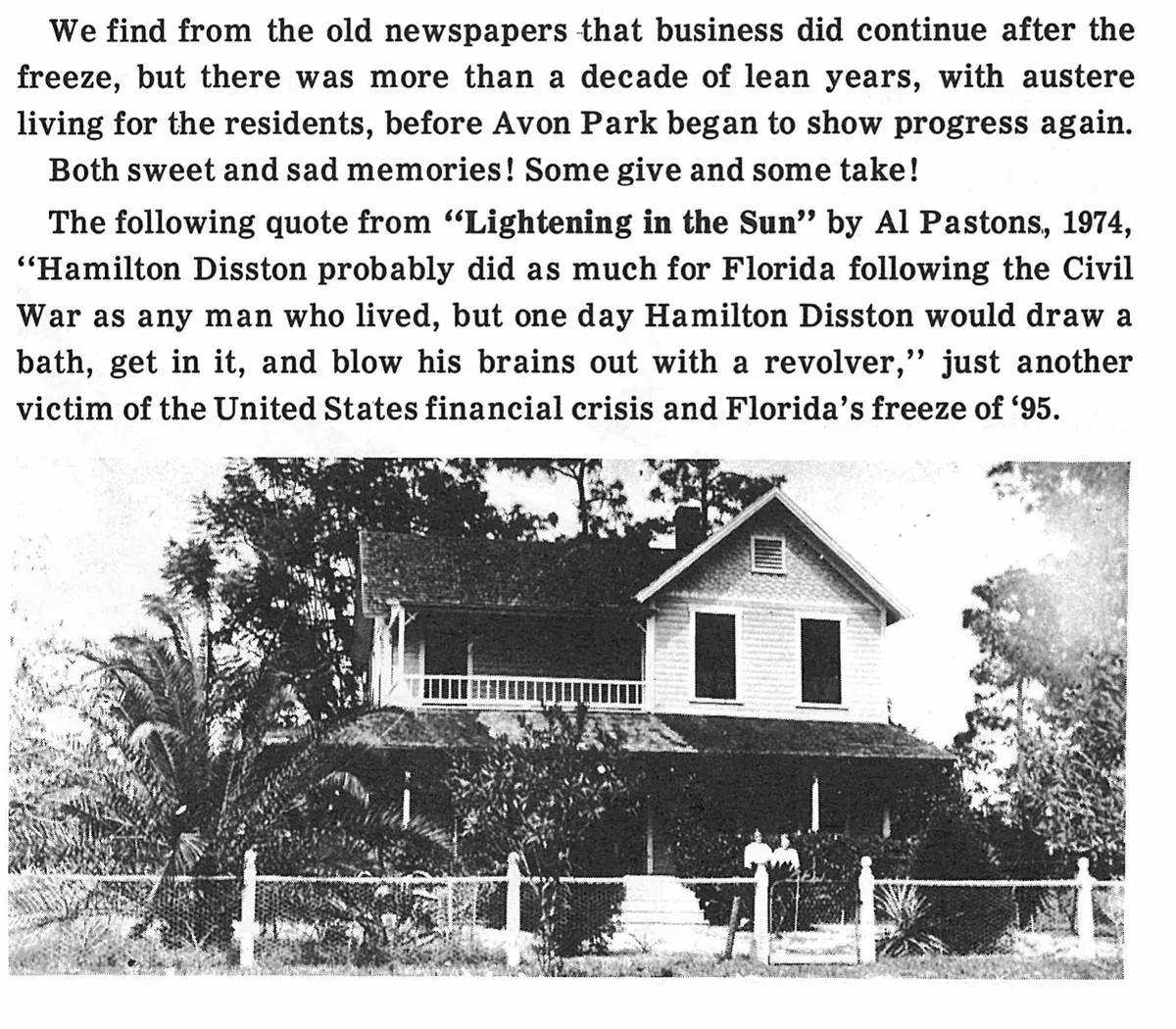
The First Hundred Years of Avon Park, Florida (1976), page 56. Avon Park Historical Society.[maxwell-1976]
CROSBY’S LIFE AFTER THE FREEZE
What a contrast! From a booming enterprise in 1894 to Crosby’s failure in 1896. Crosby says he left Avon Park with only $10 in his pocket, a broken man, physically and spiritually. He went to New York on a pass, where his friend, A. L. Blue, found him on the verge of pneumonia and carried him to his boarding house, which was his home for the next year or more. In July of 1896 he was able to secure steamship passage for his wife, Mrs. Emma Crosby, and their daughter Sarah, and he says for the next ten years he solicited life insurance among strangers in the heartless city.
Crosby explained the problems of clearing titles as being the result of the careless way the government’s surveyor, Penrose, had misplaced lines and made jagged corners in his original suveys.
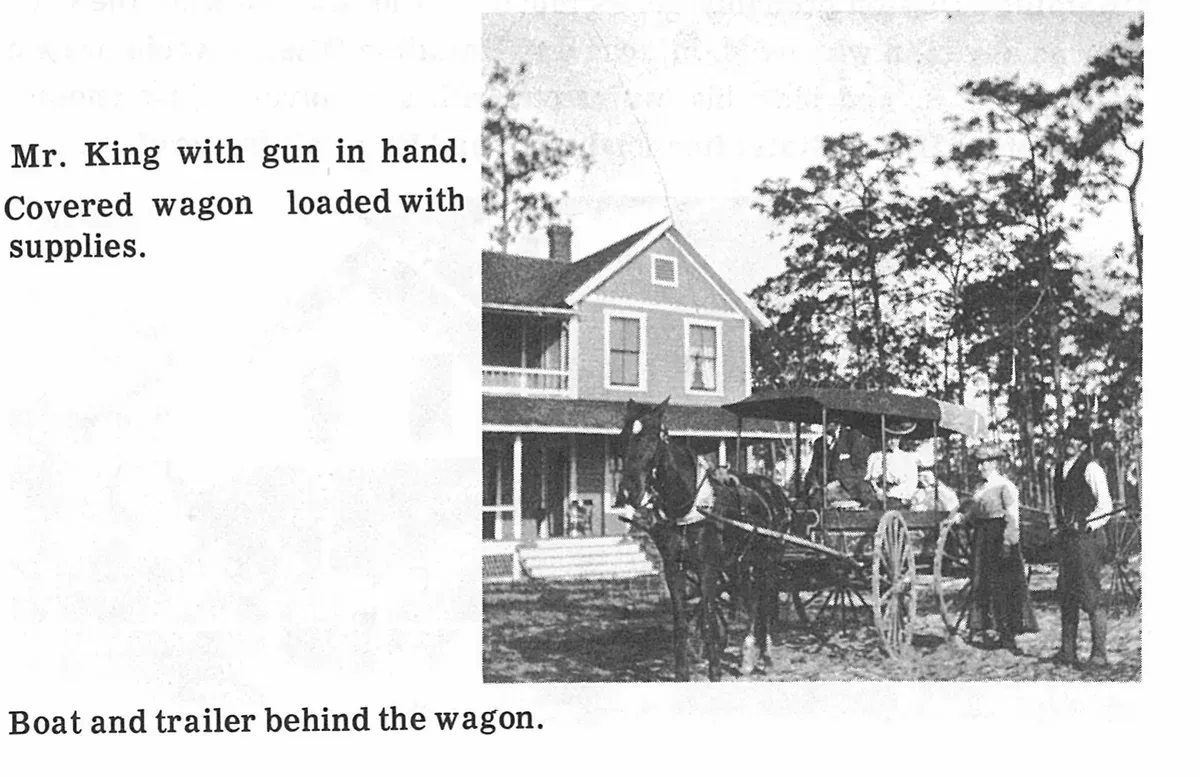
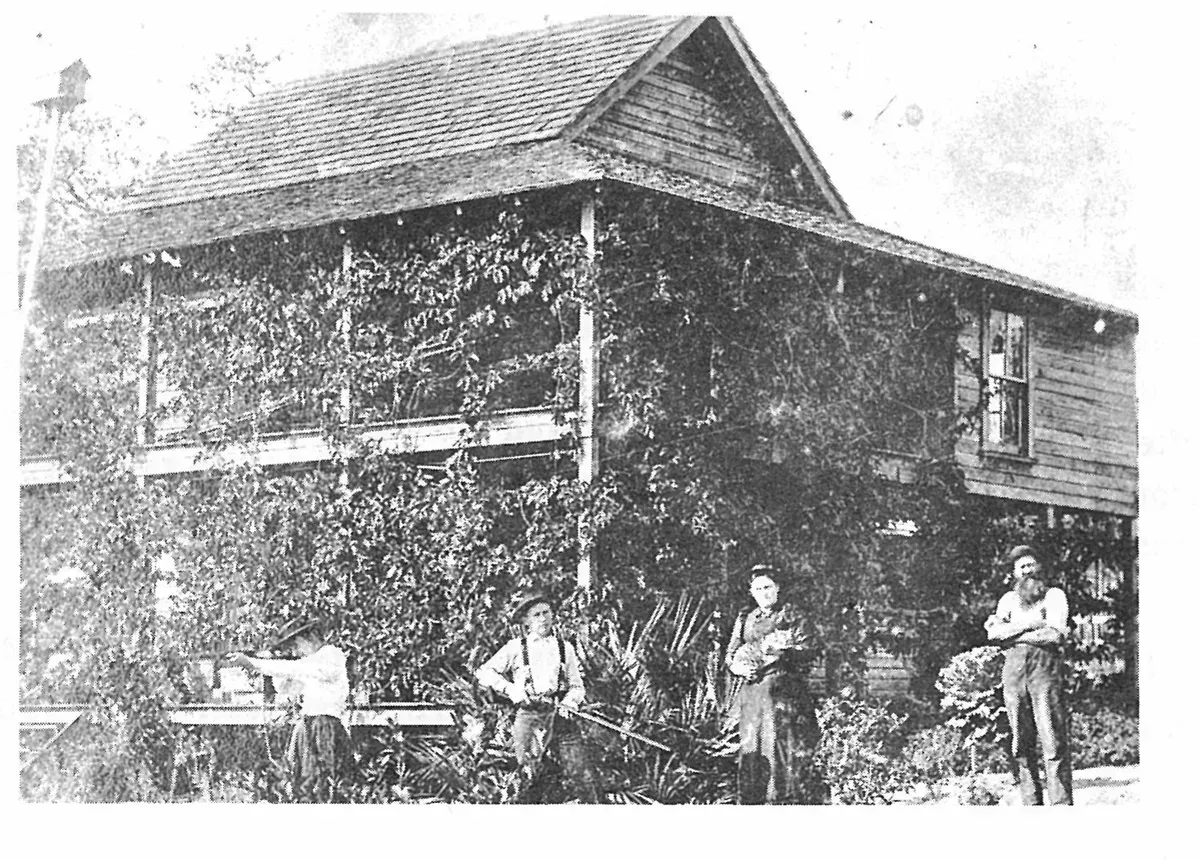
Mr. King with gun in hand. The First Hundred Years of Avon Park, Florida (1976), page 57. Avon Park Historical Society.[maxwell-1976] Covered wagon loaded with
supplies.
Boat and trailer behind the wagon.
When Mr. Crosby wrote his history of Avon Park for The Highlands Pilot newspaper in 1919, he was living with his daughter, Sarah, (Mrs. D.A. Findlay) of Pittsburgh, and her two children. Later in life he became a resident of a retirement home in Largo, Florida where he died in 1932.
According to his request, his body was brought to Avon Park for the funeral and burial in Bougainvillea Cemetery, a ten acre lot he had given to the Town of Avon Park when the original maps were made.
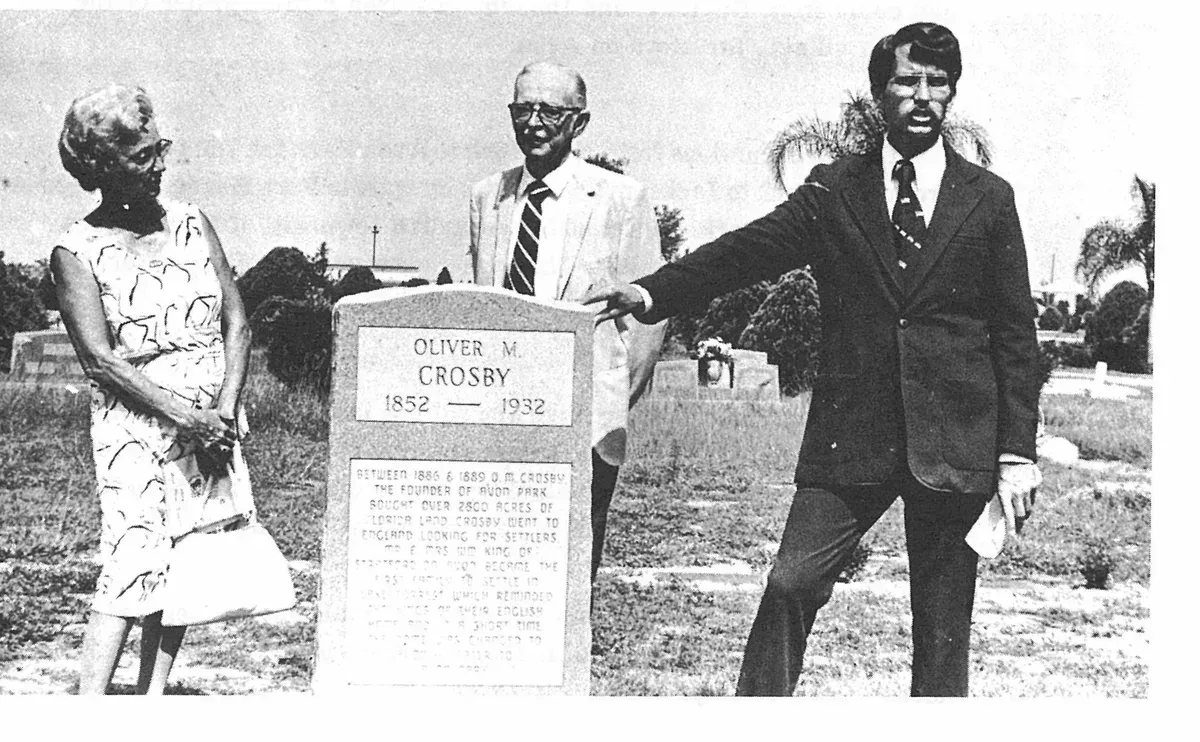
On July 4, 1976 The Bicentennial Committees of Avon Park erected an appropriate monument on Crosby’s grave, honoring his as the Founder of Avon Park. The stone was a gift to the Committee from The Hart Memorials, Sebring, Florida.
Shown in this picture is Mrs. T. H. Maxwell, Chairman of the Bicentennial Committee, the Rev. H. D. Graetz, President of the Historical Society of the Old Settlers Association and Howard Hart, representing the Hart Family, one of the earliest pioneer families of this area.
MONUMENT
The First Hundred Years of Avon Park, Florida (1976), page 58. Avon Park Historical Society.[maxwell-1976]
EARLY ADVERTISEMENTS of AVON PARK
Crosby first advertised his new settlement as Lake Forest in brochures and his book “Florida, Lake Forest and Avon Park,” and later in his newspaper The Florida Homeseeker. The following excerpts show some of the promotions that brought people to this area.
“Traveling through tall magnificient pine forests, arriving at clear lakes, well stocked with trout and bass, plenty of wild life and a climate unexcelled anywhere, such is Lake Forest.”
“Avon Park, 200 miles south of Jacksonville, 18 to 24 miles southeast of Fort Meade, which is on the Florida Southern Railroad, where we run stages to meet our prospective buyers.”
The name of Avon Park was suggested by Mrs. William A. King, who had come from England, and thought this area reminded her of the E English village, Stratford-on-Avon.
“Offering excursions from New York to Avon Park for $75. round trip. From New York to Jacksonville by ship, by train to Fort Meade and stage coach to Avon Park. A beautiful park-like township of 20,000 acres, within or touching on 25 lakes. They are the purest and softest water, free from swamps and malaria breeding shores.”
“The surrounding lands are high and rolling, insuring perfect drainage, good water and perfect health. Lands covered with yellow pine trees, 20 to 40 trees per acre, that are one and two feet in diameter and 50 to 80 feet high. Here is potential material for homes that will be built.”
“No frosts, no whiskey, no swamps, no malaria, no negroes, low prices for land, very easy installments. Northern progressive people. No idlers. Good society.”
Eventually the advertisements changed to report more attractions in a positive way, such as “good hotel with good northern cooks, refined intelligent northern people, pure water, good fishing, plenty of game and wild life for hunting,” with great emphasis made that no idlers were needed. The keystone to his plan for the community was to encourage only high-class lawabiding citizens.
“Evolution from the Pine Woods,” an article written by Crosby in 1895, after the freeze, gives a terse summary of the progress of his community, but does not tell of the hardships and privations endured by the founder, Crosby, Only he and those associated with him understand what pioneering meant.
He says ’well directed effort, accompanied by luck and courage, is invariably rewarded by success and it is a source of satisfaction to look back over the years of hard work and weary waiting and feel that we have accomplished in a great measure what we have sought and ever had in mind……the establishment of a ‘model community’ composed of northern people, in a climate unexcelled in the universe.”
It is clear from Crosby’s writings that he was no ordinary real estate agent. As President of the Florida Development Company and editor of The Florida Homeseeker, he says he had to rise hours before others in order to have time to answer 30 to 60 letters a day, to write hundreds of articles for publication, to listen to everyone’s problems and to answer hundreds of questions. All of this was to try to bring the right class of people to Avon Park, and also to raise at least $1,000 a week for expenses.
Crosby’s choice words for advertising seemed to catch the eye of the reader. “Avon Park, located amidst so many charming lakes, it may happily be termed ‘the zenith city of the un-salted seas of Florida.’ Keep your eye on Avon Park, you will see one of the most successful colonies in this wonderful State.”
Along with the alluring ads in The Florida Homeseeker, Crosby also stated very plainly the hardships of starting life in an un-inhabited land, and that this was no place for people who needed whiskey. He wrote often that refined northern people were being attracted by the wide and judicious advertisements for this new settlement.
Each new settlement in Florida was vieing for the Northern prospectors’ cash. Advertisements extolling the virtues of each locality were being sent out, such was a letter to H. A. Seaverns at Auburndale, Mass. from The Lemon Bay Company, Englewood, Florida, dated Aptril 1889, describing land in Lemon Bay.
“Land for $30 per acre, $10 down and $10 per month, no fevers, no malaria, free from mosquitoes and sand flies. Many advantages not found in the interior of the state. A great difference between this locality and Avon Park. Receiving 30 or 40 letters a day from people who want land. Not expecting to have any lots left within the next 30 days. Reply immediately with a downpayment.” Letter signed, The Lemon Bay Co.
We do not know what caused Mr. Seaverns to make the decision to buy in Avon Park instead of Lemon Bay, but he did, and he became one of the most influential citizens here. He was elected the first Mayor of Avon Park in 1913.
It was competitive advertisements that caused Fort Meade prospectors to dub The Florida Homeseeker newspaper as “The Homesucker.” Even though Fort Meade prospered from the commerce of the new town of Avon Park, from all of the people who had to travel to Fort Meade by train and stay overnight en route to Avon Park, a considerable enmity developed. Prospectors tried hard to persuade those who had to stop over to go no further, that the sand hills of Florida had nothing to offer and it would be impossible to make a living on the poor land.
But one of those who made these warnings, in all honesty might be answered by one of their own, known as Bill Kendrick, a remarkably successful land seller, who came from the neighborhood of Brooksville, He replied to a complaint that a certain tract of land was poor, “Good heavens, man! I’m not selling you the land, I’m selling climate, and that is worth $100 an acre and I ask you only $10.
As a member of the Florida Press Association, Mr. Crosby was invited to the opening of the World’s Fair in Chicago in 1893. When he and Mrs. Crosby arrived they found the Florida building bare. He quickly wrote to Avon Park to send him palmetto leaves, tree moss, fruit, and anything that he could exhibit or give away.
He ordered 20,000 copies of The Florida Homeseeker printed and shipped, and he and Mrs. Crosby stayed all summer and advertised Avon Park. It was at the Chicago Fair that he met the Rev. and Mrs. F. D. Rood who came to Avon Park shortly thereafter. Rev. Rood became the first pastor of the new Union Evangelical Church and both he and Mrs. Rood taught school for a number of years.
En route to Chicago, Crosby says he and Mrs. Crosby stopped over in Tallahassee and visited the Legislature which was in session.
HERBERT A. SEAVERNS
Herbert A. Seaverns visited this area in 1883 and again in 1888 and purchased 10 acres, returned to Massachusetts and did not appear again until the close of the ’90’s, at which time he moved his entire belongings and family here. He operated a brick and lime business and cleared and planted groves. He also purchased a number of cottages in town which he improved and re-sold.
The earliest records of the Town of Avon Park show that Mr. Seaverns was elected Mayor in 1913 and served two years. However, The Avon Park Idea, published in 1898 shows that Clark D. Knapp and E. L. Richardson each were Mayors, serving during the early development of this settlement in 1897 and 1898.
Mr. Seaverns told his friends of his first trip into Florida when he rode a car that was pulled by a mule on a wooden track from Lakeland to Bartow, and by ox-cart into this area. He said cowboys at Fort Meade were wild and would as soon shoot a Yankee as a rattlesnake. All cooking was done outside over an open fire.
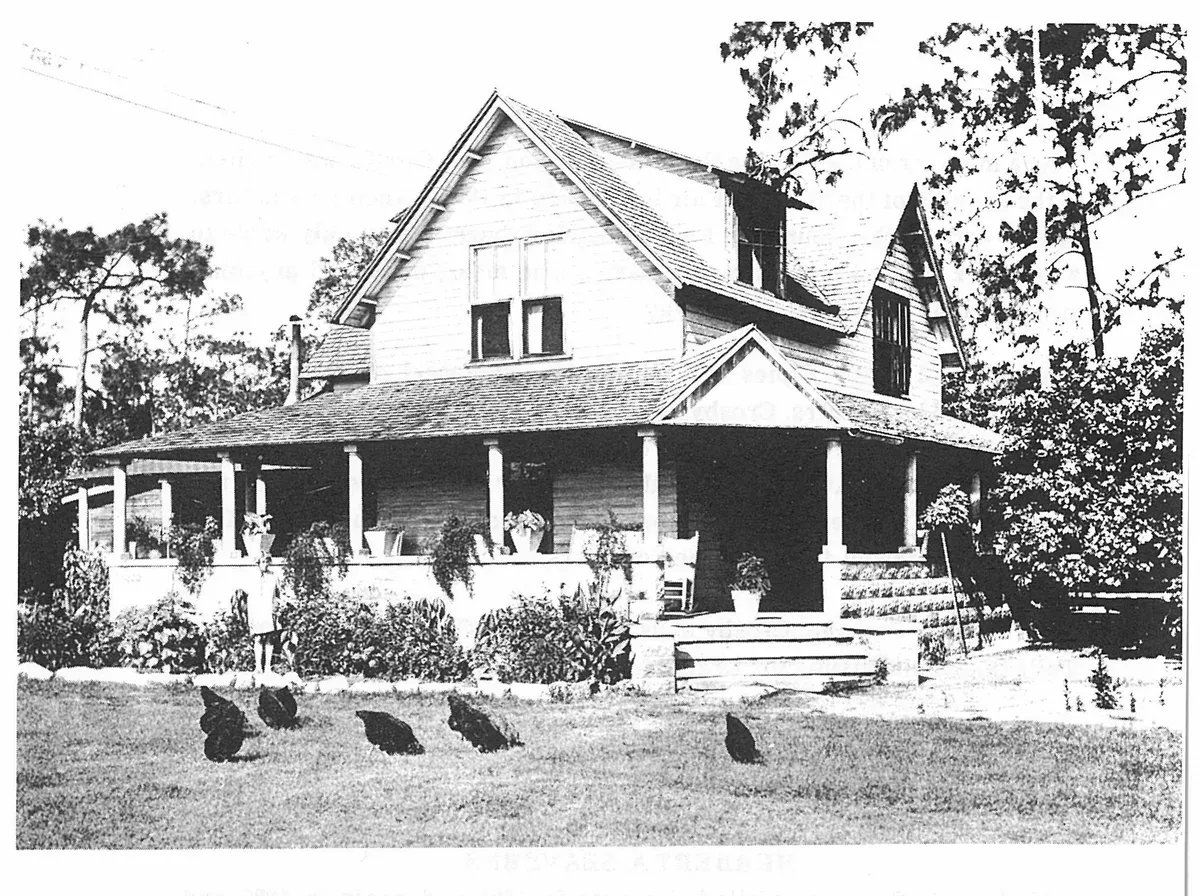
The First Hundred Years of Avon Park, Florida (1976), page 63. Avon Park Historical Society.[maxwell-1976]
DILLEY FAMILY
Mr. and Mrs. Harry Dilley came from Michigan in 1905 with their children, Lillian (who later became Mrs. John Hood), Raymond who married Miss Thelma Clark and Milford, who married Miss Bertha Lockett.
Mr. Dilley built a large two-story home on what is now Michigan Avenue. When the Seaboard Railroad came through, this house had to be moved to make room for the right-O-way. It was moved to the corner of North Central Avenue and West Pleasant Street and was probably the first large building in Avon Park to be moved from its original location.
The Dilley family had come south because doctors had told them that their young son, Raymond, would not live unless he got to a warmer climate. He had a heart condition, developed dropsy, and doctors had no treatment to offer for his recovery.
Dr. Mary McCartney, who had no license to practice medicine, but used an electric shock therapy, had gained wide recognition for her treatments. She used a bettery powered set, which her neice, Mrs. Ruth Preshur recalled in later years how she would carry the heavy set for her aunt, although she was only a small girl.
The Dilleys brought Raymond to her as a last resort to save his life. Other doctors had refused to tap him to relieve the fluid, but Dr. Mary said the only hope was to get rid of the accumulation of fluid, so she proceeded and afterwards gave him shock treatments for his heart, which were continued for several years, and he grew into healthy manhood. With her good care during his childhood, Raymond celebrated his 77th birthday in 1979.
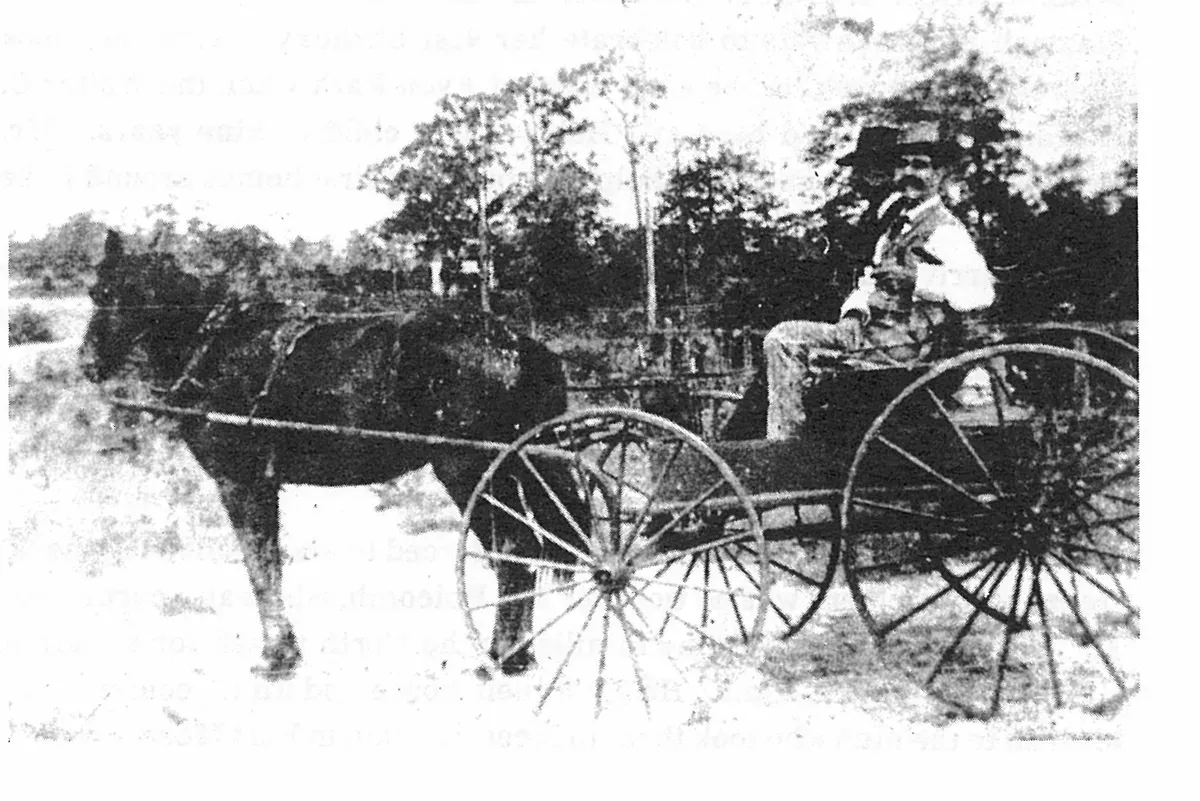
The First Hundred Years of Avon Park, Florida (1976), page 64. Avon Park Historical Society.[maxwell-1976]
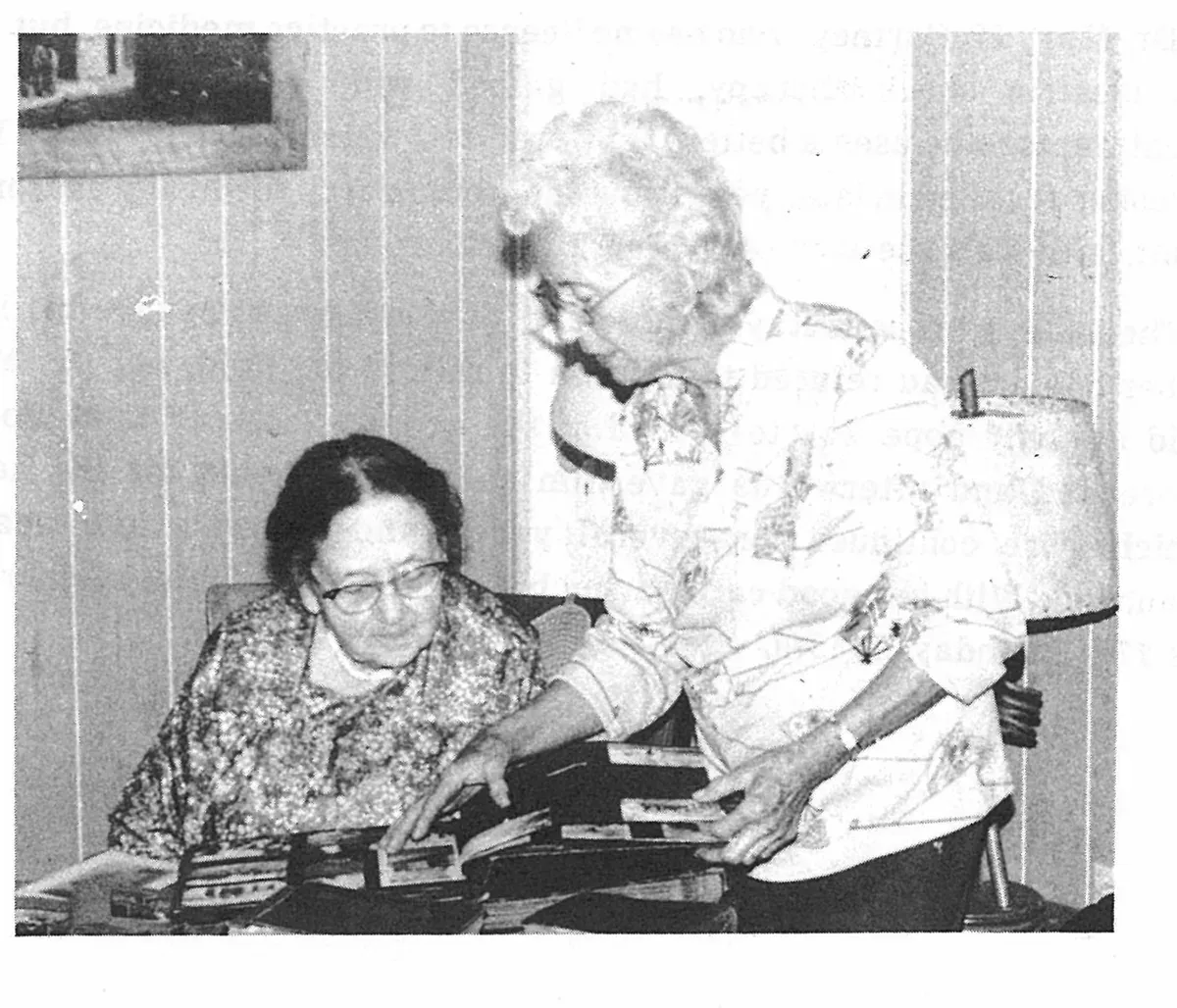
The First Hundred Years of Avon Park, Florida (1976), page 65. Avon Park Historical Society.[maxwell-1976] MRS. HELEN HOLCOMB PRIOR of Cavendish, Vt. visited Mrs. Maxwell in March 1979 to celebrate her 91st birthday. Here they look over old photographs of the early days of Avon Park when the Walter C. Holcomb family lived here and Helen was a child of nine years. Mr. Holcomb was a carpenter and helped to build the first homes around Lake Lotela.
Upon arrival in the summer of 1893, the Holcomb family lived at the Verona Hotel until their tent was erected where they lived for several months until their house was built. The tent was located near where the Florida Power Plant now stands on Lake Lotela. Their home was on the south side of the lake beyond the point, about where the stream of water run between Lake Lotela and Alligator Lake.
The family was among those who were forced to leave following the ’95 freeze because there was no work for Mr. Holcomb, who was a carpenter. Mr. Holcomb had to write the families in the North to ask for money to pay for train tickets home. He gave their house and all its contents and his land to the man who took them to meet the train in Fort Meade.
Helen recalls that their years in Avon Park were lean times. Her family lived on fish and wild meat, often the land turtles (gophers), and she said her mother always made good gravy to stretch the meat. The girls called the gravy Loly-ka-dop.
They walked more than two miles through the scrub and palmettos to attend school at the school house that burned. She remembers hearing her father say that Squire Budd had left town just in time to avoid being lynched, but at that time did not know he was the one who had set the school house. (Squire Budd had deliberately burned the school house in one of his drunken rages.)
Mrs. Prior seemed surprised that anyone would have ever though that Mr. Crosby was dishonest. She said her father always spoke of him with the highest respect.
She remembers people who lived near them on the lake and they too were in destitute circumstances following the freeze, and they decided the would just walk out into the lake and drown themselves. So one Sunday afternoon they dressed themselves and walked out into the water. As they got out deeper they turned around and came out, saying “It was too cold.”
burning of the school house
Mr. Crosby says “A family of Budds—father, mother, (nice people) with three grown sons, had come from Wisconsin and selected four ten acre tracts west of Lake Tulane which they wished to pay for in labor. An agreement was made with them to clear and plant groves and cultivate, but Mr. King complained to Crosby that the boys were loafing on the job. Mr. King told the Budd brothers they would have to work as faithfully as did others. They got angry and quit, and began to plot to get even with King and Crosby. ’Mr. Crosby began to get ugly and threatening letters to burn the school house, the Verona hotel, the church, and even his home.
Squire Budd smuggled in liquor and when he got drunk he was a vicious mean man. He did burn the school house, but Mr. King confronted him in a public gathering, telling him that following the next burning there would be an “expeditious” hanging. The Budd boys left town, but did return in later years and begged forgiveness and were given work to do.
PABOR
William E. Pabor came from Denver, Col. November 15, 1892. His first trip had been in 1890. Afterwards he visited California before returning to Florida.
He developed Pabor Lake Colony and established a U.S. Post office in 1892. He published a newspaper The Lake Pabor Pineapple for about three years, promoting the sale of land, and he also published The Pineapple Gazette until 1910.
Mr. Pabor was a poet of renown. His poem “A Drop of Ink” was written in 1893 for the Florida Press Association and the National Editoral Association meeting in Chicago. He was the poet laureate for the Editorial Association from 1886 until his death. He also contributed works to the New York Tribune.
His real estate ventures were less than successful, but his friends said he should have “stuck to his writing.”
His sons were, William Edgar and Charles W.
C.P. Pabor was an architect and the present City Hall was one of the buildings he constructed in Avon Park.
Mrs. Anne Pabor Cason, wife of Dr. Billy Cason of Sebring, is the only relative living in this area.
Selected lines from “A DROP OF INK”, written in 15 verses.
A drop of ink on an editor’s pen Will reach the hearts of his fellowmen; Because - the Editor’s drop of ink Is the drop that will make millions think.
CORA GRAY WRAY
November 3, 1903 Fred J. Gray and his son, Harry Gray and his daughter, Cora, came from Perry, N.Y. They took the train to New York and from there a steam ship to Jacksonville, Florida. Again by train to Zolfo Springs where they were loaded into a covered wagon for the all day trip to Avon Park over a trail that was covered with pine needles.
The temperature was in the nineties and late in the afternoon they stopped in a shady place to eat a lunch. Sitting on a log, they all began to itch, and found that they were covered with red bugs “chiggers”. Miss Gray said, “If it wasn’t so near night we would turn around and go right back to New York.”
Cora married Fred Elmore (Mutt) Wray who had come from Rochester, N.Y. in 1889.
Their home was located under 14 oak trees in the section of the Mall between what is now the Jacaranda Hotel and the Rich’s Hardware store. The house was purchased by the city when the street was widened in 1924. The house later was used for city business office and later it was
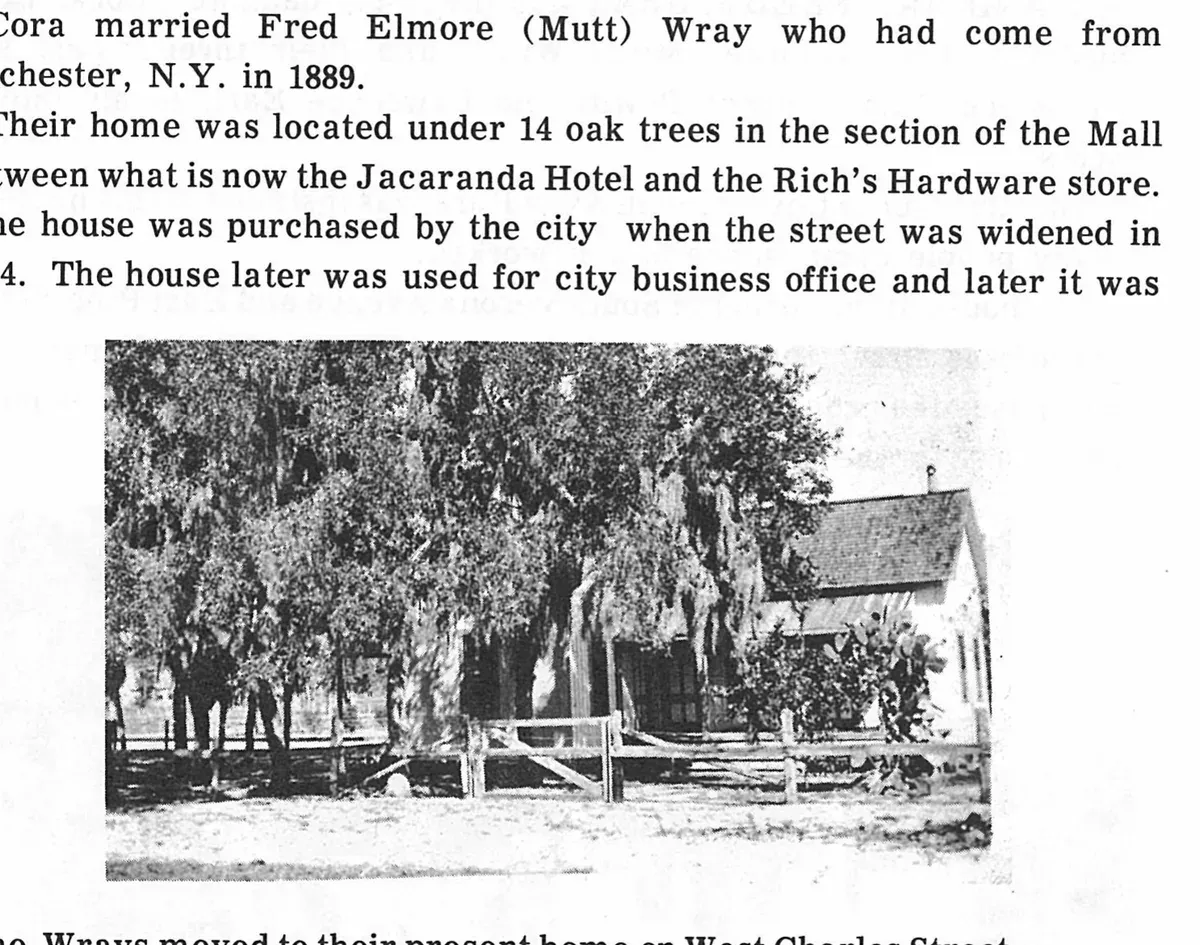
The Wrays moved to their present home on West Charles Street. The First Hundred Years of Avon Park, Florida (1976), page 68. Avon Park Historical Society.[maxwell-1976]
Their children are Frederck Ellis, Vincent DeWitt, Lawrence Earl, Howard, PFC, US Army and Mildred, who is Mrs. Frank Waddell.
CORA WRAY was the noted historian of Avon Park and kept a wide correspondence with friends and acquaintances in other states, mostly old timers and the military people who were stationed her during the War days.
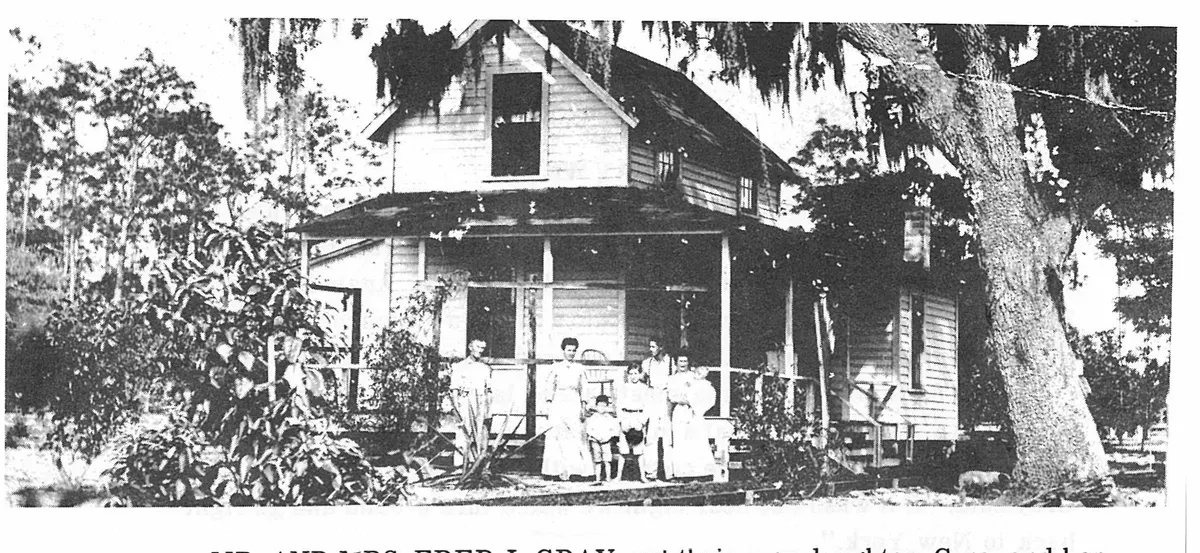
MR. AND MRS. FRED J. GRAY and their only daughter, Cora, and her husband, Fred Elmore (Mutt) Wray, and their three oldest sons,, Frederick Ellis, Vincent Dewitt and Lawrence Earl, in his mother’s arms. The First Hundred Years of Avon Park, Florida (1976), page 69. Avon Park Historical Society.[maxwell-1976]
The first indoor flush toilet in Avon Park was installed in this home, and many people came to see how it worked.
The house at the corner of South Verona Avenue and East Pine Street is one of the first that was built in Avon Park. The Woman’s Club purchased the property in 1935 and renovated the house which is now the club house for the Woman’s Club of Avon Park.
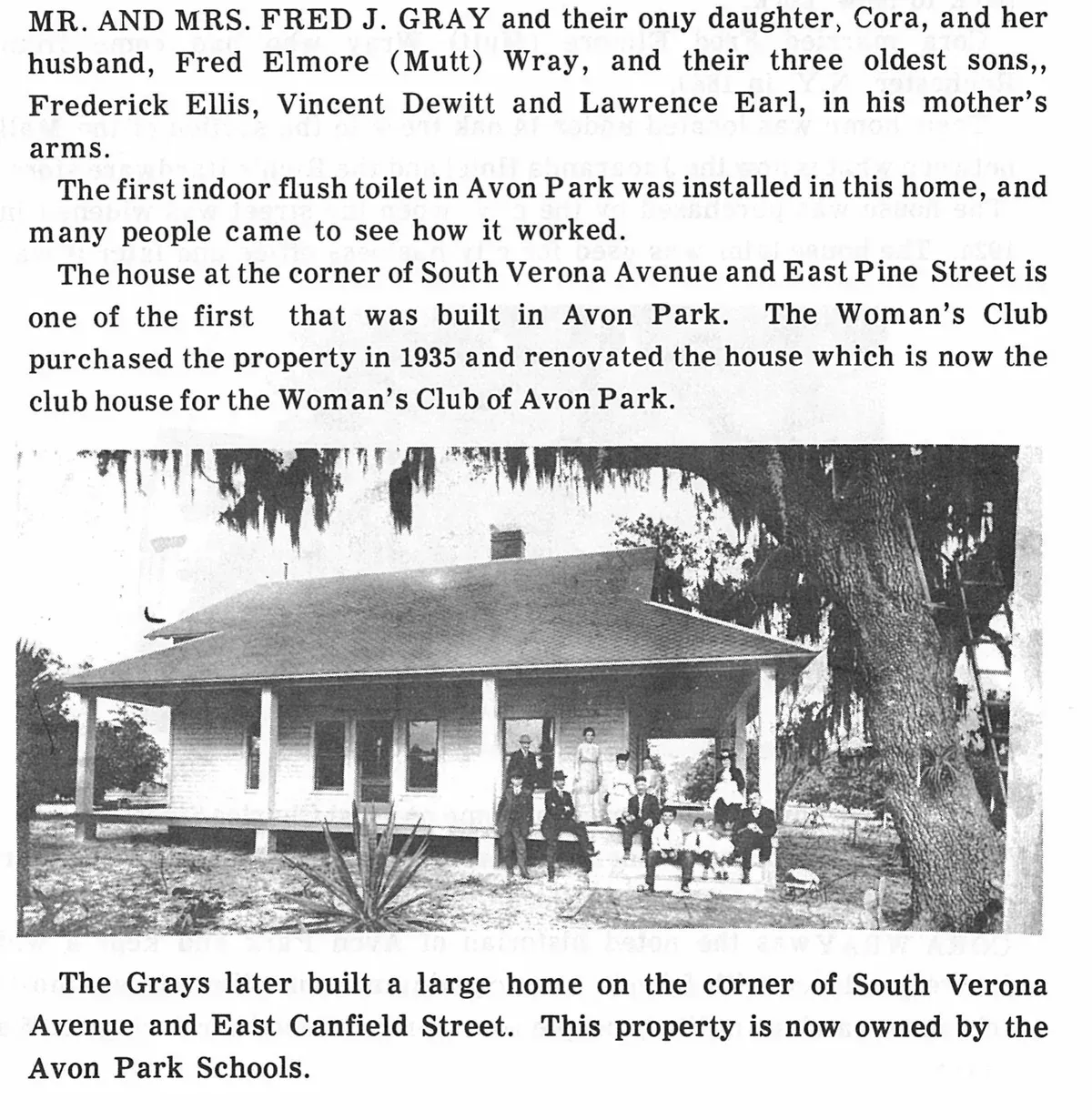
The Grays later built a large home on the corner of South Verona Avenue and East Canfield Street. This property is now owned by the Avon Park Schools. The First Hundred Years of Avon Park, Florida (1976), page 69. Avon Park Historical Society.[maxwell-1976]
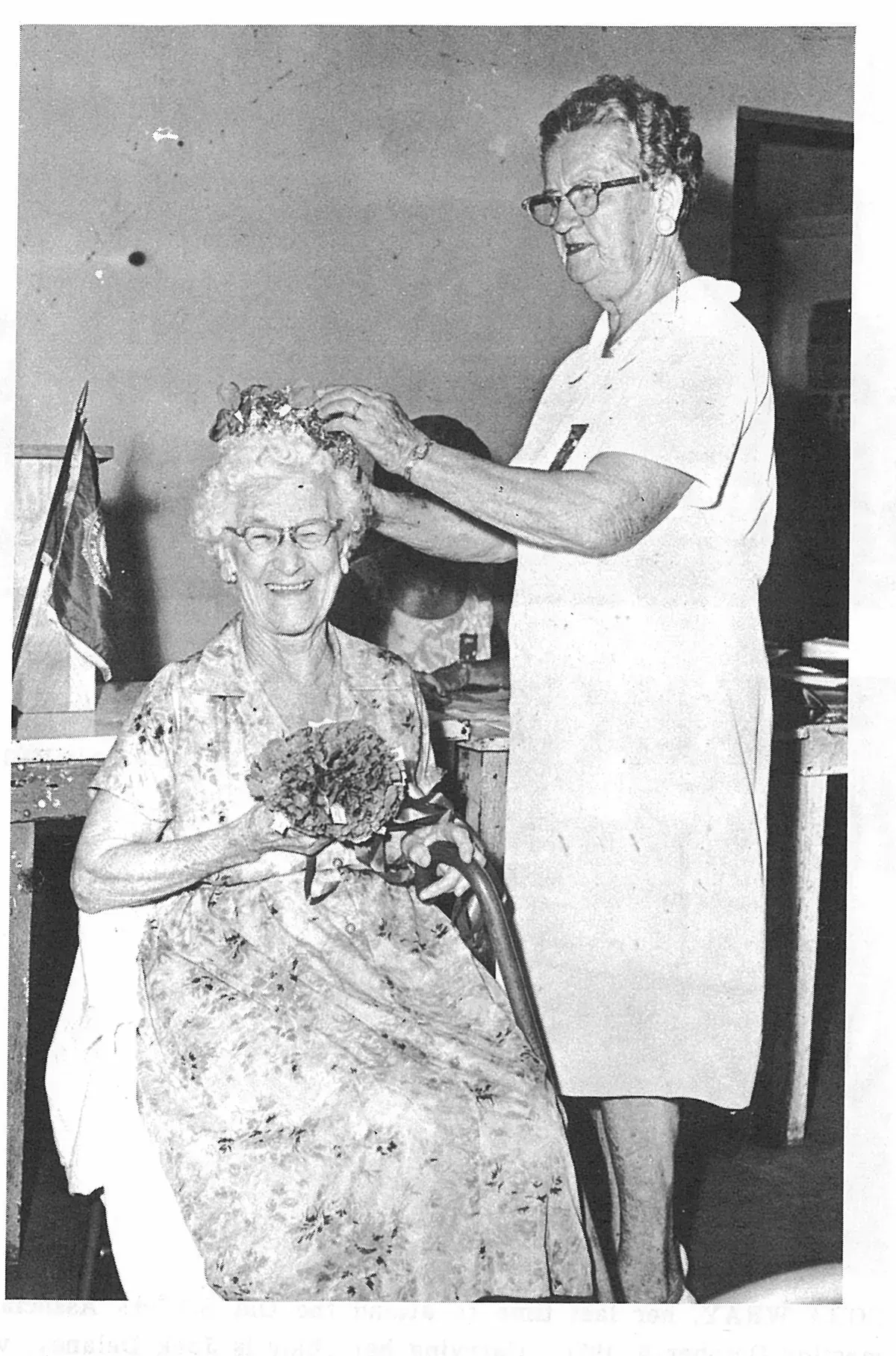
CORA WRAY crowned “Mother of the Year” and “Queen of the American Legion Auxiliary” by Rena Smith. The First Hundred Years of Avon Park, Florida (1976), page 70. Avon Park Historical Society.[maxwell-1976]
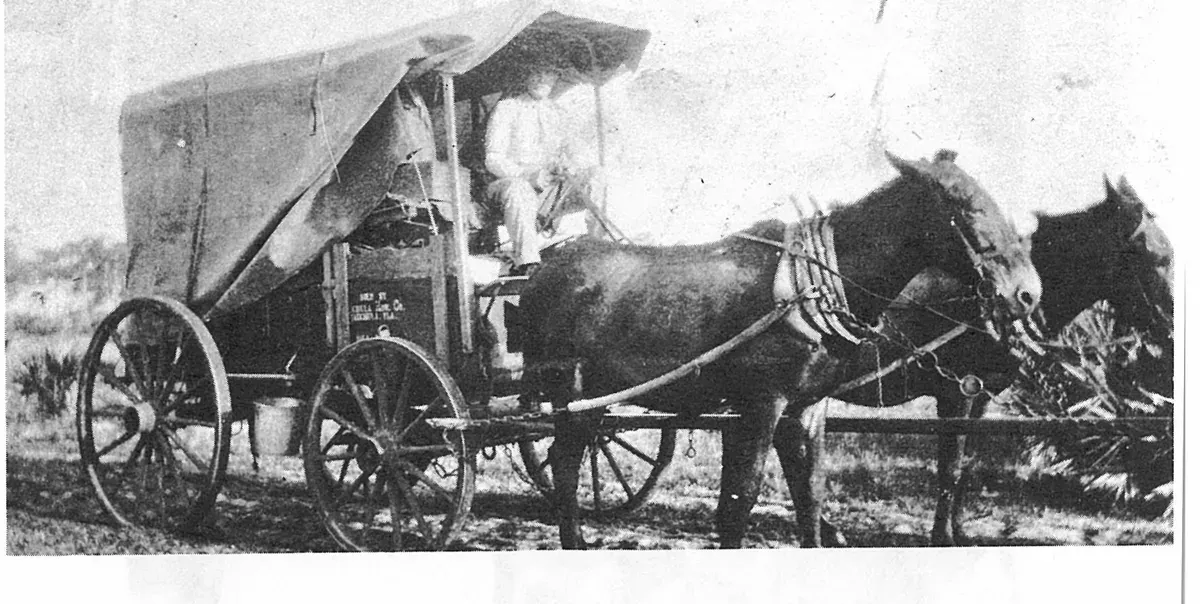
The way we came in 1903. The First Hundred Years of Avon Park, Florida (1976), page 71. Avon Park Historical Society.[maxwell-1976]
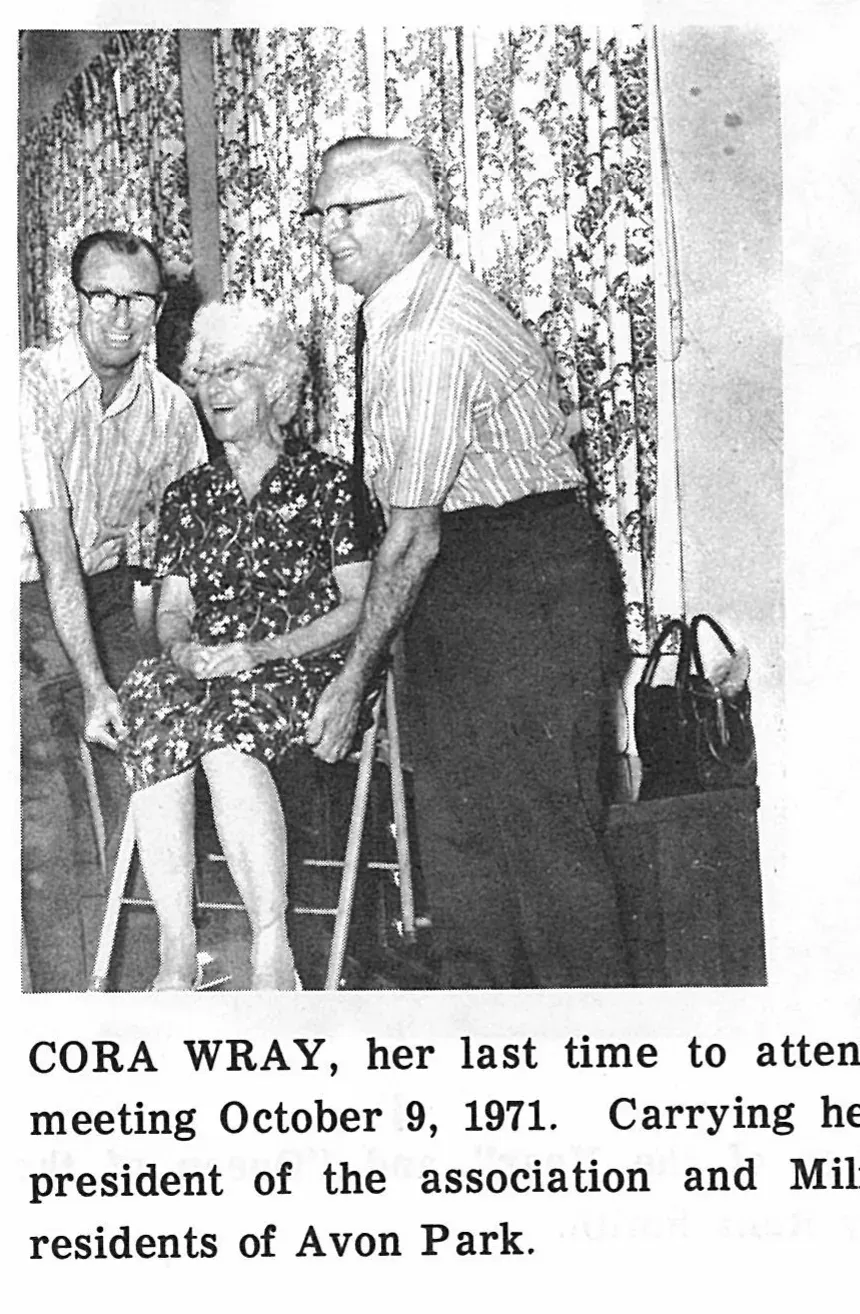
CORA WRAY, her last time to attend the Old Settlers Association meeting October 9, 1971. Carrying her chair is Jack Delaney, vice-president of the association and Milford Dilley, both are lifetime residents of Avon Park. The First Hundred Years of Avon Park, Florida (1976), page 71. Avon Park Historical Society.[maxwell-1976]
SAWMILLS, LUMBER COMPANIES and CRATE MILLS
Crosby refers to a “cracker sawmill outfit” that he secured to cut 200,000 feet of lumber from standing timbers for the building of his Verona Hotel. Because the mill stayed broken down so much of the time he advertised in a New York paper for a sawmill outfit and men to go to Florida. Six men applied and asked for transportation to Fort Meade which Crosby paid. But when they reached Fort Meade they were met by some of the “Avon Park Enemies” who advised them to go no further, that it was all swampland, so they did not come and Crosby lost his money, which he said was an “incident of profit and loss, mostly loss.”
J. C. Burleigh who came to Florida in 1890 and had a sawmill in Frostproof area, moved his operation to Avon Park near Lake Thompson, (now Lake Brentwood.)) In addition to his sawmill Burleigh operated a mercantile store in a building at the corner of Waycross Street and Lakeview, (siteof the old Poinsettia Hotel.) It was from this site that the first train which was run on a wooden track, began its run out to Burleigh’s sawmill. This train was to replace the ox-carts that had been used to move the logs and lumber to and from the sawmill, but this train didn’t last long, for lack of payments on the engine. It was said that Burleigh sawed every tree within his reach with no regard as to who owned the land. His sawmill continued operation until about 1910.
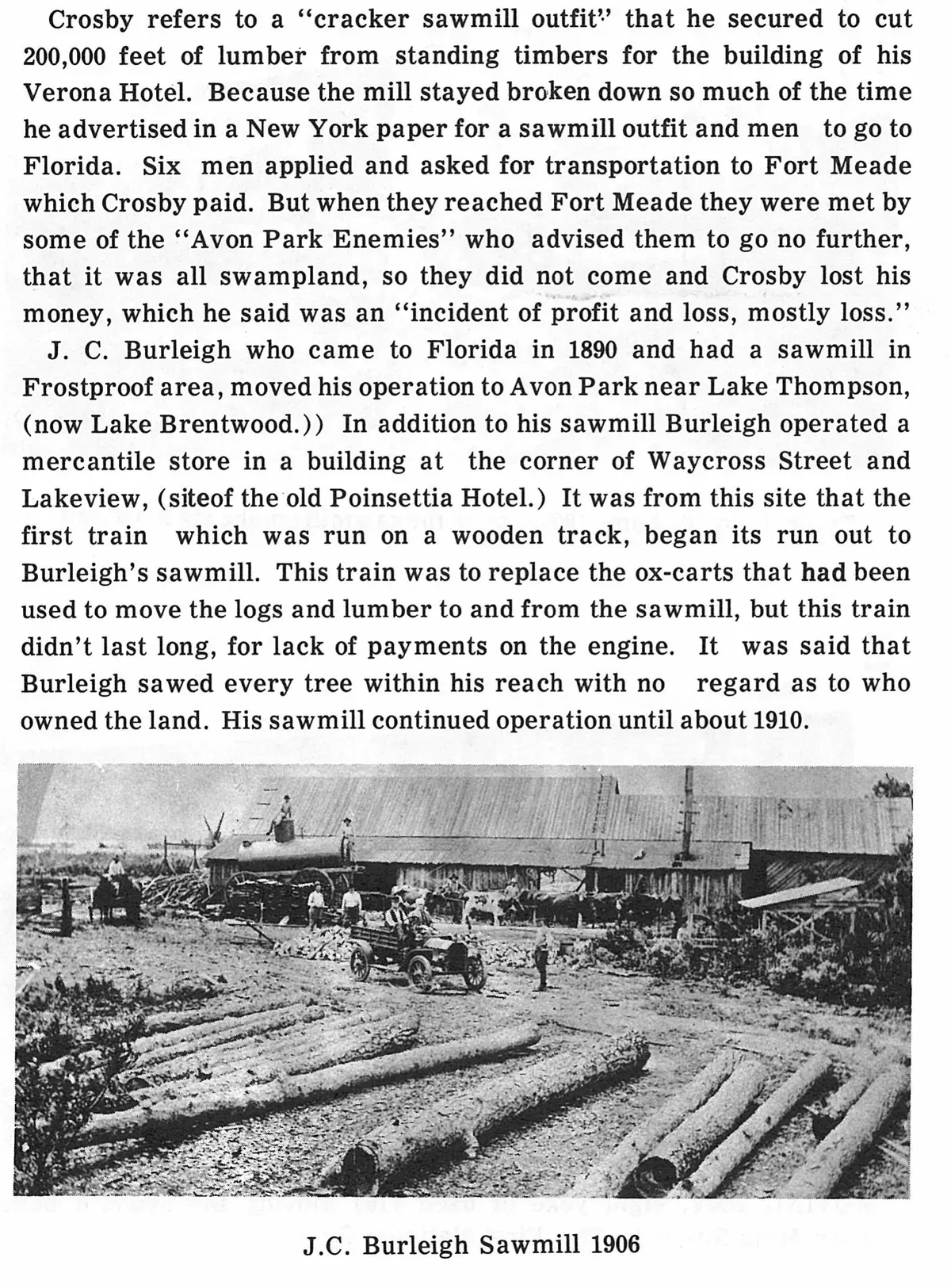
J.C. Burleigh Sawmill 1906. The First Hundred Years of Avon Park, Florida (1976), page 72. Avon Park Historical Society.[maxwell-1976]
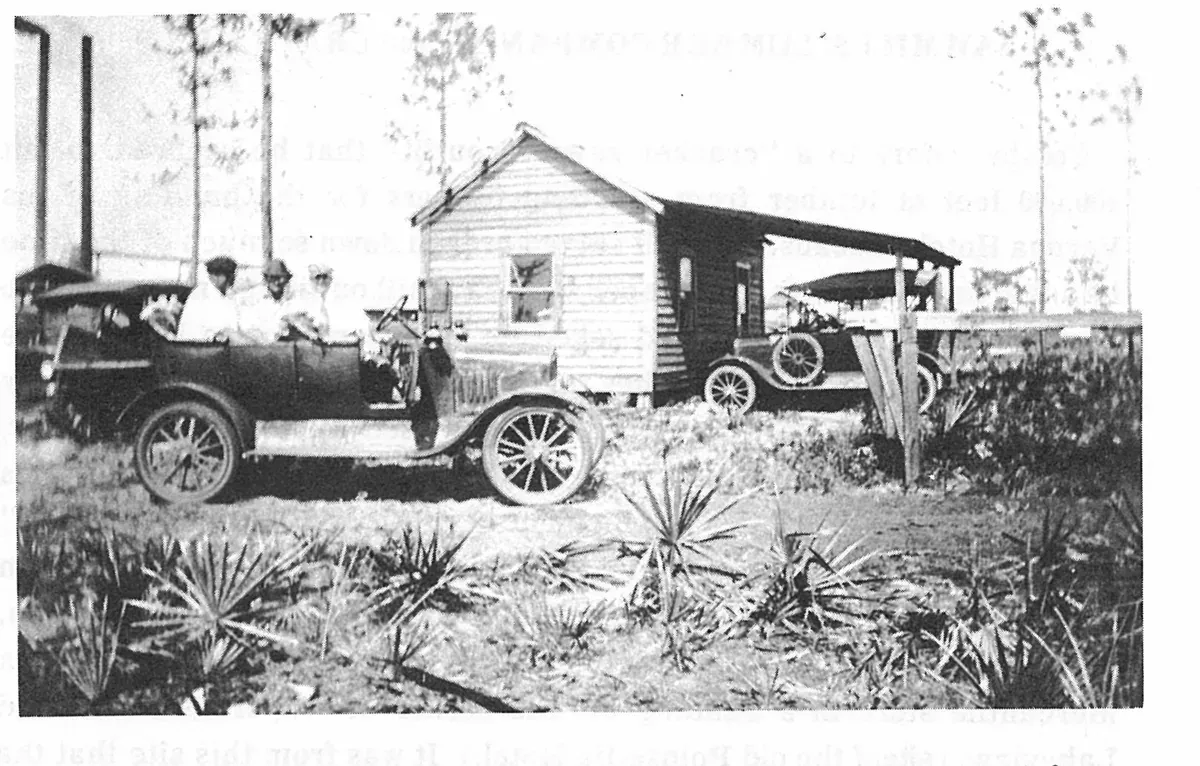
Typical Florida home 1909, notice the sawmill smoke stacks at left. The First Hundred Years of Avon Park, Florida (1976), page 73. Avon Park Historical Society.[maxwell-1976]
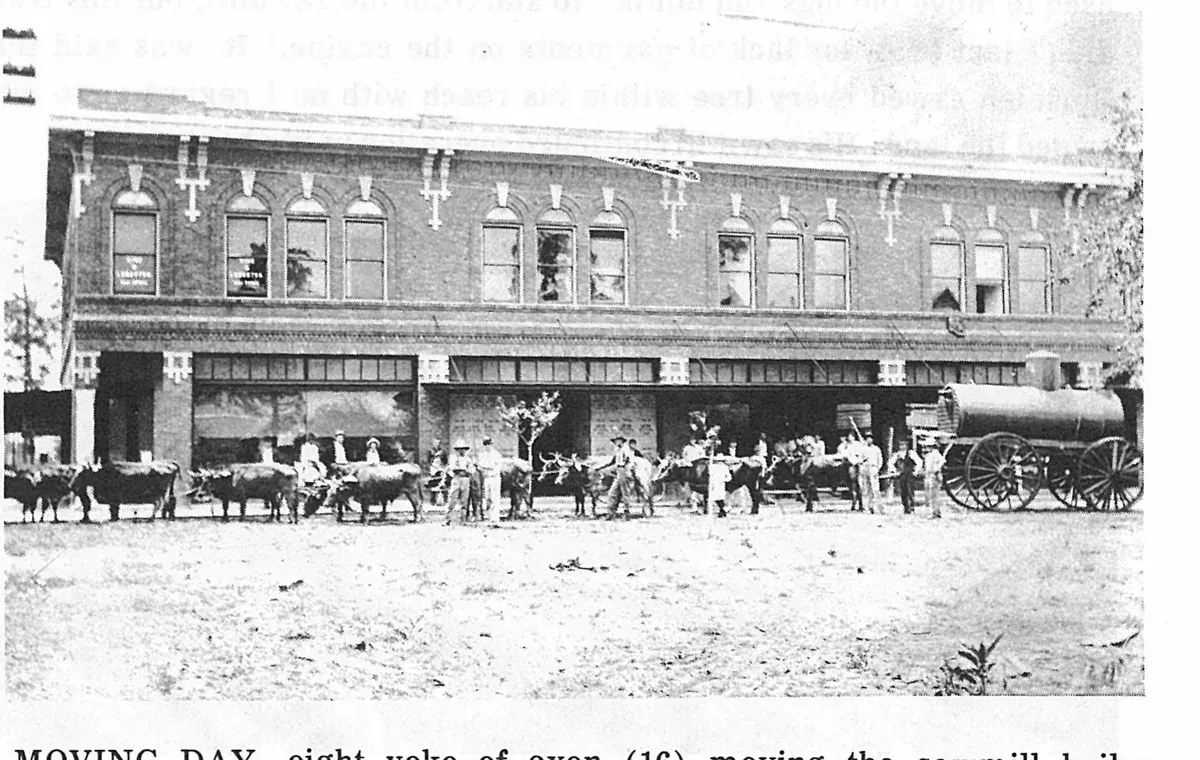
MOVING DAY, eight yoke of oxen (16) moving the sawmill boiler down Main Street by The First National Bank. The First Hundred Years of Avon Park, Florida (1976), page 73. Avon Park Historical Society.[maxwell-1976]
..THE REVELS CRATE COMPANY is today located in Avon Park and makes wire bound boxes that are used for packing and shipping produce. They employ approximately 100 people. Workers make as much in one hour today as they did in one week during the early days of the crate mill.
Canfield Lumber yard was on the north side of A.C.L. railroad.
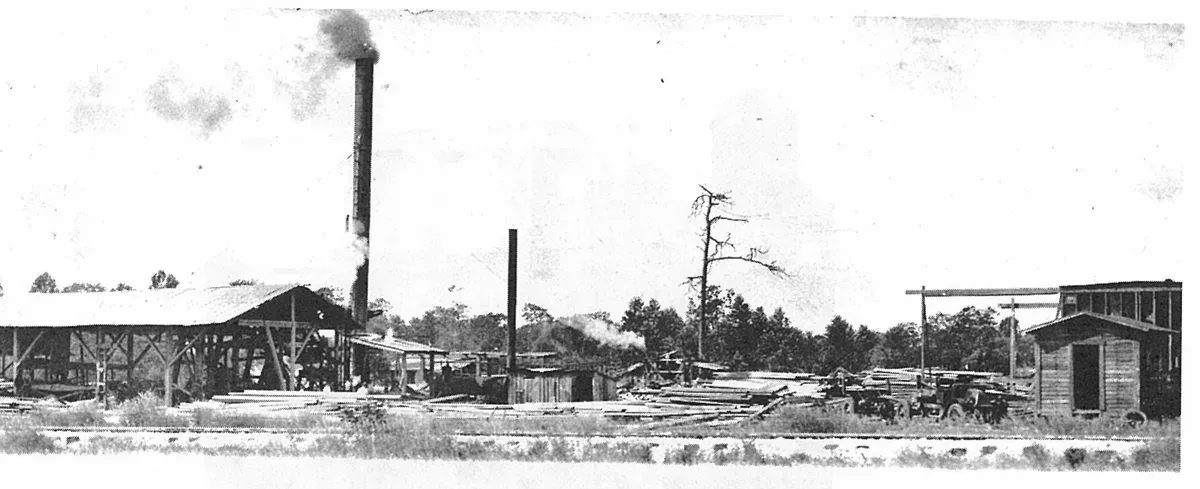
The C. R. Ginn Lumber Company was located south of LaGrande Street between the Atlantic Coast Line Railroad and the Seabord Air Line Railroad right-of-way. Ginn furnished much of the lumber for the first buildings on Main Street. The First Hundred Years of Avon Park, Florida (1976), page 74. Avon Park Historical Society.[maxwell-1976]
THE BIG INDIAN LUMBER COMPANY was owned and operated by Mel Smith. He had small sawmills located in the woods where he cut the timbers and hauled the logs to the crate mills. The tram track or switch line was met by a Seaboard engine that brought the log cars into the mill. Veneering the logs to get the box materials was a process within itself. After the logs were veneered to the hard heart of the log, then these smooth round logs were used in the construction of a number of houses around town, or burned for lighter pine wood. Three of these log houses still standing are owned by Anna Mae Taylor, C. B. Jones and Maxwell.
As the citrus industry changed to packing fruit in cardboard boxes, the crate mills were forced to close. E. A. Delaney and J. B. Martin moved with the company to Jacksonville and later returned to Avon Park.
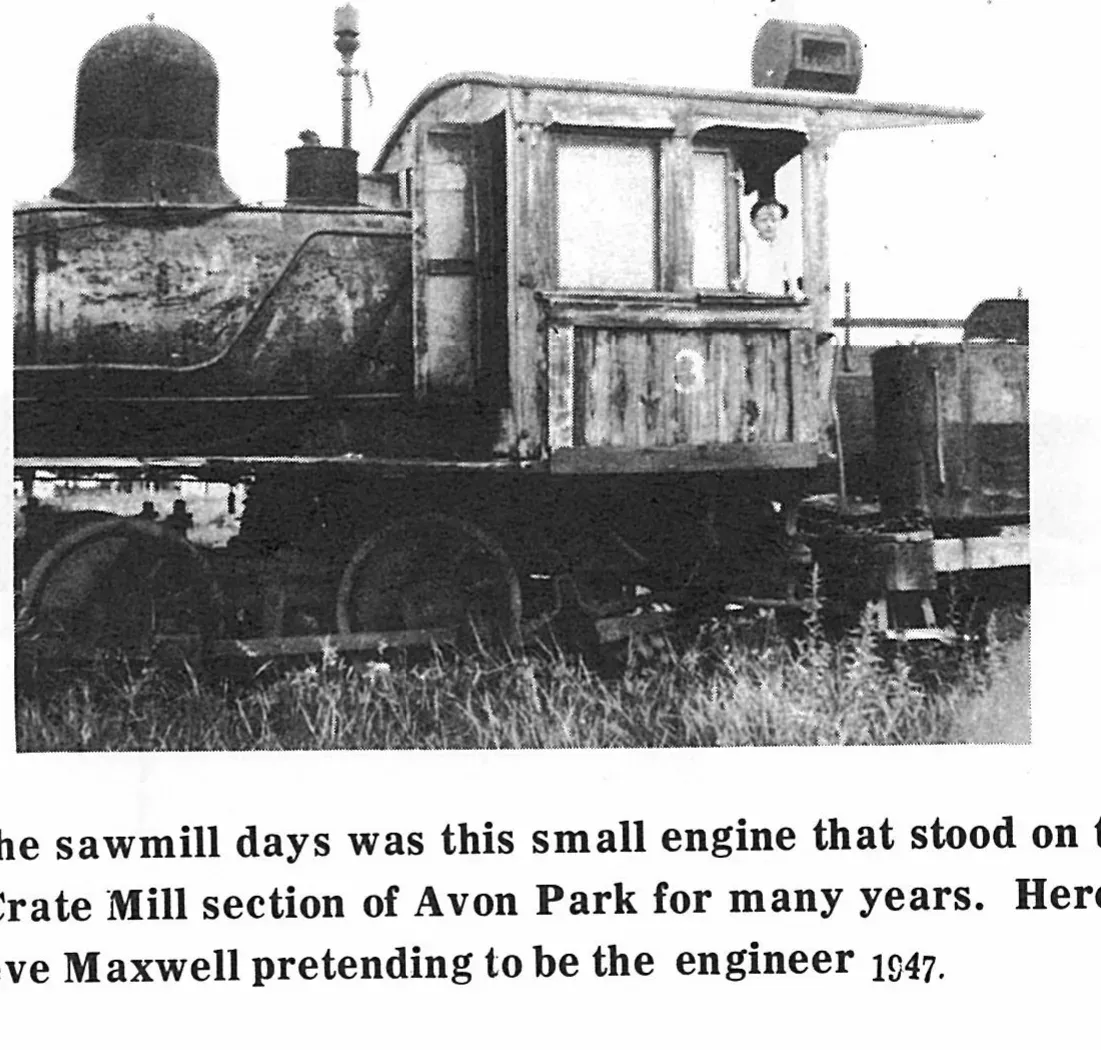
A Relic of the sawmill days was this small engine that stood on the spur line in the Crate Mill section of Avon Park for many years. Here is three year old Steve Maxwell pretending to be the engineer 1947. The First Hundred Years of Avon Park, Florida (1976), page 75. Avon Park Historical Society.[maxwell-1976]
THE HIGHLANDS CRATE MILL was operated by A. J. Caldwell and O. R. Perry. The company commissary hauled groceries once a week from Fort Meade.
THE MUTUAL CRATE COMPANY was operated by E. E. DeLaney, A. V. Anderson, S. E. Booth and Neal Trent. This company folded and Charlie Clements, Mel Smith and S. Y. Young bought out the defunct company and operated it as the Avon Manufacturing Company.
THE HIGHLANDS CRATE CO-OP and The Ridge Crate Company were names appearing in the crate making business of the Twenties and Thirties.
The Highlands Crate operated as number One and number Two where they made wooden crates and boxes for packing and shipping citrus and vegetables. They employed 300 people. Wages ranged from $1.12 to $3 per day, hardly as much as one makes in an hour today. But during those days, it was considered a good income.
The Sawmills and Lumber mills were closely connected to the Crate mills.
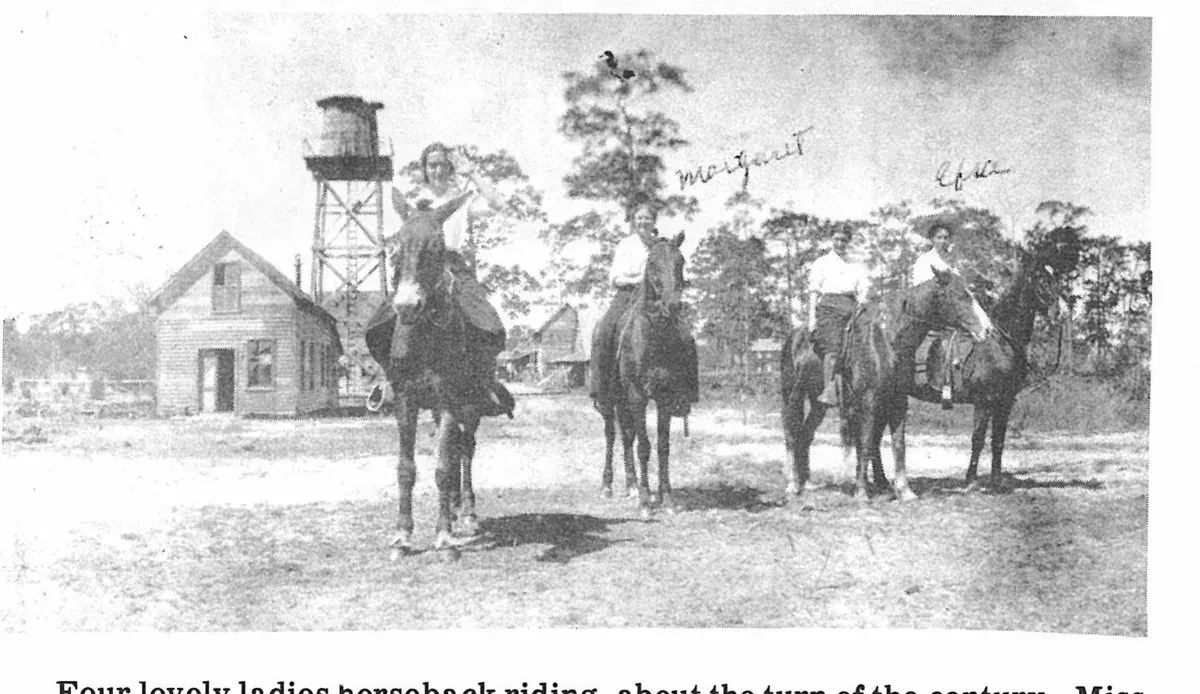
Four lovely ladies horseback riding, about the turn of the century. Miss Margaret Woodruff, who later became Mrs. Demos Mandis and Miss Efra Raulerson, are the only two identified. The First Hundred Years of Avon Park, Florida (1976), page 76. Avon Park Historical Society.[maxwell-1976]
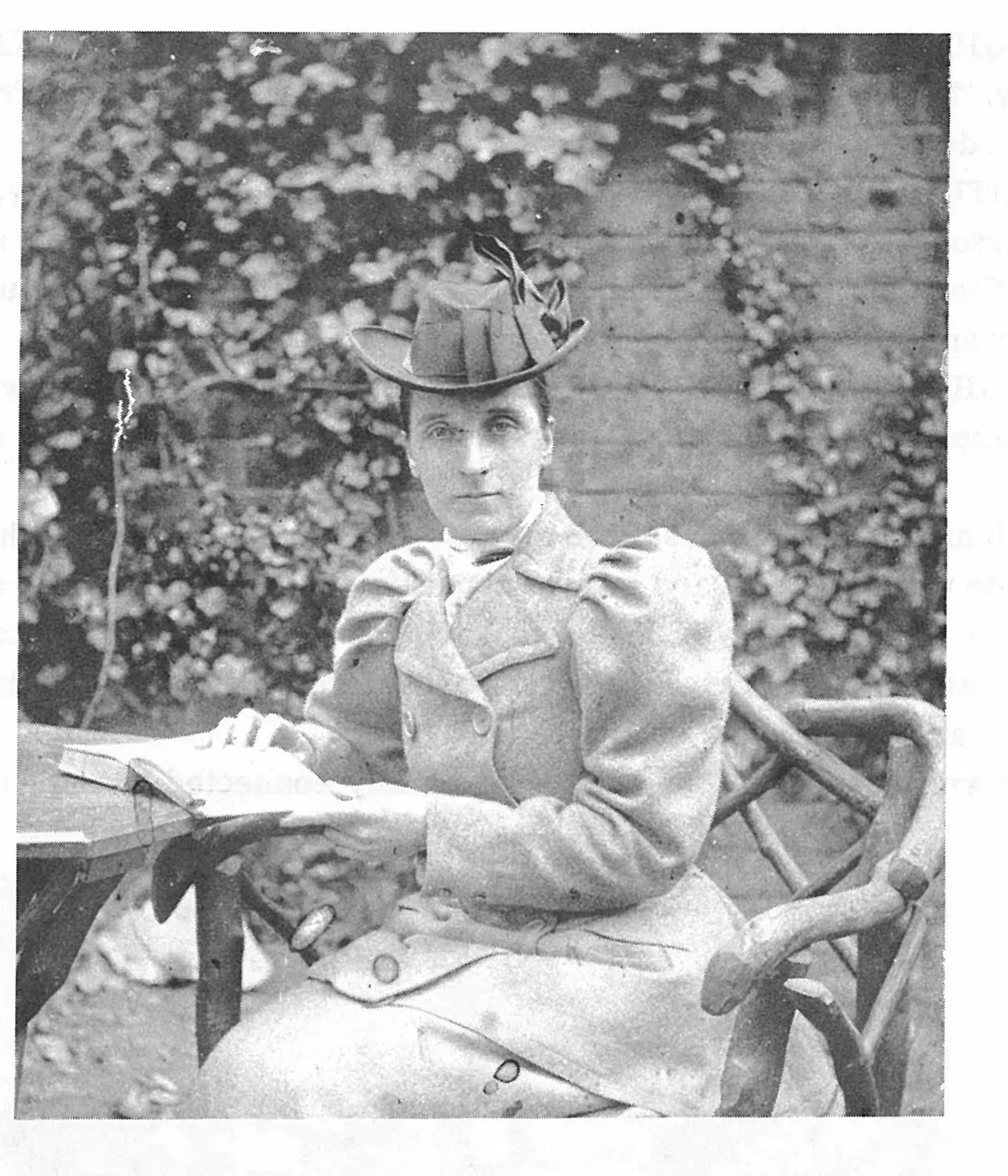
LADY BUNBURY writing in her diary, circa 1898. The First Hundred Years of Avon Park, Florida (1976), page 77. Avon Park Historical Society.[maxwell-1976]
BURNBURY HOUSE AND SHOCKLEY FAMILY
The Reverend James B. Shockley and wife, Sarah Woodyard Shockley, and two sons, Byrum and Francis, arrived in Frostproof in 1907 from Kentucky. They purchased the famous Bunbury place on Lake Pythias and moved to Avon Park in 1908. The house had stood vacant for nine years. Lord and Lady Bunbury of England had visited the Laidleys at Fort Meade before selecting the 60 acre site on Lake Pythias where they built the home. J. H. Nettleton, architect for the Verona Hotel, was the architect for the Bunbury house built in 1889. Mr. Bunbury said he designed the house which was a combination of an English farm house and hunting lodge, with southern colonial and some “cracker” influence in the style. The house had no fire place and no well, but a large wooden cistern in which to collect rain water.
During the nine years they lived in America, Lady Bunbury returned to England for the birth of each of their four children, and finally she stayed, leaving much of her personal belongings in the house. Lord Bunbury returned three times before he sold the property to the Shockleys. Byrum said he always pined to spend his last days in Avon Park.
The Bunburys had a dark room for developing pictures and left many plates that showed their four children, six dogs, and two fine blooded horses. The low ribbon wire fences, built for the race track, remained on the property for many years. Lady Bunbury told in her diary of her love for horses and it was plain to see that she was a lady who could ride to hounds with the men folk. Horse racing was the top sport of that era. A large race track was maintained at Fort Meade. Her diary also told how they brought ice from Fort Meade on special occasions.
Lady Bunbury kept in touch with her English friends in Fort Meade and the Floods in Frostproof, the Stevensons who lived on Lake Isis, the Hauptmans and the J. H. Smiths who lived on Lake Viola, as well as with the Kings in Avon Park.
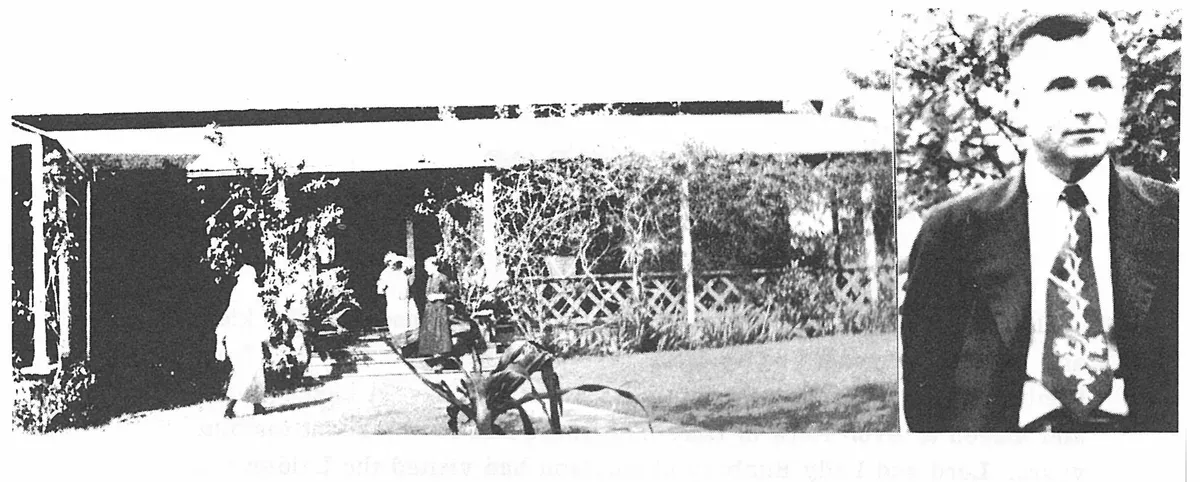
The First Hundred Years of Avon Park, Florida (1976), page 79. Avon Park Historical Society.[maxwell-1976]
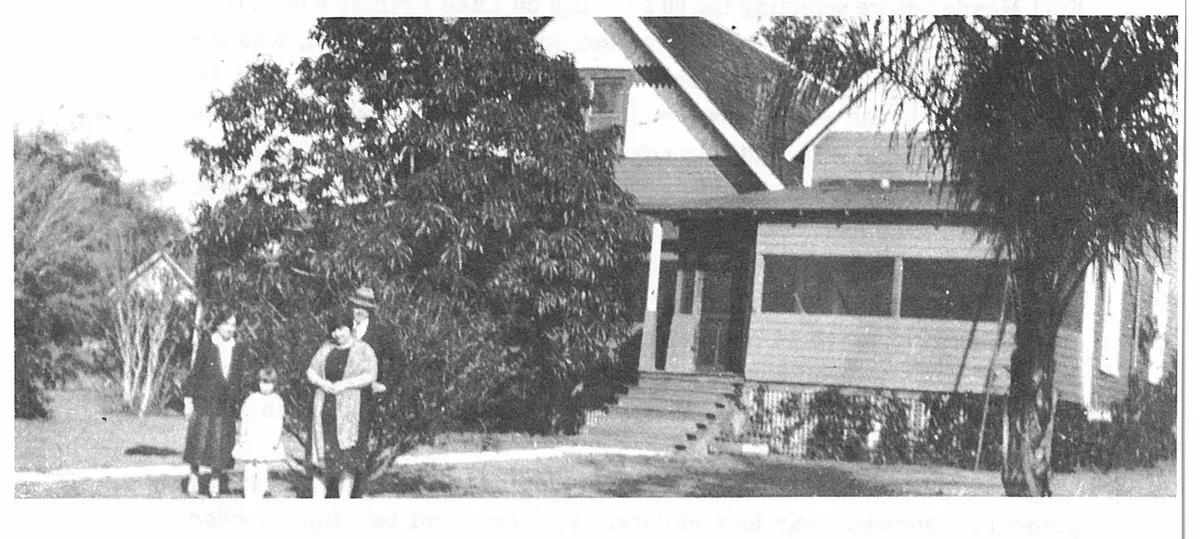
Before coming to Florida, Rev. and Mrs. Shockley had both been instructors at the Asbury Methodist College at Wilmore, Ky. Upon arriving in Frostproof he taught school and after moving to Avon Park he taught here in 1908-09. The First Hundred Years of Avon Park, Florida (1976), page 79. Avon Park Historical Society.[maxwell-1976]
Byrum Shockley was considered an authority on citrus varieties and culture. He was noted for his scholarly research into the early history of Avon Park and was one of the founders of the Old Settlers Association.
Francis marrief Miss Lucille Able, daughter of Dr. and Mrs. A. B. Able. Their only son, Jimmie is Dr. James B. Shockley.
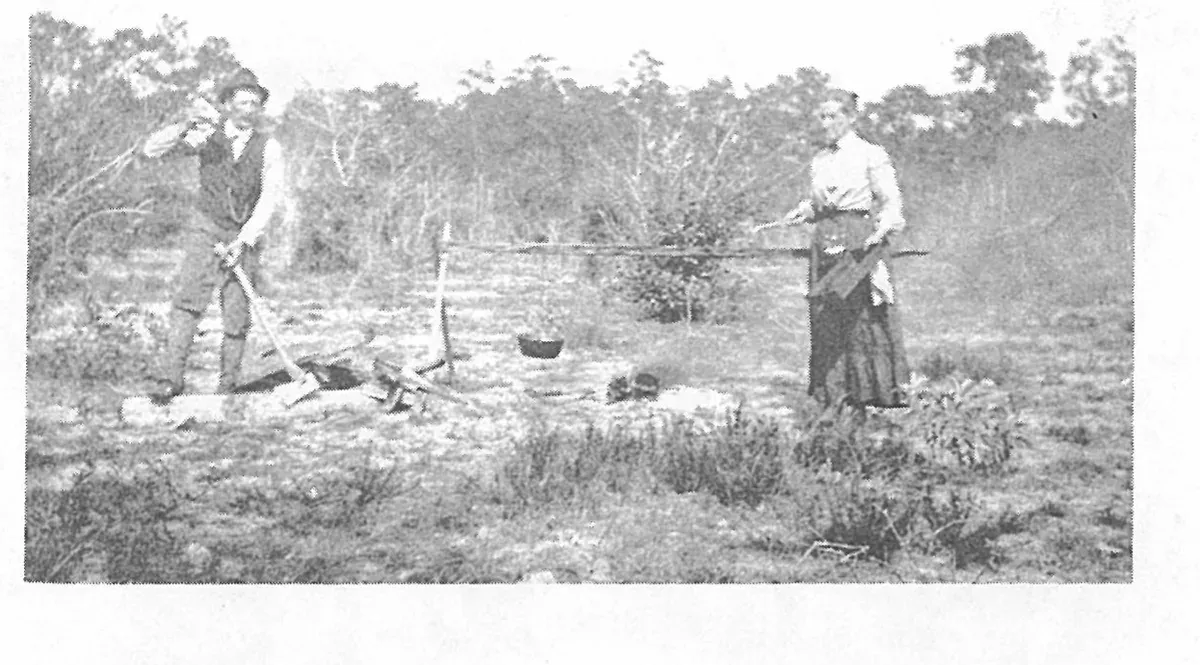
The First Hundred Years of Avon Park, Florida (1976), page 80. Avon Park Historical Society.[maxwell-1976]
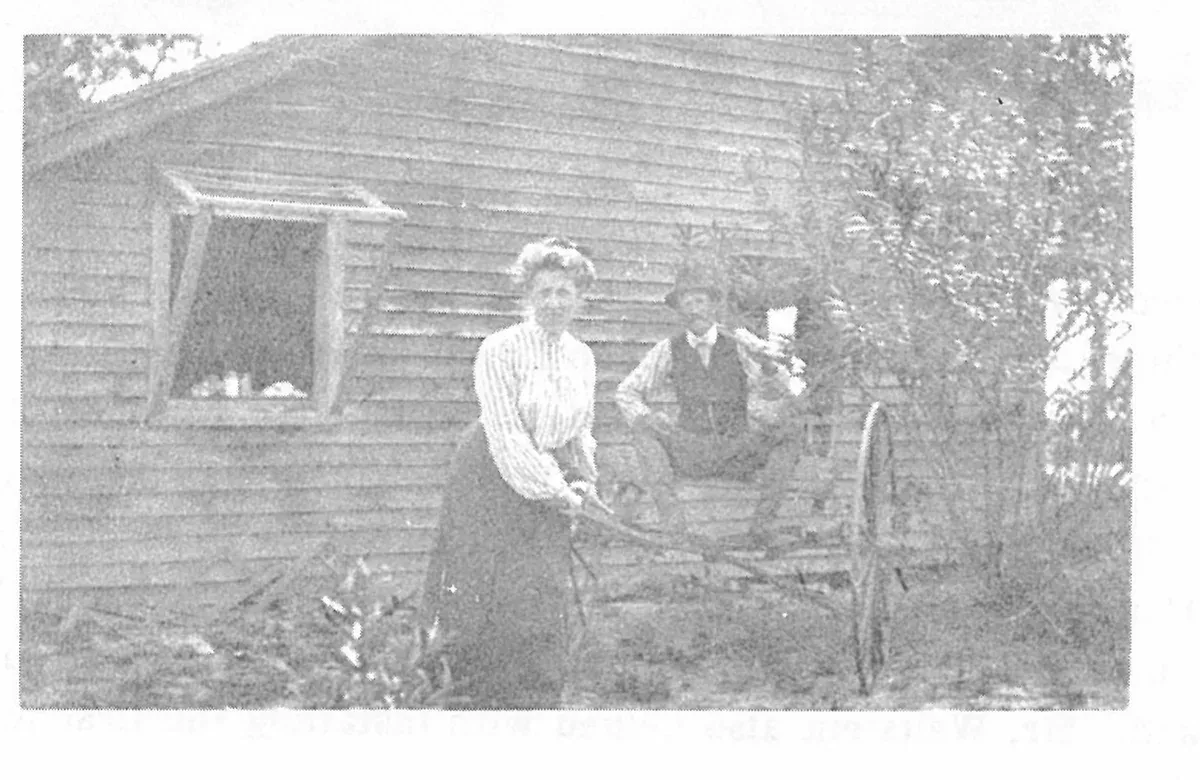
The First Hundred Years of Avon Park, Florida (1976), page 80. Avon Park Historical Society.[maxwell-1976]
CANFIELD and COY FAMILIES
The H. E. Coy and D. F. Canfield Families came in the earliest days. They were prominent in the development of Avon Park and Highlands County. Here Cora Coy Canfield and her husband, D. F. Canfield, build their first home. In later years he served as Highlands County Tax Collector.
The early settlers did not regard the hardships as a handicap, as people would do in these later days. Life was extremely simple and pleasures few as compared to life today.
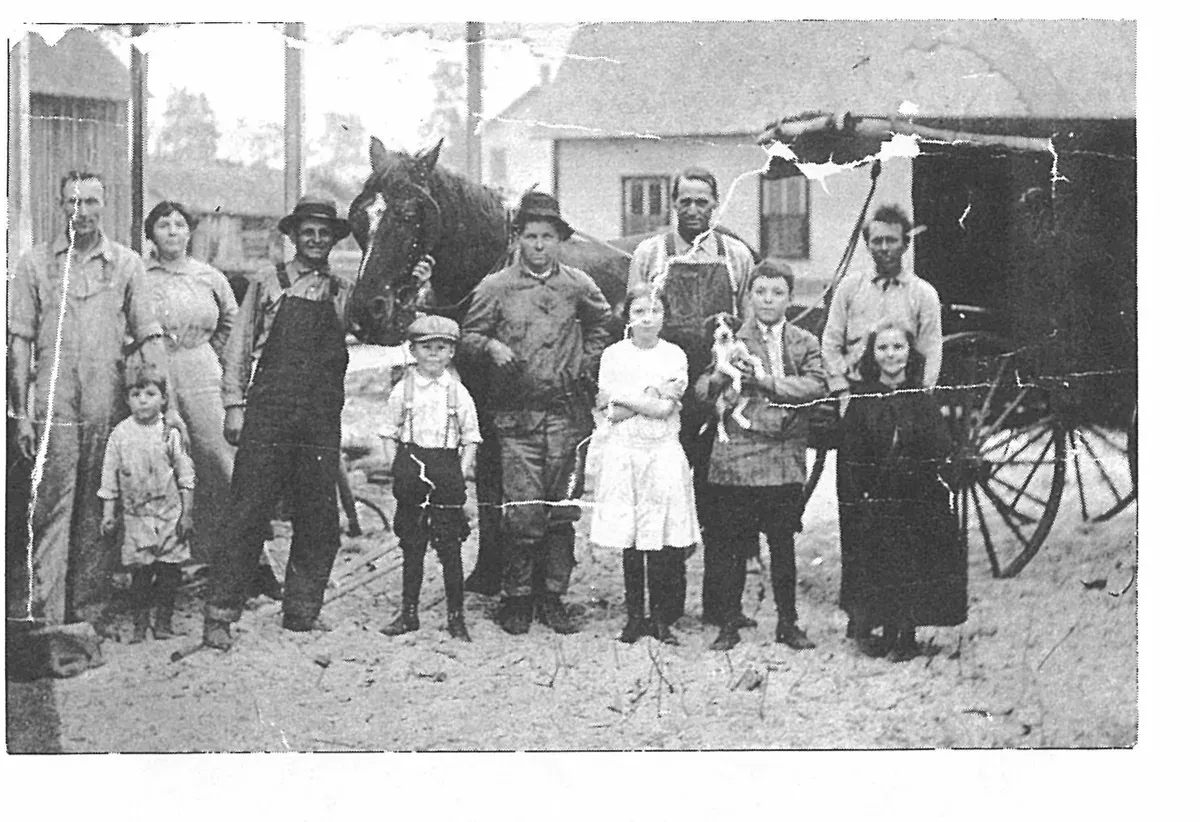
The First Hundred Years of Avon Park, Florida (1976), page 81. Avon Park Historical Society.[maxwell-1976]
CLARK FAMILY
Clarence A. Clark and wife, Frances, and children, Thelma, Albert, Josephine (Jo), Bernard (Bunk), and Edward J. came from Iowa in 1911. Thelma married Raymond S. Dilley and Jo married Floyd M. Johnson.
The Clark family came with a Mr. Weitstein who was promoting land sales. He leased the Verona Hotel for a season from Dr. McCartney and Mrs. Clark managed the dining room for the hotel. Mr. Weitstein brought in groups of people and had automobiles available to take them out to see the land. Mr. Weitstein also helped with installing the first telephone lines here.
The Clarks first lived in a small house near the hotel and later bought a two-story home on Lake Avenue in the place where the telephone exchange is now located.
The first telephone exchange was installed in their home and Mrs. Clark was the first telephone operator.
Mrs. Clark had a bakery in her home. She was assisted by Mr. Clark and son, Albert, to do the baking. They had a glass showcase in the living room to display their baked goods.
Mrs. Clark was a practical nurse and when the young doctor, W. C. Touchton arrived in 1915 she assisted him, helping to deliver many of the babies born here.
TELEPHONES
The first telephone line into Avon Park was built by Mr. Crosby in 1892 to Fort Meade. This was a great step forward! However, the cowboys used the glass insulators for target practice, and with the constant upkeep of the line from their damage and the falling limbs across the line, it kept a person in constant service for repairs. The contractor had left an unpaid bill of $400 and Mr. Crosby said it became too expensive to keep the line, in addition to the cost of $2 for each call that was made, so the line was abandoned.
It was 1914 before the first telephone office was installed here. It was located in the home of C. A. Clark, a two-story house on the same property where the telephone building is now, and Mrs. Clark was the only operator. There were 22 subscribers.
The main office was the Ed Scott Telephone Company in Arcadia. J. R. Merritt was the superintendent for installing the equipment, which had to be hauled by mule and wagon from Wauchula. Later the headquarters office was moved southwest to Ft. Myers.
Later the Merritt family moved to Ft. Pierce in St. Luci County. He was elected sheriff of St. Lucie County and gained nationwide acclaim for apprehending the Ashley Gang of bank robbers on a bridge at Stuart, where a gun battle ended this gang of bank robbers.
Following the Scott Telephone Company, the Tri-County Telephone Company with John L. Delegal as the Avon Park manager offered services to the city for many years. Later the system became the Inter-County Telephone Company with Robert M. Gay as the Avon Park manager.
The United Telephone Company began business in 1967 and has continued under the management of Charles Bryan. It employs 240 people, is the largest independent employer in the county and the largest tax-payer in the county. The United Telephone complex includes a large work-center building on South Highlands Avenue, as well as three large buildings on Lake Avenue and Forest Avenue and a parking lot on West Church Street.
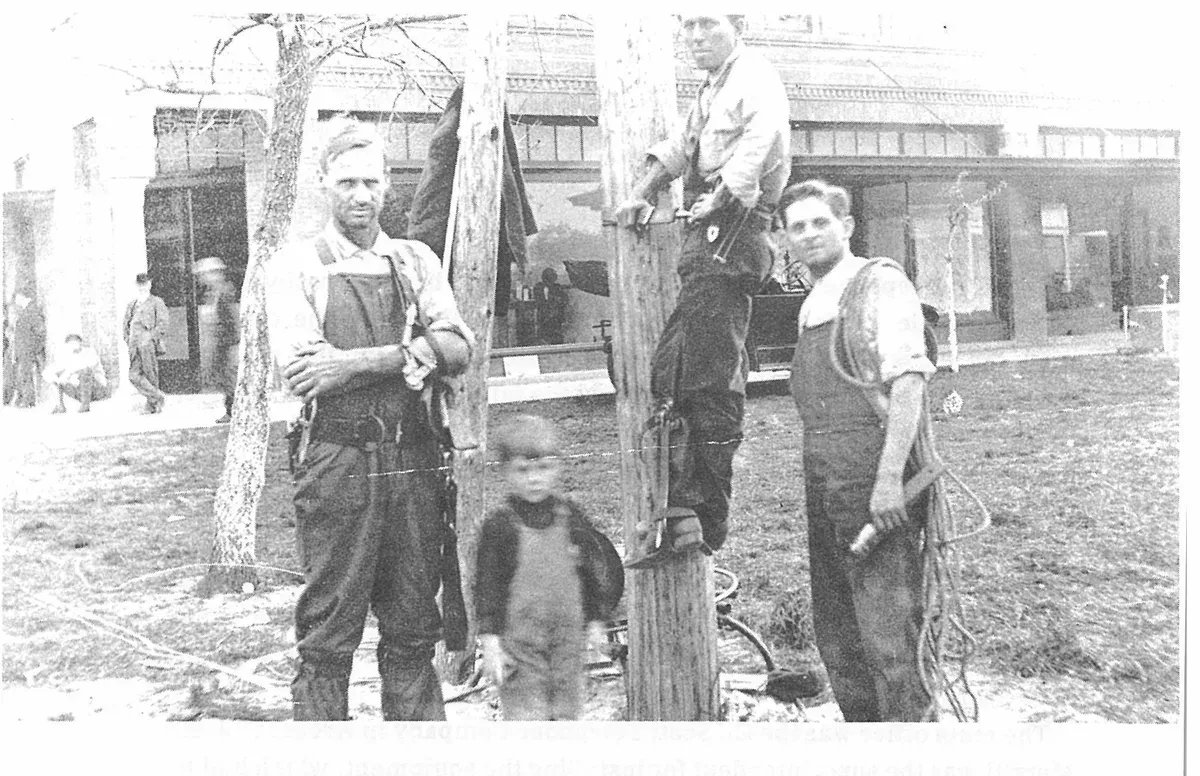
Installing the first telephone pole in 1914. First National Bank in the background, J. R. Merritt, Gene Branner (on pole), Billy Yohee and Eddie Clark, (4 years old). The First Hundred Years of Avon Park, Florida (1976), page 83. Avon Park Historical Society.[maxwell-1976]
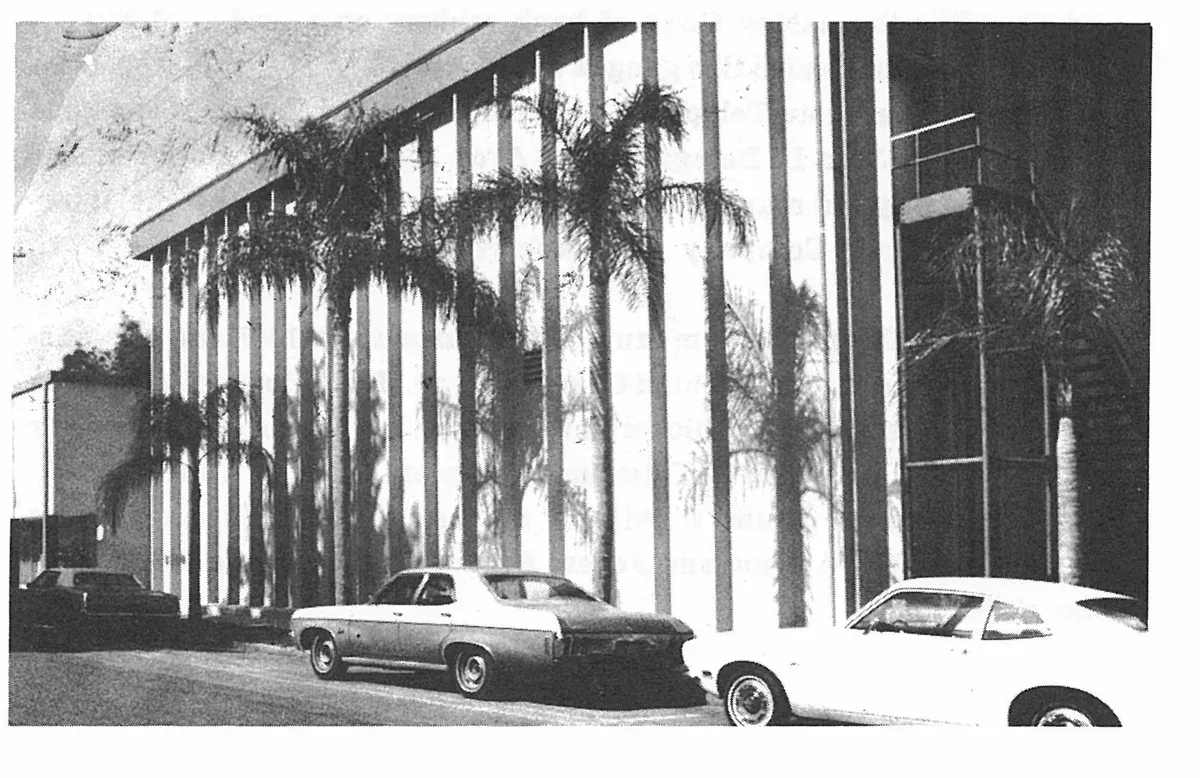
The First Hundred Years of Avon Park, Florida (1976), page 83. Avon Park Historical Society.[maxwell-1976]
POSTOFFICE
William A. King operated the first postoffice in 1887 and he reported that for three months the business amounted to $6. When D. D. Kinney bought out the Hendry store, Mr. King turned the postoffice over to him and he operated it five years and turned it over to B. F. West who continued to operate the postoffice for four years in his store as well as the bank.
The U. S. Postoffice was offically established in Avon Park May 8, 1888. Marion W. Sargent became the postmaster in 1904. Over the years others have been appointed and served only one year each. The postoffice was opened in a small building on Waycross Street, thought to be the original building which was the printing office.
Mr. Sargent built a small two story house on East Main Street and moved the postoffice there. His daughter, Mrs. Fannie Reeves, later (Mrs. Glen Spinks) was appointed as postmaster. She served for 17 years.
| Postmasters | Dates Appointed |
|---|---|
| William King | May 22, 1888 |
| Arthur W. Dickson | October 3, 1889 |
| Edward W. Dawson | November 13, 1890 |
| Dorr D. Kinney | July 29, 1891 |
| Benjamin F. West | September 10, 1896 |
| Stephen E. Roberts | August 20, 1900 |
| Gabrel Skipper | August 22, 1903 |
| Marion W. Sargent | November 14, 1904 |
| May J. Dilley | August 13, 1909 |
| Fannie P. Reeves | October 31, 1910 |
| Leslie D. Roberts | March 16, 1927 |
| Ruth Skipper | April 10, 1928 |
| Ola L. Head | February 14, 1931 |
| Douglass G. Perry | January 16, 1936 |
| Edward F. Singleton | July 31, 1960 |
| Robert D. Young | April 14, 1961 |
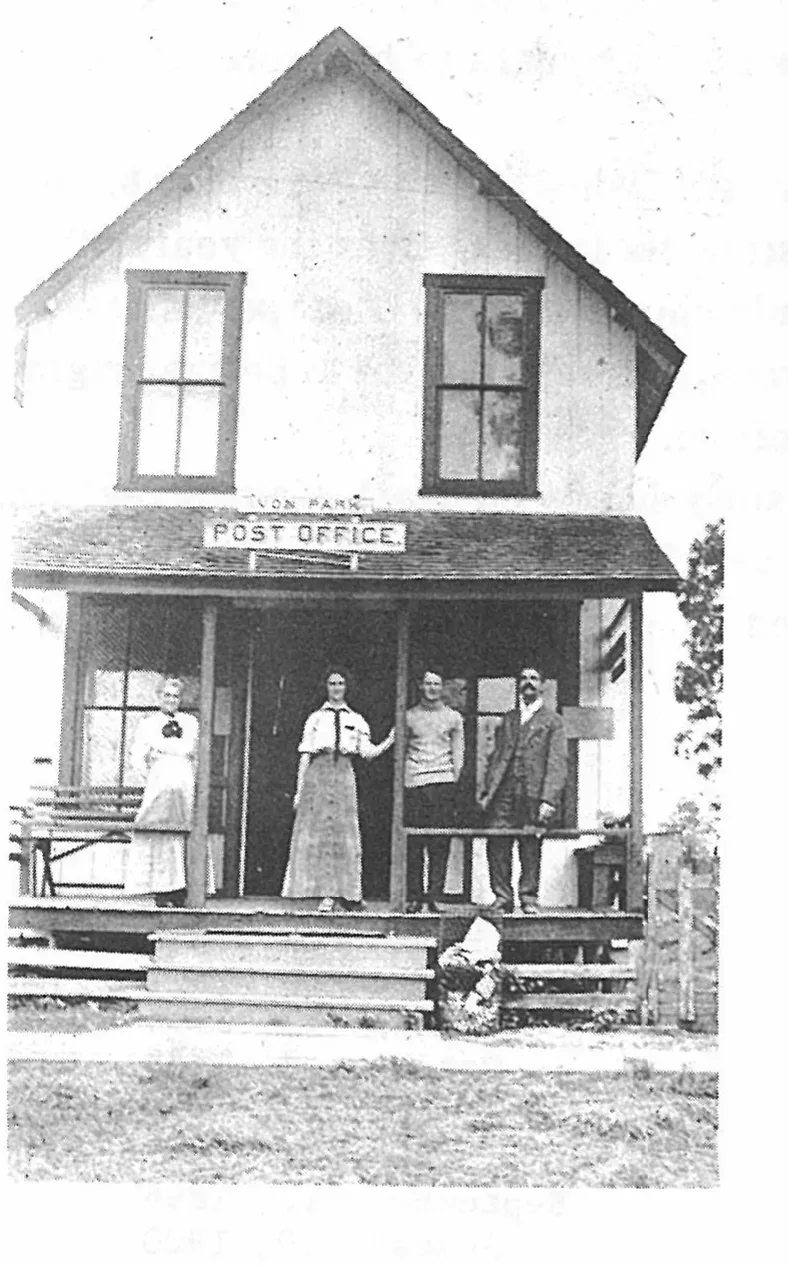
First Postoffice. The First Hundred Years of Avon Park, Florida (1976), page 85. Avon Park Historical Society.[maxwell-1976] “The Spinks building”
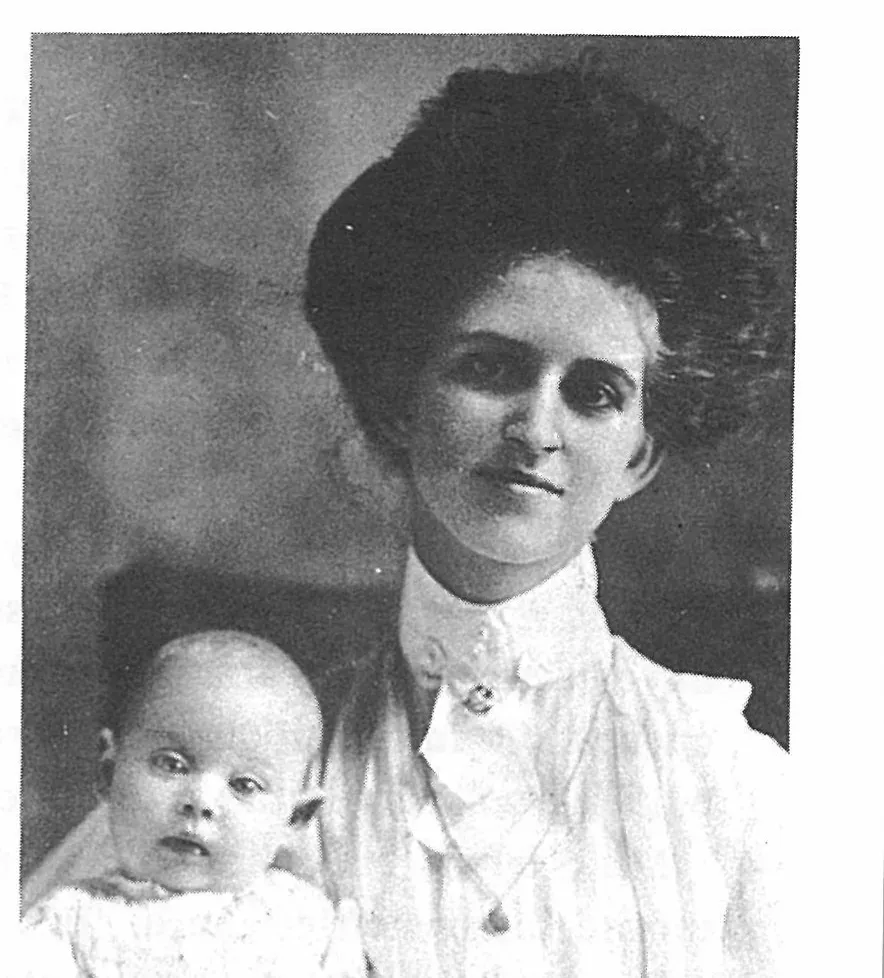
Mrs. Glen Spinks, and daughter, Christine, who grew up and married Francis Roberts. The First Hundred Years of Avon Park, Florida (1976), page 85. Avon Park Historical Society.[maxwell-1976]
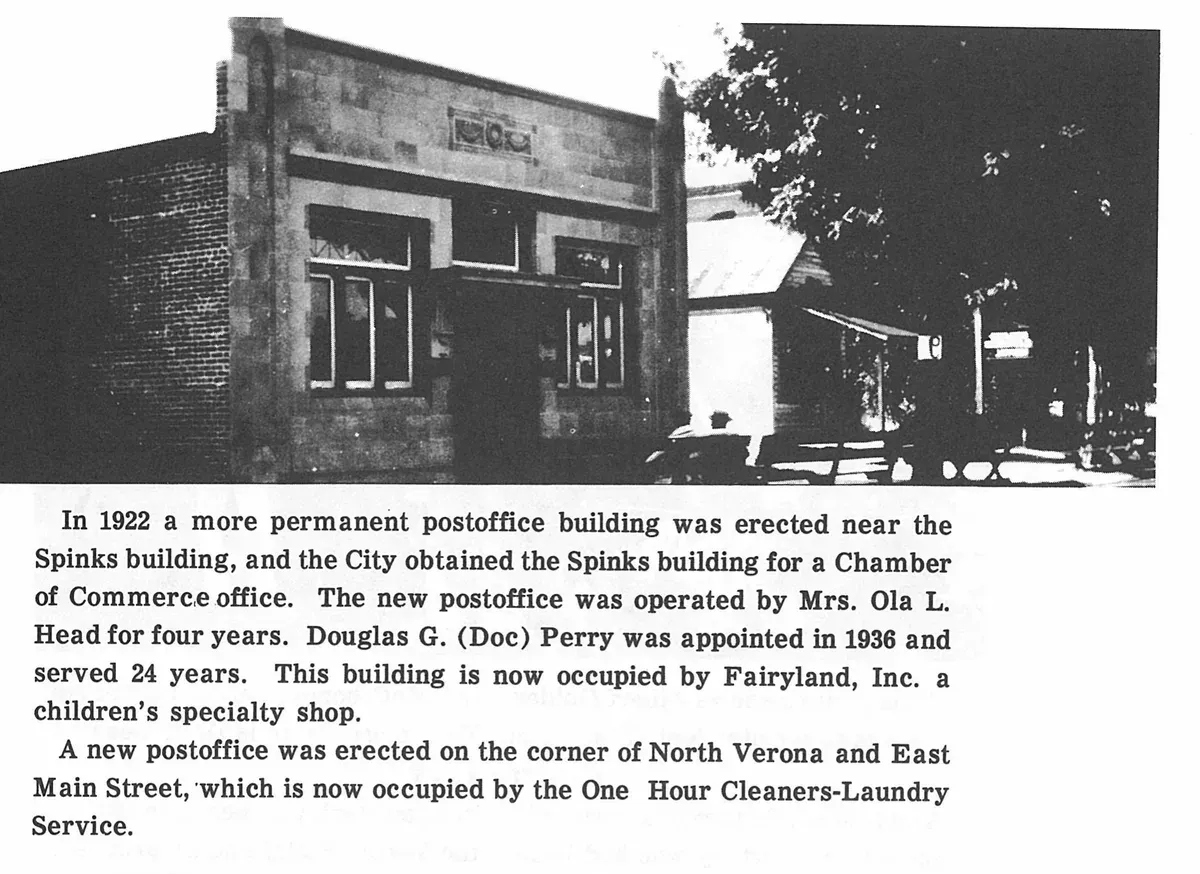
The First Hundred Years of Avon Park, Florida (1976), page 86. Avon Park Historical Society.[maxwell-1976]
In 1922 a more permanent postoffice building was erected near the Spinks building, and the City obtained the Spinks building for a Chamber of Commerce office. The new postoffice was operated by Mrs. Ola L. Head for four years. Douglas G. (Doc) Perry was appointed in 1936 and served 24 years. This building is now occupied by Fairyland, Inc. a children’s specialty shop.
A new postoffice was erected on the corner of North Verona and East Main Street, which is now occupied by the One Hour Cleaners-Laundry Service.
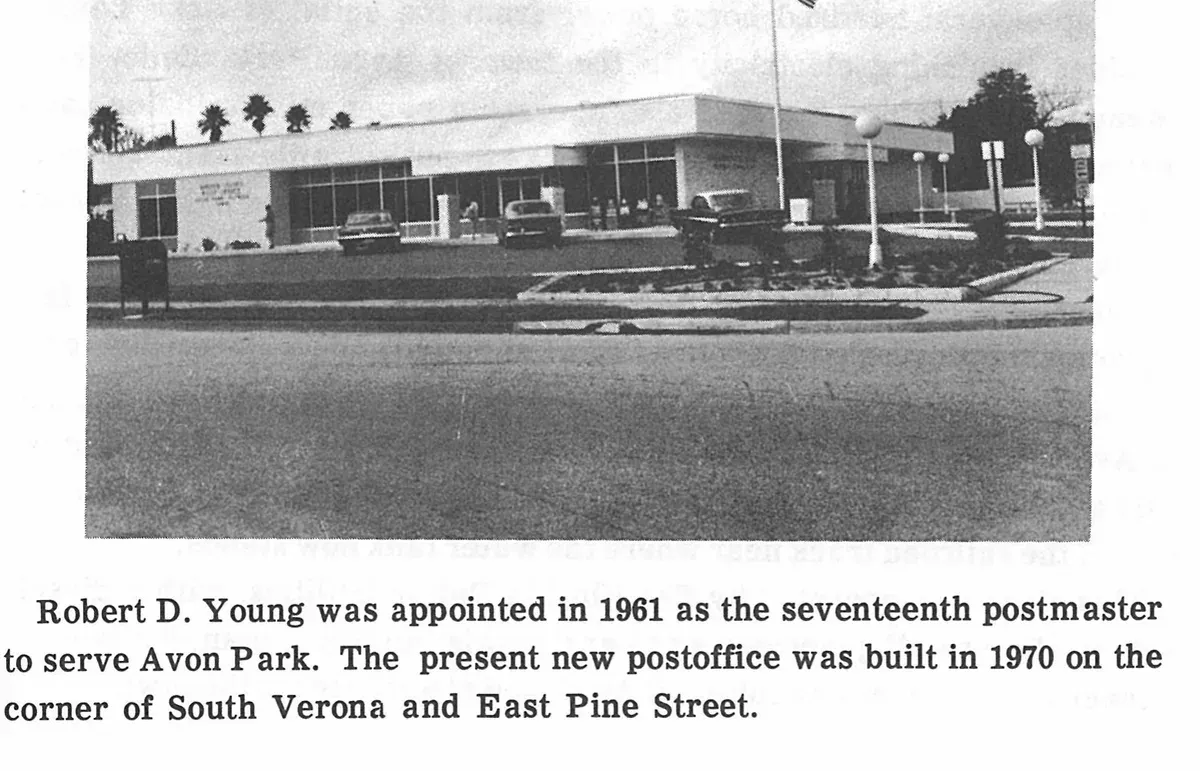
Robert D. Young was appointed in 1961 as the seventeenth postmaster to serve Avon Park. The present new postoffice was built in 1970 on the corner of South Verona and East Pine Street. The First Hundred Years of Avon Park, Florida (1976), page 86. Avon Park Historical Society.[maxwell-1976]
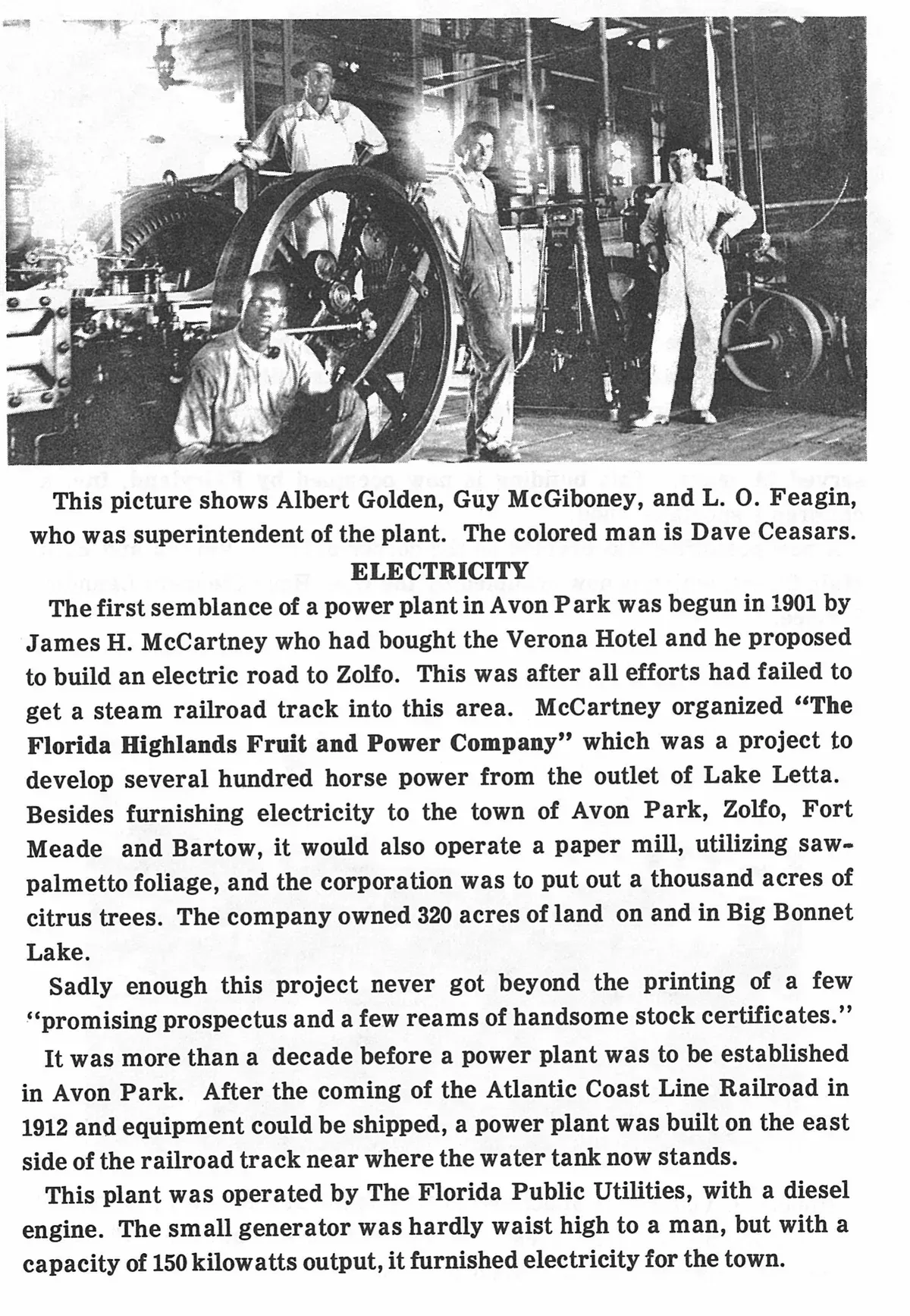
This picture shows Albert Golden, Guy McGiboney, and L. O. Feagin, who was superintendent of the plant. The colored man is Dave Ceasars. The First Hundred Years of Avon Park, Florida (1976), page 87. Avon Park Historical Society.[maxwell-1976]
ELECTRICITY
The first semblance of a power plant in Avon Park was begun in 1901 by James H. McCartney who had bought the Verona Hotel and he proposed to build an electric road to Zolfo. This was after all efforts had failed to get a steam railroad track into this area. McCartney organized “The Florida Highlands Fruit and Power Company” which was a project to develop several hundred horse power from the outlet of Lake Letta. Besides furnishing electricity to the town of Avon Park, Zolfo, Fort Meade and Bartow, it would also operate a paper mill, utilizing saw-palmetto foliage, and the corporation was to put out a thousand acres of citrus trees. The company owned 320 acres of land on and in Big Bonnet Lake.
Sadly enough this project never got beyond the printing of a few “promising prospectus and a few reams of handsome stock certificates.”
It was more than a decade before a power plant was to be established in Avon Park. After the coming of the Atlantic Coast Line Railroad in 1912 and equipment could be shipped, a power plant was built on the east side of the railroad track near where the water tank now stands.
This plant was operated by The Florida Public Utilities, with a diesel engine. The small generator was hardly waist high to a man, but with a capacity of 150 kilowatts output, it furnished electricity for the town.
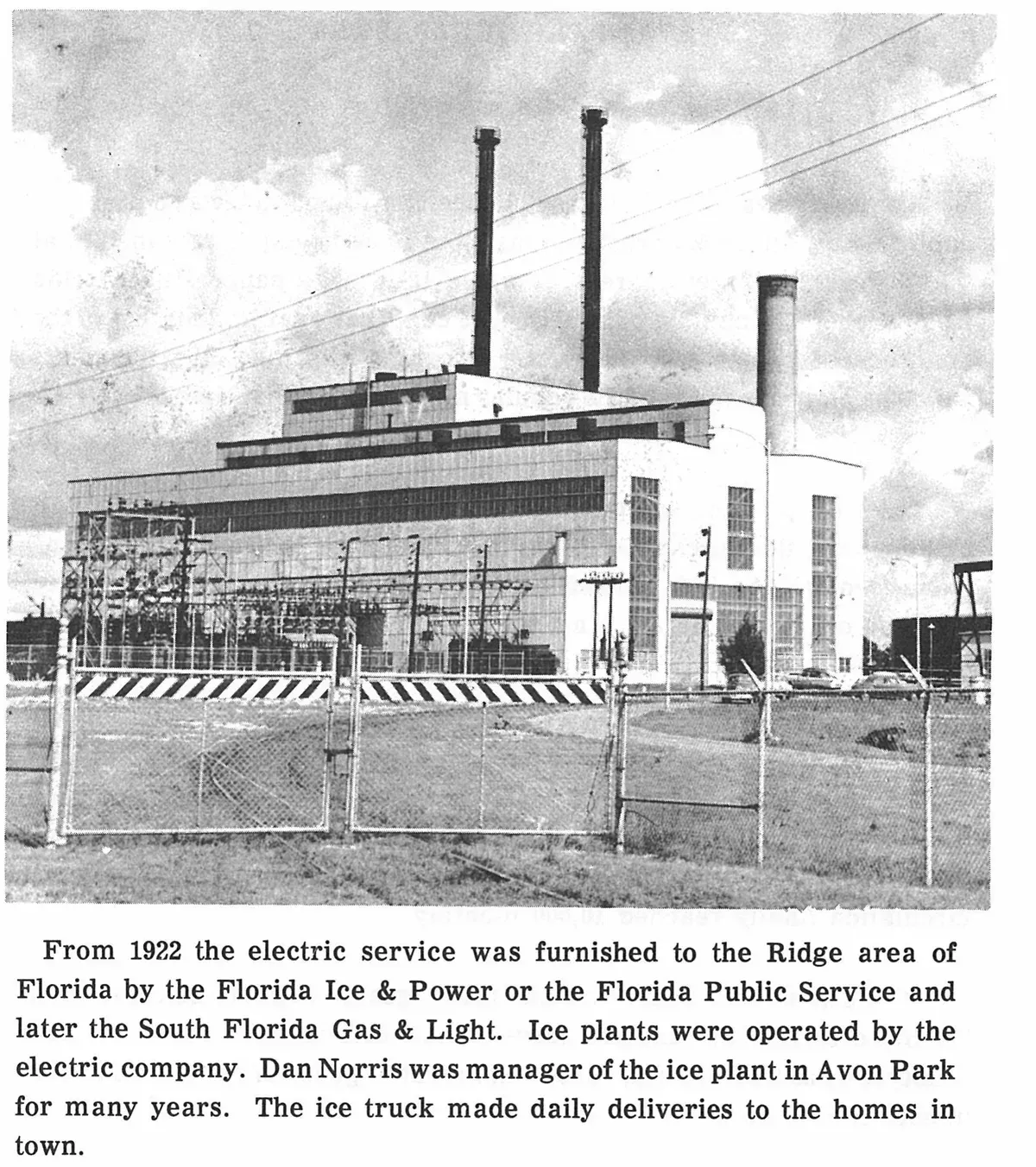
The First Hundred Years of Avon Park, Florida (1976), page 88. Avon Park Historical Society.[maxwell-1976]
From 1922 the electric service was furnished to the Ridge area of Florida by the Florida Ice & Power or the Florida Public Service and later the South Florida Gas & Light. Ice plants were operated by the electric company. Dan Norris was manager of the ice plant in Avon Park for many years. The ice truck made daily deliveries to the homes in town.
In 1928 The Florida Power Corporation built a small plant on Lake Lotela on South Highlands Avenue. They enlarged the plant in 1945 and again in 1952. It was enlarged again in 1970. The 103 ton generator now in use is hardly comparable to the small beginning of electricity in Avon Park. The output of this plant today is 104 megawatts. They employ 35 people. John Porter is plant manager and Robert Woodruff is the plant superintendent.
AVON PARK NEWSPAPERS
The first newspaper that was published for Avon Park was edited and published by Oliver M. Crosby in his New York headquarters in 1886 at the 99 Franklin Street address. It was a 12-16 page paper, The Florida Homeseeker“, a monthly publication, 50 cents per year and mailed to the hundreds of people who answered Crosby’s alluring advertisements which he placed in many of the popular magazines at that time.
Later the printing and publishing was moved to Avon Park. A small building near the Verona Hotel was the printing office. This building was later used for the U.S. postoffice for a short time and also the city business office was here for a time.
Printing the newspaper in Avon Park meant that tons of white paper had to be shipped by carload lots from New York to Fort Meade and then hauled by covered wagon to Avon Park. Here it was printed and then mailed to subscribers, state by state. This was because the railroad mail agent could not handle the entire edition at one time. Crosby says the circulation finally reached 10,000 monthly.
It was noted that Avon Park had the largest newspaper circulation in the State of Florida, and the largest mail delivery per capita in the county, and as Crosby said, “showing the intelligence of the people in our ‘model community.’
John Wannamaker, U.S. Postmaster General at that time, had this matter brought to his attention. He decided it was purely an advertising medium for Avon Park and that Crosby would have to pay one cent per copy in place of the one cent per pound for postage. Crosby wrote him to ask how he could possibly turn a wilderness into homes, businesses and orange groves and start a postoffice with sales of hundreds of dollars in postage without a newspaper. Mr. Wanamaker reversed his decision and The Florida Homeseeker was saved a $100 per month in postage. However, when Grover Cleveland was elected President, and Adams became the U.S. Postmaster General in 1892, he decided the paper was not entitled to the cent a pound postage. About this time The Florida Homeseeker merged with “The Avon Park Idea.”
A.L. Blue and son from New York started The Avon Park Idea in 1893. This paper secured second class postage rates. Finally Mr. Blue returned to New York and A.L. Gonzales, a printer from Fort Myers, who had been in the office with Mr. Blue, continued the paper under adverse circumstances and finally after his departure, Arthur Sargent continued printing The Avon Park Idea, more in the spirit of patriotism than in hopes of financial gain.
Difficulties arose with the holder of the mortgage on the type and steam press after the ’95 freeze and the paper’s career ended in 1898. In the Spring of 1900 “The South Florida Sun” was established by O.R. Thatcher. This paper proved to be interesting and handsomely printed, done in the agricultural office in DeLand, where Mr. Thatcher had been previously connected. It lived through 1908.
Mr. Thatcher had been a nurseryman before coming to Avon Park in 1891. He was a genteel, well educated man and became a faithful and trusted employee of the Avon Park Development Company. He was an outstanding citizen. He says it was with great effort he gleaned most of the history about Avon Park’s early school system from papers and records of the DeSoto County School board. Mr. Thatcher wrote Avon Park news in a column for The DeSoto County News when there was no newspaper in Avon Park, which was a period of about 10 years. Quite a contrast from the first 10 years of Avon Park’s development.
It was 1919 when “The Avon Park Press” was published by Stewart Hancock. Mrs. R.W. Swearingen wrote local news.
Another paper “The Avon Park Citizen” was published in 1929 by Charles H. Pardee. Both these papers were short lived.
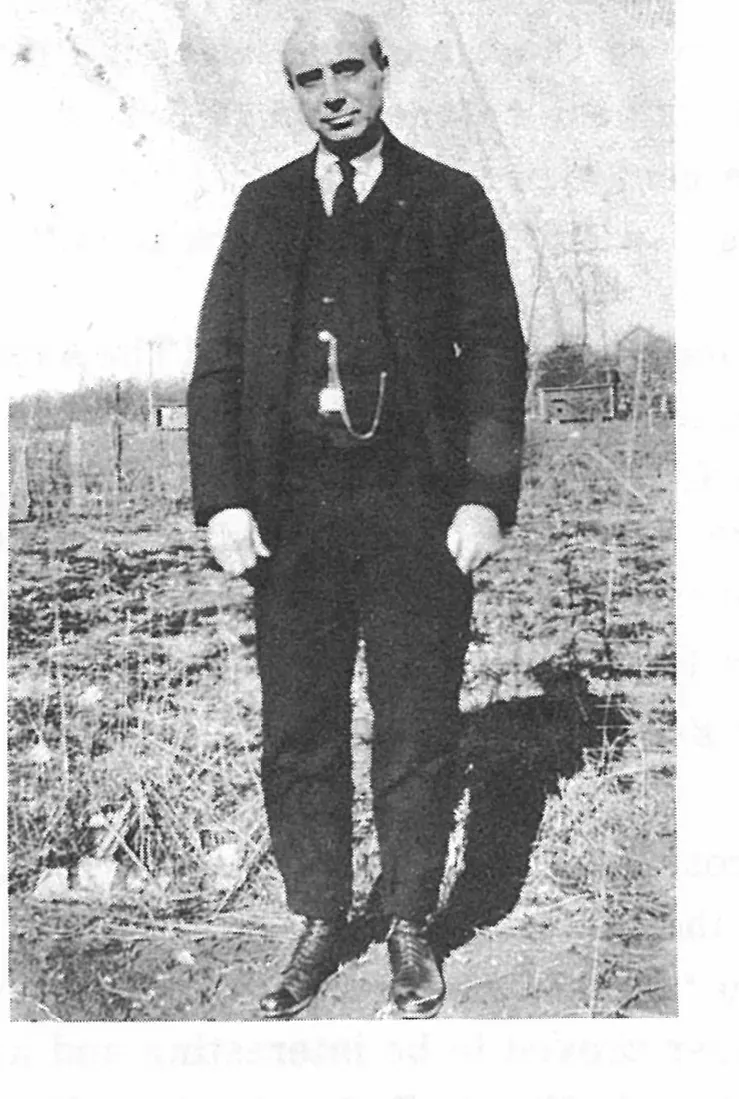
Charles H. Pardee came from Hagerstown, Md. in 1925. His wife, Mary, and the children came by train. Mr. Pardee drove down in his long, slick FRANKLIN car, one of the first cars with a self starter. The First Hundred Years of Avon Park, Florida (1976), page 91. Avon Park Historical Society.[maxwell-1976]
Mr. Pardee was an accountant, but published the Avon Park newspaper for a few years. He also held a State Examiner’s job, and later opened an accounting office. The Pardee children are Margaret (Mrs. Ben T. Stewart), Charles S., a retired school principal, Mrs. Laura V. Neubauer, and Ruth (Mrs. George Roberts.)
Also in 1919 “The Highlands County Pilot” began publication with George W. Adams as the editor. In the early Twenties Gilbert Freeman, a newspaper man from Tampa bought The Highlands Pilot and also established a daily newspaper, “The Scenic Highlands Sun.” This was during the Florida fabulous boom, and it continued until about 1926-27 when the “Big Bust” began, and these two newspapers were set up as weeklies, one on Tuesday and one on Friday, and continued as such for a few more years.
Gilbert Freeman went to Tallahassee with Col. J.M. Lee, when he was elected Florida State Comptroller, and C.H. Pardee was placed in charge of these two newspaper as manager and editor. He continued to operate the papers until 1934.
“The Avon Park Times” has been established by Schaefer-Broking Printing Company in 1929, with Hayden Williams, a Highlands County newsman as the editor. He was succeeded by W.M. (Bill) Hetherington in February 1930, who operated the paper until 1934. Schaefer-Broking sold the paper to William Beckett, who published “The Avon Park Times.” Hetherington took over “The Avon Park Sun” which was formerly The Highlands County Pilot. Later Beckett sold The Times to Freeman and the papers were consolidated and published weekly by Hetherington as “The Avon Park Sun” until he took over the Sebring News in 1949.
Bill Hetherington had become publisher and editor under a lease from Freeman, to publish The Highlands Pilot and The Scenic Highlands Sun. Finally he discontinued The Pilot and continued The Avon Park Sun as a weekly newspaper. His wife, Hettie, always wrote social news.
Freeman died in Tallahassee in 1942 of a sudden heart attack. Hetherington continued as publisher for the Freeman estate until 1946 when his interest and that of the Freeman estate were sold to W.C. Cleary, a former Dunedin publisher.
Cleary stayed only a short time and he sold the newspaper to John H. Perry Publications, formerly a newspaper chain which had previously purchased The Sebring News. Perry consolidated the two newspaper, with printing done in the Sebring plant. In July 1949 Hetherington took over as publisher and editor of The Sebring News, assisted by his wife, Hettie, as associate editor. They both retired in 1971.
During the next few years, after the consolidation of the Sebring and Avon Park papers, The Avon Park Sun had a number of editors operating for John H. Perry Publications. Among the most popular was Earl H. Wells, who resigned and is now the executive assistant for the Florida Citrus Mutual in Lakeland.
The New York Times purchased The Sebring News and The Avon Park Sun in 1972 and both papers continue as weekly newspapers.
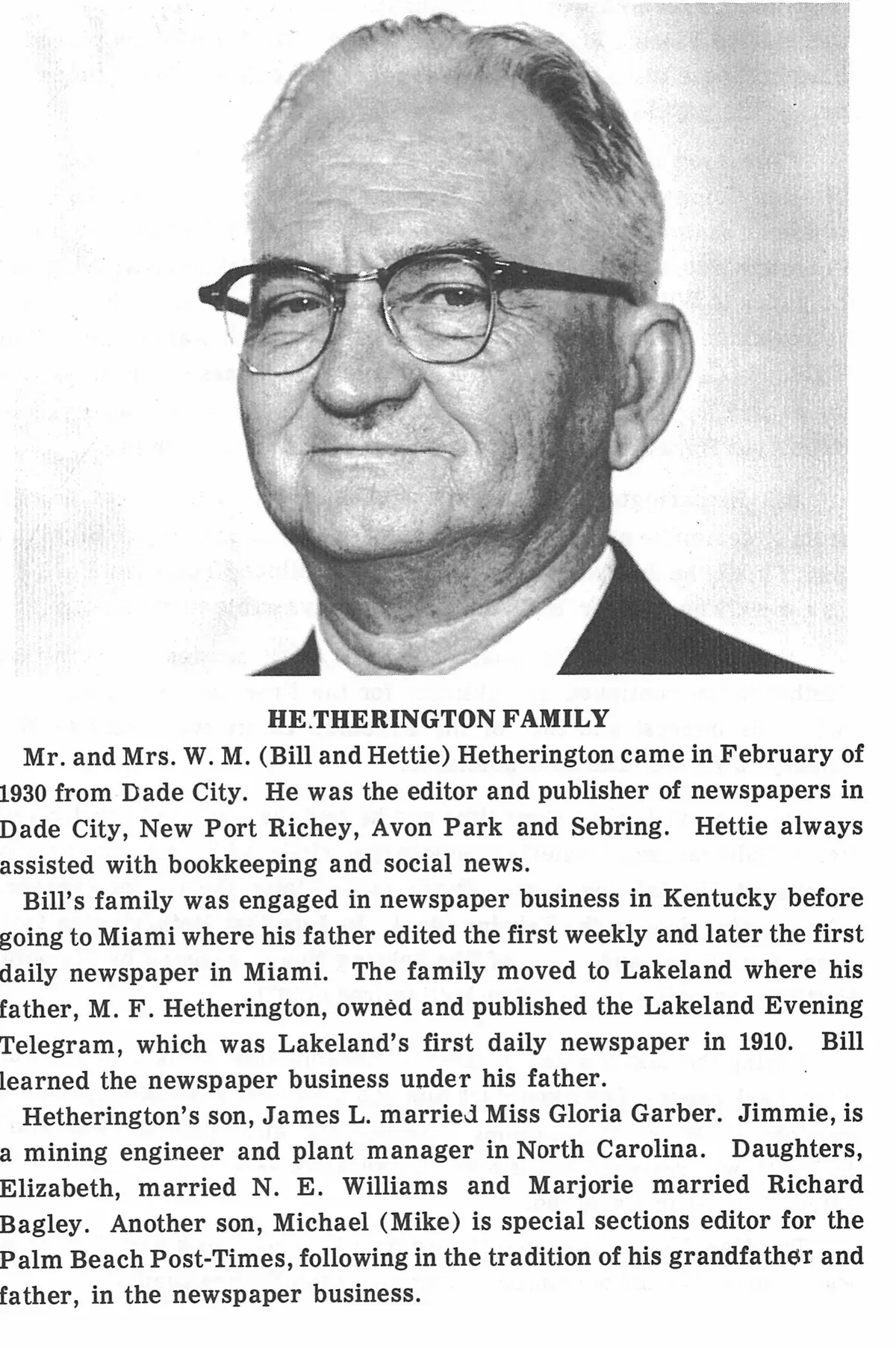
The First Hundred Years of Avon Park, Florida (1976), page 93. Avon Park Historical Society.[maxwell-1976]
HETHERINGTON FAMILY
Mr. and Mrs. W. M. (Bill and Hettie) Hetherington came in February of 1930 from Dade City. He was the editor and publisher of newspapers in Dade City, New Port Richey, Avon Park and Sebring. Hettie always assisted with bookkeeping and social news.
Bill’s family was engaged in newspaper business in Kentucky before going to Miami where his father edited the first weekly and later the first daily newspaper in Miami. The family moved to Lakeland where his father, M. F. Hetherington, owned and published the Lakeland Evening Telegram, which was Lakeland’s first daily newspaper in 1910. Bill learned the newspaper business under his father.
Hetherington’s son, James L. married Miss Gloria Garber. Jimmie, is a mining engineer and plant manager in North Carolina. Daughters, Elizabeth, married N. E. Williams and Marjorie married Richard Bagley. Another son, Michael (Mike) is special sections editor for the Palm Beach Post-Times, following in the tradition of his grandfather and father, in the newspaper business.
Edward Carter was named by The Perry Publications as editor and publisher of The Avon Park Sun January 1, 1965, having joined the Sun staff as a printer in 1959.
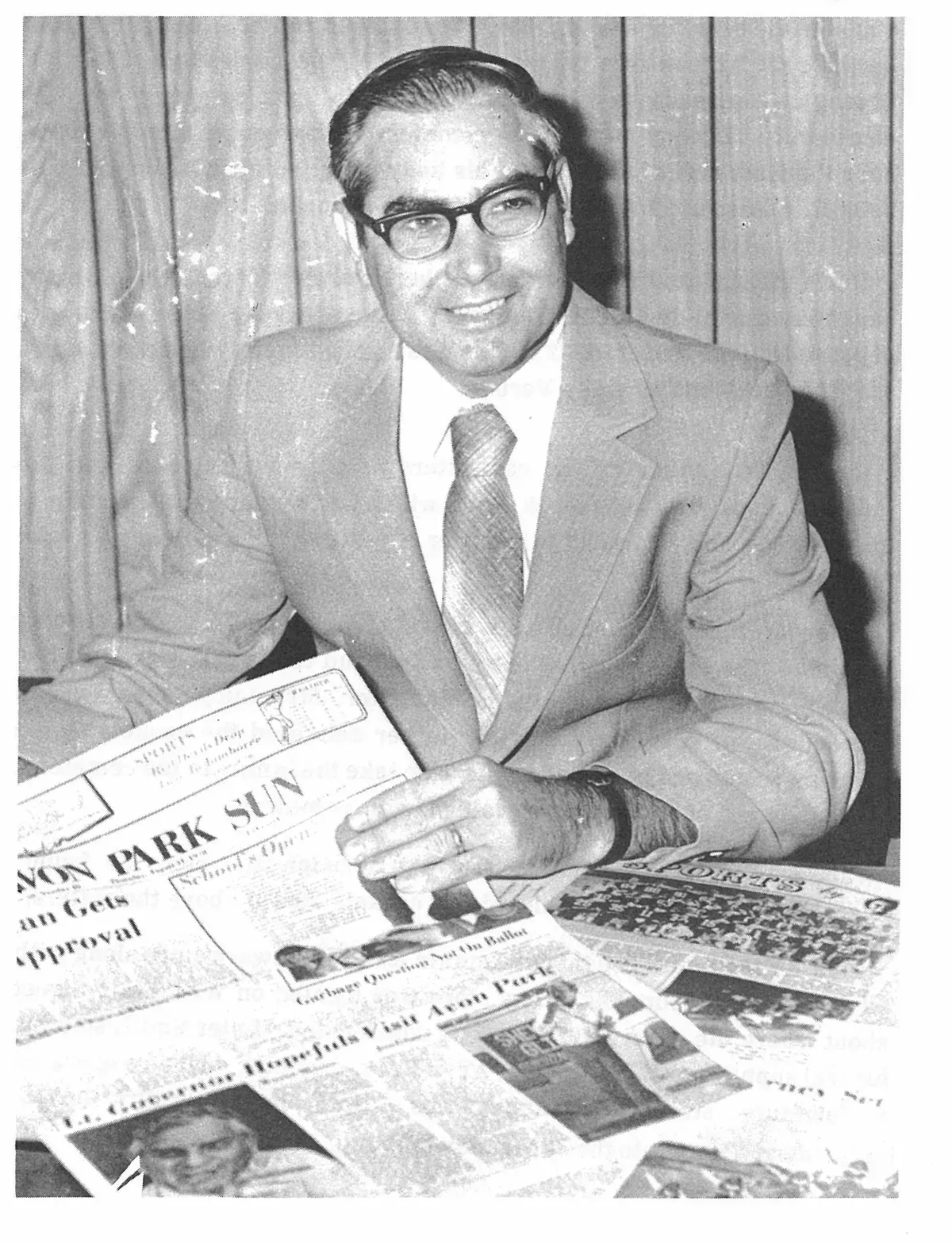
The First Hundred Years of Avon Park, Florida (1976), page 94. Avon Park Historical Society.[maxwell-1976]
FUNERAL HOMES
Crosby wrote that there were no undertakers in Avon Park. The first burial in the cemetery was in 1888, a 3-month old Hulda Stnestrom, who is buried near an oak tree on the East side of the cemetery, which Mr. Crosby had already laid out and donated to be a cemetery for the community. Crosby laid out the cemetery with a small circular park near the East side of the lot, and his body is buried near this park. The John C. Stenstrom family later moved to Wauchula.
During the fall and winter of 1889-90 there were 13 deaths, which Crosby says were due to the fact that too many came who were in the last stages of consumption. One of the 12 deaths was a young man who drowned in a sail boat accident on Lake Verona.
Coffins were made by the carpenters as they were needed and the ladies covered them with black cloth, which Crosby says were usually at his expense, and in lieu of a minister, Crosby had to officiate at the funeral.
Later Mr. Burleigh carried a few caskets for both adults and children in his store. The highest priced one was $150 and the lowest was $50. Mr. Holt bought Burleigh’s store and his daughter, Mrs. Lucy Sykes wrote in her account of early days that her father delivered the caskets to the home by wagon and mule and would also take the family to the cemetery, alghough most of the mourners walked to the cemetery.
When Captain Rae bought out the old Burleigh-Holt store he found several of the old-fashioned pointed-end caskets stored above the rafters.
In 1918 Fred Smith bought out Captain Rae’s Hardware store along with all of his funeral supplies. This store was located on West Main Street about where the Avon Auto Supply is now located. Later Smith sold his funeral supplies to J. A. Lander, Avon Park druggist, who also operated a furniture store, and about this time Fred Smith moved his hardware store into the Jacaranda building.
Lloyd Correll became the first undertaker in Avon Park. He had the funeral home for J. M Stephenson in the small wooden building next to the postoffice. The first body he handled was that of his uncle, Gene Bristol.
Correll opened a music store near the middle of the block of the First National Bank. Old timers remember the swinging doors at the entrance of the music store. Correll also kept the funeral supplies in the rear of the store. He later moved his business to the Arcade, across the street, and later to a house on South Forest Street, across from the Pendleton Wholesale Company. The Correll family lived upstairs and the funeral parlor was on the first floor.
In 1929 Joe Lander bought the large two-story home of W.R. Reck on East Circle Street and leased it to J. M. Stephenson for a funeral home. In 1932 Stephenson bought the Lander property, formed a partnership with J. R. Blythe an opened for business as the Stephenson-Blythe-Funeral Home.
In 1956 they moved the old two-story home to the northeast corner of the lot facing North Verona Avenue, and built a large modern funeral home on East Circle Street. The name was changed to Scott-Stephenson-Smith Funeral Home when Wilson Smith bought an interest in the business. Later it was changed to Stephenson-Nelson-Smith Funeral Home when Nelson Smith bought an interest.
In 1948 Mr. and Mrs. Russell Mizell opened a new funeral parlor in their home at the corner of South Lake Avenue and East Walnut Street. They remodeled the old structure into a modern reception room with a chapel and display room.
Mizell sold his business to the Florida Funeral Chapel, Inc. in 1975 and James Fountain leased the establishment and operated his Fountain Funeral Home there for a few months, while he built his new establishment on Highway 27, a few blocks north of West Main street. He and his wife, Cynthia Prescott Fountain, live in an adjoining apartment and operate the business.
The original Mizell Funeral Home is now owned and operated as Franklin’s Funeral Home.
POINSETTIA HOTEL
George Wray built a large structure on Lakeview Street in 1890 and sold to J.C. Burleigh, who operated it as a grocery store. His family of eight children lived upstairs. It was from this store that the first train on a wooden track began its run out to Lake Thompson (now Lake Brentwood) on July 4, 1895.
In 1912 Mr. Holt bought the store and continued to operate it as a general merchandise store. He had groceries, dry goods and hardware and also kept a few caskets stored above the rafters. His family lived upstairs. For a funeral, Mr. Holt would assist in carrying the casket to the cemetery along with members of the family of the deceased.
In the early Twenties the building was remodeled and became the Poinsettie Hotel. The owners were John D. Raab, Charlie Lanier and John A. Taylor. Mr. and Mrs. J. A. Jackson were the managers.
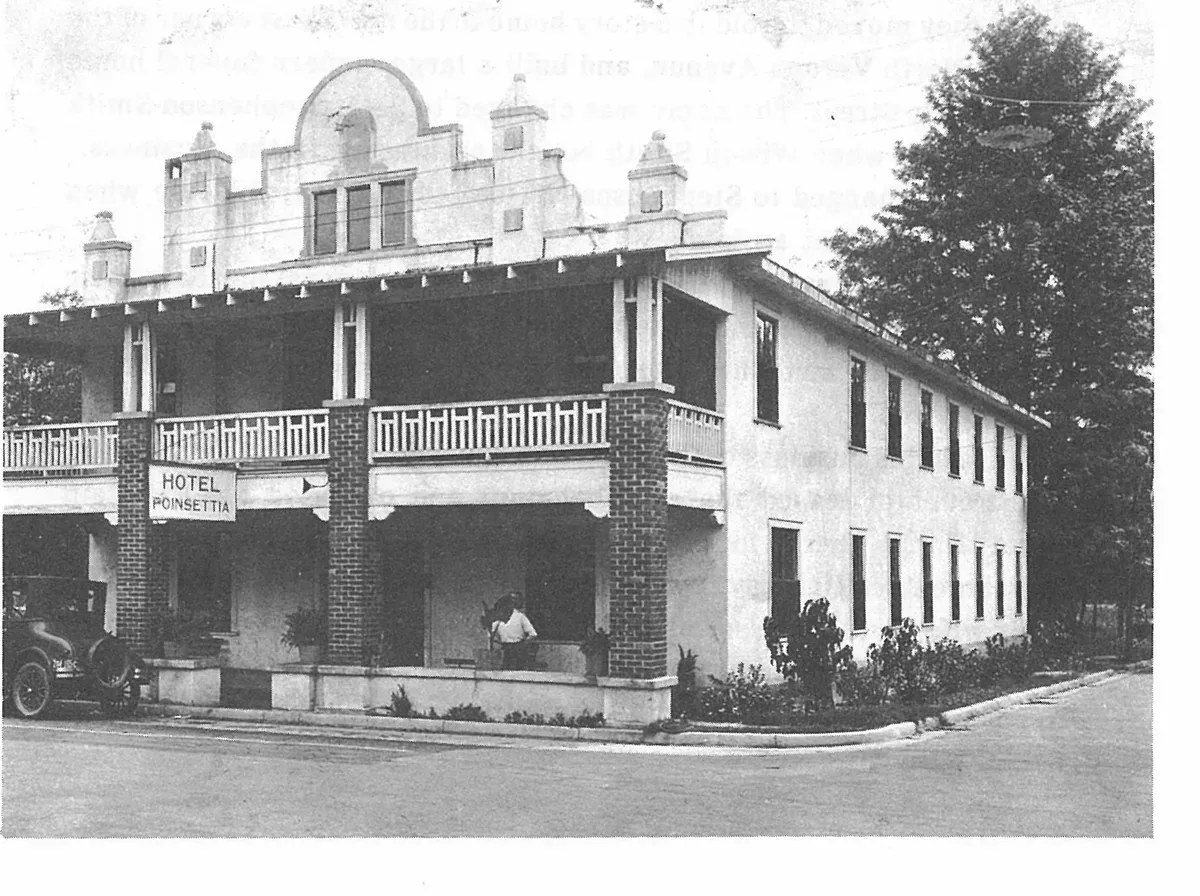
The First Hundred Years of Avon Park, Florida (1976), page 97. Avon Park Historical Society.[maxwell-1976]
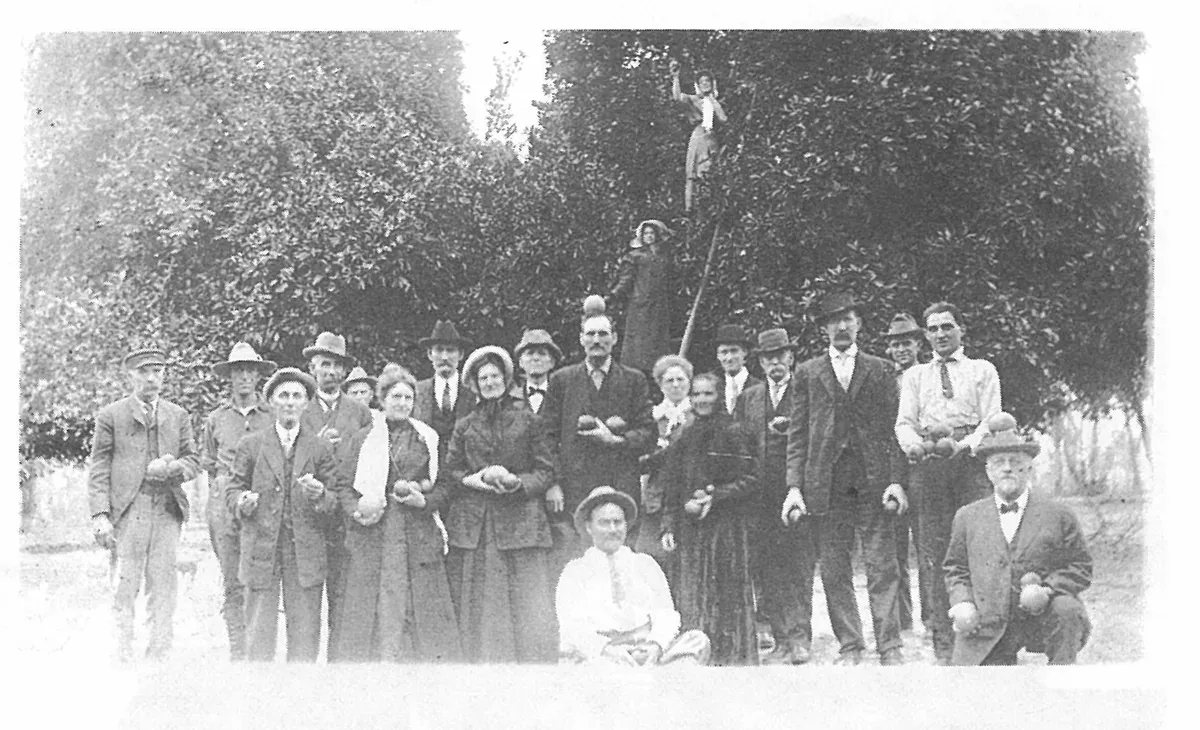
A typical group of prospectors who came and stayed at the Verona Hotel. The First Hundred Years of Avon Park, Florida (1976), page 98. Avon Park Historical Society.[maxwell-1976]
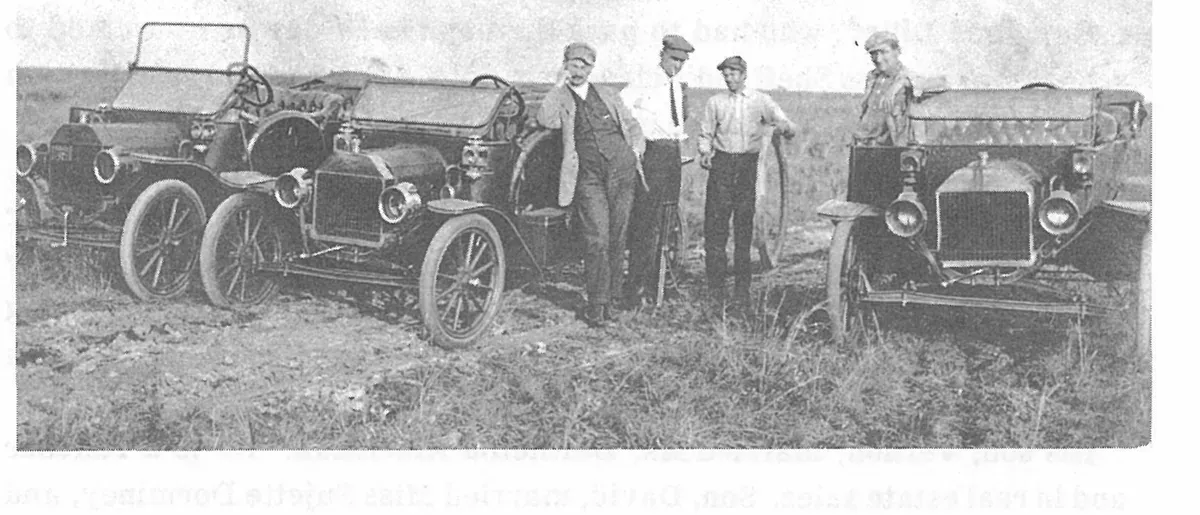
The automobiles Mr. Weitstein used to transport his customers. Notice the old tire pump beside the second man, and the innertube held by the third man. Flat tires were a common occurance on every trip and fixing the tire was done on the spot. The First Hundred Years of Avon Park, Florida (1976), page 98. Avon Park Historical Society.[maxwell-1976]
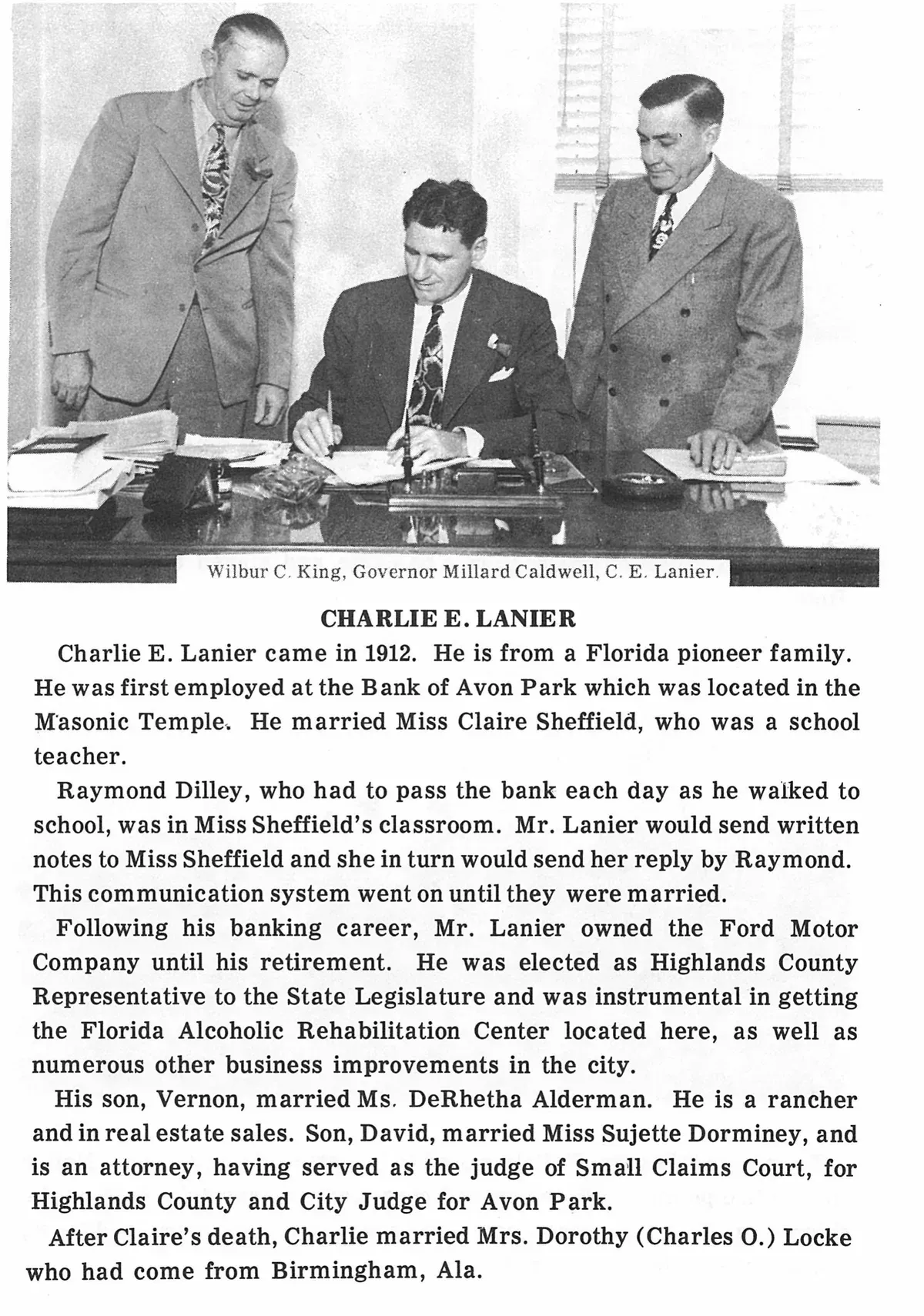
Wilbur C. King, Governor Millard Caldwell, C. E. Lanier. The First Hundred Years of Avon Park, Florida (1976), page 99. Avon Park Historical Society.[maxwell-1976]
CHARLIE E. LANIER
Charlie E. Lanier came in 1912. He is from a Florida pioneer family. He was first employed at the Bank of Avon Park which was located in the Masonic Temple. He married Miss Claire Sheffield, who was a school teacher.
Raymond Dilley, who had to pass the bank each day as he walked to school, was in Miss Sheffield’s classroom. Mr. Lanier would send written notes to Miss Sheffield and she in turn would send her reply by Raymond. This communication system went on until they were married.
Following his banking career, Mr. Lanier owned the Ford Motor Company until his retirement. He was elected as Highlands County Representative to the State Legislature and was instrumental in getting the Florida Alcoholic Rehabilitation Center located here, as well as numerous other business improvements in the city.
His son, Vernon, married Ms. DeRhetha Alderman. He is a rancher and in real estate sales. Son, David, married Miss Sujette Dorminey, and is an attorney, having served as the judge of Small Claims Court, for Highlands County and City Judge for Avon Park.
After Claire’s death, Charlie married Mrs. Dorothy (Charles O.) Locke who had come from Birmingham, Ala.
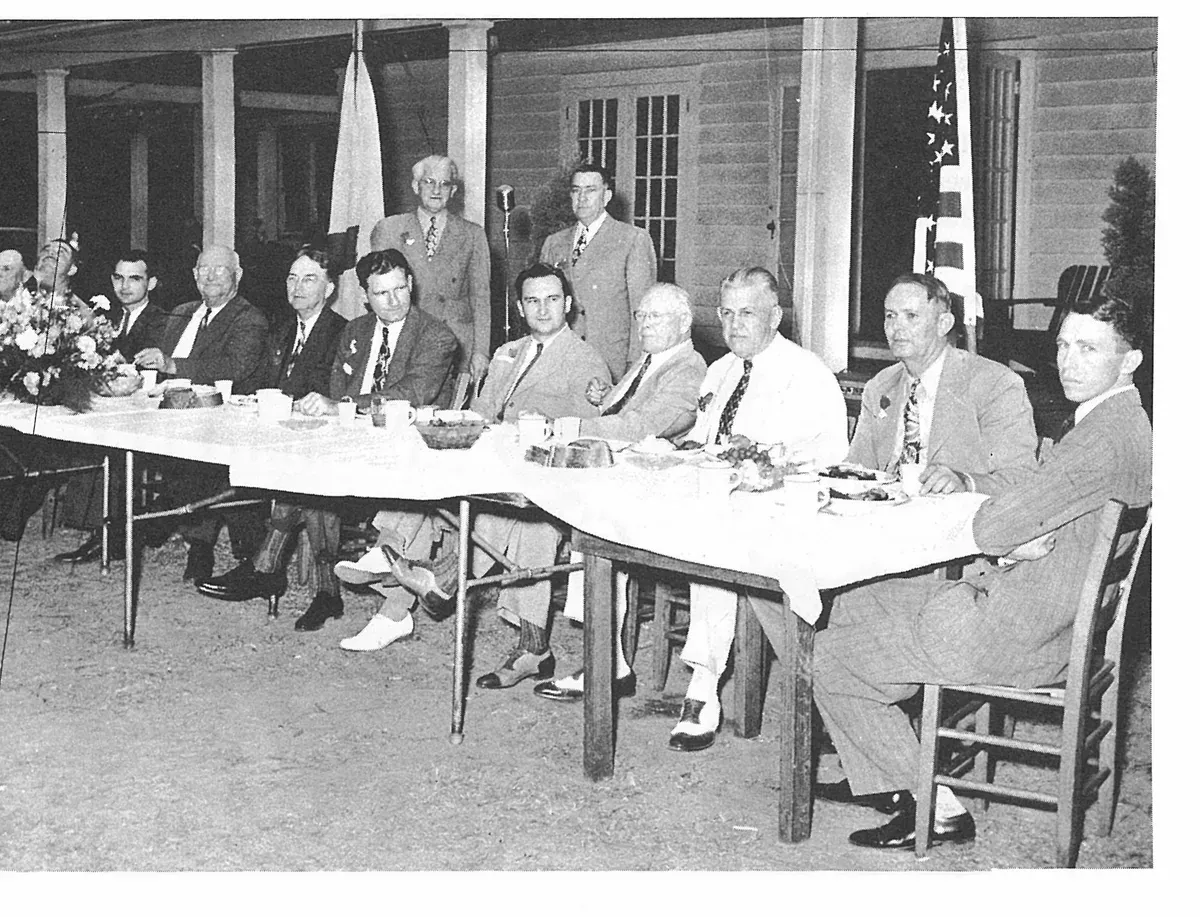
The First Hundred Years of Avon Park, Florida (1976), page 100. Avon Park Historical Society.[maxwell-1976] This picture was made in Tallahassee in 1942 when Mr. Lanier was in the Legislature. He is standing to the left of Governor Millard Caldwell as he signs the law to establish a branch of the Florida State Hospital in Avon Park. Other Avon Park men identified in this picture are Col. J. M. Lee, State Comptroller, and E. A. DeLaney, Mayor of Avon Park.
Incidentally, the State Hospital was never established here, but the property was finally used for the State Alcoholic Rehabilitation Center.
LADY IN THE HOUSE
Miss Edna Pearce of Fort Bassinger, a former school teacher in Avon Park, and later to become Mrs. William J. Lockett, was elected as Highlands County’s Representative to the State Legislature in 1938. She went to Tallahassee as the first woman ever to serve in the Florida State House.
She wielded a great deal of influence in getting the State Alcoholic Rehabilitation Center to be located here.
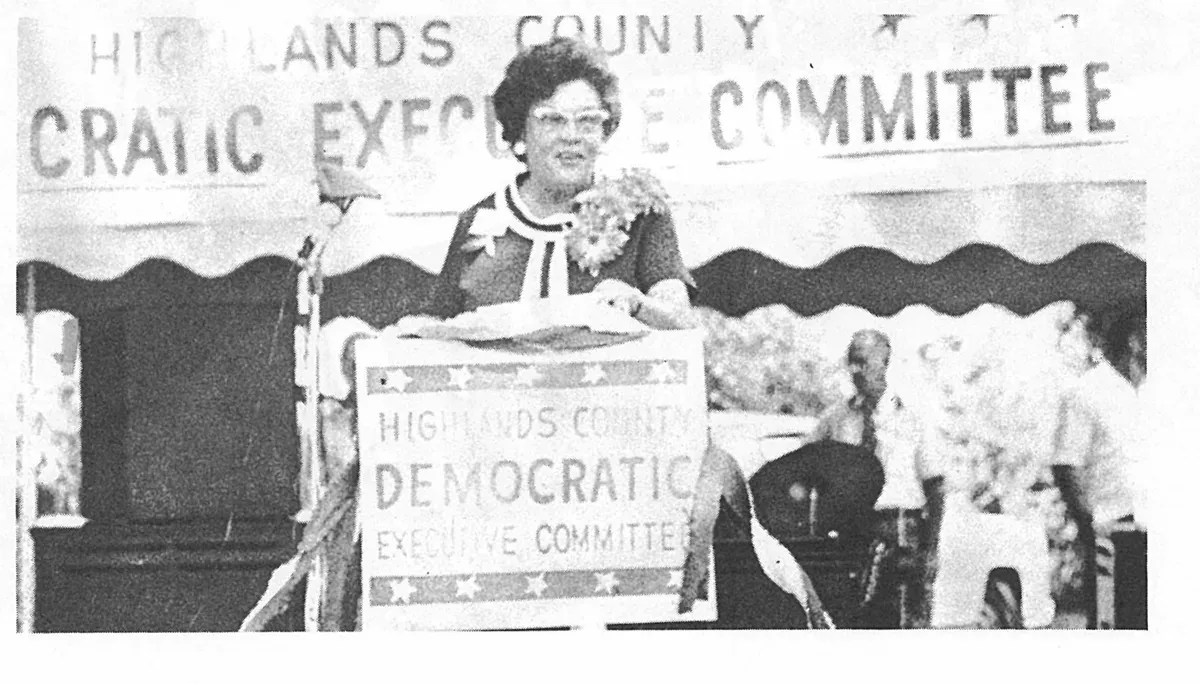
The First Hundred Years of Avon Park, Florida (1976), page 101. Avon Park Historical Society.[maxwell-1976]
THE FLORIDA ALCOHOLISM TREATMENT CENTER
In 1956 the State of Florida established The Florida Alcoholic Rehabilitation Center in Avon Park.
The name was changed to The Florida Alcoholic Treatment Center and Benjamin A. Brooks is the Adminstrator or superintendent of the hospital at the present time. They employ 83 people and treat an average of 800 people a year. Patients enter voluntarily for the program and this is the only facility in the state that is exclusively for the treatment of alcoholism.
TRI-COUNTY ALCOHOLISM REHABILITATIVE SERVICES, INC. maintains a treatment center on Highway 27 South of Avon Park. It is one of the State of Florida programs offering community out-patient treatments in each of the 67 counties of the State.
CHURCHES
THE UNION CONGREGATIONAL CHURCH, founded as the Union Evangelical Church September 11, 1892, with 34 charter members. Mr. and Mrs. O.M. Crosby donated the land for the church. At this time there were about 100 people in Avon Park.
The first Protestant Episcopal Church service was held in Avon Park by the Rev. J. N. Lee of Fort Meade, in the “Little Blue School House.” His text for the morning was from the Bible, Acts 8:35 and in the evening the text was from Eccl. 12:1, according to the entry made in the Record Book of the Verona Hotel.
The Rev. Francis Dwight Rood and wife, Annela, whom Crosby had met at the World’s Fair in Chicago and invited to come to Avon Park, became the first minister of the church, and they were also school teachers.
Max Wild and Edith Bennett were the first couple to speak their marriage vows in the new church. Miss Lillian Dilley and John Hood were the first couple to be married in a large formal wedding ceremony.
In 1926 the name Evangelical was changed to Congregational. Fellowship Hall and Sunday School rooms have been built.
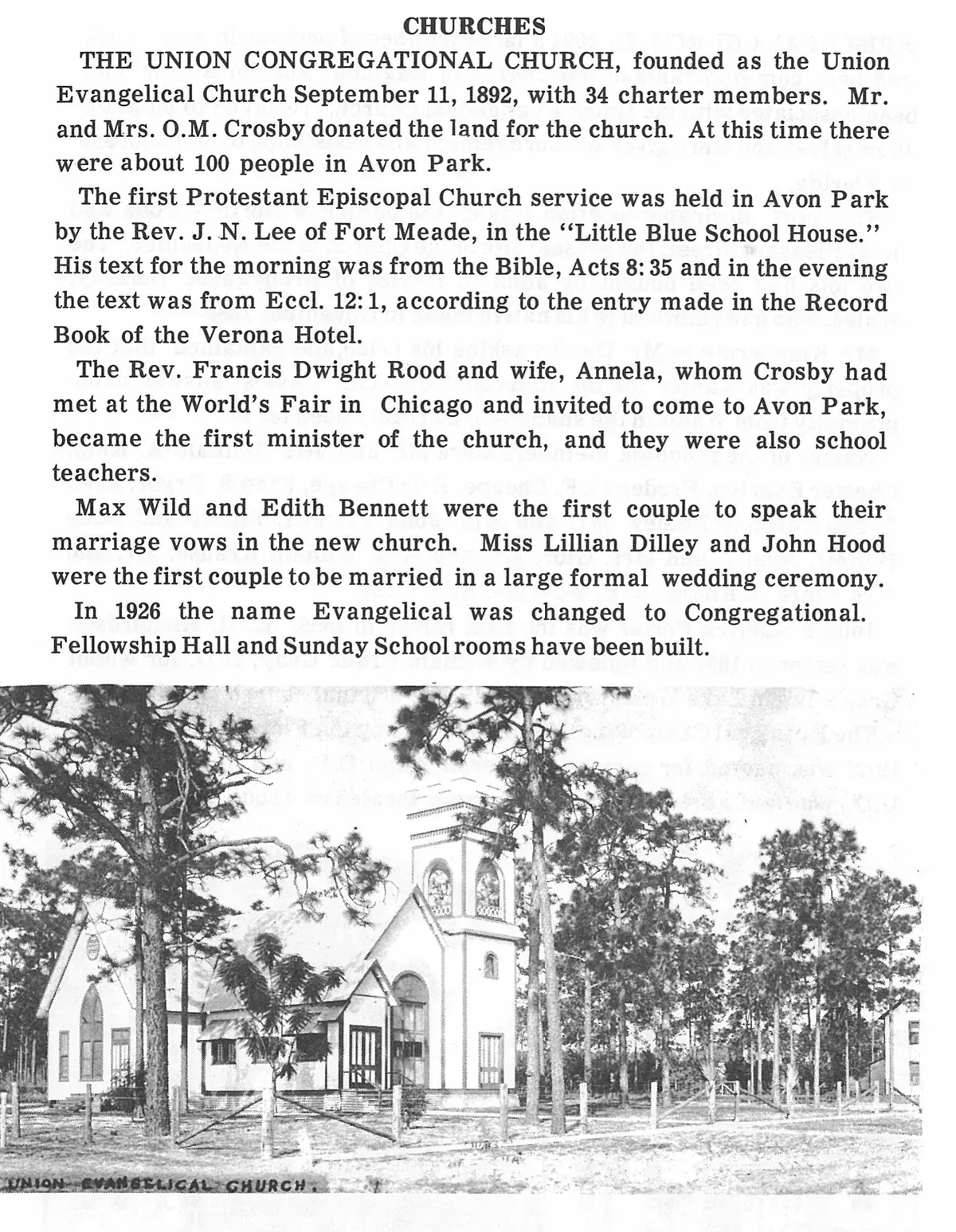
UNION EVANGELICAL CHURCH. The First Hundred Years of Avon Park, Florida (1976), page 102. Avon Park Historical Society.[maxwell-1976]
EPISCOPAL CHURCH, By 1894 a large number of persons in Avon Park had been communicants of the Church of England and for a time had been associated with the Union Evangelical Church, resolved to build for themselves,and were given encouragement and assistance by the Diocese of Florida.
The most desirable location was on the corner of North Verona and East Pleasant Street, the present site of the Church of the Redeemer. The two lots had been bought by John C. Davies of Brouygader Delzelly, Wales, who had returned to his native home in November 1889.
Mr. King wrote to Mr. Davies asking his price,and explained that the property was wanted for the Episcopal Church. Davies’ answer came promptly from Wales in the shape of a warranty deed for $1.
Names of the founding members were Mr. and Mrs. William A. King, Chester Everton, Frederick F. Cheape, Eric Cheape, Fred S. Pryor, Fred S. and Caroline Putney, Mr. and Mrs. John Thwaits, Phillip and Belle DeHoff, John J. and Mrs. Glor, Mr. and Mrs. William Krause, Mr. and Mrs. Clark D. Knapp, B. F. West and Ellis West.
John Frederick Porter was the first rector in 1895. E. R. Richardson was rector in 1897 and followed by William Crane Gray, D.D. for whom Gray’s Inn in Lake Wales was named. The original church stands today.
The Episcopal Camp Wing-Mann, operated by the Florida Diocese until 1979, was named for rectors, Cameron Mann D.D. and John D. Wing, D.D., who had a dream for a church camp located on Trout Lake.
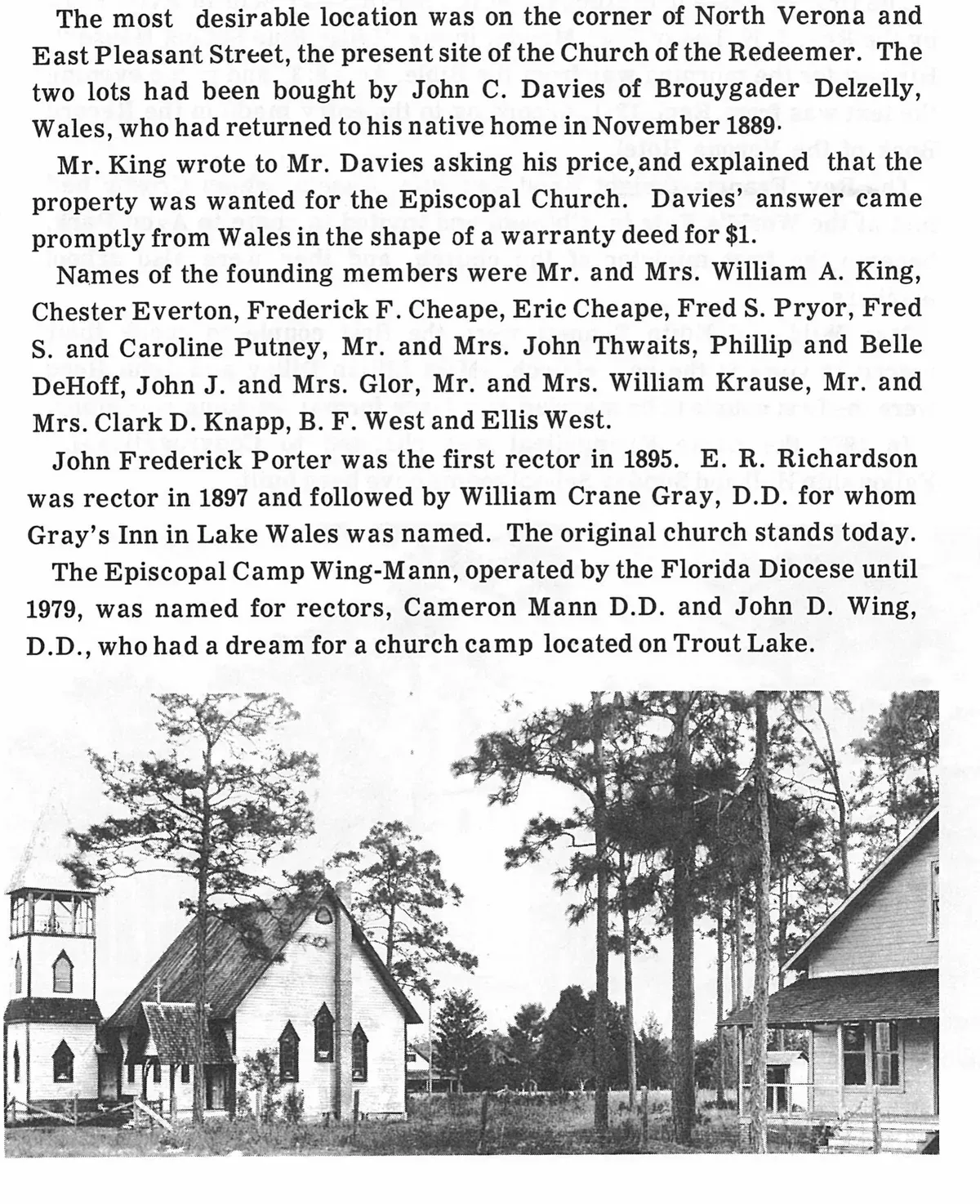
The First Hundred Years of Avon Park, Florida (1976), page 103. Avon Park Historical Society.[maxwell-1976]
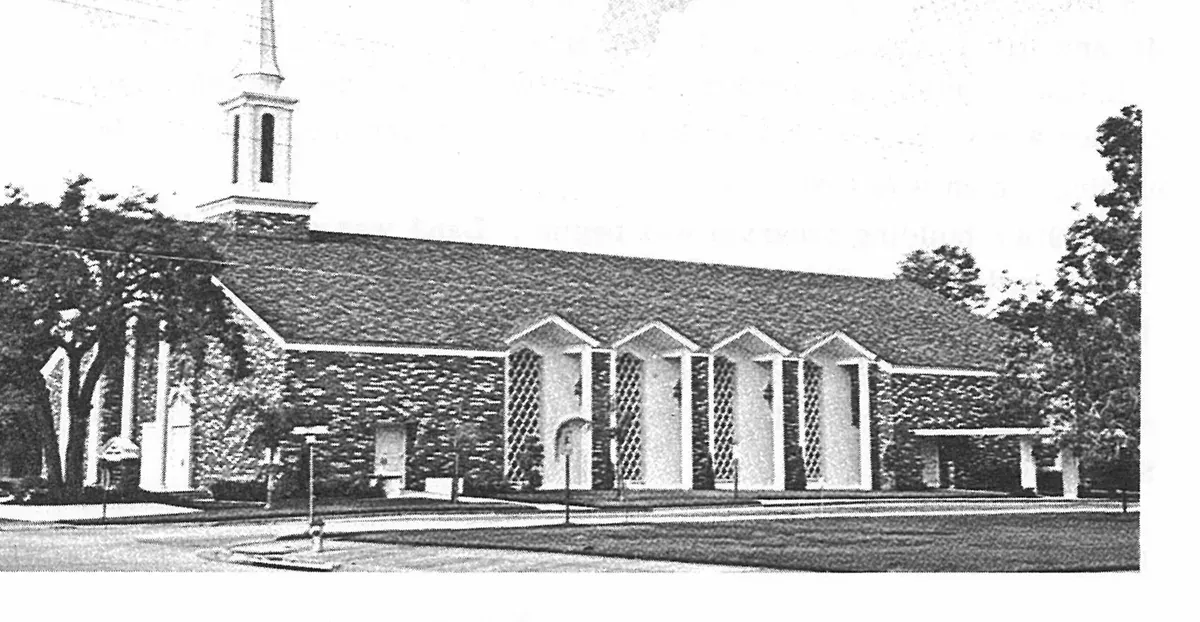
The First Hundred Years of Avon Park, Florida (1976), page 104. Avon Park Historical Society.[maxwell-1976]
THE FIRST BAPTIST CHURCH
The First Baptist Church of Avon Park was organized in 1913 following a series of meetings led by Rev. Elmer Albritton and Rev. Sam Durrance. Services were first held in the old school house on South Forest Avenue, and later in the tabernacle which was located on the present church property
The first church was erected in 1918, which was later torn away to make room for a new sanctuary. At the present time the church complex includes a large sanctuary, the first one being used as a chapel, a large Sunday School building and a social hall.
Ministers over the years have been Prentice, White, McDowell, Barnes, Baldwin, McClure, Frink, Dalton, Burton, Puryear and Liner. In 1956 the Rev. Aden D. Childress was appointed and served until his retirement in 1979.
Those from this church who have gone into full time Christian work are Gene and Dorothy Clark, Raymond Cook, Walter Cook, R. C. Dean, Milton (Tiny) Durrance, Gordon Eisenman, Alfred Englemann, Charles Lawhon, Sam Longbottom, Marjorie McCully, Bill Moseley, Wayne Strickler, Billy Wingfield, and Rev. Paul Steiner.
The First Baptist Church sponsors The Sunnyridge Mission Baptist Church which is located on Hwy 27 S. of Avon Park.
THE FIRST UNITED METHODIST CHURCH
In 1914 the Methodist Church was organized with 11 charter members. Mr. and Mrs. Charles Harris, Mr. and Mrs. B. H. Starkey, Mr. and Mrs. E. L. Hockersmith, Mr. and Mrs. J. H. Dutton, Mrs. Leila Hagan, J. W. Frazier and C. E. Lanier. In 1918 the congregation met in an old tin building which was a skating rink.
In 1919 a building program was begun . Land was donated by C. E. Lanier and Chesley Skipper. The first Sunday in May 1921 services were held in the sanctuary.
The original cream brick structure stands today. It was renovated and enlarged in 1951 and Wesley Hall was built, as well as additional Sunday School rooms.
Three young men have gone out from this church to become ministers. They are Dean Martin, Jack O. Witt and Glenn Mingledorff.
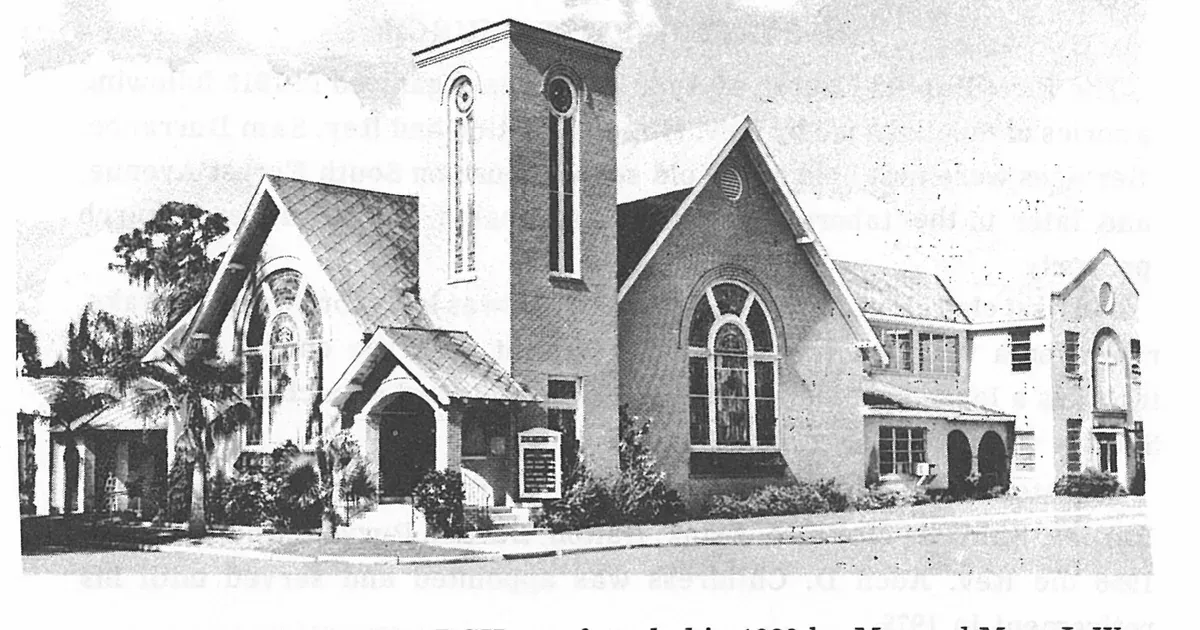
THE NAZARENE CHURCH was founded in 1929 by Mr. and Mrs. J. W. Meredith, T. R. Johnson, C. Syfrett, M. H. Gribble, Rev. N. B. Shade and Mrs. M. M. Bussey. The first pastor was the Rev. John Tompkins. The First Hundred Years of Avon Park, Florida (1976), page 105. Avon Park Historical Society.[maxwell-1976]
This church has produced two ministers, the Rev. Wm Earl Spurlock and the Rev. Arnold Roland. With a membership of less than 100, the final mortgage was burned in ceremonies May 7, 1978, for the new church and additional Sunday School rooms, located on West Main Street.
The present pastor is Rev. Stephen C. Perry.
THE CHURCH OF CHRIST was organized in 1917. A report in 1918 listed Clyde C. Conner, Minister, H. H. Willeford, E. A. Garrett and T.J. Russell as elders, F.S. Jordon and Leon Ragsdale as Deacons.
Services were held in the school house that stood near the corner of Walnut and Forests. This building was blown down during the 1926 hurricane. The members bought the lot from the city and salvaged the lumber to begin building their present church structure. The church has been renovated and additional Sunday School rooms added.
The following people have gone into full time Christian work from this church: Sarah Anderson to Japan. Robert Barker, Doyle Gillam, and James D. Judd and his sone, Randy, have all gone to Rhodesia, Africa. Claribel Welch has served in the Tennessee Orphan Home at Springhill.
THE FLORIDA AVENUE BAPTIST CHURCH began as the Southside Baptist Church. March 3, 1929 a group of people gathered at the home of Mr. and Mrs. E. A. Delaney for the purpose of organizing a church. The founding members were Mr. and Mrs. Delaney, Mr. and Mrs. W. H. Martin, Mrs. O. R. Perry, Mrs. Cora Cravey, Miss Ruby Wells, Mrs. Bernice Grantham, Mr. and Mrs. T. P. Powell and Rev. J. H. McClelland, who was the first pastor.
During his pastorate they built a church in the Crate Mill section and later this church was moved from the southside of town to its present location on South Florida Avenue
Ordained ministers from this church are E.E. Earnest, Roy Snipes, Durwood Kirkpatrick, and O. K. Collier.
CHRISTIAN SCIENCE SOCIETY and Reading Room is located on Avon Boulevard and Highlands Avenue in the Avon Park Lakes area.
OUR LADY OF GRACE CATHOLIC CHURCH is located on East Main Street. Father Gerald Grogan is the pastor.
The church was established in 1956. The Rev. Emil A. Heiring was the first pastor. The founding members were Rumpsa, Heim, Dunn, Rogers, Fenlon, King Hayes, Swiston, Station, Teppert, Vilkiatis, Palmer, Tomek, Delleo, Lagoni, Monahan, Boyle, Duffy, Vorseick, Feary and Tolbert.
CHURCH OF GOD, non-pentocostal, located on North Florida Avenue. Evangelist I. H. Marks of Kansas conducted a revival here and this church came into being on June 2, 1920. Those from this church who have gone into fulltime Christian work are David Lanier who is State Overseer of Churches in the state of Iowa, Lewis J. Willis, publisher and director of General offices in Cleveland, Joe Staton, evangelist, Ray Johns, pastor of North Melbourn Church, Quillen Green, Rogers Jefferson, Wayne and Howard Spratlin and Aaron McKinney all are in various work and visitation ministries
The AVON PARK CAMPGROUND Was established in 1939. Dr. H. C. Morrison, president of Asbury College, Wilmore, Ky., Dr. John A. Taylor of Sebring and C. E. Lanier were the founding members and provided the property for the campground. A tabernacle that seats 750 people, tow trailer courts and a dormitory with 100 rooms, all accommodate the hundreds of people who attend the annual camp meetings.
THE AVON PARK MISSIONARY CHURCH first held services on April 8, 1978 in a building on the Wauchula Road, (Hwy 64 W.) Dr. Kenneth Geiger, National President of the Missionary Church of Fort Wayne, Ind. delivered the message to 20 people who became charter members.
The present pastor is the Rev. Richard Starr, a former missionary to Ecuador, who speaks Spanish.
PENTECOSTAL BIBLEWAY CHURCH corner of South Anoka Avenue and West Center Street. Pastor is the Rev. Mitchell O. Parker, and Rev. Charles D. Lucas, assistant pastor.
THE FIRST CHURCH OF GOD, pentecostal, is the latest church founded in Avon Park, in 1979. Located at 117 South Highlands Avenue. Keith Reiley is the pastor.
FIRST ASSEMBLY OF GOD CHURCH was established in 1932. The Rev. and Mrs. C. M. Henderson served as the first pastor. The church was first built on Lake Blvd. and the new church was built at 112 South Central Avenue in the early ’40s.
Charter members included Mrs. Mary Folson, Mrs. Letha Clark, Mrs. Ellen McCullough, Mrs. Spurlock, Mrs. Myrtice Holloway, the families of Johnny Simpson, Carrie Jackson, Dewey DeLaney, Dan Willis and Marvin Corbett.
Among those who have entered full time Christian service from this church are Lewis Willis, Arlis Newell, John Moneyham, David and James Stocker and Curtis Arnold.
THE FIRST CHRISTIAN CHURCH was organized in 1958 with 30 Charter Members. Fred Davis and George H. Beckham spearheaded the movement for the church.
The congregation occupied two different locations before establishing the church in their present site on West Walnut Street. Rev. Clifford Dance served as pastor for more than 15 years. The present pastor is Rev. James S. Click
THE RESURRECTION LUTHERAN CHURCH was dedicated in June 1962. The building is located on the corner of East Main Street and South Highlands Avenue. Pastor is the Rev. John D. Lambert.
THE FIRST PRESBYTERIAN CHURCH of Avon Park was organized Feb. 4, 1962. Charter members were the families of Thomas B. Hallam. J. N. McDugald, Ted. J. Ward, The Maness and Alwood families and Mrs. Fenn and Dr. and Mrs. Daniel.
The final mortgage was burned on January 18, 1976.
THE FELLOWSHIP BAPTIST CHURCH began as The Fellowship Baptist Mission of the Athens Baptist Church. The Fellowship Baptist Church was constituted on December 15, 1963 with 57 charter Members. The new building is located on West Thomas Street. The present minister is Roland L. Holly.
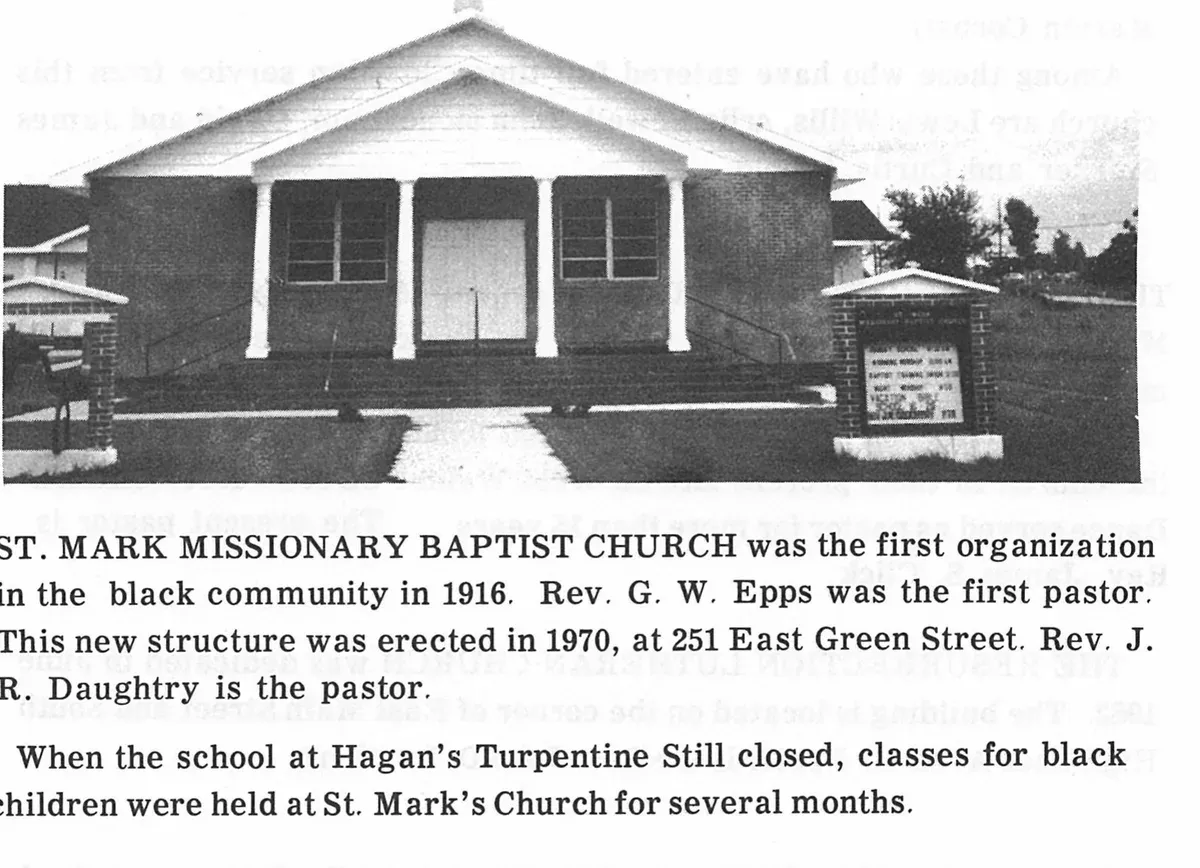
ST. MARK MISSIONARY BAPTIST CHURCH was the first organization in the black community in 1916. Rev. G. W. Epps was the first pastor. This new structure was erected in 1970, at 251 East Green Street. Rev. J. R. Daughtry is the pastor. The First Hundred Years of Avon Park, Florida (1976), page 109. Avon Park Historical Society.[maxwell-1976]
When the school at Hagan’s Turpentine Still closed, classes for black children were held at St. Mark’s Church for several months.
ST. JOHN MISSIONARY BAPTIST CHURCH, 1590 South Delaney Avenue. Organized 1918. Rev. R. Forman, first pastor. The present pastor is the Rev. A. Ousley.
MT. OLIVE A.M.E. CHURCH, 900 South Delaney Avenue. Organized in 1920. Rev. A. M. Wadell, first pastor. The present pastor is the Rev. W. E. Johnson.
BEULAH BAPTIST CHURCH, 1017 South Delaney Avenue. Organized in 1922. Rev. P. M. Scott, first pastor. The present pastor is the Rev. C. L. Carter.
MT. OLIVE C. M. E. CHURCH, 900 Castle Street. Organized in 1924. Rev. Ned Huggins, first pastor. Present pastor is the Rev. J. B. Fields.
CHURCH OF CHRIST, 1102 S. Carolina Avenue. Organized in 1938. Rev. Jerry Giles, first pastor. The present pastor is the Rev. J. D. Reeves.
APOSTOLIC CHURCH OF JESUS, 914 South Carolina Avenue. Organized in 1939, Elder Harry Johnson, first pastor. The present pastor is Elder T. J. Brown.
CHURCH OF GOD BY FAITH, 221 Second Street. Organized in 1939. Elder Baker, first pastor. Present pastor is Elder C. M. Fogle.
ST. MARY PRIMITIVE BAPTIST CHURCH, 202 Third Street. Organized in 1948. Rev. Washington, first pastor. Rev. T. J. Jackson is the present pastor.
EMANUEL CHURCH OF THE LIVING GOD, Pillow of Ground of Truth. 438 Sixth Street. Organized in 1950. Elder V. Lee, first pastor. Elder E. Reeves, present pastor.
BETHEL PENTECOSTAL HOLINESS CHURCH, 120 West Fourth Street. Organized in 1967. Rev. Spencer Sanders, first pastor. Present pastor is the Rev. Benjamin Carter, Jr.
NON-DENOMINATIONAL CHURCH, 922 Woodrow Avenue. Organized in 1977. Elder Joseph Nelson, first pastor who is still serving.
CHURCH OF GOD IN CHRIST, 1314 South Carolina Avenue. Elder Clarence C. Black, first pastor, who is still serving.
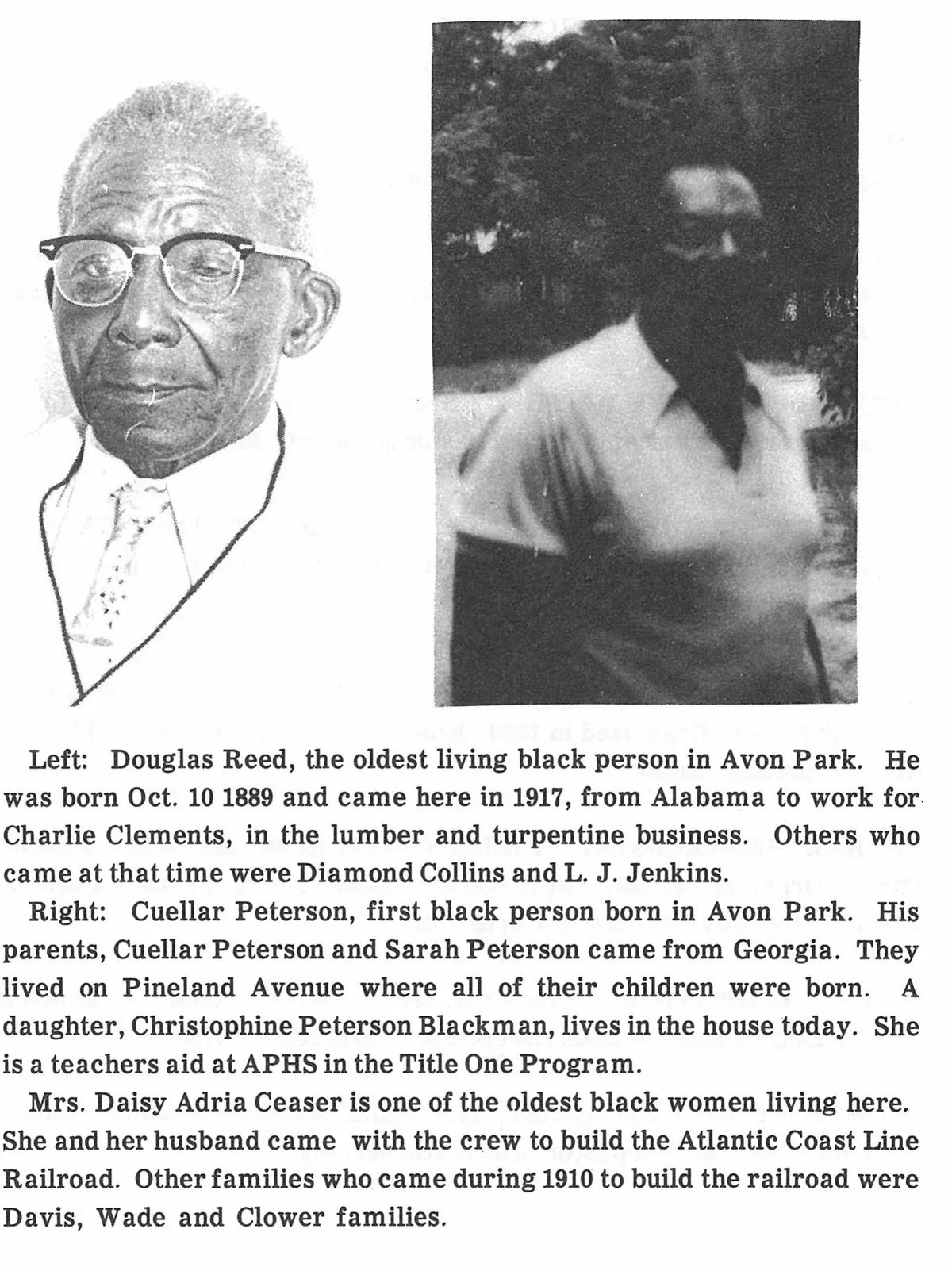
The First Hundred Years of Avon Park, Florida (1976), page 111. Avon Park Historical Society.[maxwell-1976]
Left: Douglas Reed, the oldest living black person in Avon Park. He was born Oct. 10 1889 and came here in 1917, from Alabama to work for Charlie Clements, in the lumber and turpentine business. Others who came at that time were Diamond Collins and L. J. Jenkins.
Right: Cuellar Peterson, first black person born in Avon Park. His parents, Cuellar Peterson and Sarah Peterson came from Georgia. They lived on Pineland Avenue where all of their children were born. A daughter, Christophine Peterson Blackman, lives in the house today. She is a teachers aid at APHS in the Title One Program.
Mrs. Daisy Adria Ceaser is one of the oldest black women living here. She and her husband came with the crew to build the Atlantic Coast Line Railroad. Other families who came during 1910 to build the railroad were Davis, Wade and Clower families.
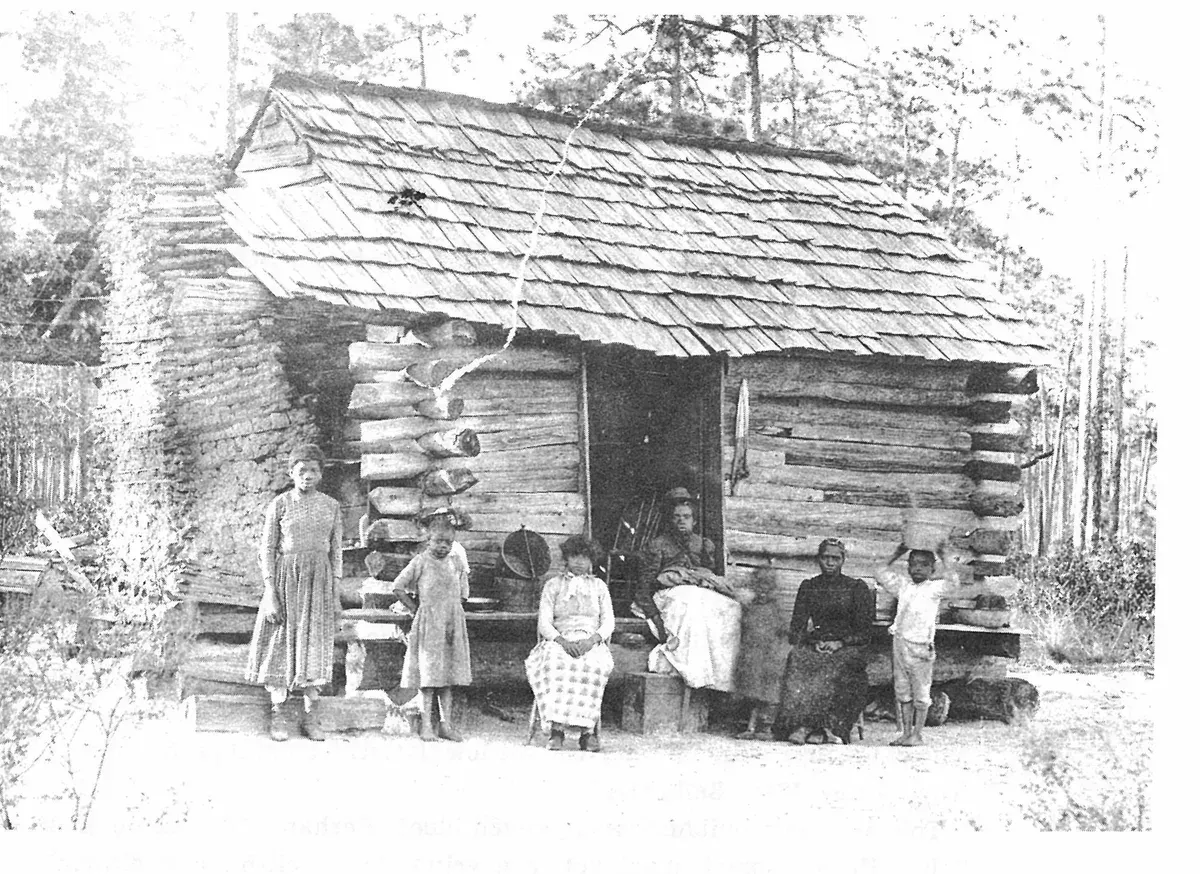
A typical log cabin, shack built for a colored family living at Hagan’s turpentine still which was located South of Avon Park in early days, about 1900. The First Hundred Years of Avon Park, Florida (1976), page 112. Avon Park Historical Society.[maxwell-1976]
It is understandable that those of us who have lived through the days of of Prohibition and Repeal, the desegregation of the races and the Civil Rights movement, would raise an eyebrow at Crosby’s advertisements of ‘no liquor’ and ‘no Negroes’ for his new settlement.
However, Crosby was cognizant of the race problems that had followed the Civil War during the reconstruction days, and had seen the degrading influence of liquor in the many new settlements that were springing up in Florida. He was determined that his new settlement would be free from what he considered negative influences. He re-inforced his determination with a “no liquor” clause in all of the deeds issued by the Florida Development Company, and it is reported that the first colored people who came were invited to leave, but of course, as time passed so did both of these restrictions
SCHOOLS
By 1888 a few families had arrived in Avon Park with children and William King decided it was time to have a school. A gentleman by the name of Dewey, who had come from Kansas, was employed as the first teacher. He was succeeded by Walter Byrd, one of the Irishmen for whom Lake Byrd is named. The names of these two teachers do not appear on the school board records in DeSoto County, but they were supplied by William Krause and verified by Mr. King in 1919 to Rev. Thomas McDowell, who read a historical sketch of the Avon Park schools at the dedication of the brick school house April 18, 1915.
It was thought that Dewey opened his school in a log cabin, and the school house was built during late 1888, on the south side of the street Midway, which is now West Main Street. Most of the early families lived on and around Lake Tulane and the school house was built on the south side of the first “hillock” beyond the low flat, which put it in the area of what is now West Bell Street.
This one-room building was painted blue! Perhaps “The Little Red School House” song had not yet been written to establish the traditional red school house. All public meetings were held in the school house as well as a Sunday School and all religious services, which had formerly been held in the Verona Hotel.
Daniel Quinn was employed to teach school in 1890. The term opened with 19 pupils on Oct. 6, 1890, and the following fall 1891 Miss Annie M. Hampton was employed to teach. She had 11 pupils and the following year only 15 enrolled. Perhaps some of the older ones got married or had to start to work.
It was decided in 1892 that the school was not conveniently located because most of the businesses and dwellings were being built nearer the Verona Hotel area. Money for the new school building was raised by subscription. N.S.C. Perkins was instrumental in contacting the non-residents and securing much of the needed funds for the school building which was erected at the corner of South Forest Avenue and West Walnut Street where the Church of Christ now stands.
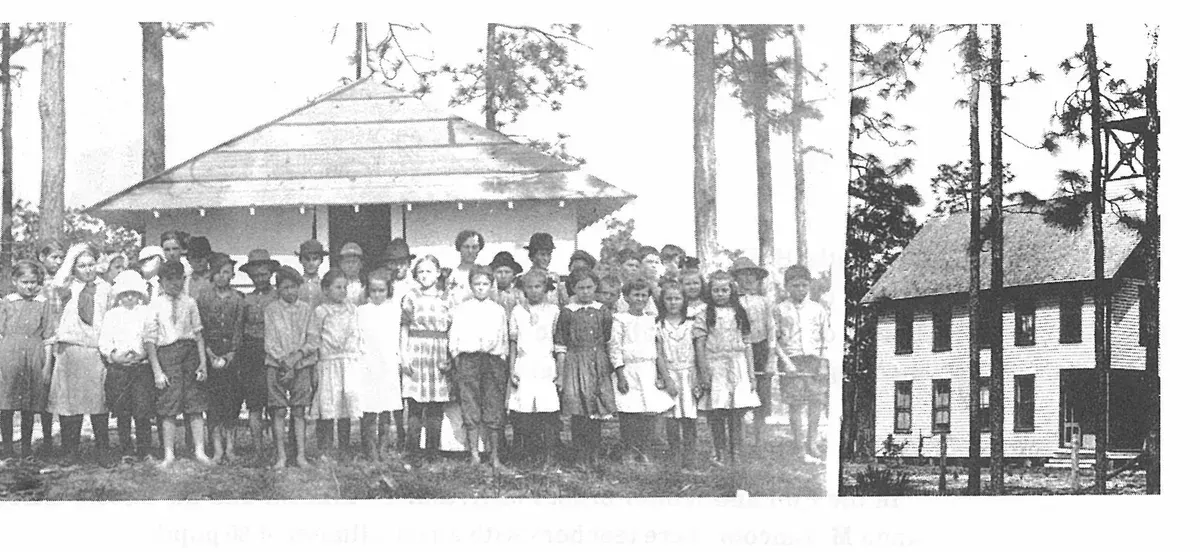
The First Hundred Years of Avon Park, Florida (1976), page 114. Avon Park Historical Society.[maxwell-1976]
Begun in 1893 the building was still unfinished but school opened on January 8, 1894 with the Rev. F. D. Rood and wife, Annella C. Rood, as the teachers with 19 pupils. Rev. Rood was also the first pastor of the newly built Evangelical Church, now the Union Congregational Church. Enrollment increased to 58 pupils by 1894 and Mrs. J. E. Thwaites was employed.
This building and all of its contents was burned on December 4, 1895. It had already been deeded to the County school board but had not been insured and it was a total loss The burning was the deliberate act of one revengeful man, who had a grudge against Mr. King and Mr. Crosby. It was a great loss to the community and was hard to bear. The story of the burning will be told in a later portion of this book. No pictures of this school building or the first little blue school house have ever been found.
DeSoto County had only two school districts, Arcadia and Punta Gorda. A movement was started for a school sub-district for Avon Park. As recorded in The Avon Park Idea, an election was held June 6, 1894 to vote on the question.
Twelve votes were cast, all in favor of the sub-district which was to embrace all of township 33, range 28 east, and later the district was extended east to embrace the Kissimmee River area. This became District 3 of DeSoto County. Trustees elected were Aaron Bassett, William A. King and Carl D. Knapp. M. F. Giddens was chairman of the board and T. J. Sparkman was the school superintendent of DeSoto County.
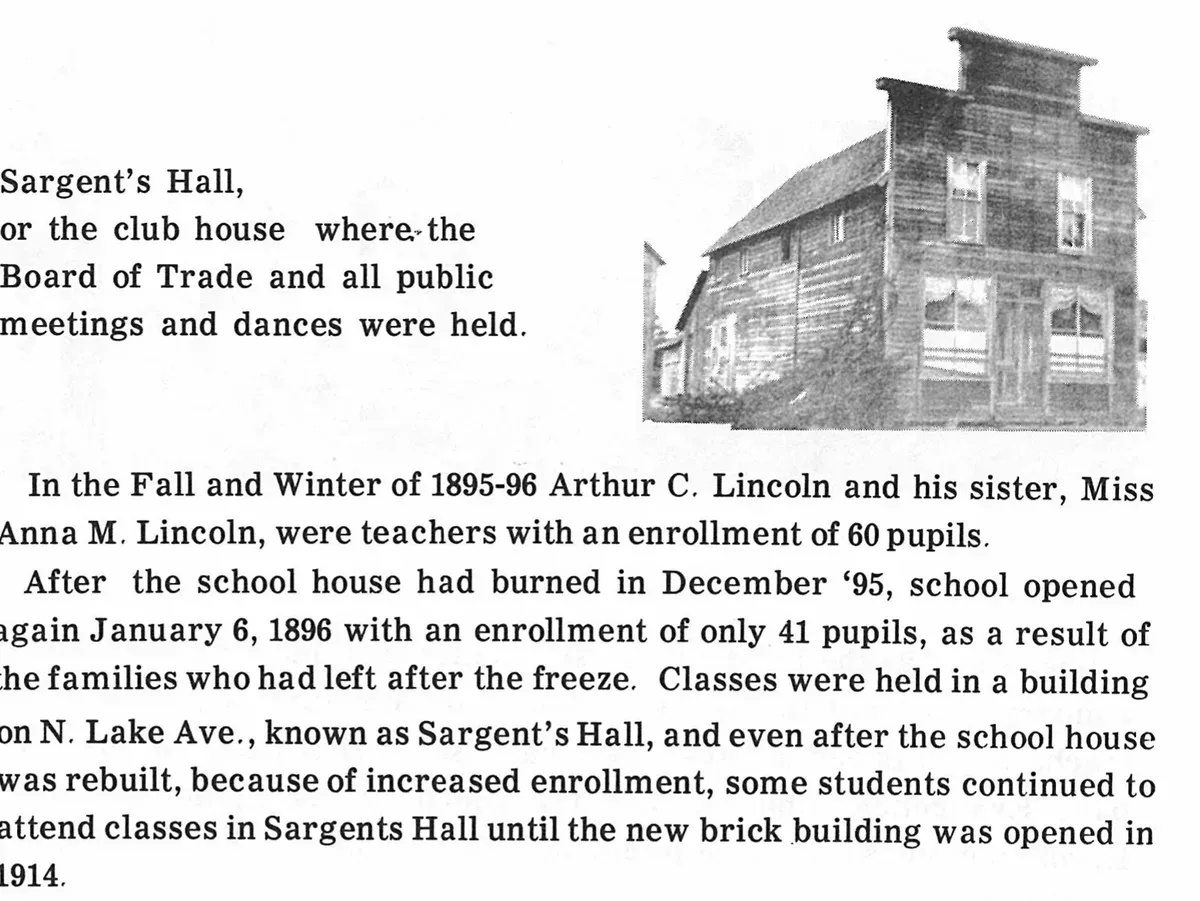
Sargent’s Hall,. The First Hundred Years of Avon Park, Florida (1976), page 115. Avon Park Historical Society.[maxwell-1976] or the club house where the Board of Trade and all public meetings and dances were held.
In the Fall and Winter of 1895-96 Arthur C. Lincoln and his sister, Miss Anna M. Lincoln, were teachers with an enrollment of 60 pupils.
After the school house had burned in December ’95, school opened again January 6, 1896 with an enrollment of only 41 pupils, as a result of the families who had left after the freeze. Classes were held in a building on N. Lake Ave., known as Sargent’s Hall, and even after the school house was rebuilt, because of increased enrollment, some students continued to attend classes in Sargents Hall until the new brick building was opened in 1914.
October 4, 1897 classes began in the new building with an enrollment of 58 pupils. Prof. E. L. Richardson, a graduate of Dartmouth College, was the first teacher and he continued for the next nine years.
A small building was erected near the two-story school house in 1906 because of increased enrollment and the students called this building “The Coop.”
The following teachers and principals were employed from 1906-1912: M. R. Martin, Miss Nina Ogg, the Rev. James N. Shockley, E. L. Putney, John Bethea and Marion Durrance as principal with Miss Claire Sheffield as his assistant.
From 1913-18 the principals were James M. Stock, Mr. Haltiwanger, J. G. Malfers and Prof. A. J. Gross, each having two or more assistant teachers, among them being Miss Lola Crews. During this time only one student, Cyrus Street, became a 10th grade student.
This two-story school building was used for religious services by the Church of Christ after the schools vacated it. During the 1926 hurricane the building was blown off its foundation and the Church bought the property and began building their present church with the salvaged lumber from the old school house.
The new two-story red brick building was started in 1914 and dedicated April 15, 1915, to be the High School building, facing South Lake Avenue. The bell tower housed a bell that was heard all over the area as it was rung to call the students to class.
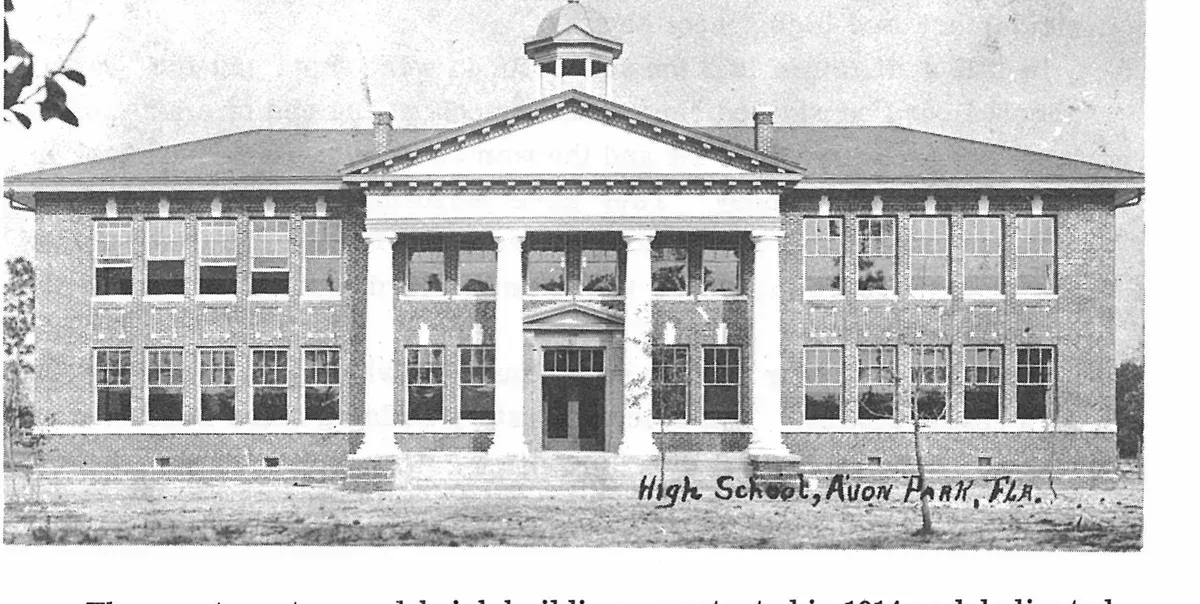
High School, Avon Park, Fla. The First Hundred Years of Avon Park, Florida (1976), page 116. Avon Park Historical Society.[maxwell-1976]
Prof. I.C.M. Ellenberger came to be the principal of Avon Park in 1919. When DeSoto County was divided to make five counties, Highlands County came into being and Prof. Ellenberger was appointed as the County School Superintendent but Governor Craig Hardee informed him that he could not hold two state jobs, so he chose to continue as principal of the Avon Park Schools, and W. A. Marshall was appointed and he served one year. F.N.K. Bailey was elected and he served 19 years as County School Superintendent.
During Prof. Ellenberger’s administration, the Avon Park schools had reached an enrollment of 200 students and the county schools joined the Southern Association of Secondary Schools.
In 1919 The Mothers Congress was organized and later it was the beginning of the PTA which was organized in 1926. The Parent-Teacher - Association sponsored many money-making projects which provided money for many needs of the classrooms that were not furnished by the County School Board. The PTA also operated the first lunch room for the children under the supervision of Mrs. Tennie Haynie, Berta Lander and Vivian Hartt. The first paid lunch room managers, about 1930, were Mrs.
C. H. and Mrs. R. A. Gerrard. Mrs. E. C. Wever and Mrs. Virgal Still were later managers of the new cafeteria that was built for all elementary and high school classes.
In 1922 andagain in 1932 the school funds were short and the County School Board considered closing the schools at the end of a six-months term but each time the PTA and the women of Avon Park undertook to raise the needed money. They gave performances, had bake sales, solicited money from door to door and were able to raise the major part of the money needed, and once the County Board paid a portion of the salaries in script.
Plans were laid for another school building which was finished in 1925 at a cost of $150,000. This stucco two story building faced South Verona Avenue. It had a large auditorium with a balcony, and this was to serve the community for all public meetings for the next fifty year.
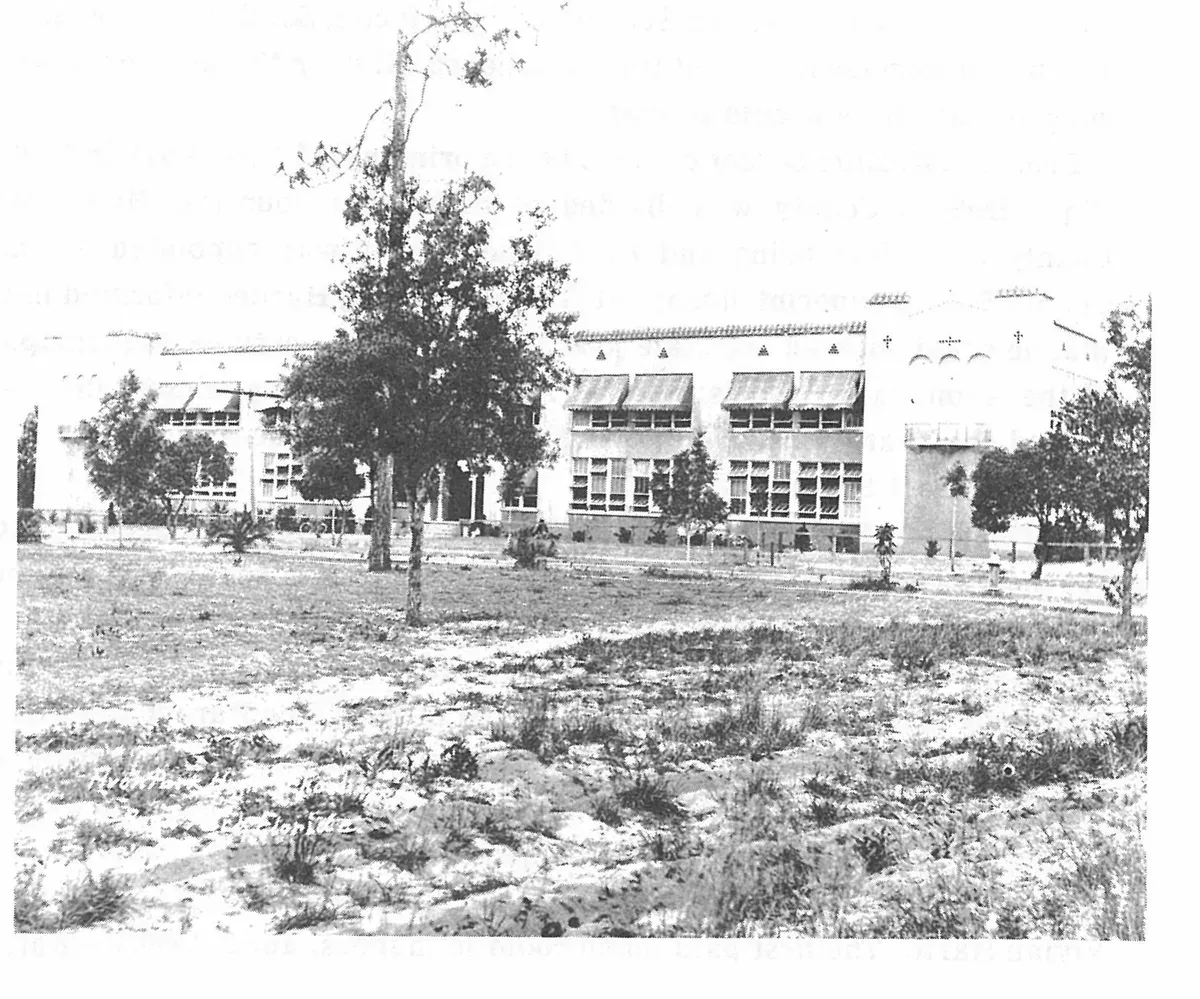
The First Hundred Years of Avon Park, Florida (1976), page 117. Avon Park Historical Society.[maxwell-1976]
The 1925-26 graduating Seniors published the first school annual which they named the “Galleon.” Each succeeding year since, the Senior Class has published an annual, and it has always been called the “Pitchfork” except for the annual,published by the senior class , in 1954 under the direction of Mrs. Patti Hill. They named that annual the “Aloha.”
In the early Twenties the High School football team became known as the “Red Devils.” A life-size figure representing the devil with a pitchfork, was erected on the roof of the new high school building. Paul S. (Mickie) Heath, an amateur sculptor designed and made this cement figure. Over the years it became a challenge to opposing football teams and once the statue was painted blue and again it was stolen by the opposing team. Finally the statue was anchored in a cement base on the roof of the building. The devil statue is to be removed when this school building is replaced, and it will be preserved in a suitable location.
Prof. R. T. Fairey came as the principal of the school at the beginning of the 1926-27 school term. Enrollment had reached a peak of 867 students by the end of his tenure in 1936.
Dr. Stanley Reeves came in 1936 as the supervising principal and Mrs. Charles Shepherd as principal of the elementary school. The school system continued to grow to keep up with the constantly increasing enrollment, diversified manuel training, music, art, home economics, agriculture, athletics and physical education all kept abreast of the times, as did the school’s academic program. A band room was added to the high school building and more classrooms were built at the elementary school. A new gymnasium and cafeteria were erected. Bud Roberts directed the band and later Mr. Gorman became the band director and under his direction the band brought many honors to Avon Park. Following his retirement, Vic MicKunas became the director and continued the APHS reputation for an excellent band.
Mr. A. B. Whilhite came to serve as the supervising principal in 1942. His wife, Ann, served as an assistant in the office. When they retired in 1966 it was an accepted fact that they were the most popular and influential leaders ever to be remembered by the student body.
Enrollment of elementary grades increased every year and it became necessary to add portable classrooms.
All through the years the athletic program has brought honors to Avon Park. In the late Twenties,Coach Carmichael and Harold Rowe were popular coaches. Coach Rowe volunteered at the beginning of WW II and became a Marine officer. The Memorial Field on South Delaney Avenue is named in honor of Coach Rowe and Charles Sherman who lost their lives in the war.
Edwin Carter became the coach. Following him Joe Franza became the Coach in 1938. The Avon Park High School athletic teams have won the State Baseball Championship and the Conference Football Championship a number of times.
Lucy Derkman (Mrs. Richard Derkman) has covered the sports and athletic program of the schools for local newspapers for more than 20 years. At one time Lucy was the only woman sports’ reporter in the State of Florida.
At the close of the school year 1978-79 the student enrollment had reached a total of 2500. Teachers and all school personnel totaled 215 people.
The 1979-80 school year opened with Lester F. Watson, Principal of the High School, John C. Martin, Middle School, Norris T. Brooks, Elementary School and E. Leon Garner, Principal of the Hopewell School.
A building program was started in 1978 to replace the buildings between South Lake Avenue and South Verona Avenue. The new structures are one-story brick, ultra-modern architectural design. The cost of this new complex for the Avon Park Middle School $2,910,000.
The new Middle School buildings were occupied by students November 12,1979. The old buildings were razed immediately. But they did not come down without a loud protest from many Avon Park citizens who had fond memories of their school days, as well as considering the enormous cost of the new buildings.
But along with love and respect for the old, go pride and esteem for the new and modern air-conditioned classrooms, where Avon Park’s children will be attending classes in the future.
In 1955 the new elementary school was built in the area between West Winthrop and La Grande Streets, for grades one through four at a cost of $340,000. Classes were transferred from the South Lake Avenue building, which became known as the Middle School.
Vaughan Driggers was principal of the elementary school for five years. He retired in 1951. Mrs. Driggers taught in the high school.
George Kelsey, who had served in the Highlands County Schools most of his life, was appointed principal of the elementary school. He moved his offices into the new elementary school where he served until his retirement.
Mr. Kelsey was a dedicated person, having served 47 years in the county school system. His quiet , gentle manner commanded the respect of both teachers and students.
A few of the most popular teachers to be remembered are Mrs. Alice Sherman, Miss Alma Harrell, Miss Millie Pearson, Mrs. Patti Hill, Mrs Sadie Myers Brown and Miss Mildred Myers, who retired with a record of 48 years teaching the Avon Park Schools.
School Superintendents for Highlands County have been I.C.M. Ellenberger, W.A. Marshall, Col. F.N.K. Bailey, Fred Wild, Andrew W. Miracle, George Douglass and Dr. Dan Davis. Five of these men were from Avon Park.
THE RIDGE AREA DAY SCHOOL began in 1957 for educable retarded children Seventeen children from three counties enrolled. The first class was held in the Woodruff Heights building. Through the efforts of G. Franklyn and Mary Ellen Ward, who donated land, and contributions and donations from many other people, a new building was erected five years later and classes began in 1962. The children have access to the Avon Elementary Cafeteria. A bus was made possible through the donation of hundreds of trading-stamp books from many citizens. This school is operated by the Highlands County School board.
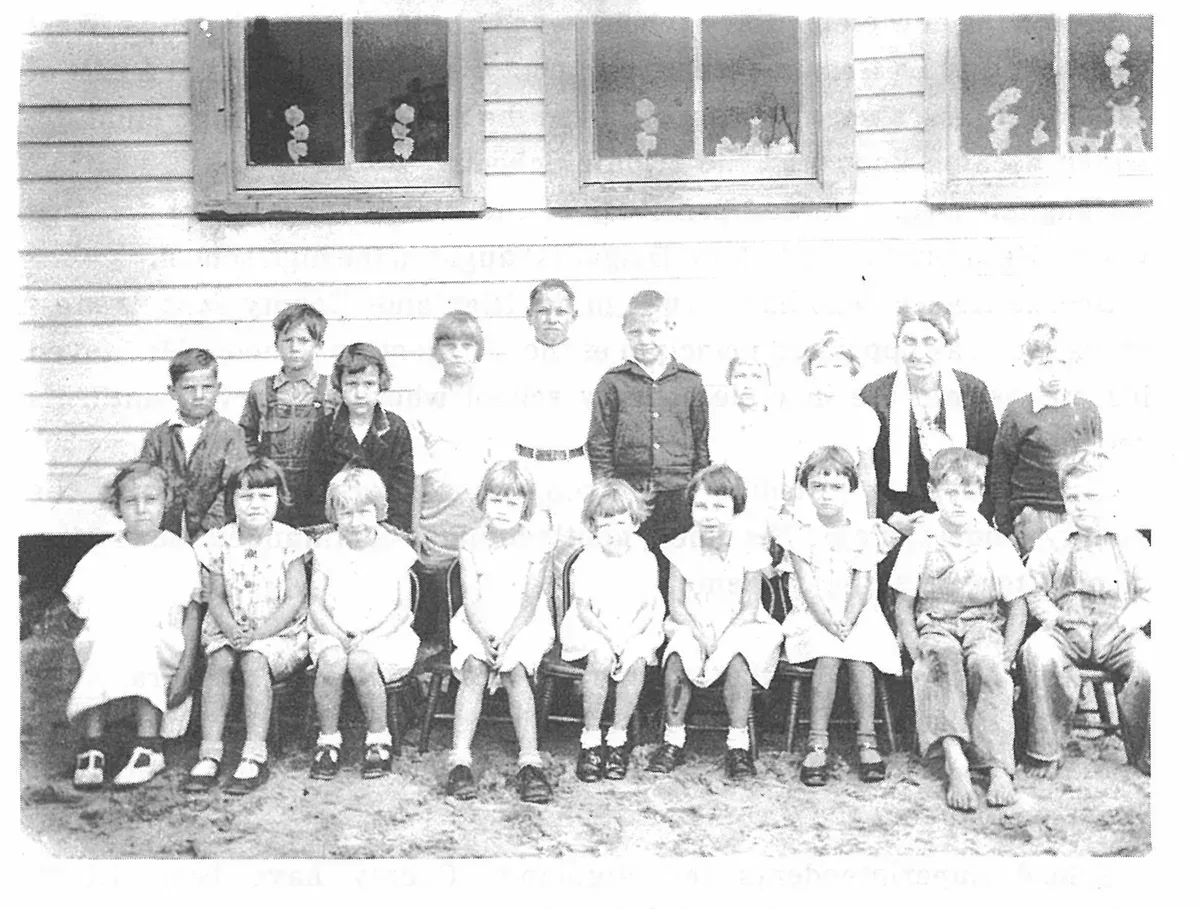
THE CRATE MILL SCHOOL was opened in 1920 for children whose families lived and worked at the crate mills. Mrs. Charles Shepherd was principal of this school. She taught all elementary grades in the small school with one other assistant teacher. The First Hundred Years of Avon Park, Florida (1976), page 121. Avon Park Historical Society.[maxwell-1976]
Some of the people who attended this school remember their childhood days with all of the classes in the one room. They also recall the water hole, known as Norton’s Pond, where they fished after school. This pond was later filled in with dirt as the water level dropped and today there is no evidence that water was ever in this area.
The first school in Avon Park for colored children was opened at Hagan’s Turpentine Still about 1910 A Mr. Abraham was the teacher. When the Still closed, Mrs. Wilson opened a school in her home on Pineland Avenue because she felt that children should learn to read,
write and spell. Later the County opened a school in a small wooden building in the Crate Mill Section of Avon Park and the teachers remembered were Mr. Lindsay, Rev. Zanders and Prof. and Mrs. Jones. Lucille Nemins Miles was remembered as a very strict teacher.
The name “Hopewell” for the colored school was the result of the children’s repeating, “hope we’ll win”, “hope we’ll win “ at the time they had entered some exhibits in a fair that was held.
When Hopewell School was opened it had only grades one through eight. Prof. Earnest E. Sims, who had been the principal of Hopewell School before the integration of black and white students, was appointed as assistant principal of the Avon Park schools, and later the Middle School, where he served until his retirement in 1971.
The Hopewell School was enlarged when classes were integrated. Today it accommodates grades from one through two, kindergarten and preschool classes as well as a special class for migrant children.
Prof. Sims recalls how he entered the first grade here when his family moved from Fort Meade. When he finished the eighth grade he went to St. Augustine to the Florida Memorial College. Here he finished two years and received a License Instructor’s degree.. He came back to Avon Park to teach and, later he attended A & T College in North Carolina and Columbia University. Following these years he returned to Avon Park where he taught for 35 years, being the oldest black person holding this record.
The integration of black and white students and teachers began in 1966, first on a voluntary basis of seniors from all of the County High Schools. In the following years a complete transfer of students and teachers were accomplished without incident.
A new high school was built on a large tract of land east of Avon Park between East Main and Canfield Street and South Marshall Avenue. The cost of this complex was $2,000,000. The design was the ultimate in efficiency for air-conditioning and heating with a large auditorium and a cafeteria.
Following Mr. Wilhite’s retirement, principals to serve were Guy Garrett, Aaron W. Cravens and John W. Crittenden. Lester F. Watson is now the principal of the High School. His assistant is Helen Britt.
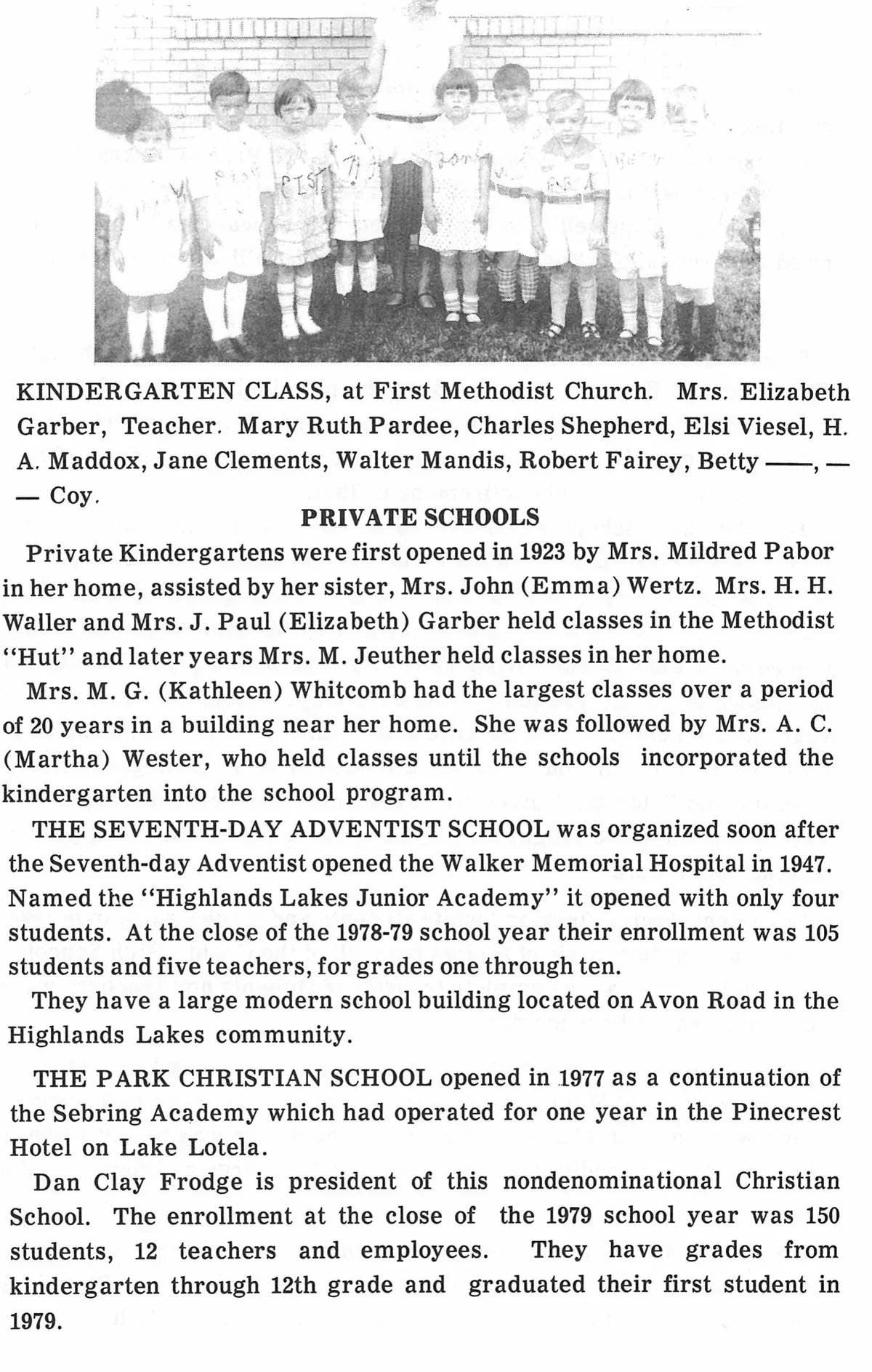
KINDERGARTEN CLASS, at First Methodist Church. Mrs. Elizabeth Garber, Teacher. Mary Ruth Pardee, Charles Shepherd, Elsi Viesel, H. A. Maddox, Jane Clements, Walter Mandis, Robert Fairey, Betty ——, —— Coy. The First Hundred Years of Avon Park, Florida (1976), page 123. Avon Park Historical Society.[maxwell-1976]
PRIVATE SCHOOLS
Private Kindergartens were first opened in 1923 by Mrs. Mildred Pabor in her home, assisted by her sister, Mrs. John (Emma) Wertz. Mrs. H. H. Waller and Mrs. J. Paul (Elizabeth) Garber held classes in the Methodist “Hut” and later years Mrs. M. Jeuther held classes in her home.
Mrs. M. G. (Kathleen) Whitcomb had the largest classes over a period of 20 years in a building near her home. She was followed by Mrs. A. C. (Martha) Wester, who held classes until the schools incorporated the kindergarten into the school program.
THE SEVENTH-DAY ADVENTIST SCHOOL was organized soon after the Seventh-day Adventist opened the Walker Memorial Hospital in 1947. Named the “Highlands Lakes Junior Academy” it opened with only four students. At the close of the 1978-79 school year their enrollment was 105 students and five teachers, for grades one through ten.
They have a large modern school building located on Avon Road in the Highlands Lakes community.
THE PARK CHRISTIAN SCHOOL opened in 1977 as a continuation of the Sebring Academy which had operated for one year in the Pinecrest Hotel on Lake Lotela.
Dan Clay Frodge is president of this nondenominational Christian School. The enrollment at the close of the 1979 school year was 150 students, 12 teachers and employees. They have grades from kindergarten through 12th grade and graduated their first student in 1979.
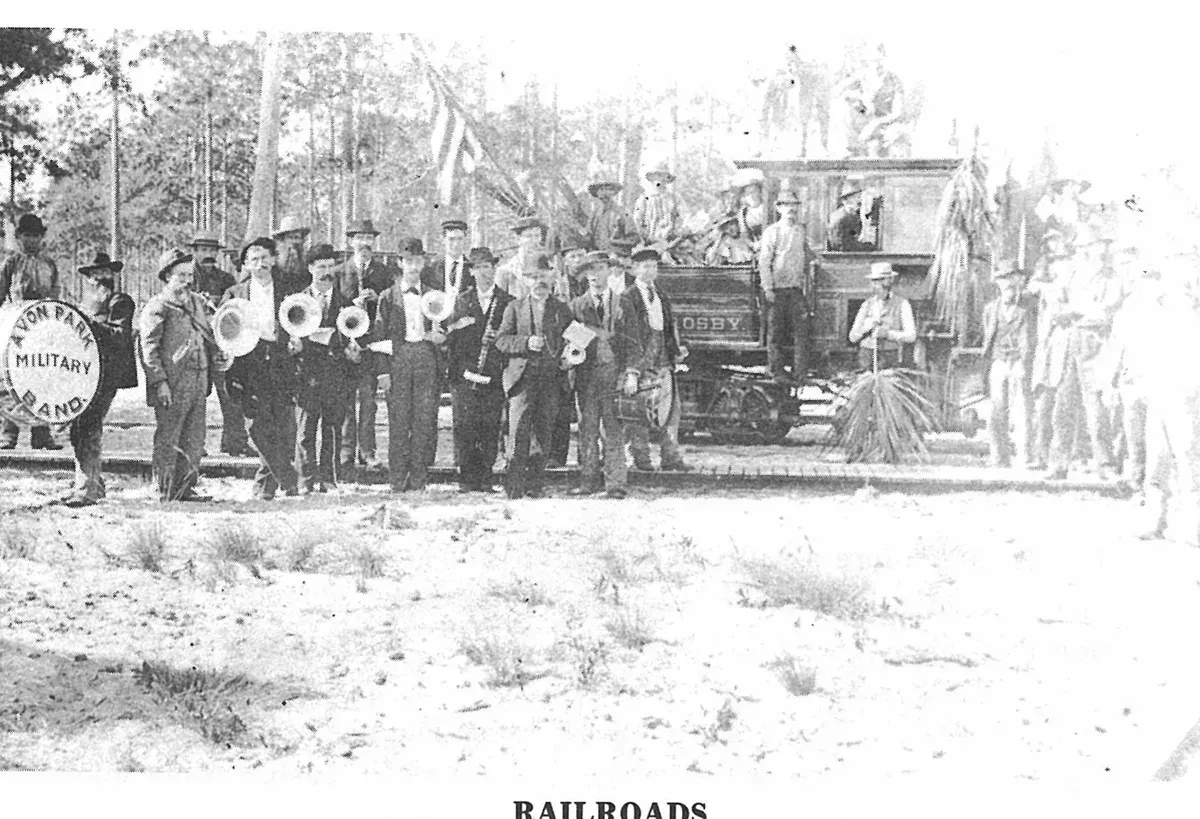
RAILROADS. The First Hundred Years of Avon Park, Florida (1976), page 124. Avon Park Historical Society.[maxwell-1976]
Crosby says there were 10 projects to get a railroad into Avon Park, but none got past the talking and planning stage. His greatest disappointment was when two men came from Chicago and worked for weeks on plans, only to learn they had no money to finance the project. In the summer of 1894 Col. H. S. Haines, Vice-president of the Plant System, invited Crosby to Tampa to accompany him to New York City. They talked with Mr. Plant who was to furnish the rails, engine and cars, if Crosby would grade and tie the road. But Plant decided not to endorse the plan.
In desperation J. C. Burleigh proposed a log road which was built for about five miles, to run to his sawmill north of Avon Park at Lake Thompson, (now Lake Brentwood.) They located an old locomotive in Tennessee, which some called a side-winder, and had it shipped down by rail to Bowling Green. From there the arduous task of getting it to Avon Park began. Mr. Burleigh supervised the task of moving the engine and flat cars on planks that were moved along ahead as the locomotive moved. The locomotive first arrived December 22, 1894, and set on a track in front of the Burleigh Store on Lakeview Avenue.
Burleigh set about getting a track laid out to his sawmill near Lake Thompson. The rails were 3x8 inches of 20 foot lengths of hard pine, laid on ties that were held down to the sandy soil by wooden pins. These pins were one and one-fourth inches thick by 30 inches long.
In June 1895 plans were made for a big Fourth of July celebration. A large crowd turned out with picnic lunches, in high spirits for a ride on the train.The Avon Park Military Band played and everyone seemed happy. The train could make an approximate 5 miles per hour.
But the jubilee soon ended. Within a few months the payments on the locomotive fell due, and like everything else following the ’95 freeze, there was no money, so the train was returned the way it came.
It was 1912 before a railroad finally did come to stay. The Atlantic Coast Line Railroad had a combination passenger and freight train that came through Avon Park twice each week. The right-of-way was secured with great effort. Prof. E. M. Hyde, who was a faculty member at Rollins College, Winter Park, gave a seven and one-half acre strip of land on the South side of Lake Damon and $290 in cash. Many other property owners also contributed for the railroad.
The business men were delighted that now the tons of merchandise could be loaded here instead of making the long drive to Fort Meade, but some of the citizens were unhappy about the noise that disturbed the quiet and peaceful little village with the tooting of the trains day and night.
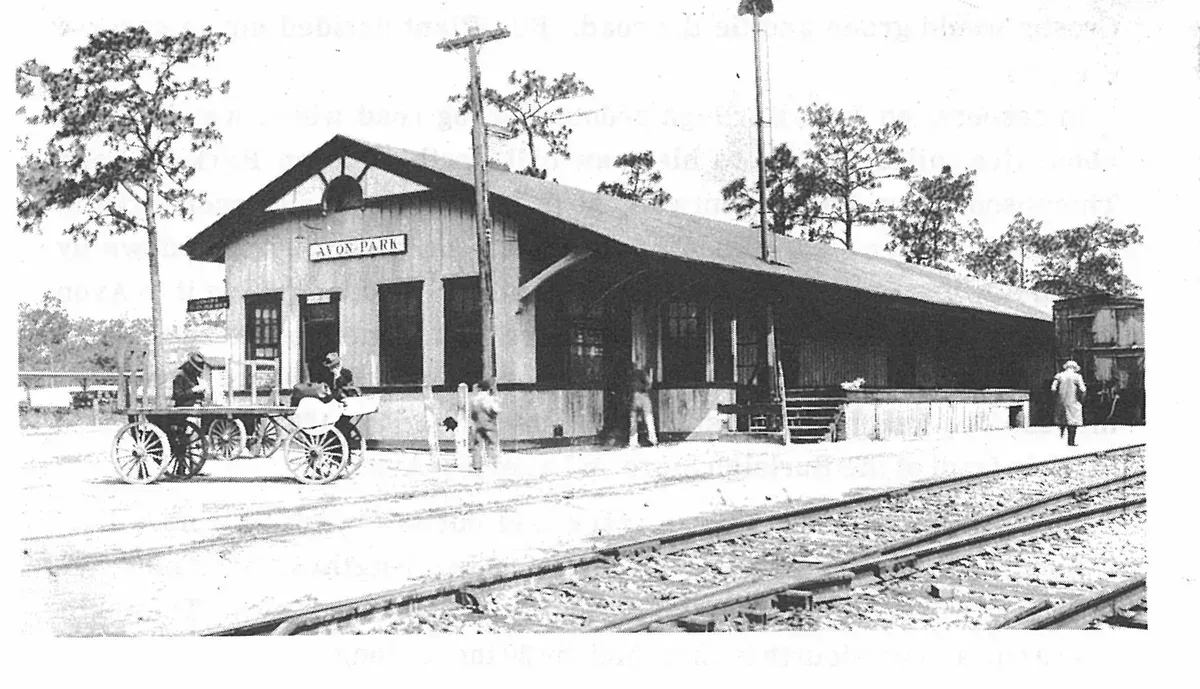
The First Hundred Years of Avon Park, Florida (1976), page 125. Avon Park Historical Society.[maxwell-1976]
The Coastline built a station. A. E. Conoley was sent as the first agent. L. M. Marsh was section foreman and W. D. Cameron was in charge of the extra work gang. The line run from Haines City to Sebring, with a Y-turn around at each end of the line. This train made stops at Dundee, Lake Hamilton, Lake Wales andFrostproof, People who rode trains into Lakeland or Orlando could make connections in Haines City to come to Avon Park. Some old-timers remember experiences of how the engineer would stop the train in the woods so the fireman could go out and cut enough wood to fire the boiler, so the train could continue the run. It took a full day to come from Haines City to Avon Park.
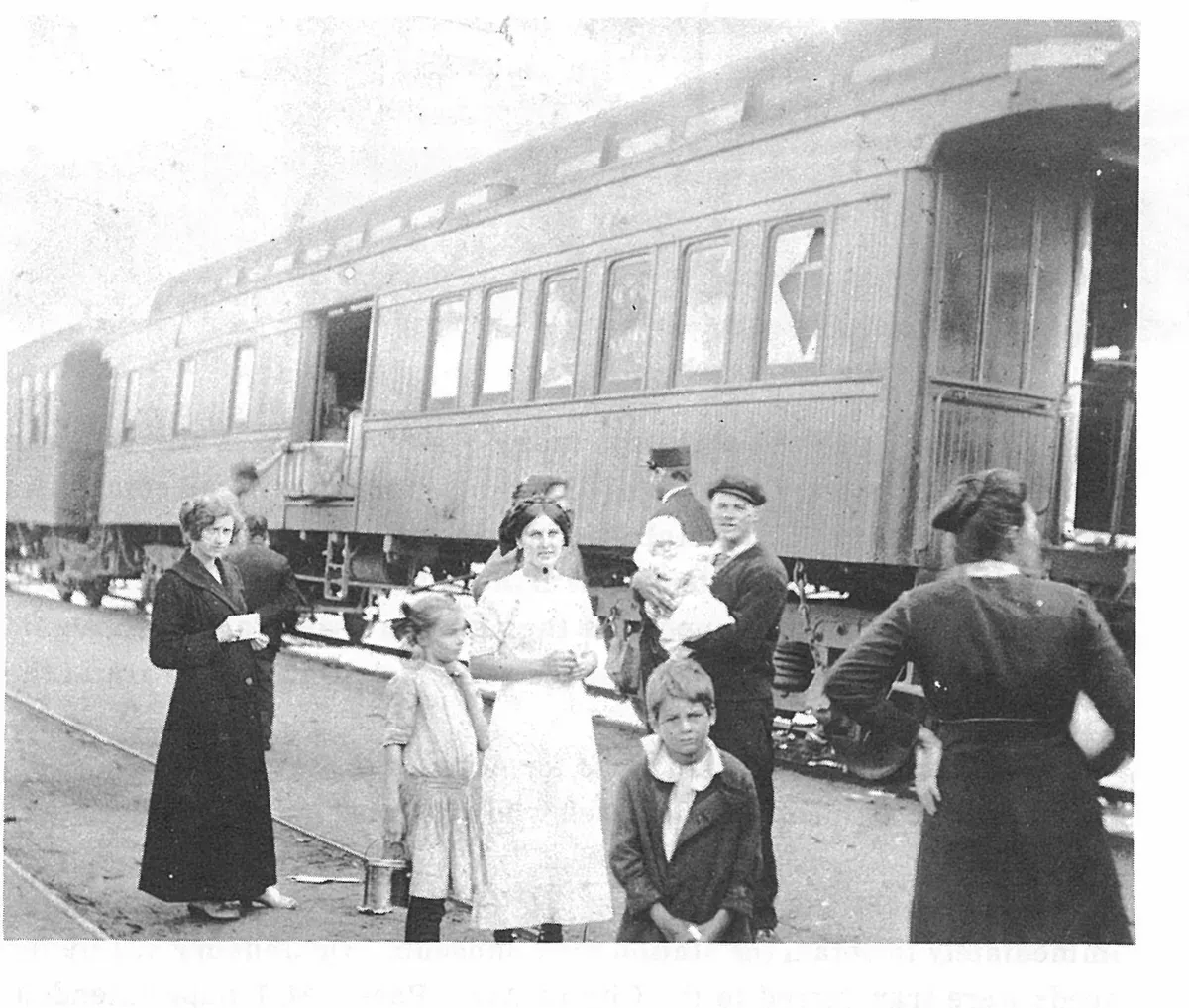
Other agents for the Coast Line were C. A. Denmark and J. N. McDugald who was the agent when the Coast Line merged with the Seaboard Railroad in 1967. The Coastline station was torn down in 1970. The First Hundred Years of Avon Park, Florida (1976), page 126. Avon Park Historical Society.[maxwell-1976]
In 1924 the Florida Western and Northern Railroad secured a right–of-way and the Seaboard Airline Railroad built a line through Avon Park. They completed the station in 1926.
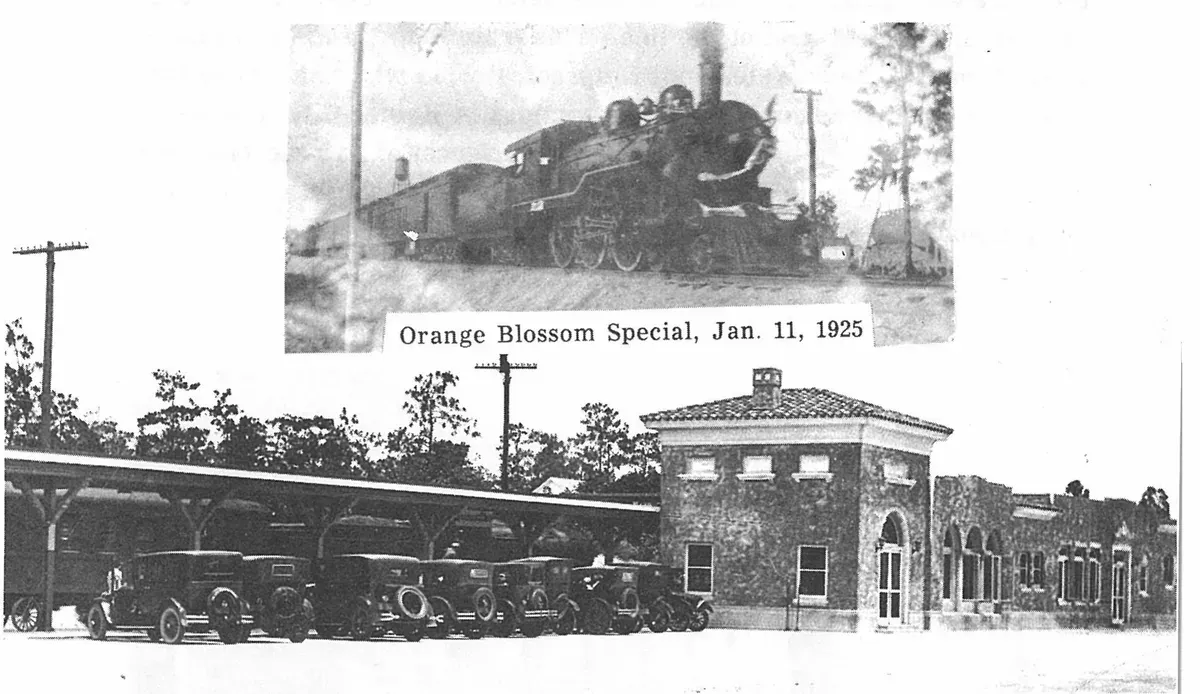
Orange Blossom Special, Jan. 11, 1925. The First Hundred Years of Avon Park, Florida (1976), page 127. Avon Park Historical Society.[maxwell-1976]
A. O. Kinsey was the agent for many years. J.L.R. Kelly followed Kinsey and Raymond K. Cook was the agent when the railroad companies merged July 1, 1967. J. N. McDugald, who had seniority with the Coast Line Railroad, over Cook’s tenure with the Seaboard, and so according to railroad custom, he was appointed the agent in Avon Park. McDugald served until the Seaboard discontinued station stops in Avon Park in the late Seventies.
The discontinuing Seaboard stops for Avon Park was a great shock and inconvenience for people in this area who now must go to Sebring to take the train.
The Historical Society of the Old Settlers Association set about immediately to obtain the station for a museum. On Janaury 4, 1979 the deeds were transferred to the City of Avon Park. SCL Superintendent, John W. Thomas presented the deed to Avon Park Mayor, Marshall Davis in a ceremony attended by a large gathering of citizens and the Avon Park High School Band played for the occasion.
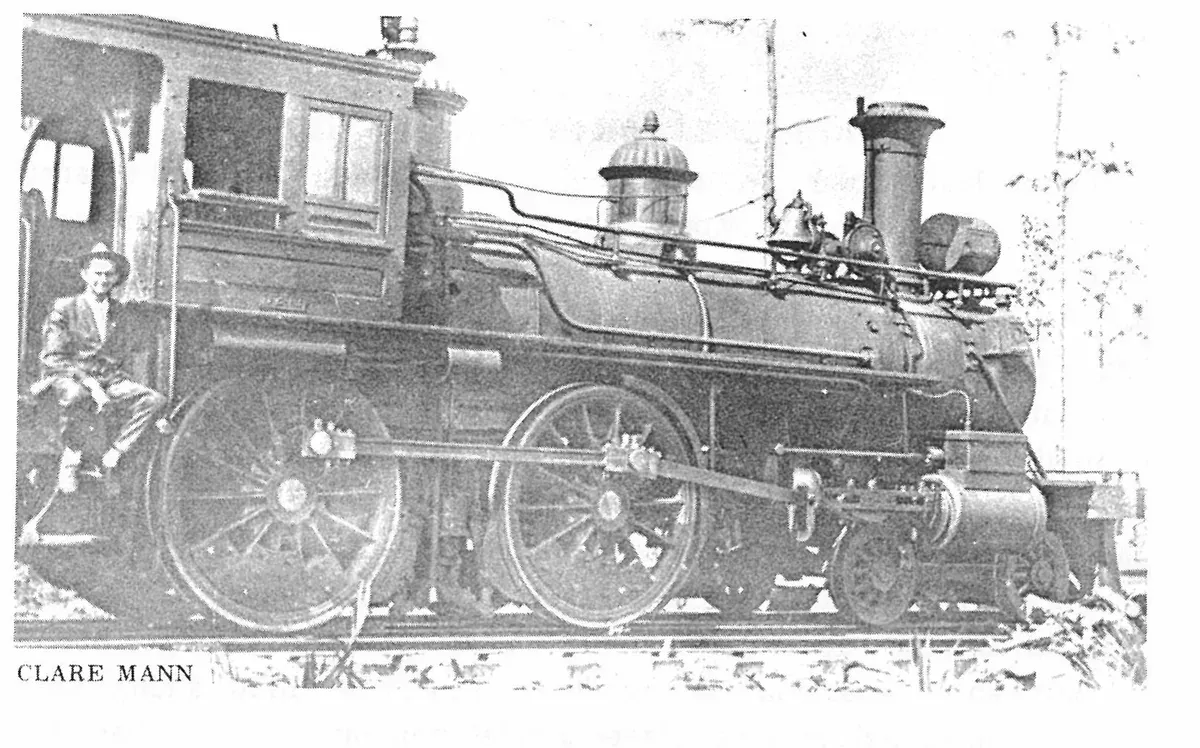
CLARE MANN. The First Hundred Years of Avon Park, Florida (1976), page 128. Avon Park Historical Society.[maxwell-1976]
EARLY TRAIN RIDES
When the C. W. Wood family came from North Carolina with their two daughters, Lois and Miriam, they rode in the caboose behind the freight cars from Haines City into Avon Park. It was an all day trip.
They arrived about dark and spent the night at the Williams’ Boarding House which was very near the station. Lois Wood became the first paid librarian for the Avon Park Library. Miriam became Mrs. Raleigh Lawhon.
MISS ALICE DAVIDSON, who had a curved spine and needed a special rocking chair for comfort, wanted very badly to visit friends in Fort Myers, after the train came through in 1912. A few years later her brother, Col. R. P. Davidson, who was a man of means, arranged with the Coast Line Railroad officials for her to make the trip. They placed her rocking chair in a box car for the trip so she could sit in comfort.
Unfortunately, the box car was switched to a side track somewhere between here and Fort Myers and when the train arrived Miss Alice was missing. Her friends made a search and finally located the box car and Miss Alice rocking away and smiling at the humorous predicament in which she had been caught.
In her eightieth year she related the event, explaining how they had come in a two-horse wagon to take her on to Fort Myers.
A “BELIEVE IT OR NOT” TRAIN RIDE
In early 1927 three young men were involved in a strange and bizarre accident. Red Murphy, Mike Underwood and Wilbur Giddens were returning about midnight from an evening at a near by “dive”, where they had been drinking white lightening and chasing it down with home brew. Riding with Red in his new Ford Touring car, they approached the Seaboard Railroad and realized that the Orange Blossom Special always came through at twelve o’clock midnight. Red slowed the speed of the car and Mike played his mouth harp to immitate the train’s whistle. The car rolled into the side of the slow moving train as Red and Mike jumped to safety. Wilbur, who was the youngest and smallest of the three, was thrown under the train between the wheels. He grabbed on to u rod under the pullman car, pulled himself up and realized he was in for a long ride. As the train gained speed he relaxed a brief moment but as his back hit the cross-ties, he wrapped his legs and arms tighter under the iron rod and held on for his life.
When the train stopped at West Lake Wales, he crawled out from under the pullman, minus his shirt, and was taken to a doctor’s office in Lake Wales, where they discovered that he had only a cut shoulder and some broken ribs. His body was so black that the doctor first thought he was a colored man.
Wilbur relates this experience today and marvels that he made this unusual ride from Avon Park to West Lake Wales.
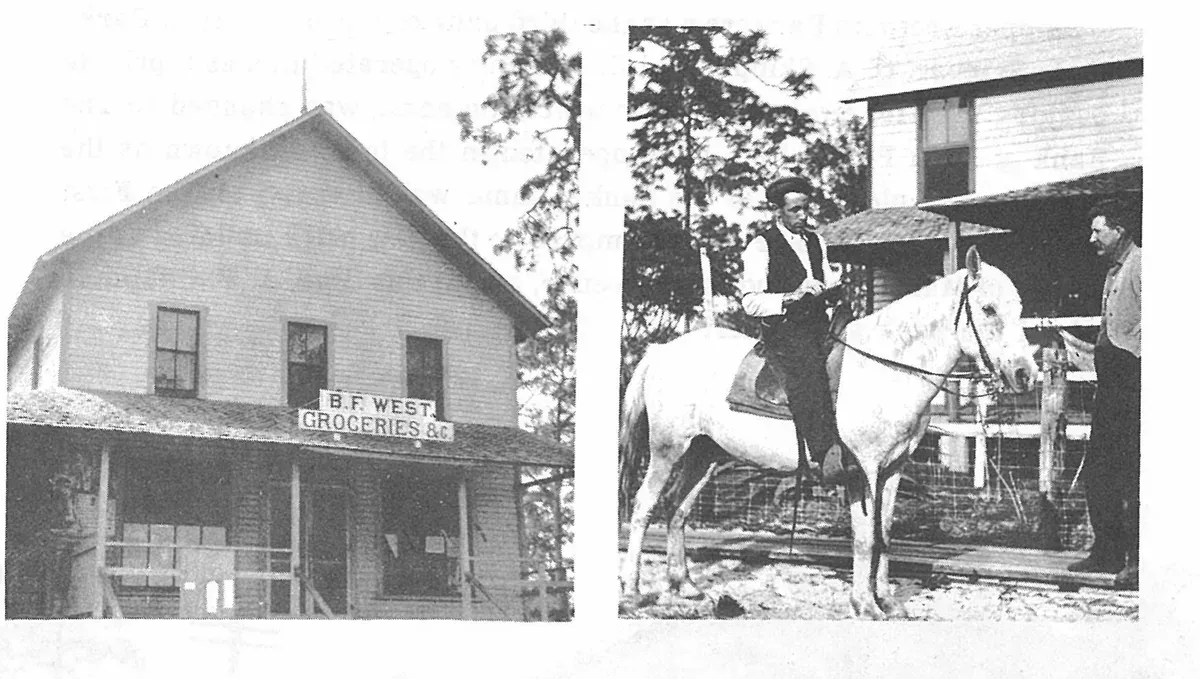
The First Hundred Years of Avon Park, Florida (1976), page 130. Avon Park Historical Society.[maxwell-1976]
BANKS OF AVON PARK
The B. F. West family arrived in 1895. He bought the D. D. Kinney store and building. Living upstairs, he opened a full line of groceries and builder’s supplies, drugs, dry goods and even ready made clothing and he kept feed for animals on the porch, and kept the postoffice for four years.
His son, Ellis, rode a white horse, took grocery orders from the residents and made deliveries. He also carried the mail to Berea, a distance of 14 miles from Avon Park. There he was met by a Mr. Raulerson from Fort Meade with the mail.
The West store was located at the east end of Main Street and it was moved away in 1921 then the street was widened to make the two-way street.
Mr. West had had experience in banking in Albion, N.Y., his former home, so he opened a bank in one corner of his store. Having the biggest and best safe in town, he kept money for individuals, loaned money and collected interest. He began this banking operation after the 1894-95 freeze when C. C. Chollar moved the Florida Development Company’s banking business to Arcadia. The Florida Development Company’s Bank had been in the Avonian Building, which later became the Masonic Temple.
B. F. West Bankers continued operation and received a charter in 1921.
Skipper Brothers Bankers was the third bank organized in Avon Park. D. L. Skipper, C. A. Skipper and C. E. Lanier operated this as a private banking firm for two years, after which the name was changed to The Bank of Avon Park. This bank operated in the building known as the Masonic Temple. In 1916 the bank’s name was changed to The First National Bank of Avon Park and moved to the new brick building at the corner of Main Street and Lake Avenue, and at this time, J. V. Chapman joined the bank as cashier.
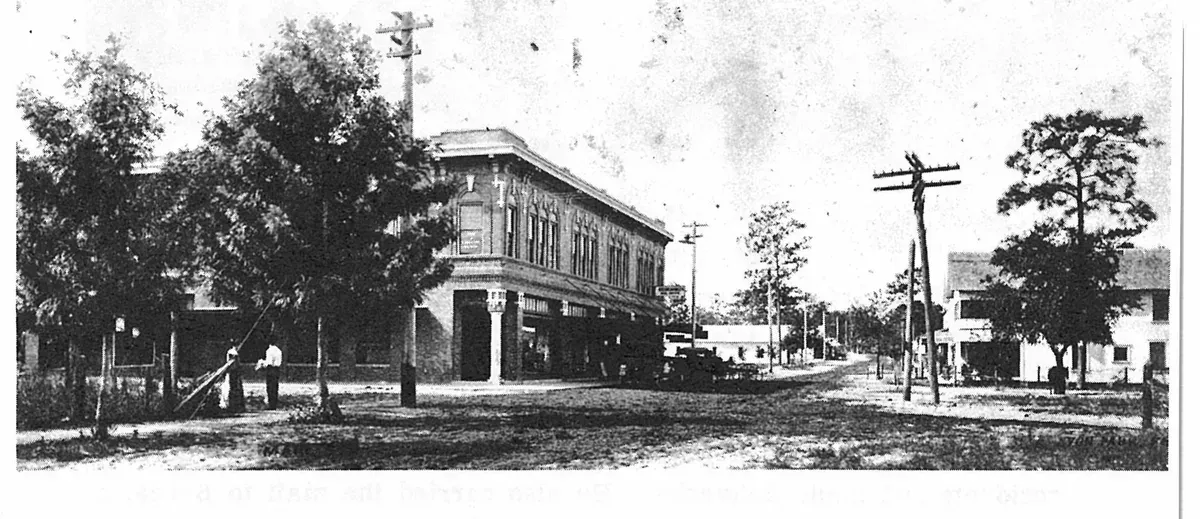
The First Hundred Years of Avon Park, Florida (1976), page 131. Avon Park Historical Society.[maxwell-1976]
The First Trust and Savings Company was organized and received a charter on December 12, 1919 and was located in the Durrance block. This institution and the B.F. West Bankers merged in April of 1922 and became a state bank in 1927, known as The Avon Park State Bank. The B.F. West Bank had been in continuous business for a total of 27 years.
On February 16, 1929 the glorious bubble that had encased the Sunshine State collapsed,and so did both banks….. The First National Bank of Avon Park and The Avon Park State Bank, both closed their doors.
On January 30, 1930 the Barnett National Bank of Avon Park received a charter, affiliated with the Barnett National Bank of Jacksonville. Bank doors opened February 3, 1930 for business in the First National Bank building, corner of West Main Street and South Lake Avenue.
The Barnett National Bank converted to a State Bank on December 2, 1937, as The Barnett Bank of Avon Park. It was purchased by the Sottile Banking group of Miami on February 21, 1955 and the name was changed to The Avon Citrus Bank. Edward G. Touchton purchased controlling interest in 1960 and the bank was moved across the street into a new and modern building.
All of the original buildings in the block between North Lake Avenue and North Forest Avenue facing Main Street were removed to make space for the new bank. The new building was erected on the corner of Lake and Main, with three drive-up windows and a walkup window on the street. The bank and parking lot occupies the entire block. The opening and dedication of the new Avon Citrus Bank was a gala event on February 2, 1962. During the year of 1980 The Avon Citrus Bank will celebrate 50 years of continuous service to Avon Park.
Mrs. Mary F. Garrett senior vice-president, has been with the bank since February 3, 1930, except for two years she spent in the WAVES. She has seen five different ownerships of the bank.
Mrs. Garrett retired from her banking career in October 1979.
President of the Avon Citrus Bank is Donald L. Bowden. His wife, Jan, is in charge of public relations and administration.
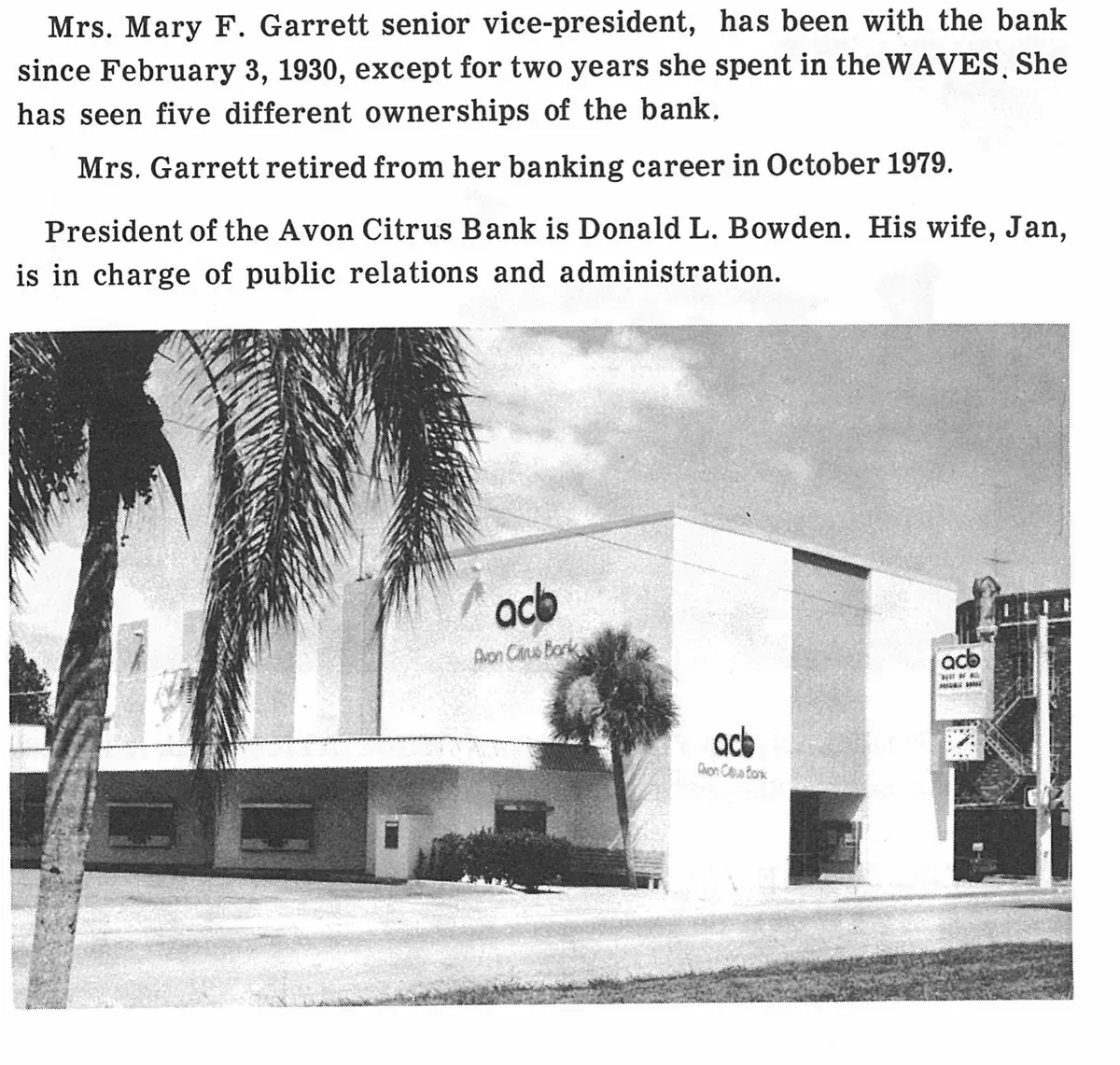
The First Hundred Years of Avon Park, Florida (1976), page 132. Avon Park Historical Society.[maxwell-1976]
HIGHLANDS COUNTY BANK OF AVON PARK
May 30, 1974 was the first time in 53 years that Avon Park could claim a second bank, when Ben Hill Griffin, Jr., opened The Highlands County Bank of Avon Park.
This beautiful and spacious building is located on North Michigan Avenue, facing West Main Street, with surrounding lawn and four drive-up window spaces, and a parking lot, all neatly landscaped. It was a decided improvement over the vacated lot where the Atlantic Coast Line Railroad station had once stood. The old Maxcy packing house that once was in operation here, was torn down, which cleared the entire lot north to Pleasant Street.
Executive officers of the Highlands County Bank of Avon Park are Ben Hill Griffin, Jr., president and D. R. Daubach, vice-president.
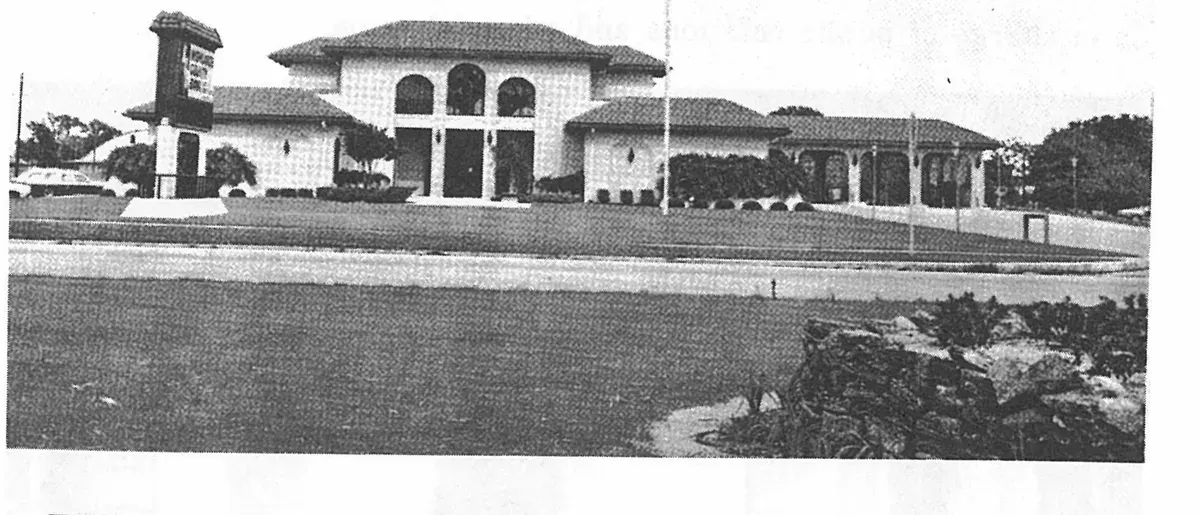
THE HEARTLAND SAVINGS AND LOAN ASSOCIATION bank is located in the Avon Square Shopping Plaza on Highway 27 South of Avon Park. The First Hundred Years of Avon Park, Florida (1976), page 133. Avon Park Historical Society.[maxwell-1976]
THE FIRST HOME FEDERAL SAVINGS AND LOAN ASSOCIATION is located at 825 West Main Street, Avon Park.
BARBER SHOPS
The first barber shop in Avon Park was operated by John Cardulla in 1898. He placed an ad in The Avon Park Idea August 8, 1899 that he would open a tonsorial branch of this Avon Park shop in Fort Meade.
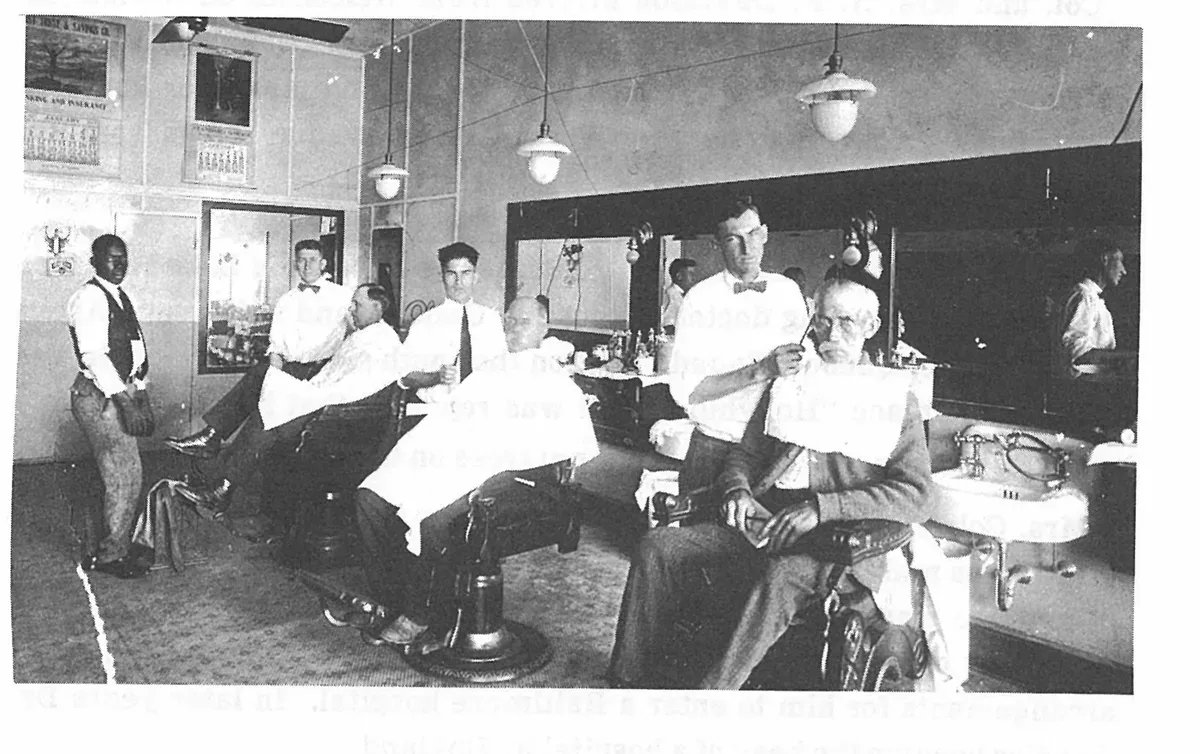
In 1920 Peter C. Boney purchased a half interest in a barber shop with Jim Simmons. This picture, made in 1923, shows Boney, Waters, and Cline as the barbers. The First Hundred Years of Avon Park, Florida (1976), page 134. Avon Park Historical Society.[maxwell-1976]
Riles and Ellison each had barber shops in the early Twenties.
In the days before homes had bathrooms, men went to the barber shop for a shower bath. A shave and haircut was a quarter. A shower was an extra 25 cents and a shoeshine was a nickel.
Troy Cox operated a barber shop in connection with a pool room on the West end of Main Street. Other shop owners and operators over the years have been Roy C. Jarrett, Jim Tomlinson, David Stuckey, L. C. Davis and Red Carlisle.
The Acuff Shop was purchased by Maurice Albritton and sold to his brother, Larry. Milton Giddens is now owner of a shop on West Main Street, that formerly belonged to Tommy Thomas.
HOLLYHURST
Col. and Mrs. R. P. Davidson arrived from Wisconsin on Christmas Day 1892 with his sister, Miss Alice Davidson. Mrs. Davidson was the daughter of Mrs. J. L. Colwell who came in 1895 and made her home at “Twin Oaks”, a two-story home on North Verona Avenue across from the Annex or Avonian Block.
The Davidsons first built a home on the hill overlooking Lake Lotela on the east side. A young doctor, Augustine Gandier and wife, Edna Agnes B. Gandier, of Quebec, Canada built on the south side of Lake Lotela and called their place “Hollyhurst”. It was reported that he planted many varieties of holly and many hickory nut trees on the property.
Mrs. Colwell invited the Doctor to stay free at “Twin Oaks” any time that he was making calls in town. One night as he entered a stall to hitch a mule he was kicked in the head. He was carried away in a serious condition, on a stretcher. It was Mrs. Colwell who made financial arrangements for him to enter a Baltimore hospital. In later years Dr. Gandier became the head of a hospital in England.
As a result of Mrs. Colwell’s kindness to the doctor, Hollyhurst came into the hands of Mrs. Colwell who sold it to the Davidsons.
The Davidsons rebuilt the house and made it into a colonial mansion, remodeling it again in 1926 to become one of the landmarks of Avon Park.
Ben Hinkley, who came from England and married Allie Mae Woodruff in 1901 at Green Bay, Wisc., came to Avon Park in 1903 to become the caretaker for Hollyhurst. The Hinkley children were Rose, Ted, Florence and Robert.
In 1945 Hollyhurst was sold to Mr. and Mrs. L. D. (Love) McGibone. In 1895 Dr. Gandier had performed an operation on Mrs. Dollie Skipper, mother of Mrs. McGiboney, to remove her appendix, using the kitchen table for an operating table.
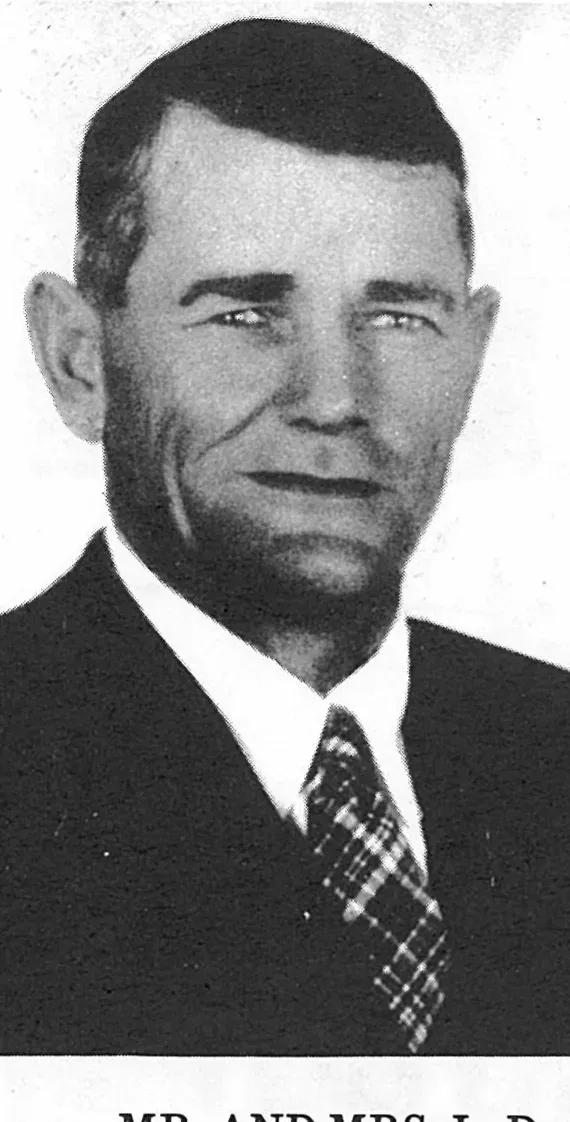
The First Hundred Years of Avon Park, Florida (1976), page 136. Avon Park Historical Society.[maxwell-1976]
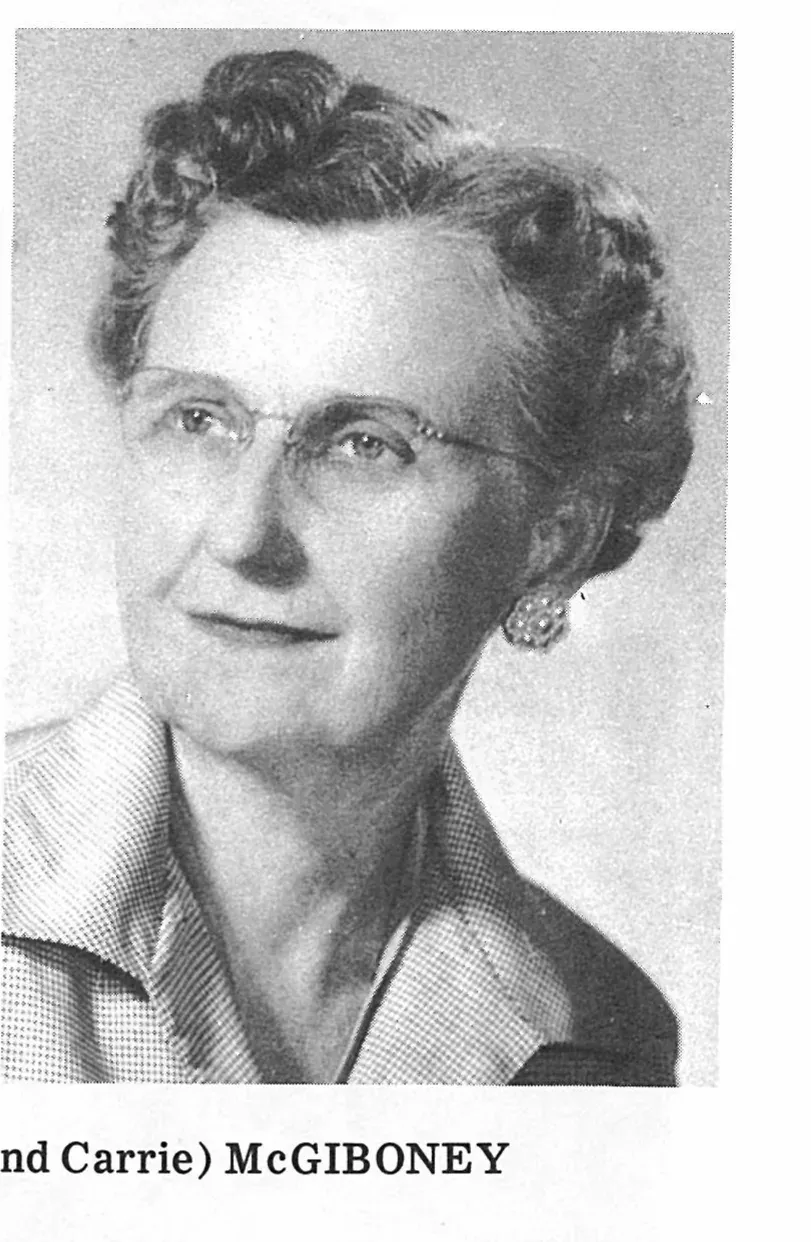
MR. AND MRS. L. D. (Love and Carrie) McGIBONEY. The First Hundred Years of Avon Park, Florida (1976), page 136. Avon Park Historical Society.[maxwell-1976]
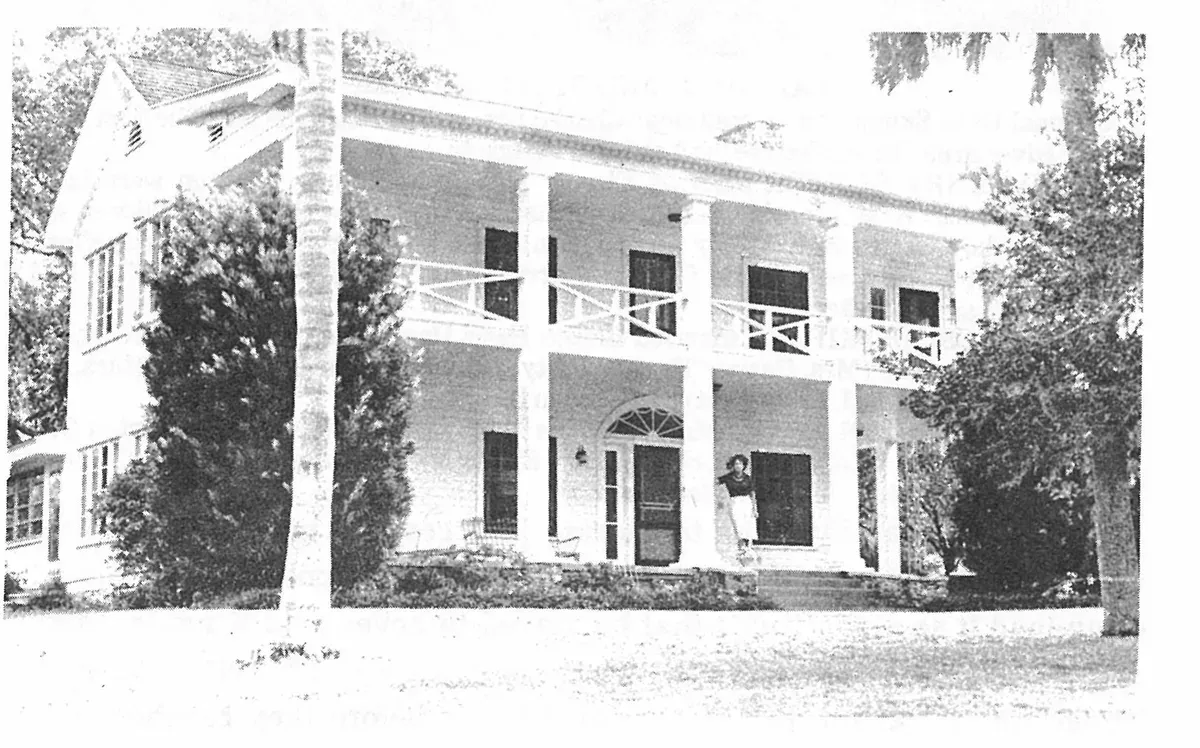
Present owners of Hollyhurst are Mr. and Mrs. Ross Backus. The First Hundred Years of Avon Park, Florida (1976), page 136. Avon Park Historical Society.[maxwell-1976]
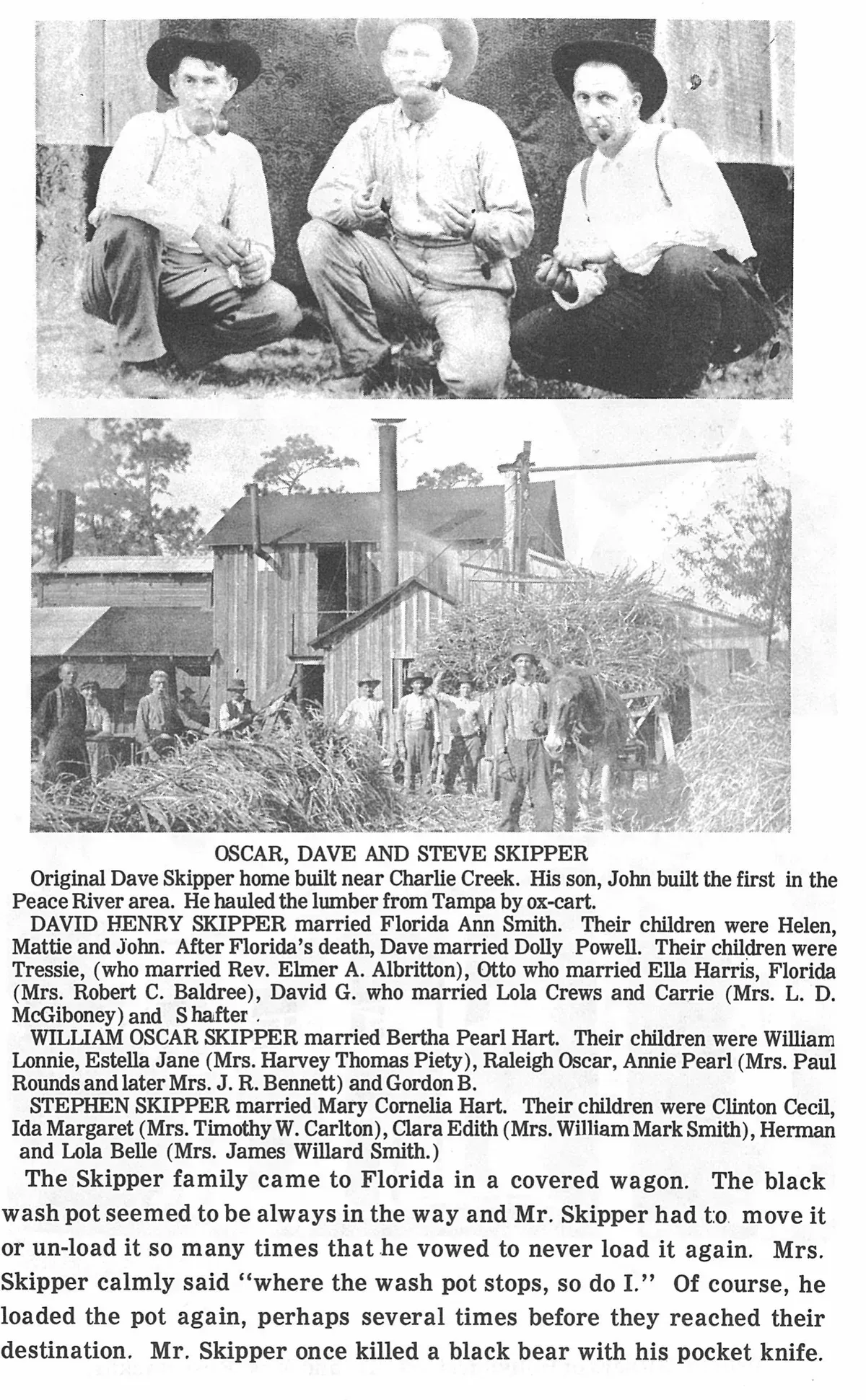
OSCAR, DAVE AND STEVE SKIPPER. The First Hundred Years of Avon Park, Florida (1976), page 137. Avon Park Historical Society.[maxwell-1976] Original Dave Skipper home built near Charlie Creek. His son, John built the first in the Peace River area. He hauled the lumber from Tampa by ox-cart.
DAVID HENRY SKIPPER married Florida Ann Smith. Their children were Helen, Mattie and John. After Florida’s death, Dave married Dolly Powell. Their children were Tressie, (who married Rev. Elmer A. Albritton), Otto who married Ella Harris, Florida (Mrs. Robert C. Baldree), David G. who married Lola Crews and Carrie (Mrs. L. D. McGiboney) and Shafter .
WILLIAM OSCAR SKIPPER married Bertha Pearl Hart. Their children were William Lonnie, Estella Jane (Mrs. Harvey Thomas Piety), Raleigh Oscar, Annie Pearl (Mrs. Paul Rounds and later Mrs. J. R. Bennett) and Gordon B.
STEPHEN SKIPPER married Mary Cornelia Hart. Their children were Clinton Cecil, Ida Margaret (Mrs. Timothy W. Carlton), Clara Edith (Mrs. William Mark Smith), Herman and Lola Belle (Mrs. James Willard Smith.)
The Skipper family came to Florida in a covered wagon. The black wash pot seemed to be always in the way and Mr. Skipper had to move it or un-load it so many times that he vowed to never load it again. Mrs. Skipper calmly said “where the wash pot stops, so do I.” Of course, he loaded the pot again, perhaps several times before they reached their destination. Mr. Skipper once killed a black bear with his pocket knife.
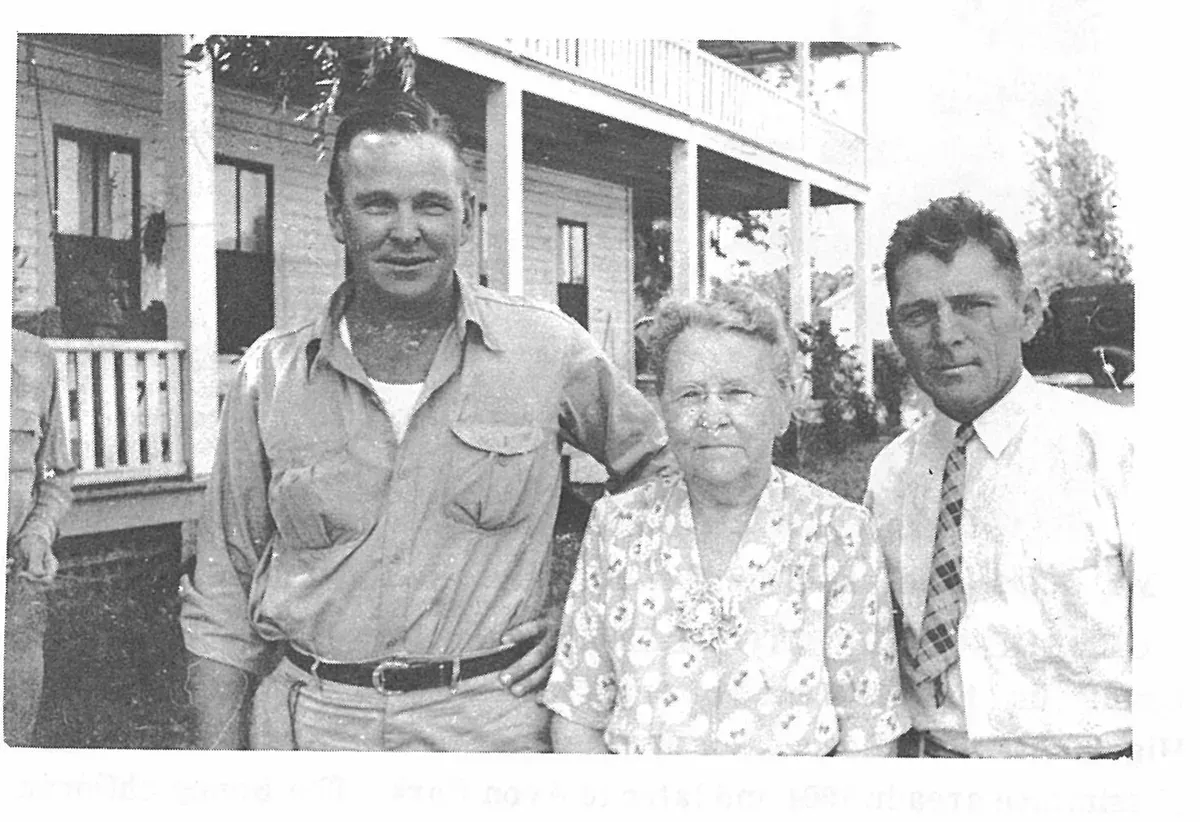
Roscoe, Mother Bass and Mel. The First Hundred Years of Avon Park, Florida (1976), page 138. Avon Park Historical Society.[maxwell-1976]
Lovable “MA BASS,” Mrs. Lula E. Bass, lived to be 81 years old. She had married Thomas A. Bass and they homesteaded in the Kissimmee area. Mr. Bass died leaving her with a large cattle and sheep ranch and seven children to rear. In addition to managing the ranch she taught school in the earlier days.
The family moved to Avon Park in 1919 and purchased a large two-story home on Lake Lotela.
The Bass family has played an important part in the development of Highlands County. The children are Mrs. A. B. (Gertrude) Sircum, Mrs. Ruth B. Hylton, who was the Tax Collector for Highlands County for 12 years. Mrs. Fred (Ruby) Smith, Mrs. J. A. (Roberta) Lander, Melville, Mrs. C. Parke (Beatrice) Anderson and Roscoe.
Fred and Ruby Smith’s children are Nelson, who had three children and Patricia, who married James Brotherton.
Bee and Parke Anderson had only one daughter, Arden, who married C. L. Sutherland and their children are Tracey, Parke and Cameron.
Mel married Miss Ruby Crumley and they had one son, Melville, Jr.
Roscoe married Miss Mildred (Babe) Raulerson and they had two sons, Roscoe and Tom.
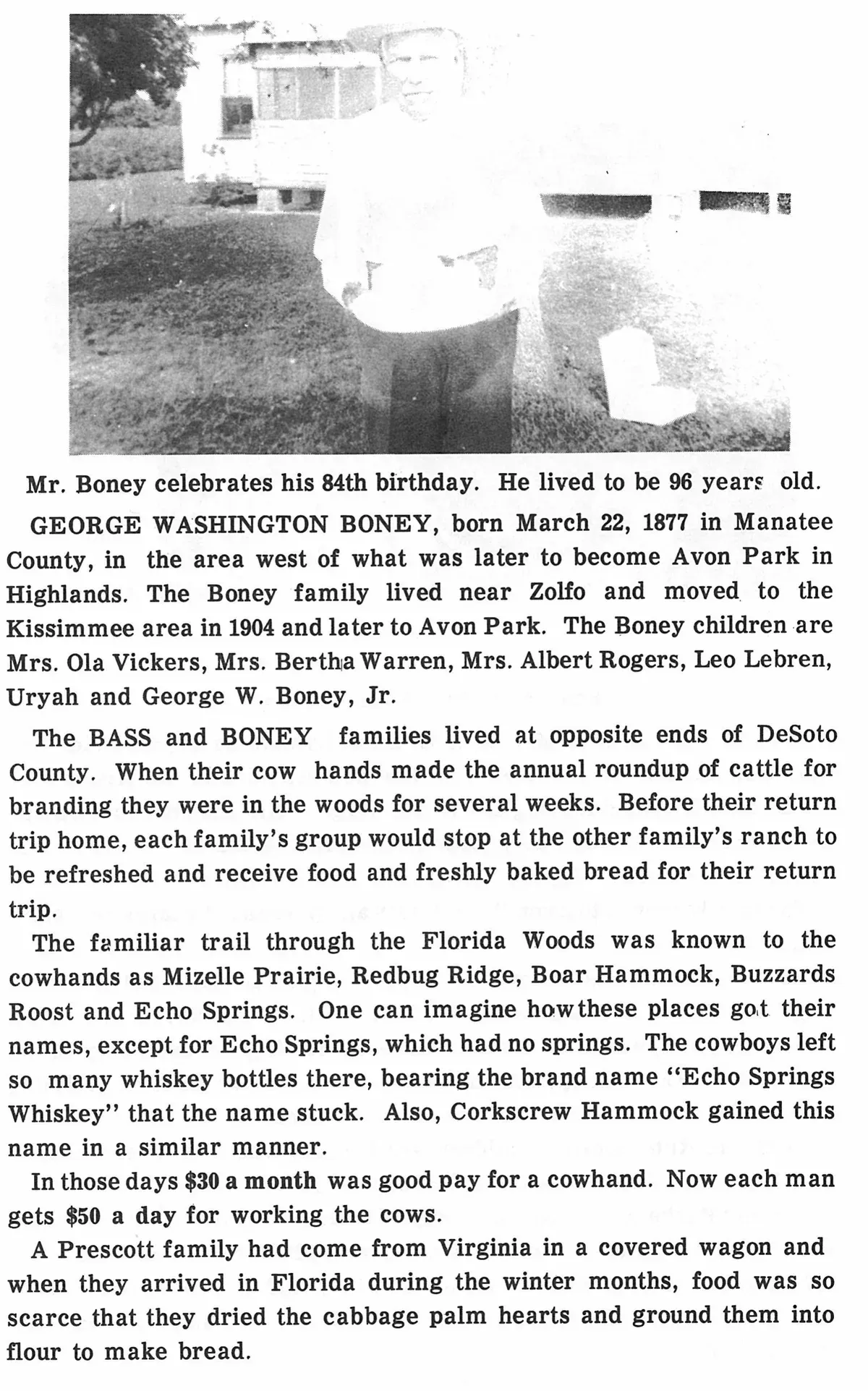
Mr. Boney celebrates his 84th birthday. He lived to be 96 years old. The First Hundred Years of Avon Park, Florida (1976), page 139. Avon Park Historical Society.[maxwell-1976]
GEORGE WASHINGTON BONEY, born March 22, 1877 in Manatee County, in the area west of what was later to become Avon Park in Highlands. The Boney family lived near Zolfo and moved to the Kissimmee area in 1904 and later to Avon Park. The Boney children are Mrs. Ola Vickers, Mrs. Bertha Warren, Mrs. Albert Rogers, Leo Lebren, Uryah and George W. Boney, Jr.
The BASS and BONEY families lived at opposite ends of DeSoto County. When their cow hands made the annual roundup of cattle for branding they were in the woods for several weeks. Before their return trip home, each family’s group would stop at the other family’s ranch to be refreshed and receive food and freshly baked bread for their return trip.
The familiar trail through the Florida Woods was known to the cowhands as Mizelle Prairie, Redbug Ridge, Boar Hammock, Buzzards Roost and Echo Springs. One can imagine how these places got their names, except for Echo Springs, which had no springs. The cowboys left so many whiskey bottles there, bearing the brand name “Echo Springs Whiskey” that the name stuck. Also, Corkscrew Hammock gained this name in a similar manner.
In those days $30 a month was good pay for a cowhand. Now each man gets $50 a day for working the cows.
A Prescott family had come from Virginia in a covered wagon and when they arrived in Florida during the winter months, food was so scarce that they dried the cabbage palm hearts and ground them into flour to make bread.
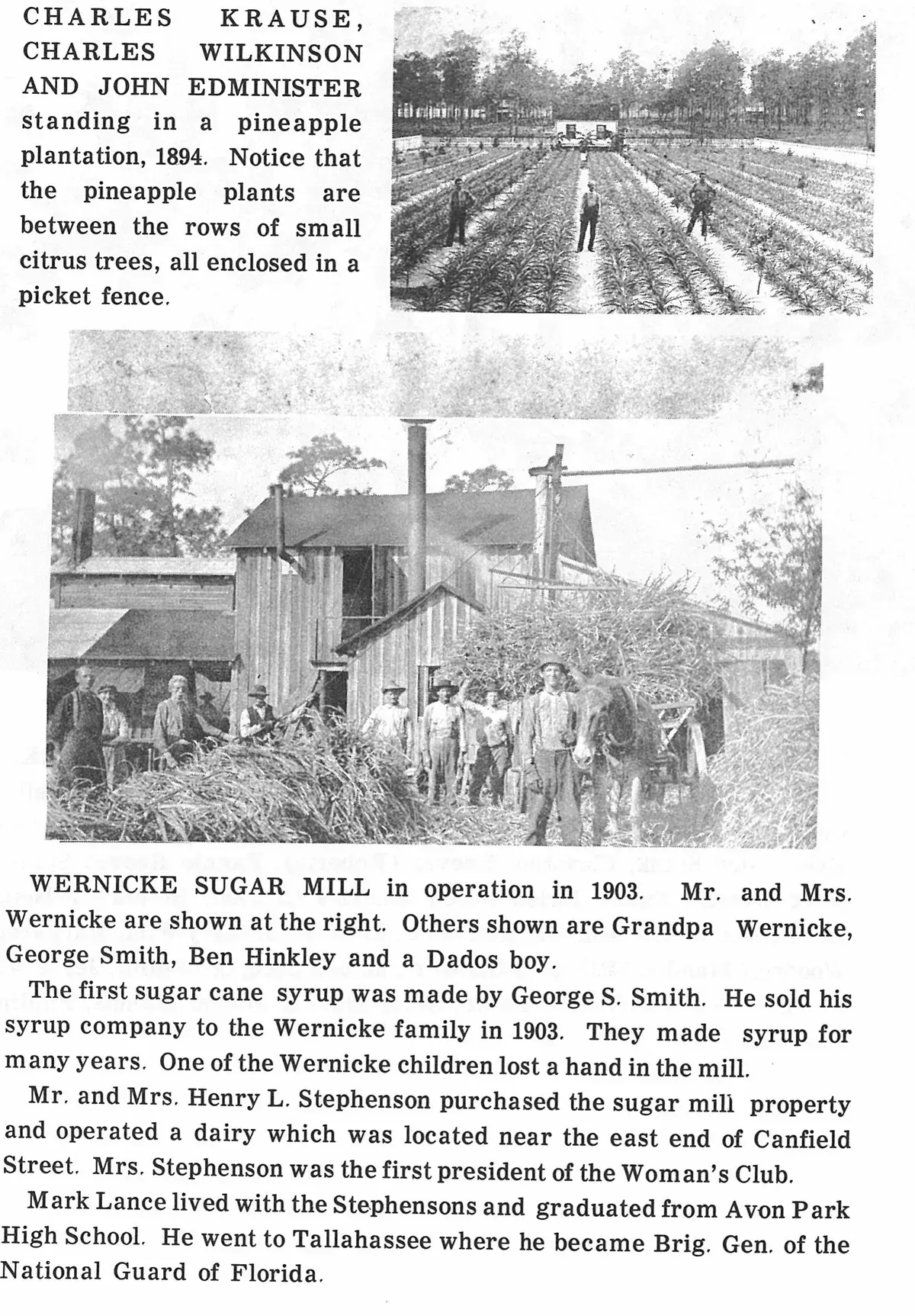
CHARLES KRAUSE, CHARLES WILKINSON AND JOHN EDMINISTER standing in a pineapple plantation, 1894. Notice that the pineapple plants are between the rows of small citrus trees, all enclosed in a picket fence. The First Hundred Years of Avon Park, Florida (1976), page 140. Avon Park Historical Society.[maxwell-1976]
WERNICKE SUGAR MILL in operation in 1903. Mr. and Mrs. Wernicke are shown at the right. Others shown are Grandpa Wernicke, George Smith, Ben Hinkley and a Dados boy.
The first sugar cane syrup was made by George S. Smith. He sold his syrup company to the Wernicke family in 1903. They made syrup for many years. One of the Wernicke children lost a hand in the mill.
Mr. and Mrs. Henry L. Stephenson purchased the sugar mill property and operated a dairy which was located near the east end of Canfield Street. Mrs. Stephenson was the first president of the Woman’s Club.
Mark Lance lived with the Stephensons and graduated from Avon Park High School. He went to Tallahassee where he became Brig. Gen. of the National Guard of Florida.
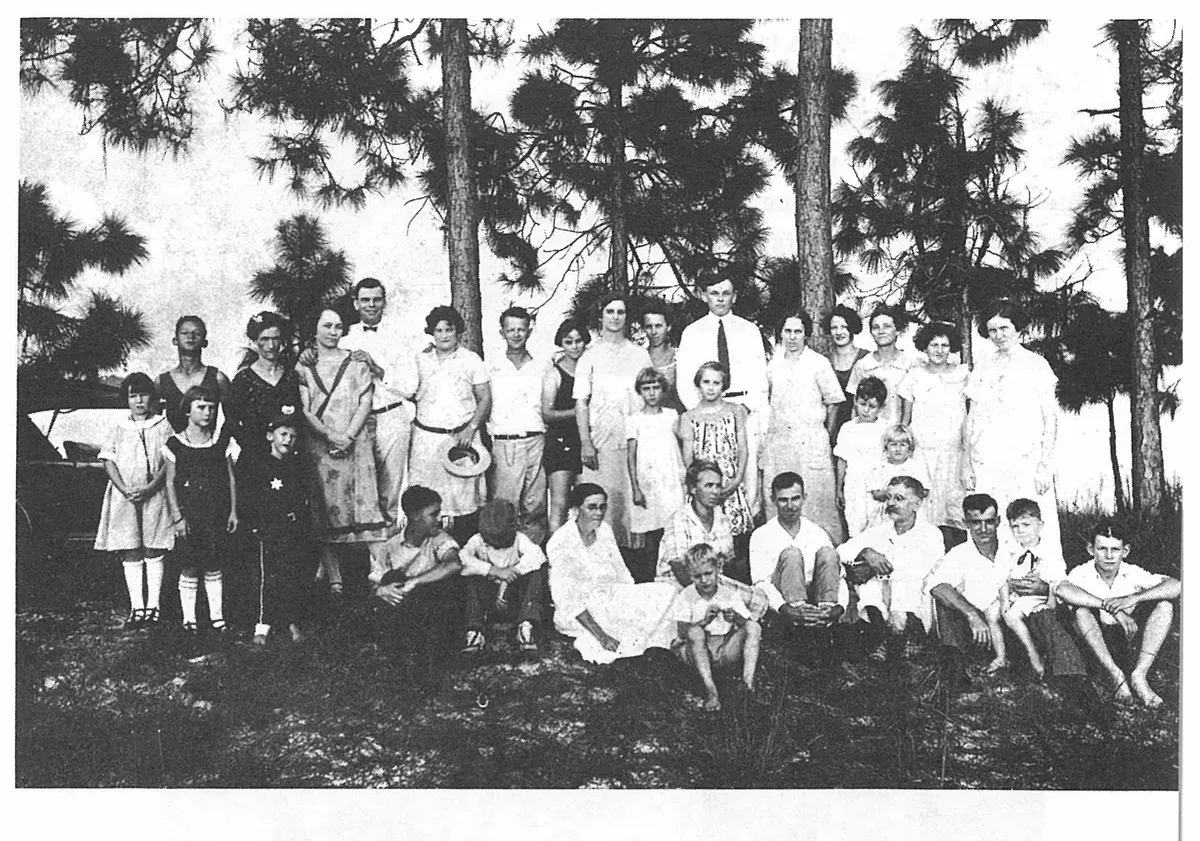
PICNIC, CELEBRATING THE FIRST 25 YEARS IN AVON PARK. The First Hundred Years of Avon Park, Florida (1976), page 141. Avon Park Historical Society.[maxwell-1976] Standing: Geraldine Potter, Lawrence Wray, Mildred Wray (Waddell), Cora Wray, Howard Wray, Ruby Bass Smith, Fred Smith, Daisy Ten Eyke, Glen Spink, Christine Reeves (Roberts), Fannie Reeves Spink, Alice Hessler Tuten, Helen Tuten, Charles Carlson, Helma Carlson, Emma Hessler Carlson, Caroline Wild, Edith Wild, Mary Wild, Margaret Woodruff Mandis, Sitting: Ellis West, unidentified, Ma Smith, Jesse W. Tuten Jr., Victor Smith,Pa Smith, Demo Mandis, Walter Mandis, Phillip Boardman.
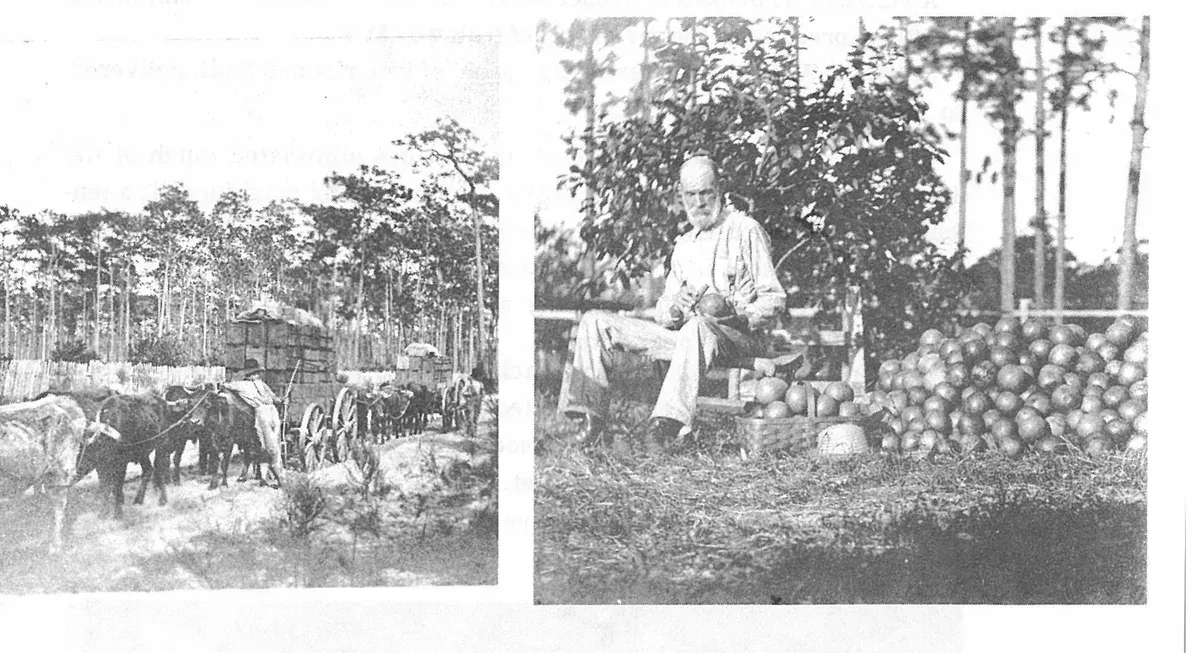
The First Hundred Years of Avon Park, Florida (1976), page 142. Avon Park Historical Society.[maxwell-1976]
CITRUS INDUSTRY
The first citrus planted was lemon trees and oranges. Grapefruit was not so popular. One of the first groves planted in 1886 was five acres on the corner of what is now East Cornell Street and South Highlands Avenue. A part of this block is still bearing fruit today, and is owned by Mrs. Fred Glaser. The large trunks of the trees indicate that the tops have been killed back, perhaps more than one time, but the trees’ trunks survived the ’95 freeze and all subsequent freezes, as one of the few groves in this area of the State.
The first citrus harvested was hauled by wagon to Fort Meade to be shipped by train to northern markets . Only 40 boxes could be hauled on one load, and it took three days to make the trip and return. Fred Smith was one of the first wagon masters. He would take a load of fruit and bring back a load of groceries or hardware.
Before a packing house was built, the fruit was brushed and cleaned by hand at the grove, and hauled out by ox-cart. It is interesting to note that the field crates were the same as those still in use by many grove people today.
All citrus was packed in bushel baskets or wooden crates for shipment. In 1913 express rates for one bushel of fruit was $1.45.
In 1930 A. W. Forbes advertised a bushel of tree-ripened fruit, delivered to the express office for $1.00.
All of the modern grove equipment has eliminated much of the hand labor handling fruit in the grove. Today loading machines lift a ten-box tub of fruit and dump it into the semi-trailer which can haul hundreds of boxes at a time to the processing plant. Progress is being made to develop a fruit picking machine, and no doubt, it will be perfected within the near future. William A. King built the first packing house in 1893, and established the Avon Park Exchange, which lasted until 1909 when it became a part of the Avon Park Citrus Growers Association. King’s packing house was built on the South side of Main Street, near where the Jahna Concrete plant is located today. S. E. (Steve) Roberts also had a packing house near this site
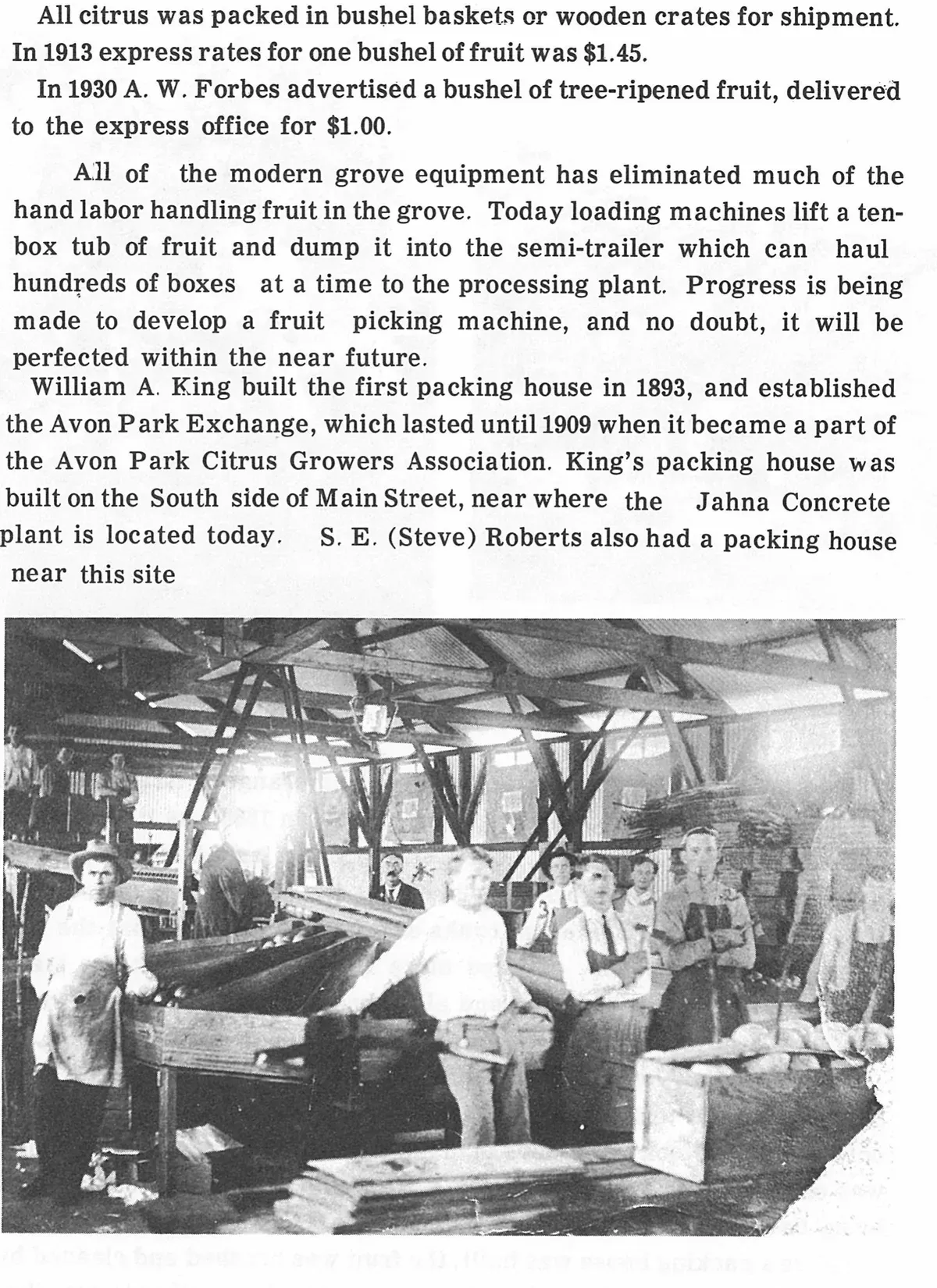
The First Hundred Years of Avon Park, Florida (1976), page 143. Avon Park Historical Society.[maxwell-1976]
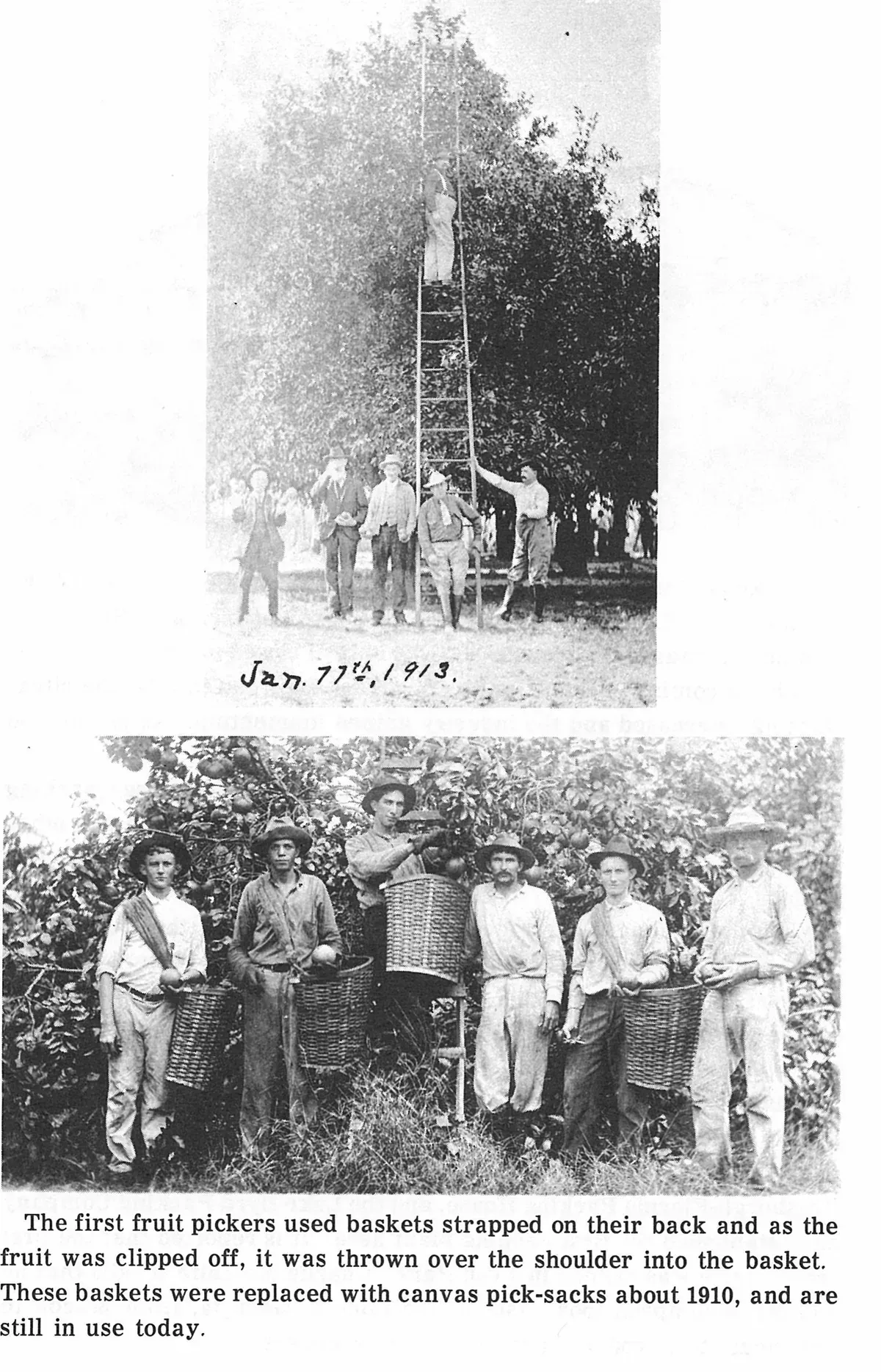
Jan. 17th, 1913. The First Hundred Years of Avon Park, Florida (1976), page 144. Avon Park Historical Society.[maxwell-1976]
The first fruit pickers used baskets strapped on their back and as the fruit was clipped off, it was thrown over the shoulder into the basket. These baskets were replaced with canvas pick-sacks about 1910, and are still in use today.
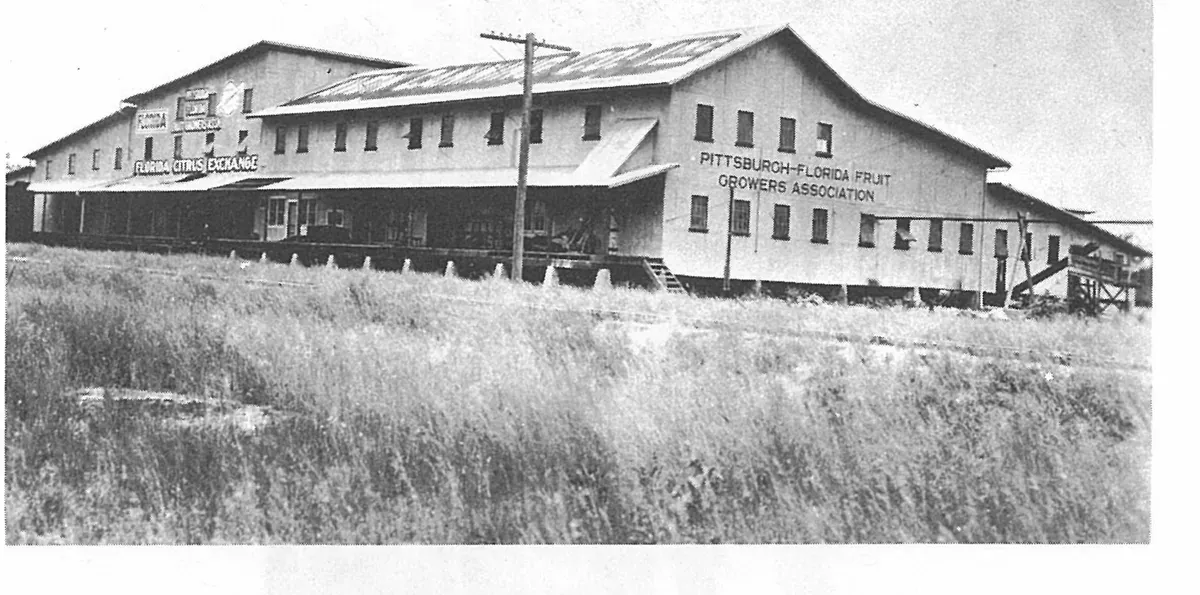
The Avon Park Citrus Growers Association became a part of the Florida Citrus Exchange and built a large house North of Main Street and continued to market fruit as the APCGA until it closed in 1955. The First Hundred Years of Avon Park, Florida (1976), page 145. Avon Park Historical Society.[maxwell-1976]
With the coming of the Atlantic Coast Line Railroad in 1912, the citrus plantings increased and the industry gained momentum. As production increased, so did packing houses.
Latt Maxcy and John and Gregg Maxcy established large packing houses on the ACL track. One of these houses burned and the other destroyed. Ben Hill Griffin, Jr. operated one of the houses for a few seasons.
When the Seaboard Air Line Railroad came in 1926, the SAL built a large house facing West Pleasant Street. This was the American Fruit Growers Association, or the Blue Goose Packing Company. Roscoe Skipper operated this house for a few seasons. Today this building stands as a skeleton, waiting to be destroyed or converted into a useful building.
In 1915 the Anderson Brothers, A. V. and C. P. and his young son, C. Parke Anderson, came and organized the Pittsburgh-Florida Citrus Growers Association and planted 4000 acres of citrus. They built the Pittsburgh-Florida Packing House, and the Lake Byrd Packing Company and established the first canning plant here. It is reported that the first orange juice was canned in Avon Park. Charlie Metcalfe recalls that he and Mr. Thompson took cases of the juice to Georgia, from Macon to Americus, to introduce it to prospective buyers.
When the Anderson’s corporations collapsed, C. H. Walker was appointed as receiver for the bankrupt associations. He re-organized them under the name of the Avon Florida Citrus Corporation and continued operation.
This packing house was purchased by the Sottile Brothers of Miami, who also purchased the Barnett Bank in 1955. Sottile enlarged and modernized the packing house and later sold to Ben Hill Griffin, Jr., who uses it now for storage, and a part of the building has been converted into classroom space for the Park Christian School, a private establishment.
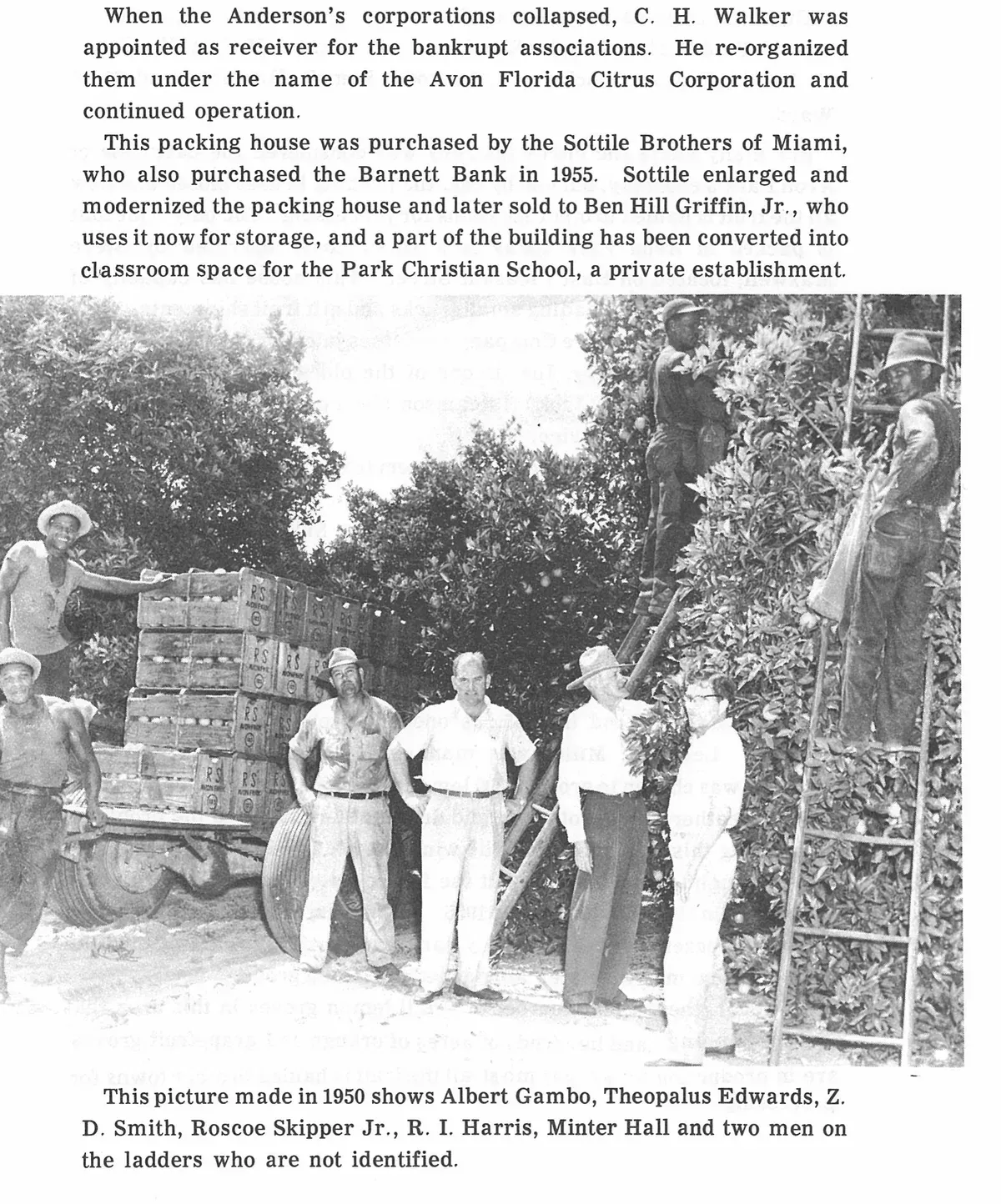
This picture made in 1950 shows Albert Gambo, Theopalus Edwards, Z. D. Smith, Roscoe Skipper Jr., R. I. Harris, Minter Hall and two men on the ladders who are not identified. The First Hundred Years of Avon Park, Florida (1976), page 146. Avon Park Historical Society.[maxwell-1976]
Other familiar names connected with the early citrus organizations were J. Paul Garber, Charles Shepherd, C. R. Ginn, A McKee Elwell, H . E. Keller, Francis Shockley, E. G. Todd, Sam P. Durrance and W. F. Ward.
For many years the citrus industry was considered the backbone of Avon Park’s economy, but one by one, the packing houses closed and now all the fruit is hauled to other locations for processing. The only fruit that is packed in Avon Park today is a small house operated by Steve Maxwell, located on East Pleasant Street. This house has capacity of 1000 boxes per day for loading small trucks and gift fruit shipments.
The Florida Home Juice Company processes juice for shipments.
Wards Citrus Nursery, Inc. is one of the oldest and largest citrus nurseries in the state. Jack Hutchinson also operates a citrus nursery and a tree removal service.
C. Elton Crews operates a caretaking service as well as a large ranch in Hardee County.
Joe S. Murphy operates the Agra-Chem Sales Company, which furnishes materials for the caretakers.
Minute-Maid Groves Corp. and Coca-Cola Company Food Division owns and operates a large acreage and all of their fruit is hauled to other places for processing.
Stokley Van Camp developed a 320 acre tract of lemons on the Bombing Range Road in 1955, as one of several lemon plantings in Florida. Lewis R. Miller was manager for the operation. Ward’s Nursery was chosen to grow 33,000 lemon trees for the plantings.
Cold weather, frost protection and dry weather, added to the problems of growing this tropical fruit. The winter of 1961 with a 20 mile an hour wind wrought great damage, but the first crop of marketable fruit was harvested in the late summer of 1965. The winter of 1970-71 brought a series of freezes that caused heavy damage Stokley-Van Camp sold the grove to local men who later abandoned the lemon grove.
However, there are a number of small lemon groves in this area that are producing and hundreds of acres of orange and grapefruit groves are in production today, yet mo st all the fruit is hauled to other towns for processing.
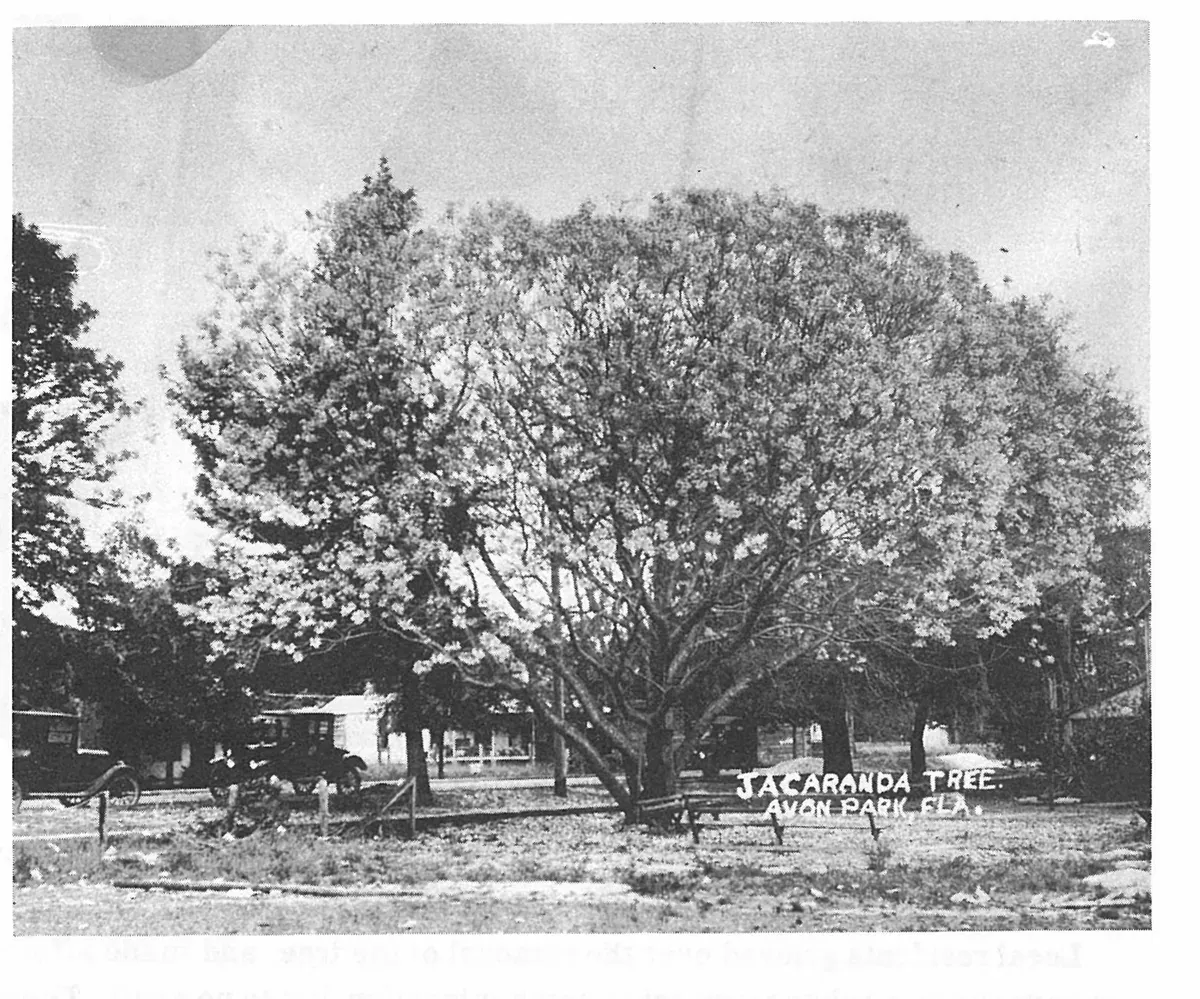
The Jacaranda tree that had to be cut down to make room for building the Jacaranda Hotel. The tree stood between East Main and Waycross Street. The First Hundred Years of Avon Park, Florida (1976), page 148. Avon Park Historical Society.[maxwell-1976]
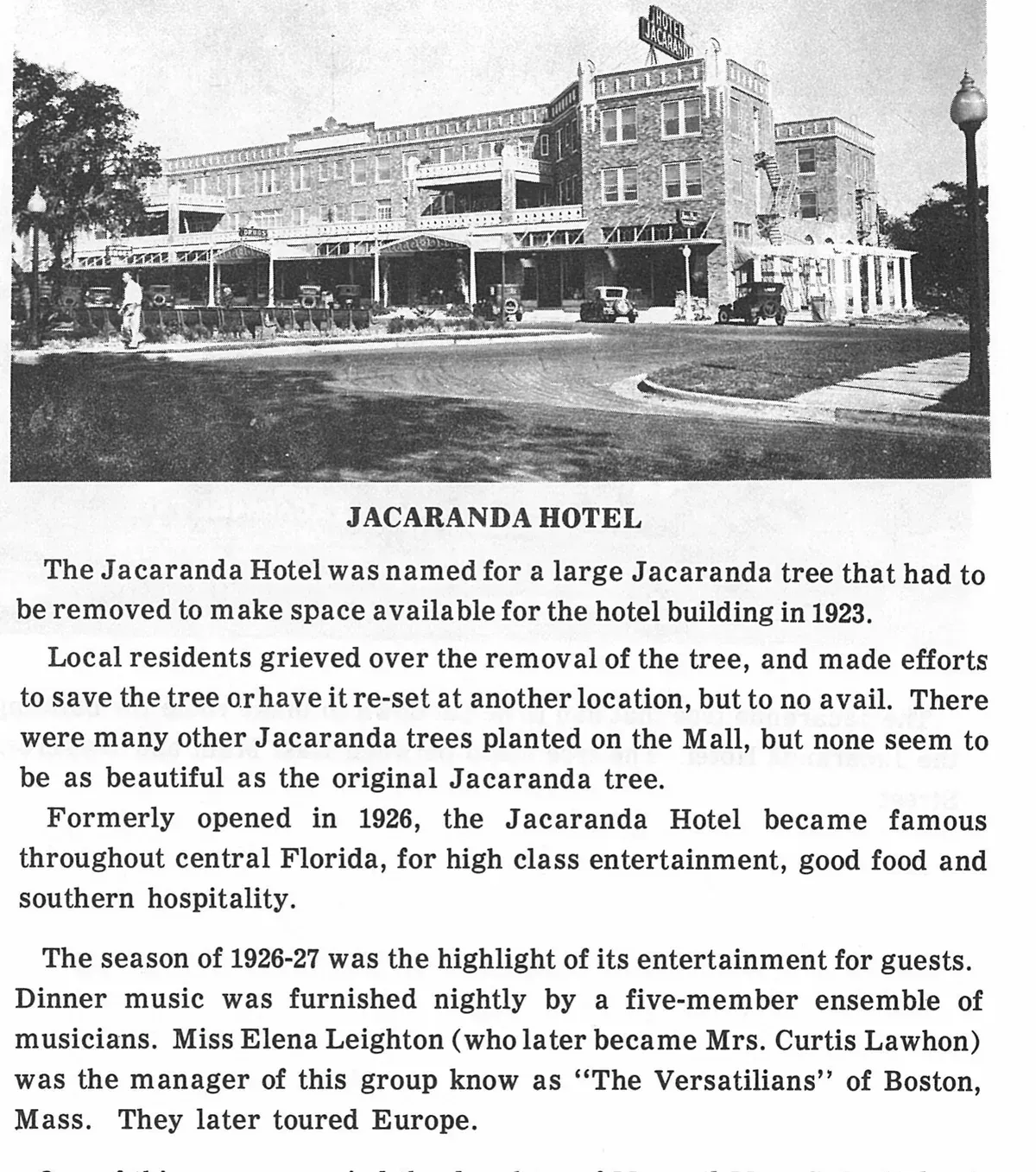
The First Hundred Years of Avon Park, Florida (1976), page 149. Avon Park Historical Society.[maxwell-1976]
JACARANDA HOTEL
The Jacaranda Hotel was named for a large Jacaranda tree that had to be removed to make space available for the hotel building in 1923.
Local residents grieved over the removal of the tree, and made efforts to save the tree orhave it re-set at another location, but to no avail. There were many other Jacaranda trees planted on the Mall, but none seem to be as beautiful as the original Jacaranda tree.
Formerly opened in 1926, the Jacaranda Hotel became famous throughout central Florida, for high class entertainment, good food and southern hospitality.
The season of 1926-27 was the highlight of its entertainment for guests. Dinner music was furnished nightly by a five-member ensemble of musicians. Miss Elena Leighton (who later became Mrs. Curtis Lawhon) was the manager of this group know as “The Versatilians” of Boston, Mass. They later toured Europe.
One of this group married the daughter of Mr. and Mrs. C. D. Noland and another one married Miss Virginia Smith, a sister of Mrs. Jack Head.
Elena and Curtis Lawhon settled in Avon Park and she taught piano and other instruments to local children for many years.
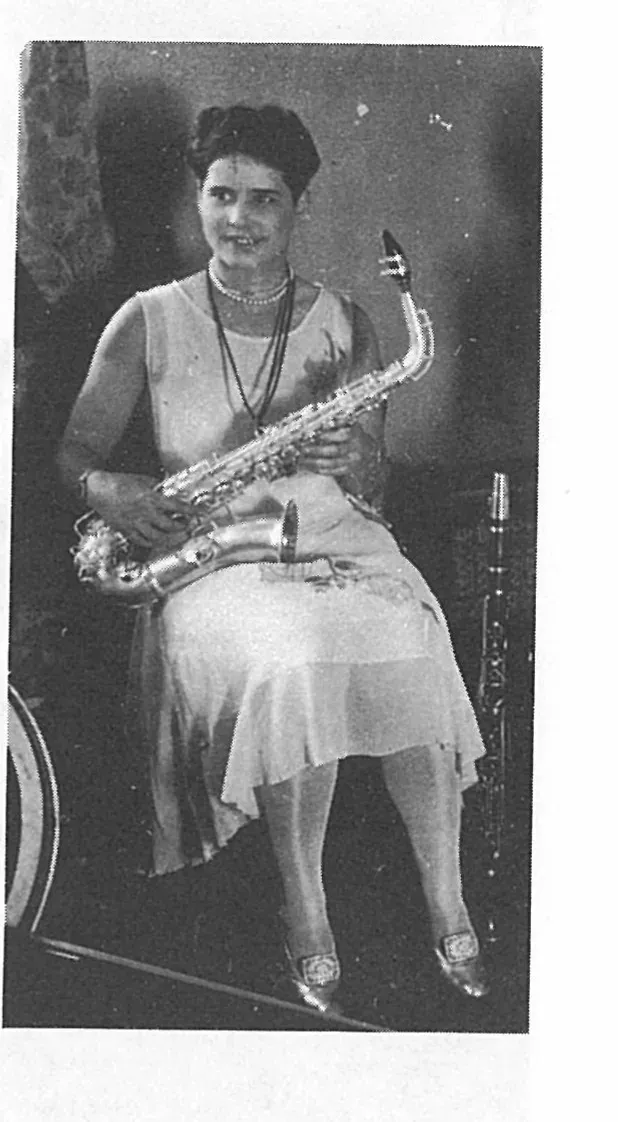
Elena Leighton Lawhon,. The First Hundred Years of Avon Park, Florida (1976), page 150. Avon Park Historical Society.[maxwell-1976]
director of the Versatilians
JACARANDA HOTEL opened in April 1926
Jacaranda Hotel Lobby
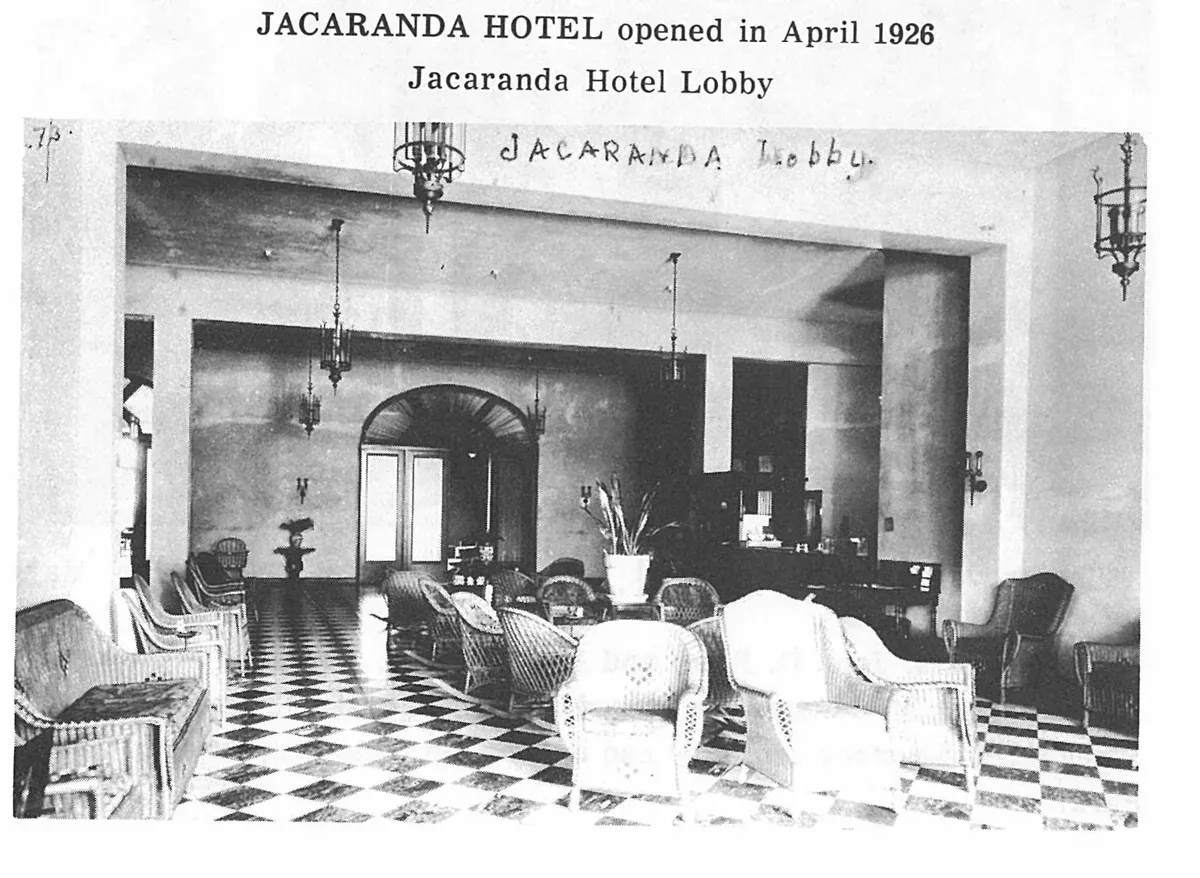
The First Hundred Years of Avon Park, Florida (1976), page 150. Avon Park Historical Society.[maxwell-1976]
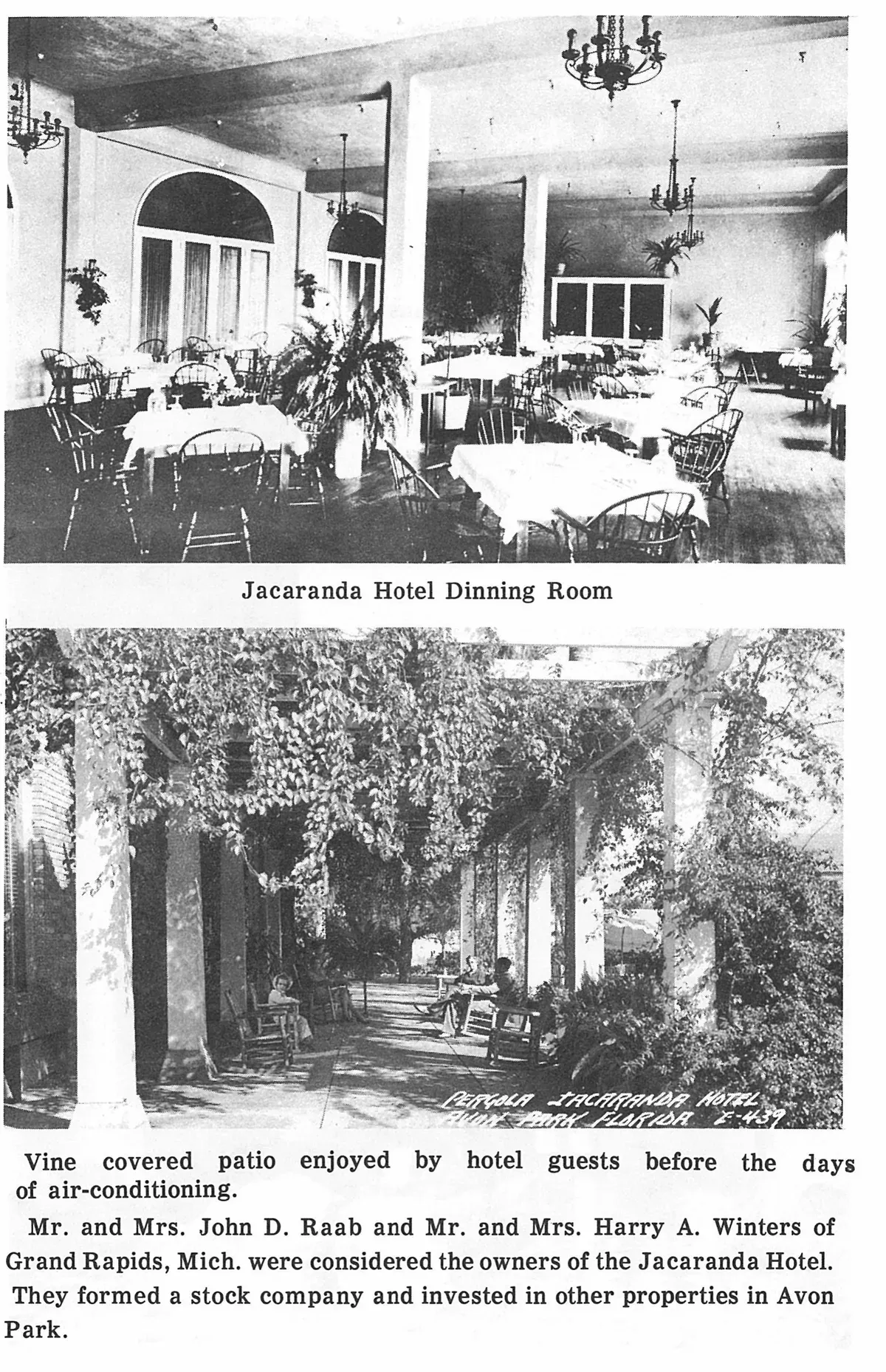
Jacaranda Hotel Dinning Room. The First Hundred Years of Avon Park, Florida (1976), page 151. Avon Park Historical Society.[maxwell-1976]
Vine covered patio enjoyed by hotel guests before the days of air-conditioning.
Mr. and Mrs. John D. Raab and Mr. and Mrs. Harry A. Winters of Grand Rapids, Mich. were considered the owners of the Jacaranda Hotel. They formed a stock company and invested in other properties in Avon Park.
The First Mortgage and Guaranty Company was formed in 1923 with an appraised value of $250,000 stock. Officers were W. A. Marshall, president, Charlie Lanier, vice-president, A. V. Anderson, J. D. Raab, W. M. Reck, T. J. McGinnis, Moffett and Whitehurst were stockholders. The stock company built the Jacaranda Hotel which was in trouble financially from the beginning because the Florida real estate boom was slowing down and values were decreasing.
The Jacaranda Hotel kitchen and dining room was under the management of Mrs. Tennie Haynie, Mrs. L. C. Stewart and Mrs. Katherine Bristol during the early days. Mr. Broderick was the hotel manager.
Like so many other investors in Florida, the Raabs and Winters were among those who lost all of their investments here. The Raabs were forced to leave Avon Park as destitute as had the founder, Oliver M. Crosby, when he was forced to leave in 1896. Their venture had begun in the Twenties It is reported that Mr. Raab invested $260,000 and lost all.
As the “Great Depression” set in, The Raabs decided to return to their former hometown, Grand Rapids, Mich. where they lived with friends. It was about ten years later that they returned to Avon Park.
The Jacaranda has known several different owners and managers over the years. Mel Smith, the prominent saw mill owner and rancher, purchased the hotel in the Thirties and C. E. Crabtree became the manager.
Mr. and Mrs. R. R. King of Highlands, N. C. and their son and wife, Mr. and Mrs. R. R. King, Jr., purchased the hotel in 1946. They operated it in connection with their resort hotel, King’s Inn, in Highlands, N.C. They later sold to Mr. and Mrs. Royal Coats and son, Royal, Jr., who continued the Kings’ reputation for elegant dining at the hotel.
Thornton Kennedy of Atlanta, Ga. bought the hotel in 1962 and sold it to the present owners, Mr. and Mrs. E. F. Calloway and sons, Harold and Smitty.
The Calloways operate the hotel as a retirement home with rooms reserved for tourists and overnight guests, and the dining room is open to the public. The long standing reputation of good food and Southern hospitality continues to be maintained at the hotel.
Mr. and Mrs. John D. Raab returned to Avon Park in the late Thirties. They owned a one-third interest in the Poinsettia Hotel, and through the special arrangements made by Charlie Lanier, the City of Avon Park canceled all back taxes, which had accumulated during the depression, and The Raabs lived out their lives there. This special favor was a gratutious for what Mr. Raab had done in the development of Avon Park. Also, this was before the days of Social Security, and the City took care of many people before there was any State of County welfare programs.
During World War II they rented rooms to the airmen who were stationed at the Avon Park Bombing Range and to some of their wives who lived at the hotel, which provided them with a small income.
Mrs. John A. Taylor purchased the hotel and later sold it to Mrs. H. C. Bigbie, who operated it for many years. Her daughter, Mrs. Sibyl Padelford and family lived at the hotel and continued to operate it until it was sold in 1978.
The Avon Citrus Bank purchased the Poinsettia Hotel property, razed the hotel and made a parking lot for bank employees.
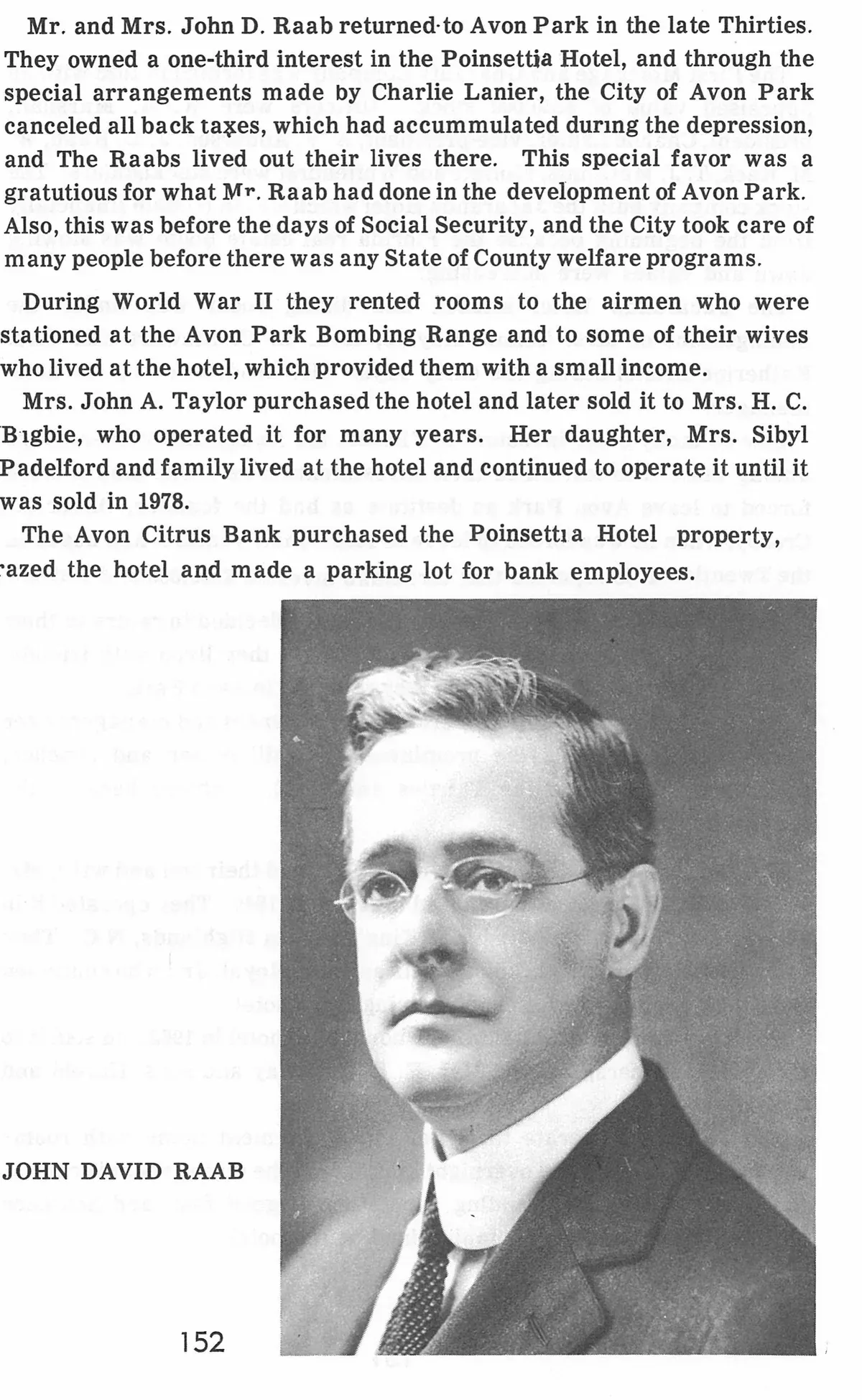
JOHN DAVID RAAB. The First Hundred Years of Avon Park, Florida (1976), page 153. Avon Park Historical Society.[maxwell-1976]
RAAB and WINTERS
Mr. and Mrs. John D. Raab and Mr. and Mrs. Harry A. Winters came from Grand Rapids Mich. Their names are synonomous in the furniture manufacturing business. They built the Jacaranda Hotel as well as making investments in citrus groves and other construction projects. It is reported that they each brought more than $300,000 in cash and invested it in Avon Park. Unfortunately, they lost all of their holdings, because of the “Florida Boom and Bust.”
The Raabs built a large home on North Lake Avenue, with a solarium and maid’s living quarters. It was one of the finest homes built during the Twenties. W. T. Connell purchased the home and made it into an apartment house.
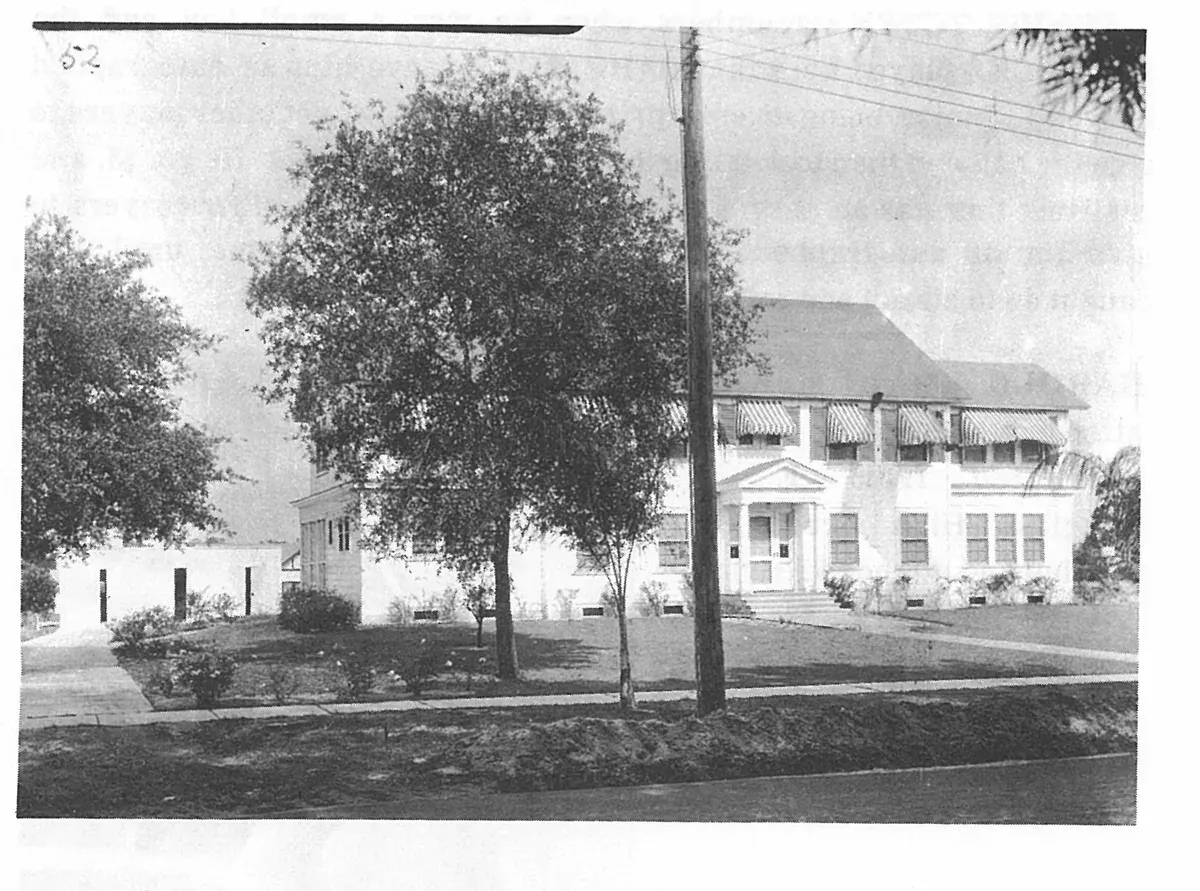
The First Hundred Years of Avon Park, Florida (1976), page 154. Avon Park Historical Society.[maxwell-1976]
OPERA TO BASEBALL
In 1927 the SAN CARLOS OPERA COMPANY of New York City was in Avon Park. They stayed at the Jacaranda Hotel and gave three evening performances at the High School Auditorium, before moving to Miami.
THE WORLD CHAMPION ST. LOUIS CARDINALS baseball team wintered in Avon Park for two season, 1926-27-28. They lived at the Jacaranda and practiced at the Charles R. Head Memorial Field.
Col. Head ,for whom the field was named, was a friend of Sam Bearden and Branch Rickey, owners of the team, and was instrumental in getting the team to winter here.
The CARDINALS played the NEW YORK YANKEES, who were wintering in St. Petersburg. A crowd of 7,000 people came to attend the game. This was more than the entire population of Avon Park at that time.
In 1934-35 THE COLUMBUS RED BIRDS were here for winter and spring training.
In 1938 THE MAPLE LEAFS OF TORONTO, CANADA also trained here. They played the BOSTON RED SOCKS at Head Memorial Field.
JUNIOR TUTEN remembers when he was a small boy and the REDSOCKS played here that BABE RUTH gave him an autographed baseball..Junior, being an enterprizing young fellow, got other players to sign the ball and then took it into the stand to auction it off. He got $5, and realizing this was an easy way to make a buck, he got other players to give him an autographed ball and he repeated his scheme, until they caught on to his act and refused to give him any more balls.
HAROLD (HAL) McRAE attended Avon Park school, graduated from E. O Douglass High School in Sebring and attended Florida A & M University. He was drafted by the Cincinnati Reds in 1965, and is now a baseball professional with the Kansas City Royals.
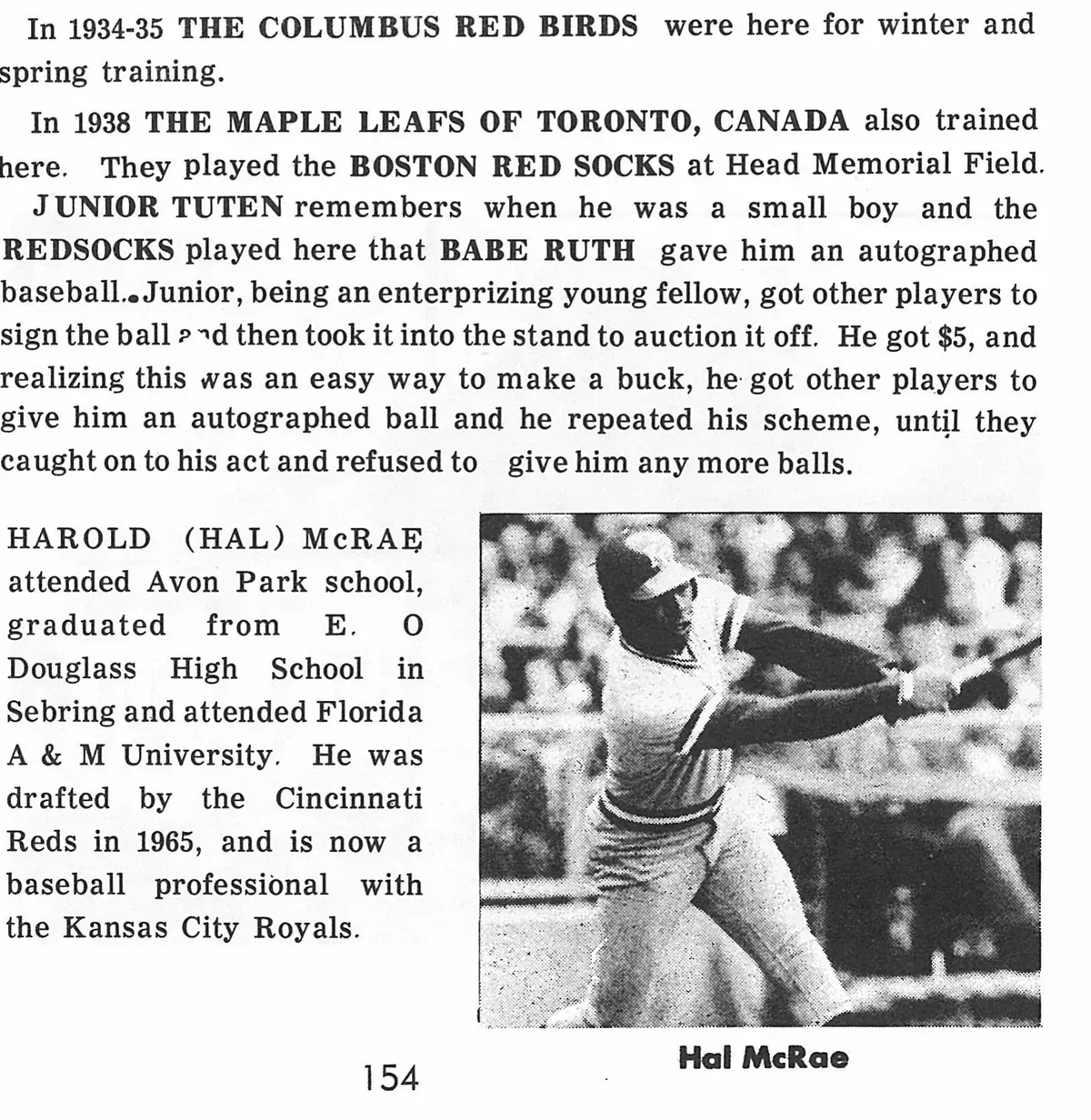
Hal McRae. The First Hundred Years of Avon Park, Florida (1976), page 155. Avon Park Historical Society.[maxwell-1976]
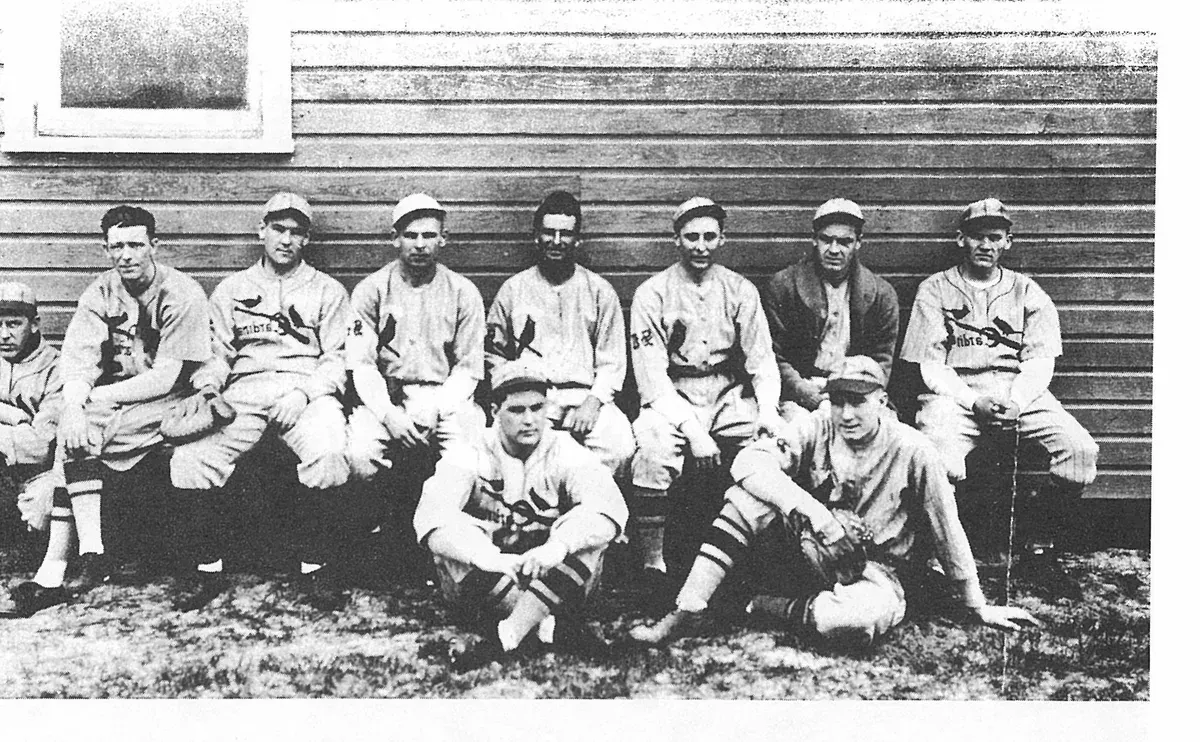
World Champion St. Louis Cardinals. The First Hundred Years of Avon Park, Florida (1976), page 156. Avon Park Historical Society.[maxwell-1976]
Members of the team were Jim Bottomley, Frankie Frisch, Jesse Haines, Sylvester Johnson, Flint Rhem, Jimmie Wilson, Gus Mansusco, Ray Blades, Pepper Martin, Robert Moranville, Chick Hofey, Taylor Douthie, Grover C. Alexander, Harold Thevenow and Charlie Gilbert. Pepper Martin first tried out with the team here.
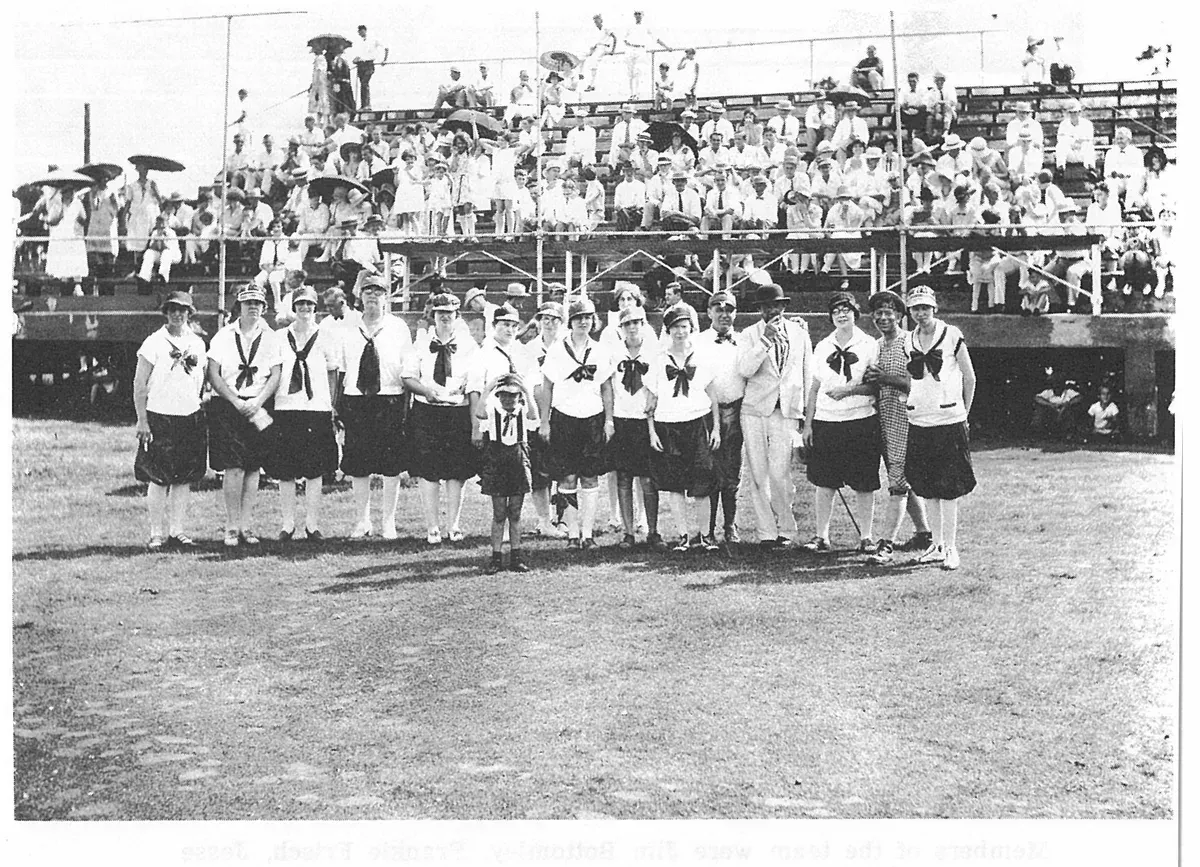
The First Hundred Years of Avon Park, Florida (1976), page 157. Avon Park Historical Society.[maxwell-1976] ST. LOUIS CARDINALS’ GIRLS TEAM, Fannie Reeves, Louise Armstrong, Mattie Tompkins, Jennie Wyckoff, Mona Langford, Helen Mann, Peggy Cass, Wilma Peden, Vera Freeman, Thelma Dilley, T. J. McGinnis, Coach; A McKee Elwell, comic owner, Katherine Bristol, Lloyd Correll, clown and Fadelma Hagood.
Little Frances Brown is the mascott.
Grover C. Alexander, now in the Baseball Hall of Fame, was the manager for the St. Louis Cardinals Girls’ team.
COCA-COLA BOTTLING COMPANY
J. S. Francis of Birmingham, Ala., established a Coca-Cola Bottling Company here in 1919. He bought the Avon Products Company which had been owned by A. C. West, C. C. Edwards, R. I. Harris and C. D. Noland. Mr. Francis built a plant on Lake Tulane in 1920.
The building was designed by architect, William Heim, and it featured the world’s largest Coca-Cola bottle. This bottle was designed and built by Paul S. (Mickie) Heath, an amateur sculptor.
Following Mr. Francis’ death, the plant had several different owners and finally the business was sold and moved to another city.
The building was purchased by Robert M. Young, Avon Park Postmaster, who used it as a warehouse for his personal business. The building was completely destroyed by fire in 1976.
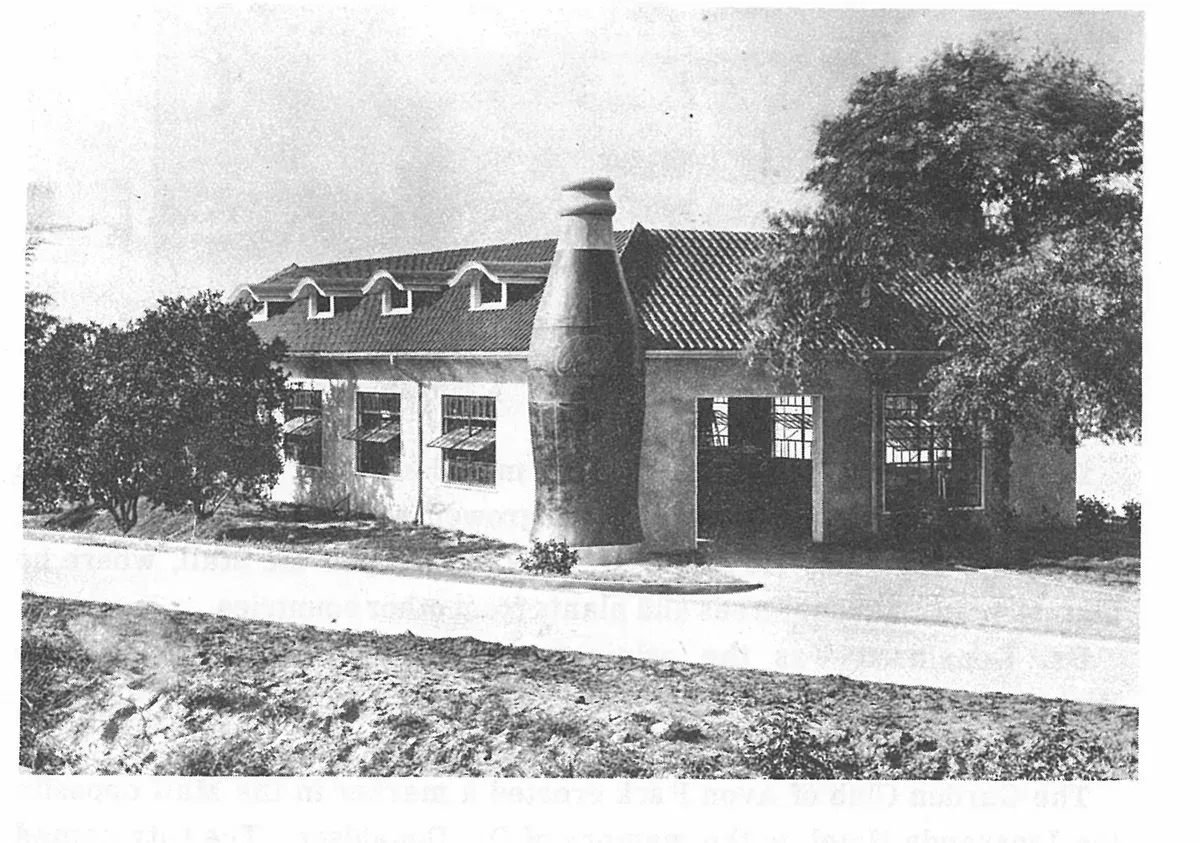
The First Hundred Years of Avon Park, Florida (1976), page 158. Avon Park Historical Society.[maxwell-1976]
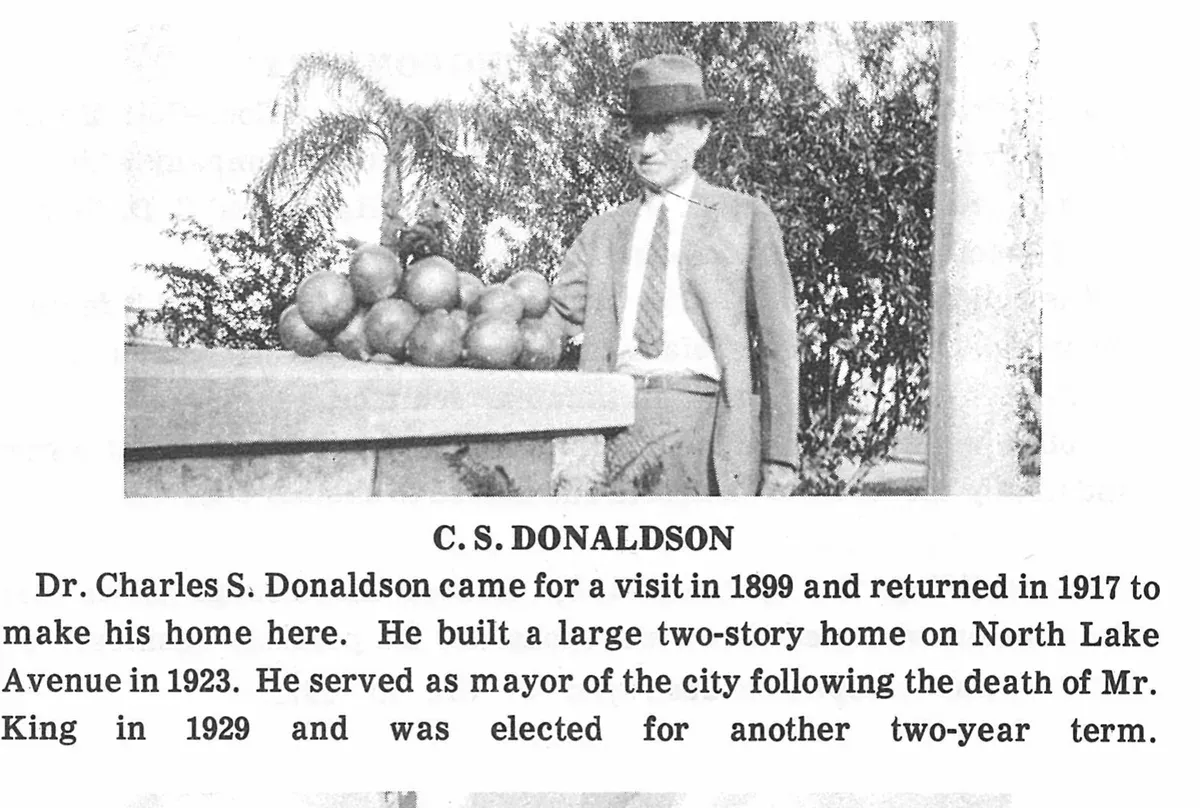
The First Hundred Years of Avon Park, Florida (1976), page 159. Avon Park Historical Society.[maxwell-1976]
C. S. DONALDSON
Dr. Charles S. Donaldson came for a visit in 1899 and returned in 1917 to make his home here. He built a large two-story home on North Lake Avenue in 1923. He served as mayor of the city following the death of Mr. King in 1929 and was elected for another two-year term.
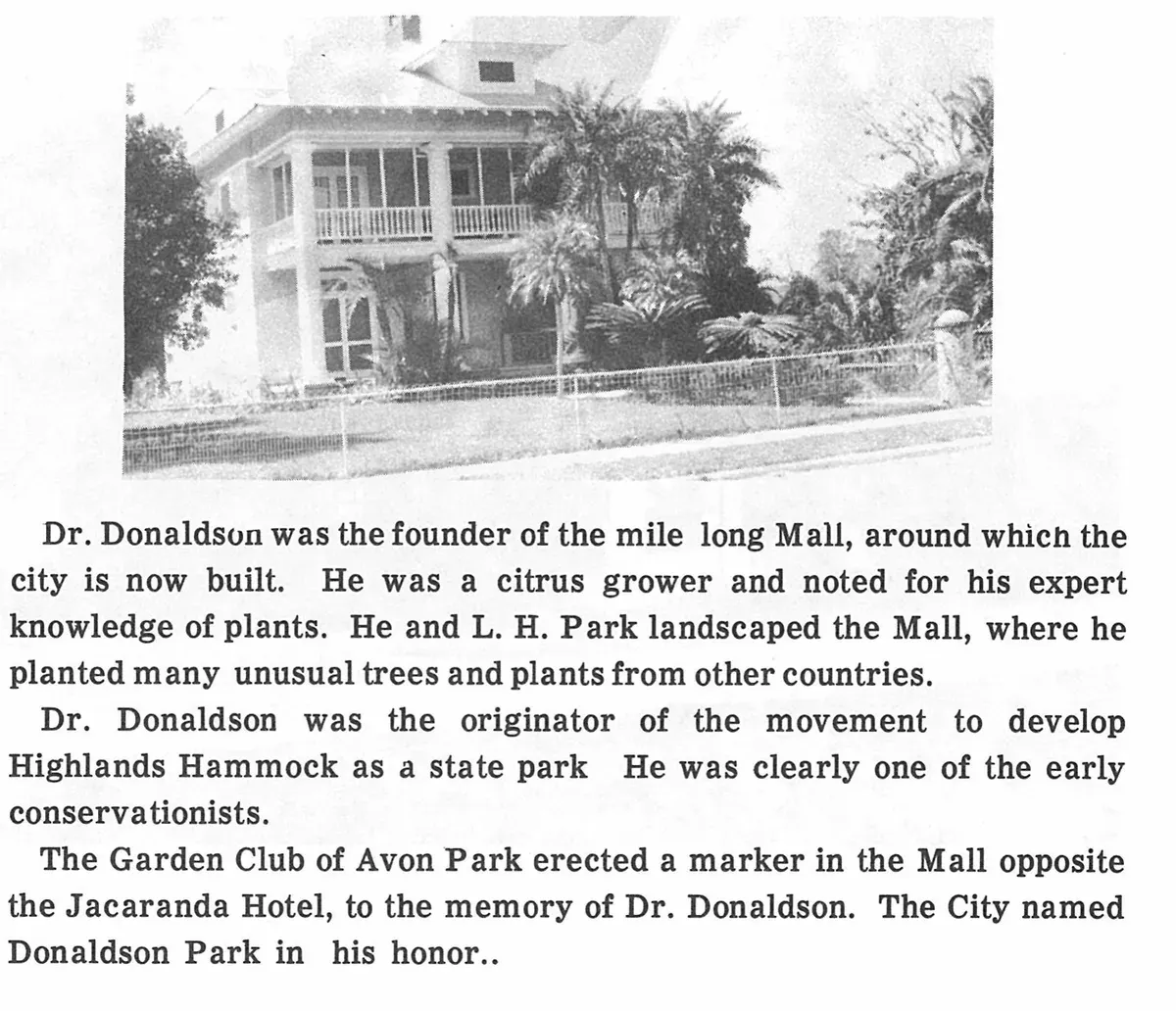
The First Hundred Years of Avon Park, Florida (1976), page 159. Avon Park Historical Society.[maxwell-1976]
Dr. Donaldson was the founder of the mile long Mall, around which the city is now built. He was a citrus grower and noted for his expert knowledge of plants. He and L. H. Park landscaped the Mall, where he planted many unusual trees and plants from other countries.
Dr. Donaldson was the originator of the movement to develop Highlands Hammock as a state park He was clearly one of the early conservationists.
The Garden Club of Avon Park erected a marker in the Mall opposite the Jacaranda Hotel, to the memory of Dr. Donaldson. The City named Donaldson Park in his honor..
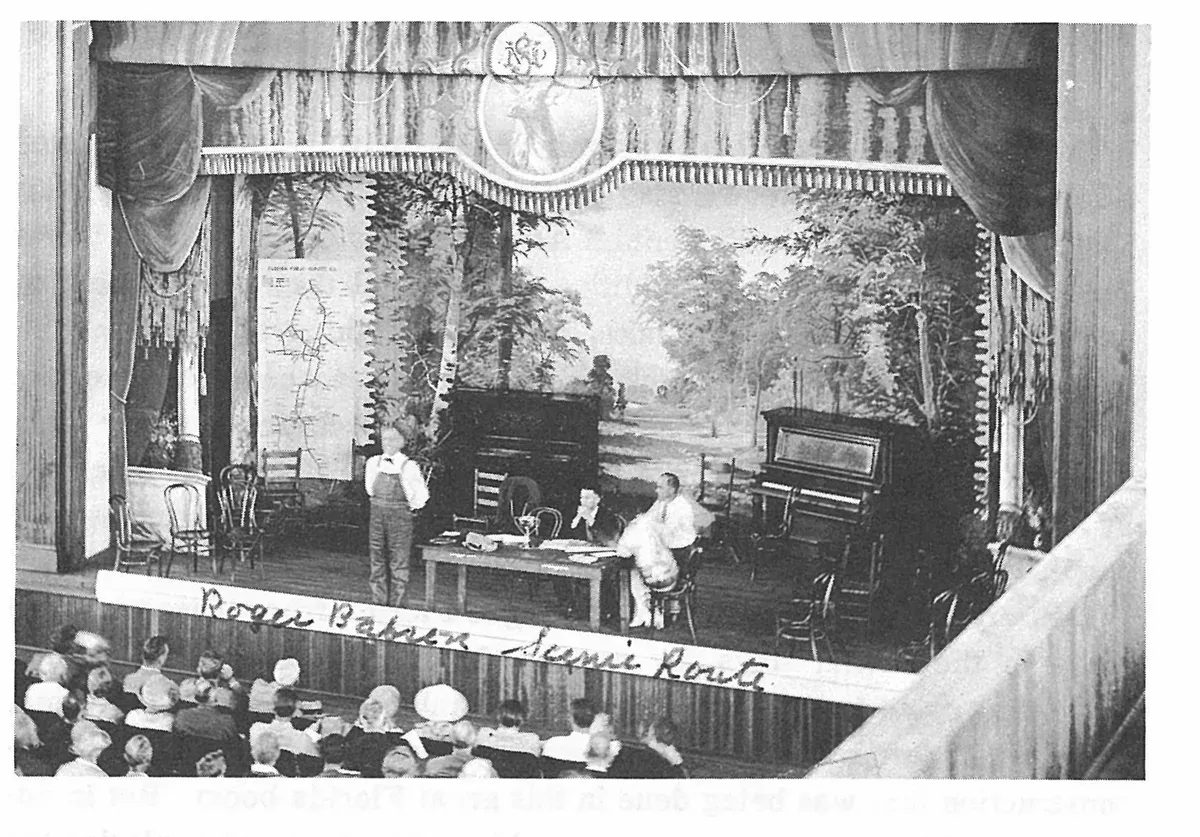
Roger Babson Scenic Route. The First Hundred Years of Avon Park, Florida (1976), page 160. Avon Park Historical Society.[maxwell-1976]
ROGER W. BABSON
ROGER W. BABSON, an eminent statistician of the twentieth century, and founder of the city of Babson Park, Florida, visited Avon Park in the early Twenties in the interest of promoting the cities of the Scenic Highlands and a better road from Lake Wales south. At that time State Road 8 came from Frostproof down South Highlands
Partly through Babson’s efforts, Highway 17 was built from Lake Wales south, which is now Alternate 17.
Again in the Spring of 1932 Babson visited Avon Park. This time was the period following the bank failures, when business was slow, morale was low and money was scarce. Babson was promoting an organization to get the new Highway 27 extended south. A large public meeting was held in the High School Auditorium. Babson’s topic was “Business Outlook, Depression and Return to Prosperity.”
It was a number of years later that Highway 27 South was built and today it is a four lane highway through the state practically all the way to Miami.
HIGHLANDS LAKES HOTEL AND CASINO
The Highlands Lakes Hotel was built in the early Twenties on the east side of Lake Lillian, known also as Highlands Lake. Cliff and Lewis Eisley were salesmen with Bennett Associates for the Highlands Lakes Development Company. In addition to the hotel they built a floating pavilion in the middle of the lake, which was lighted at night, and attracted wide attention. An 18-hole golf course on the west side of the lake and a plush Casino, with a fountain in the front, became a popular night spot. The Casino was built mostly over the water Music was furnished by a live orchestra and dancing nightly was enjoyed by hotel guests and people from the surrounding area. These were the “Roaring Twenties.”
A different type of people were coming to Florida from those who had come in the earlier days, by ox-cart, horseback or on foot with a pioneering spirit for freedom from crowds and cold weather. This time, many who came were looking for work, which they found in all of the construction that was being done in this great Florida boom. But in addition to making money, many were seeking adventure and exploring the new era of lighthearted night life, like that of the big cities, which was being transferred to the Florida towns, (so some said in their reminiscing of the Twenties.) Florida was a new land to be opened up for living and making a living. There was a feeling of revolt from the puritanism of the past, and there was dancing and jazz bands, swimming and recreation like in big resort hotels. Everyone seemed to be caught up in the spirit of the times.
Among the famous guests who registered at the Highlands Lakes Hotel during the Twenties was the novelist, Sinclair Lewis.
Unfortunately the glorious bubble burst all to soon. Hardly had the Highlands Lakes Hotel started to prosper when the 1929 crash struck. People no longer came and this plush hotel was forced to close.
For a number of years it was opened only on special occasions for certain social functions of local interest. The last big event that is remembered by Avon Park residents was the Junior-Senior Banquet of the High School which was held in 1940.
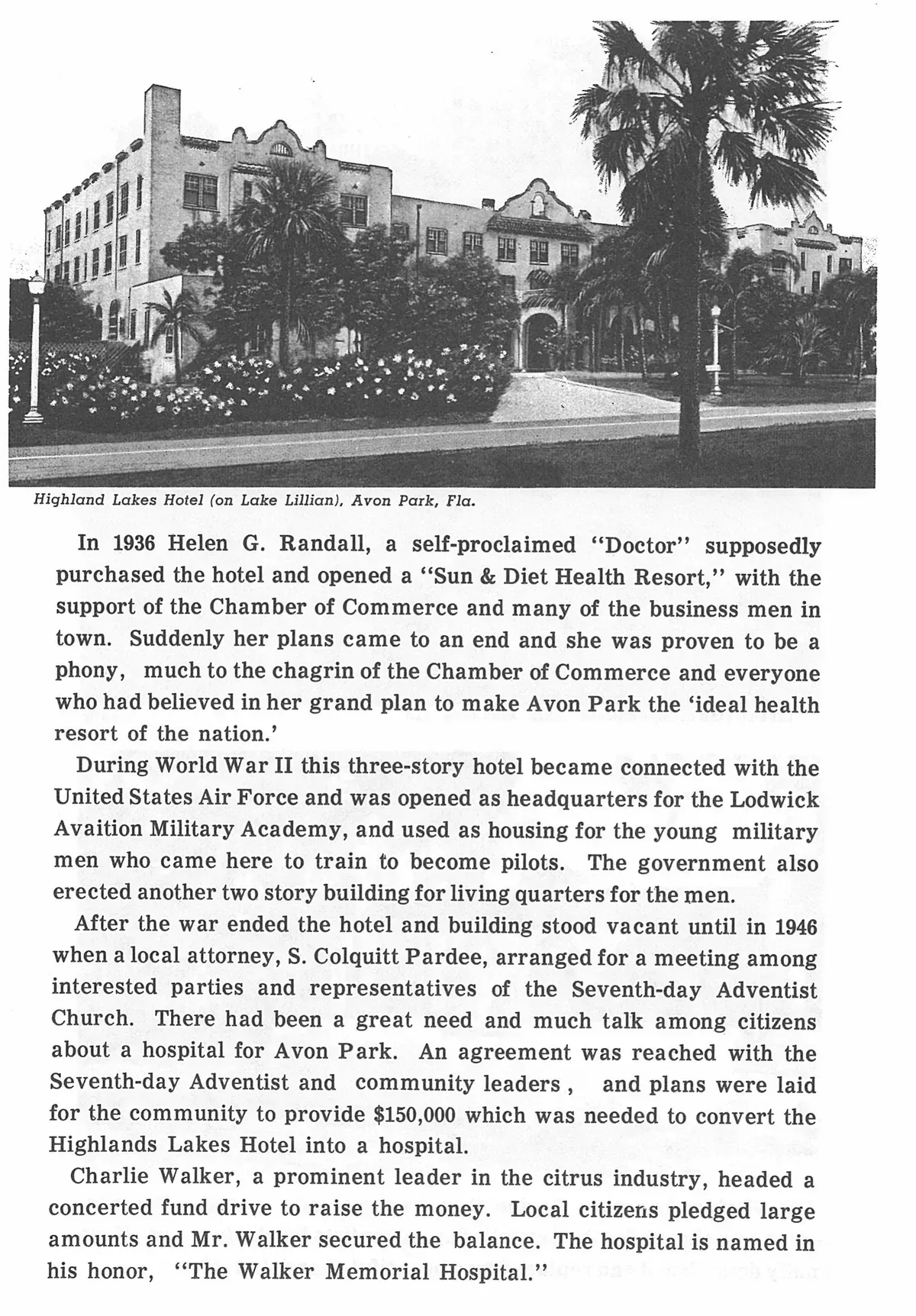
Highland Lakes Hotel (on Lake Lillian), Avon Park, Fla.[maxwell-1976]
In 1936 Helen G. Randall, a self-proclaimed “Doctor” supposedly purchased the hotel and opened a “Sun & Diet Health Resort,” with the support of the Chamber of Commerce and many of the business men in town. Suddenly her plans came to an end and she was proven to be a phony, much to the chagrin of the Chamber of Commerce and everyone who had believed in her grand plan to make Avon Park the ‘ideal health resort of the nation.’
During World War II this three-story hotel became connected with the United States Air Force and was opened as headquarters for the Lodwick Avaition Military Academy, and used as housing for the young military men who came here to train to become pilots. The government also erected another two story building for living quarters for the men.
After the war ended the hotel and building stood vacant until in 1946 when a local attorney, S. Colquitt Pardee, arranged for a meeting among interested parties and representatives of the Seventh-day Adventist Church. There had been a great need and much talk among citizens about a hospital for Avon Park. An agreement was reached with the Seventh-day Adventist and community leaders , and plans were laid for the community to provide $150,000 which was needed to convert the Highlands Lakes Hotel into a hospital.
Charlie Walker, a prominent leader in the citrus industry, headed a concerted fund drive to raise the money. Local citizens pledged large amounts and Mr. Walker secured the balance. The hospital is named in his honor, “The Walker Memorial Hospital.”
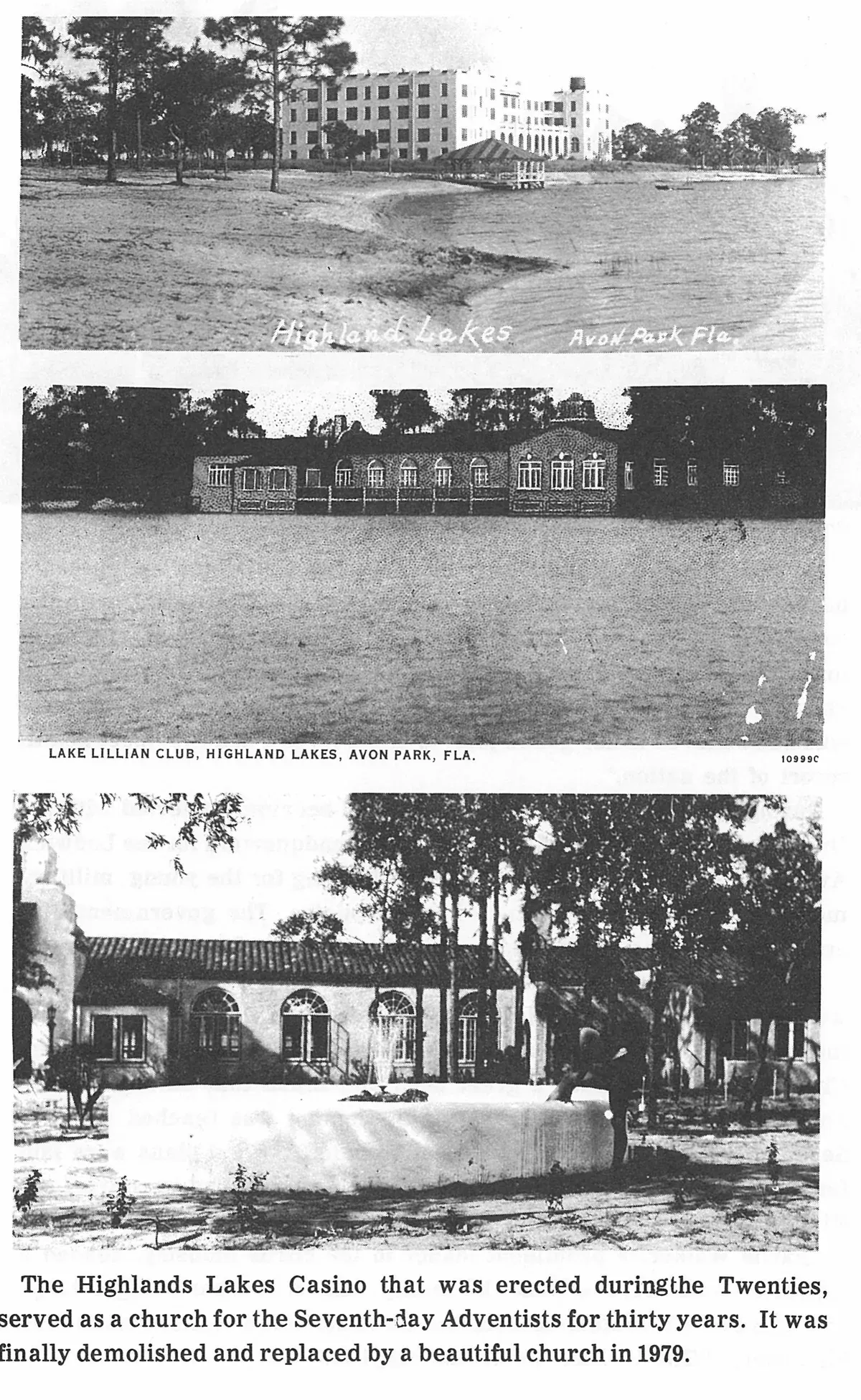
LAKE LILLIAN CLUB, HIGHLAND LAKES, AVON PARK, FLA. 10999C. The First Hundred Years of Avon Park, Florida (1976), page 163. Avon Park Historical Society.[maxwell-1976]
The Highlands Lakes Casino that was erected duringthe Twenties, served as a church for the Seventh-day Adventists for thirty years. It was finally demolished and replaced by a beautiful church in 1979.
WALKER MEMORIAL HOSPITAL
The Walker Memorial Hospital and Sanitorium opened its doors for the first patients on January 7, 1948. Dr. C. J. Larsen came as the first medical director. Dr. Donald C. Hartwell also came at the beginning of the hospital. Dr. H. W. Coleman, a local doctor, helped to get the hospital operation under way, and Dr. Samuel A. King was also among the first doctors to join the hospital staff.
Since its first patient, the hospital staff has continued to improve its facilities. All of the original buildings have been replaced. A $2 million construction project that began in 1963 was completed. The new two-story hospital building was dedicated on March 11, 1973.
In 1975 a large 11-office complex for doctors’ offices was opened, and construction is under way for additional space for another hospital department, and also another doctors’ complex.
Today the Walker Memorial Hospital has 99 beds and anticipates a full capacity of 120 beds in the immediate future. The hospital has a full staff of physicians and surgeons who are specialists in their own practice, and a full corps of nurses , Pink Ladies and Candy Stripers to take care of the patients’ needs.
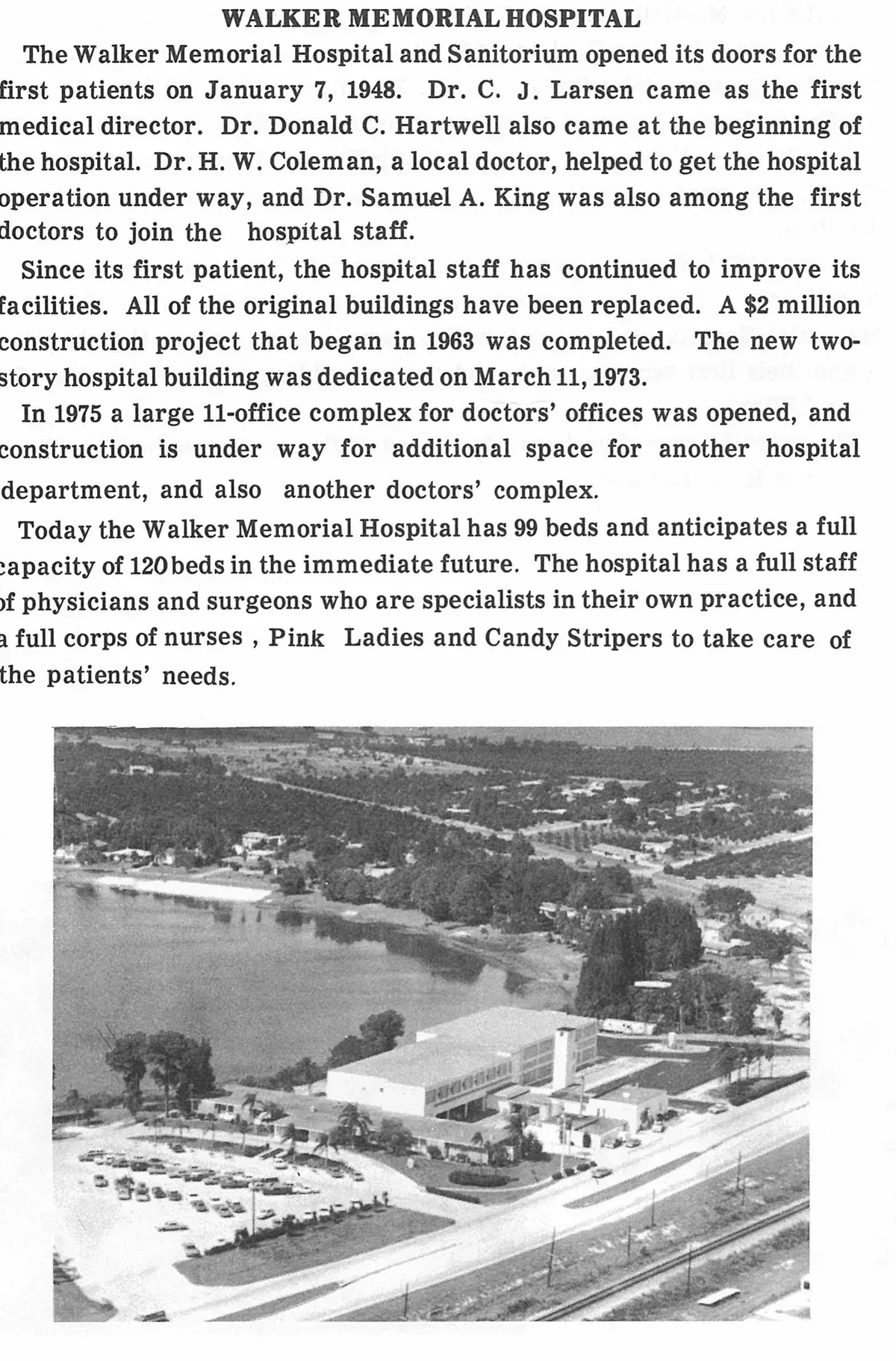
The First Hundred Years of Avon Park, Florida (1976), page 164. Avon Park Historical Society.[maxwell-1976]
WALKER MEMORIAL SEVENTH-DAY ADVENTIST CHURCH was first organized in Avon Park in 1921. Charter members were Emma and John Wertz, Mrs. John Krause, E. E. Thompson, Mr. and Mrs. H. B. Smith and Victor Smith, Mrs. George Guthrie and Mrs. Rena Dalgetty.
The church building was located on South Florida Avenue and after the church disbanned in the late Thirties, the building was converted into a dwelling.
It was 1947 before the Seventh-day Adventist Church was revived in Avon Park. When the Adventist Church began operation of the Walker Memorial Hospital and many families came into this area, the church began their first services in the old casino building on the West side of Lake Lillian.
The beautiful new church was dedicated on this same spot in 1979. The Pastor is R. J. LaFave.
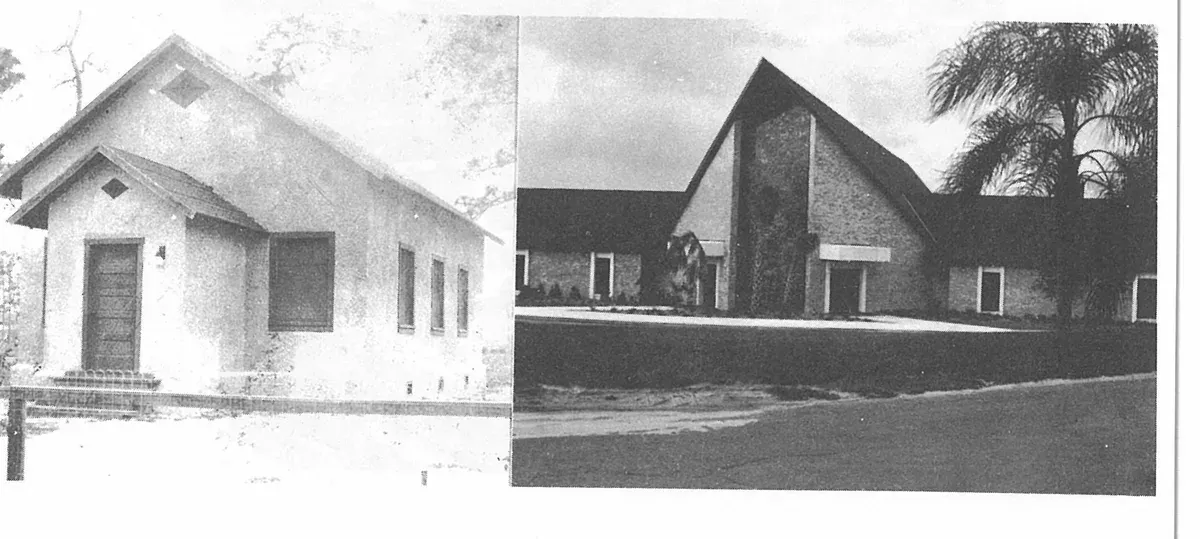
The First Hundred Years of Avon Park, Florida (1976), page 165. Avon Park Historical Society.[maxwell-1976]
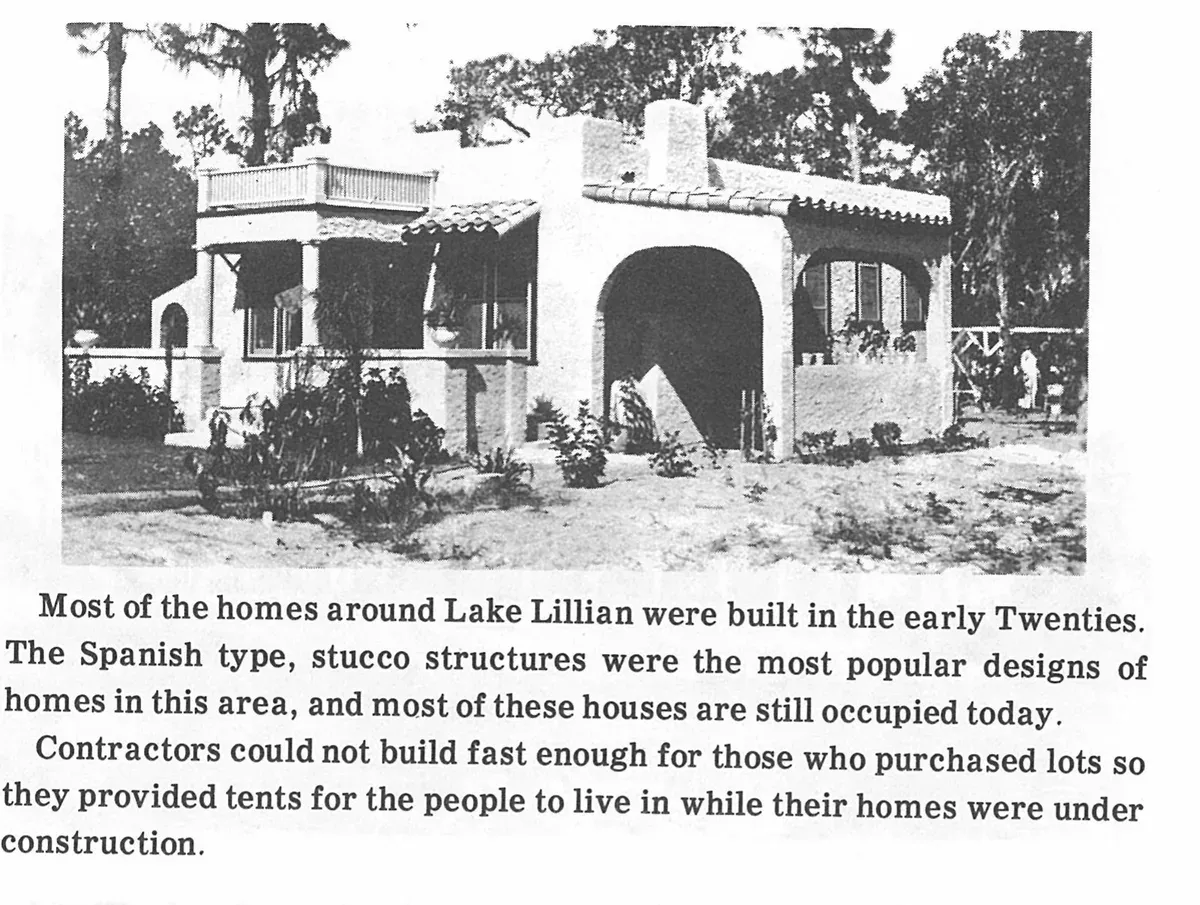
Most of the homes around Lake Lillian were built in the early Twenties. The Spanish type, stucco structures were the most popular designs of homes in this area, and most of these houses are still occupied today. The First Hundred Years of Avon Park, Florida (1976), page 166. Avon Park Historical Society.[maxwell-1976]
Contractors could not build fast enough for those who purchased lots so they provided tents for the people to live in while their homes were under construction.
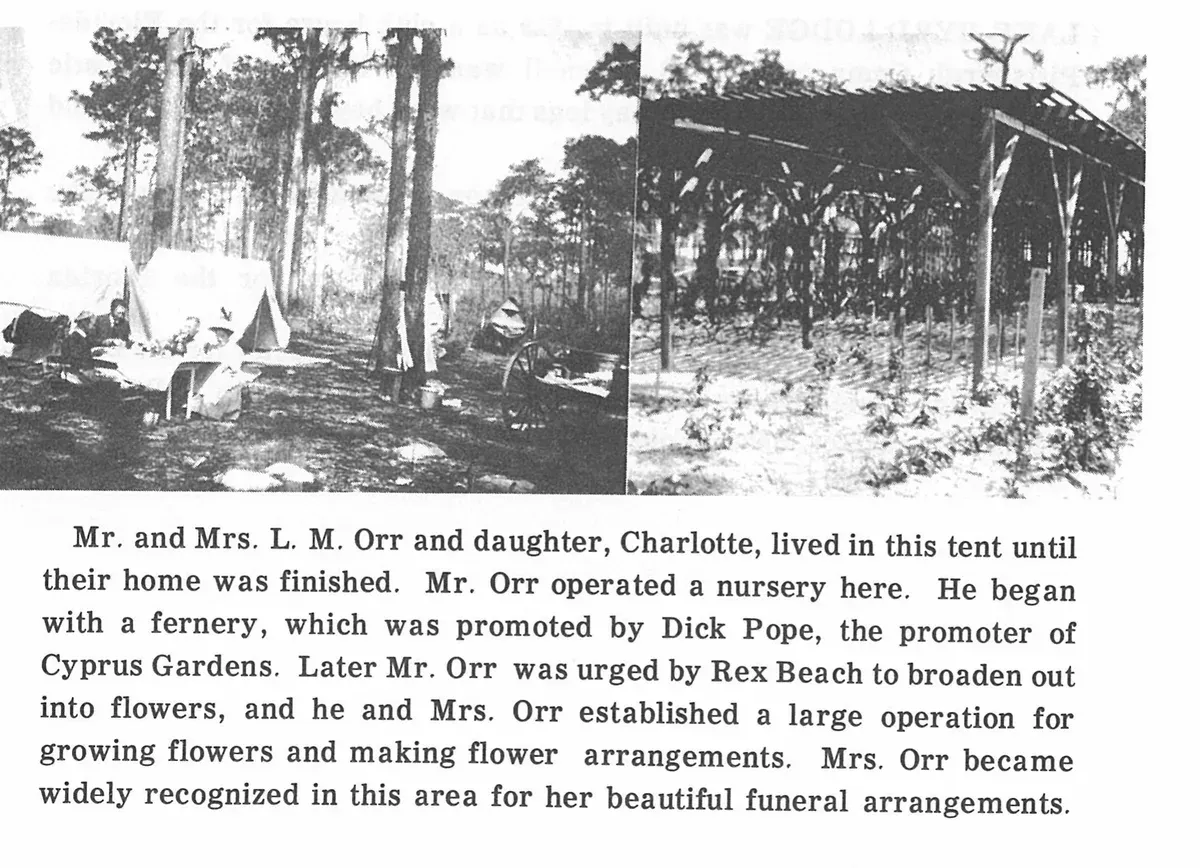
The First Hundred Years of Avon Park, Florida (1976), page 166. Avon Park Historical Society.[maxwell-1976] Mr. and Mrs. L. M. Orr and daughter, Charlotte, lived in this tent until their home was finished. Mr. Orr operated a nursery here. He began with a fernery, which was promoted by Dick Pope, the promoter of Cyprus Gardens. Later Mr. Orr was urged by Rex Beach to broaden out into flowers, and he and Mrs. Orr established a large operation for growing flowers and making flower arrangements. Mrs. Orr became widely recognized in this area for her beautiful funeral arrangements.
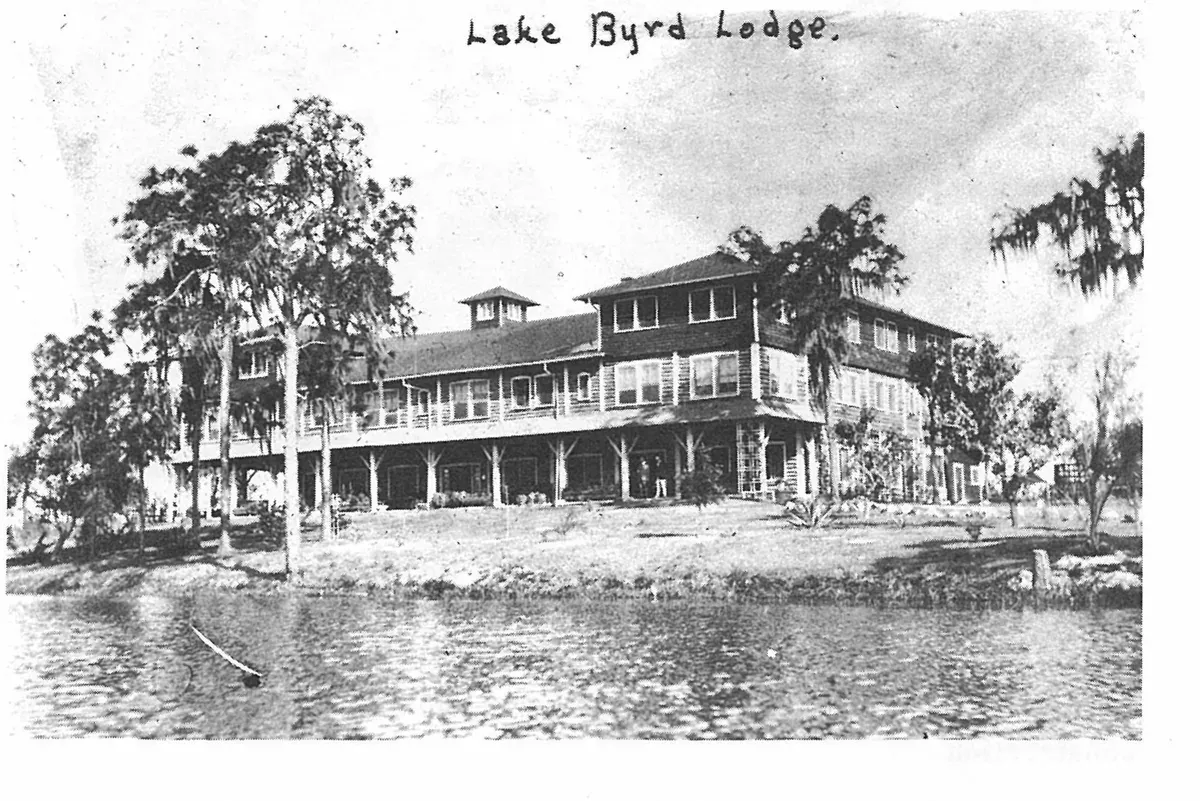
LAKE BYRD LODGE was built in 1919 as a club house for the Florida-Pittsburgh Company. D. B. Farnell was the builder of this rustic structure, made completely of bay logs that were hewn smooth, sized and fitted together. The First Hundred Years of Avon Park, Florida (1976), page 167. Avon Park Historical Society.[maxwell-1976]
An 18-hole golf course was maintained on the Southwest side of Lake Byrd.
The Lodge later became the State headquarters for the Florida Congregational Churches.
Mr. Albinson of Bartow, Florida was the building contractor for the Lake Byrd Lodge. Materials were hauled by the Woodwards Transfer of Bartow. Albinson’s daughter, Bonnie Cole Warren, lives in Bartow.
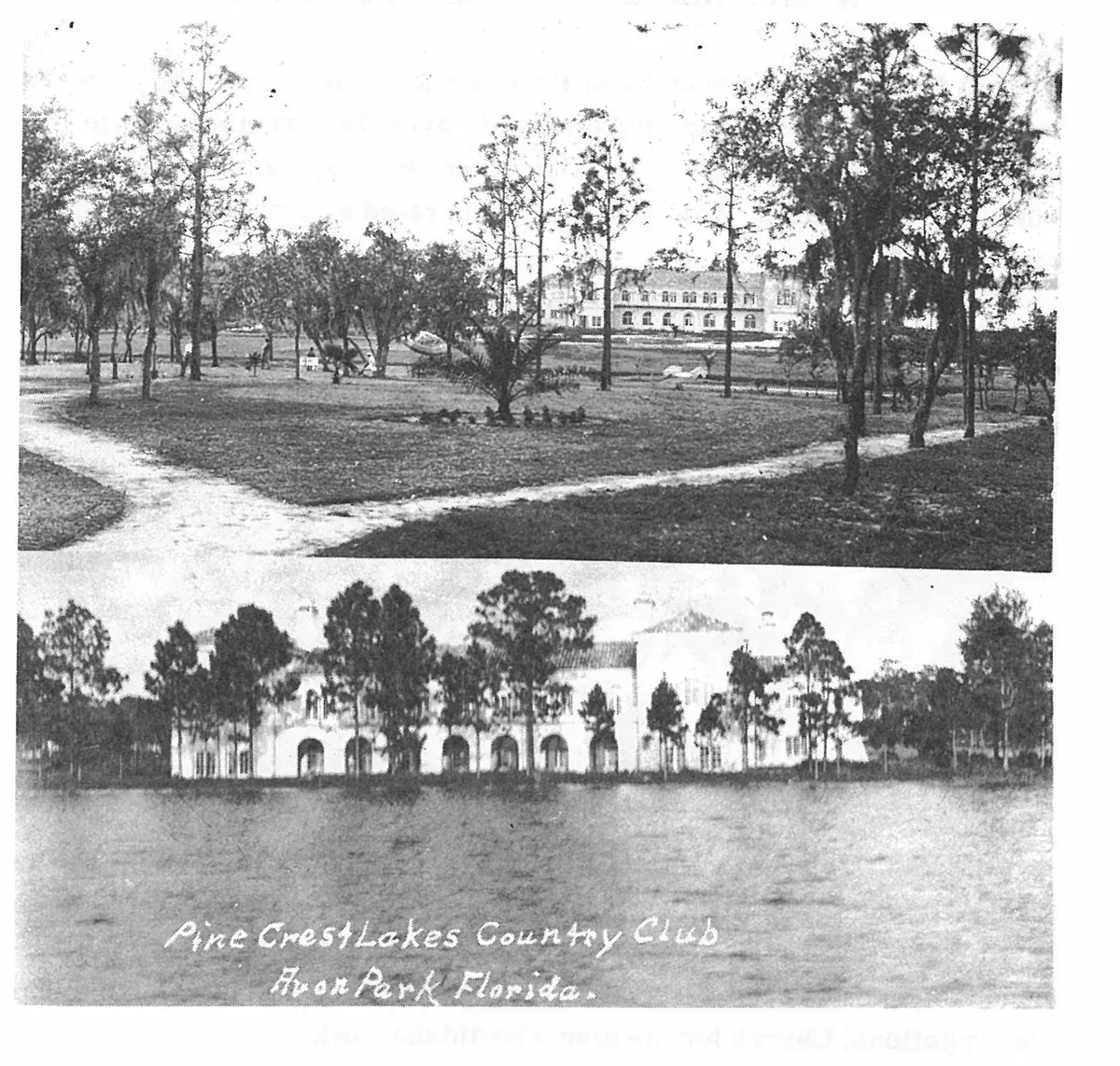
PINECREST LAKES HOTEL, was built in 1925 as a private club with membership made up of a group of northern people who came only for winter months. They maintained an 18-hole golf course. The First Hundred Years of Avon Park, Florida (1976), page 168. Avon Park Historical Society.[maxwell-1976]
Mr. and Mrs. Ferd deAnguera was the first manager. Ths hotel has had a number of different owners and has been headquarters for two different private schools.
Today the golf course is owned by a group of local people.
Pinecrest hotel is owned today by Florida Capital of the Age of Enlightenment. This is a non-profit educational facility dealing in research on consciousness as a field of all possibilities, through transcendental meditation and Transcendental Meditation-Sidhi Program.
AVON PARK -MAIN STREET - THE MALL
From the earliest days of Avon Park the townspeople met together to rake and haul loads of pine needles and cover the streets, because this was the only way travel was possible over the deep sand ruts. These work days were called “sidewalk bees” and rated an article in the Tampa paper in 1893.
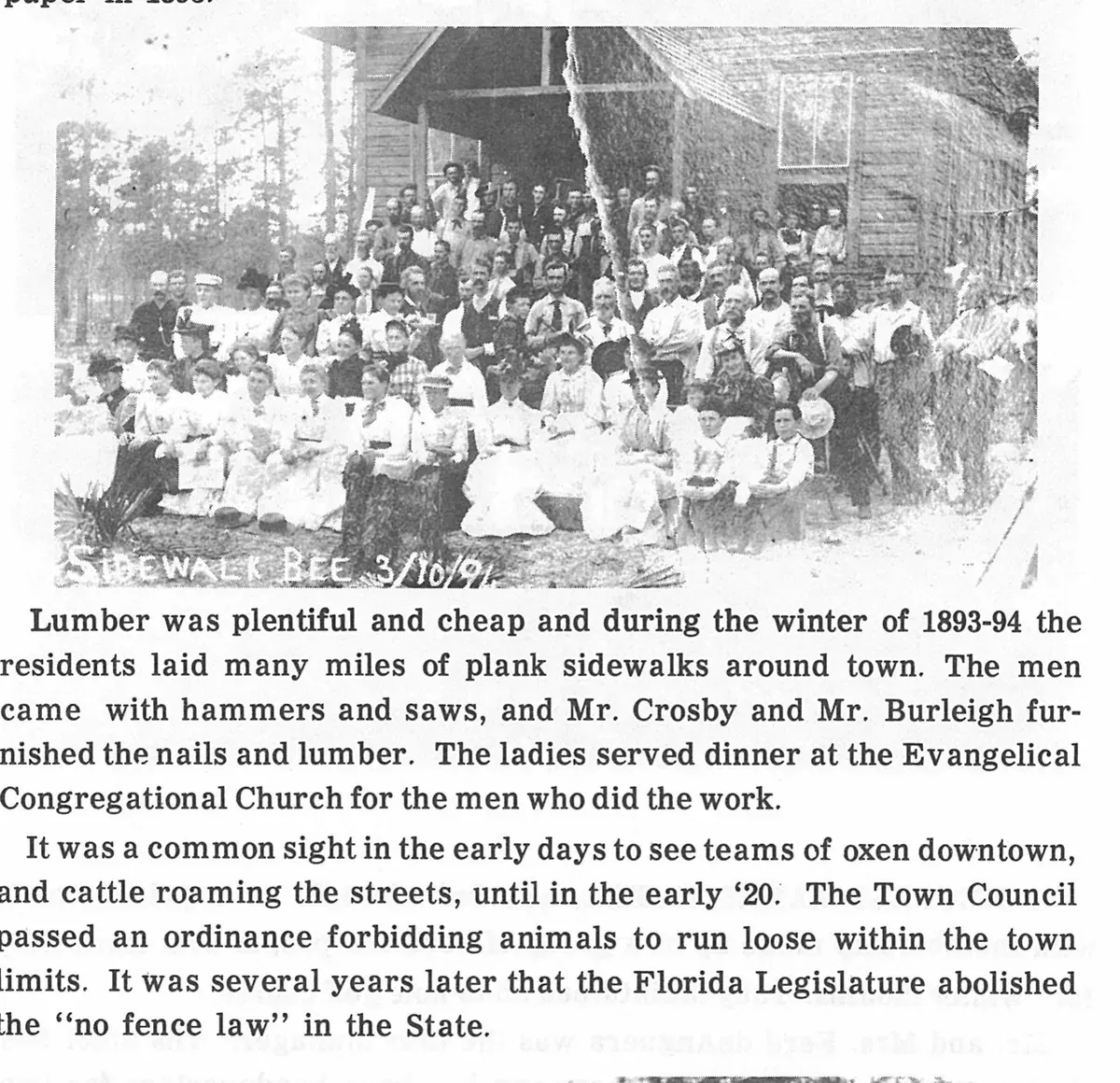
The First Hundred Years of Avon Park, Florida (1976), page 169. Avon Park Historical Society.[maxwell-1976]
Lumber was plentiful and cheap and during the winter of 1893-94 the residents laid many miles of plank sidewalks around town. The men came with hammers and saws, and Mr. Crosby and Mr. Burleigh furnished the nails and lumber. The ladies served dinner at the Evangelical Congregational Church for the men who did the work.
It was a common sight in the early days to see teams of oxen downtown, and cattle roaming the streets, until in the early ’20. The Town Council passed an ordinance forbidding animals to run loose within the town limits. It was several years later that the Florida Legislature abolished the “no fence law” in the State.
“Uncle Eb” Godwin
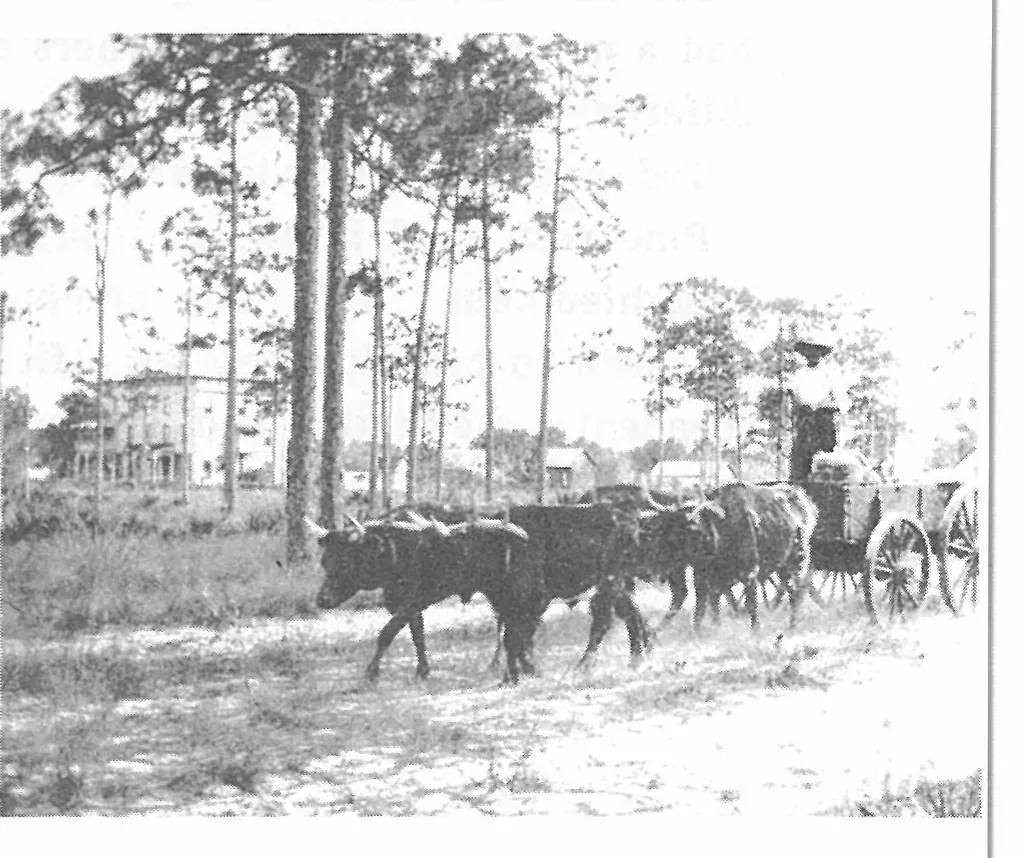
The First Hundred Years of Avon Park, Florida (1976), page 169. Avon Park Historical Society.[maxwell-1976]
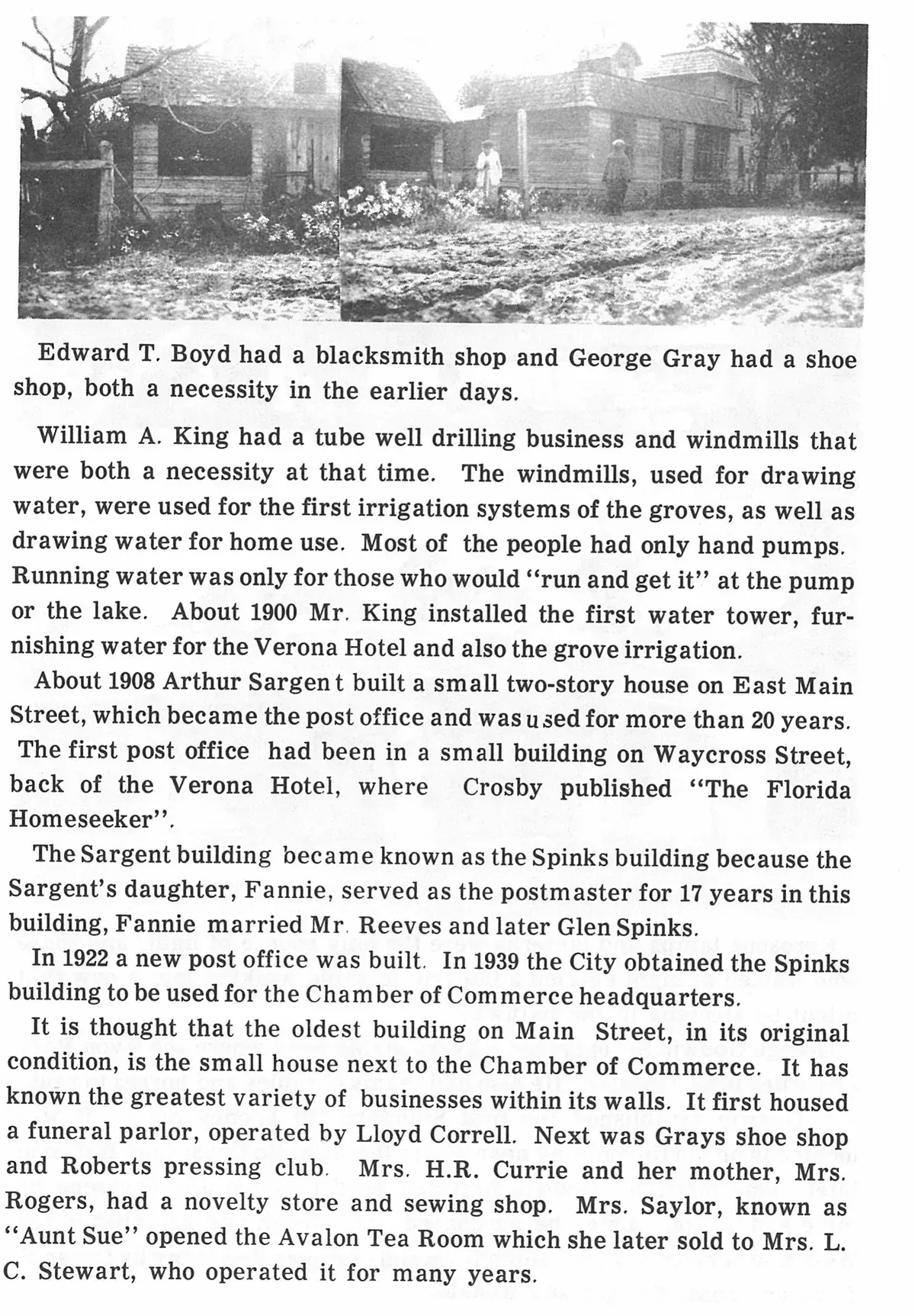
Edward T. Boyd had a blacksmith shop and George Gray had a shoe shop, both a necessity in the earlier days. The First Hundred Years of Avon Park, Florida (1976), page 170. Avon Park Historical Society.[maxwell-1976]
William A. King had a tube well drilling business and windmills that were both a necessity at that time. The windmills, used for drawing water, were used for the first irrigation systems of the groves, as well as drawing water for home use. Most of the people had only hand pumps. Running water was only for those who would “run and get it” at the pump or the lake. About 1900 Mr. King installed the first water tower, furnishing water for the Verona Hotel and also the grove irrigation.
About 1908 Arthur Sargent built a small two-story house on East Main Street, which became the post office and was used for more than 20 years.
The first post office had been in a small building on Waycross Street, back of the Verona Hotel, where Crosby published “The Florida Homeseeker”.
The Sargent building became known as the Spinks building because the Sargent’s daughter, Fannie, served as the postmaster for 17 years in this building, Fannie married Mr. Reeves and later Glen Spinks.
In 1922 a new post office was built. In 1939 the City obtained the Spinks building to be used for the Chamber of Commerce headquarters.
It is thought that the oldest building on Main Street, in its original condition, is the small house next to the Chamber of Commerce. It has known the greatest variety of businesses within its walls. It first housed a funeral parlor, operated by Lloyd Correll. Next was Grays shoe shop and Roberts pressing club. Mrs. H.R. Currie and her mother, Mrs. Rogers, had a novelty store and sewing shop. Mrs. Saylor, known as “Aunt Sue” opened the Avalon Tea Room which she later sold to Mrs. L. C. Stewart, who operated it for many years.
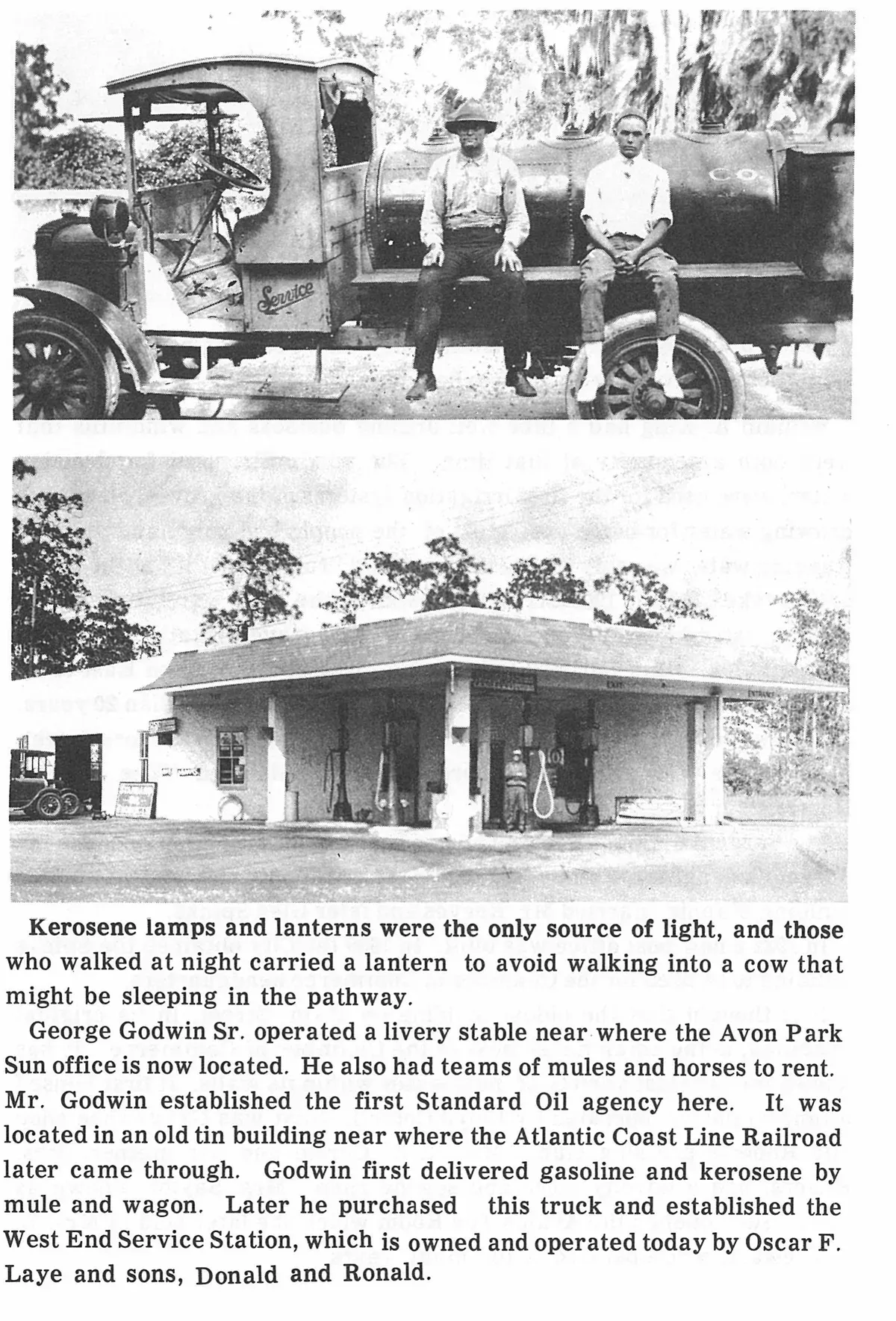
Kerosene lamps and lanterns were the only source of light, and those who walked at night carried a lantern to avoid walking into a cow that might be sleeping in the pathway. The First Hundred Years of Avon Park, Florida (1976), page 171. Avon Park Historical Society.[maxwell-1976]
George Godwin Sr. operated a livery stable near where the Avon Park Sun office is now located. He also had teams of mules and horses to rent. Mr. Godwin established the first Standard Oil agency here. It was located in an old tin building near where the Atlantic Coast Line Railroad later came through. Godwin first delivered gasoline and kerosene by mule and wagon. Later he purchased this truck and established the West End Service Station, which is owned and operated today by Oscar F. Laye and sons, Donald and Ronald.
Today this building is the Betts Book Exchange, operated by Mrs. Nels (Barbara Betts) Kluberg. The Betts family became owners of this and the Brickel building property in the Thirties.
The post office which was built in 1922 is today occupied by the Fairyland Children’s Specialty Shop.
The next post office was built on the corner of North Verona Ave. and East Main Street and is today occupied by the One Hour Cleaners.
B.F. West Grocery and Bank was located near the end of East Main Street, about where the Dollar Store is now located.
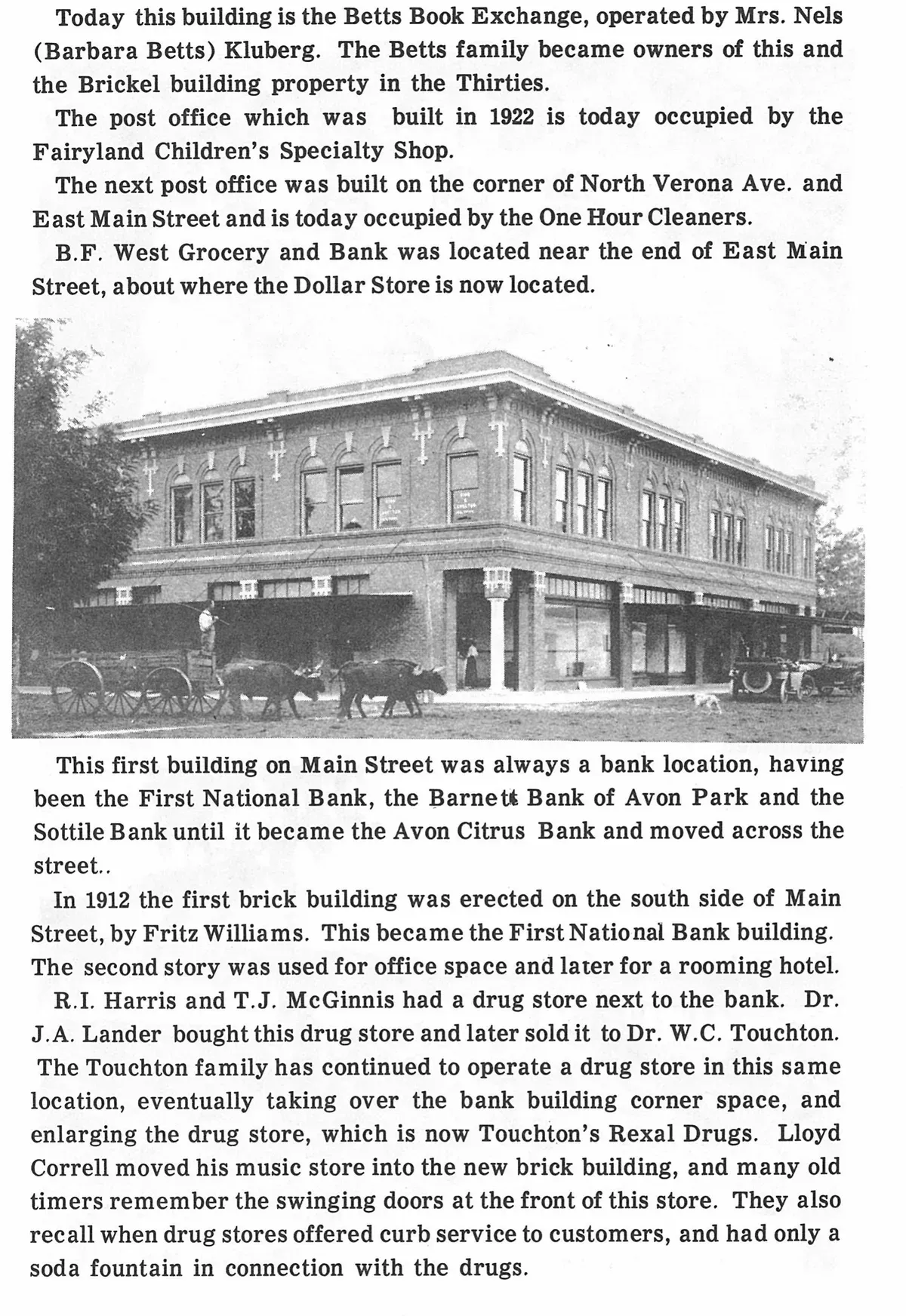
This first building on Main Street was always a bank location, having been the First National Bank, the Barnett Bank of Avon Park and the Sottile Bank until it became the Avon Citrus Bank and moved across the street. The First Hundred Years of Avon Park, Florida (1976), page 172. Avon Park Historical Society.[maxwell-1976]
In 1912 the first brick building was erected on the south side of Main Street, by Fritz Williams. This became the First National Bank building. The second story was used for office space and later for a rooming hotel.
R.I. Harris and T.J. McGinnis had a drug store next to the bank. Dr. J.A. Lander bought this drug store and later sold it to Dr. W.C. Touchton. The Touchton family has continued to operate a drug store in this same location, eventually taking over the bank building corner space, and enlarging the drug store, which is now Touchton’s Rexal Drugs. Lloyd Correll moved his music store into the new brick building, and many old timers remember the swinging doors at the front of this store. They also recall when drug stores offered curb service to customers, and had only a soda fountain in connection with the drugs.
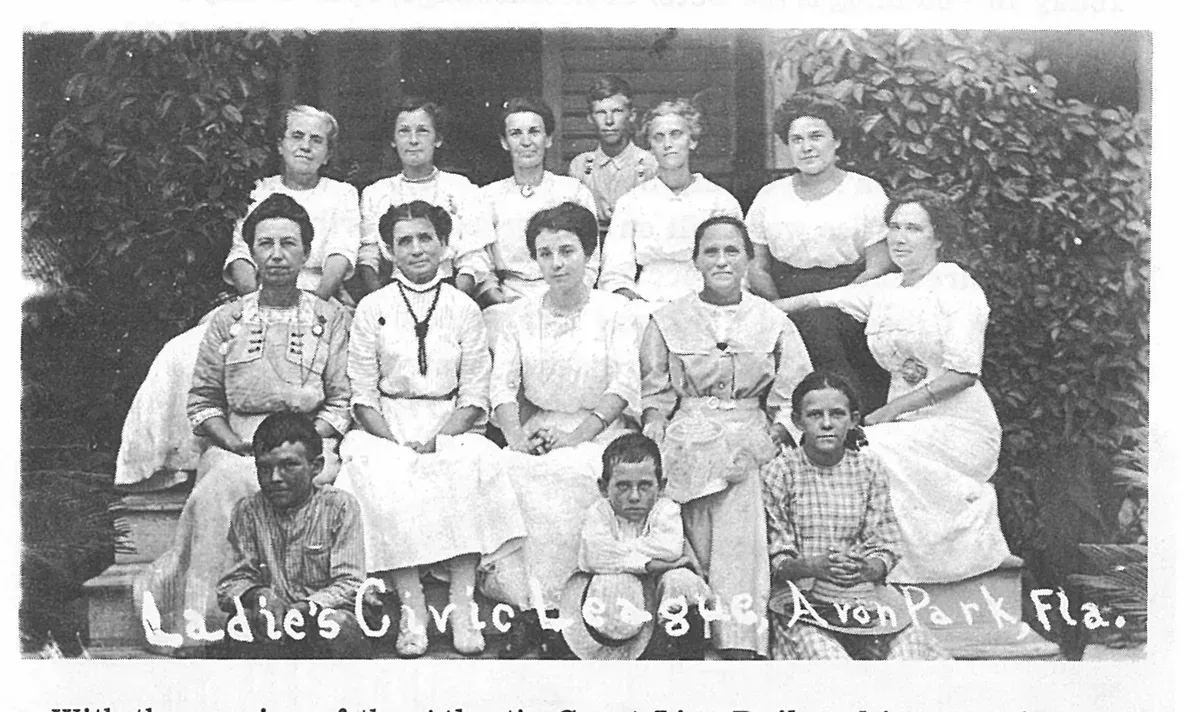
The First Hundred Years of Avon Park, Florida (1976), page 173. Avon Park Historical Society.[maxwell-1976]
With the coming of the Atlantic Coast Line Railroad in 1912, the town took on new life. A Ladies Civic League was organized for the improvement of the town. One of their first projects was to have the bandstand moved from its original site in front of the Verona Hotel, on Lake Verona, and placed on a vacant lot near Main Street. It was later moved to its present location on the Mall, when the double thoroughfare was established.
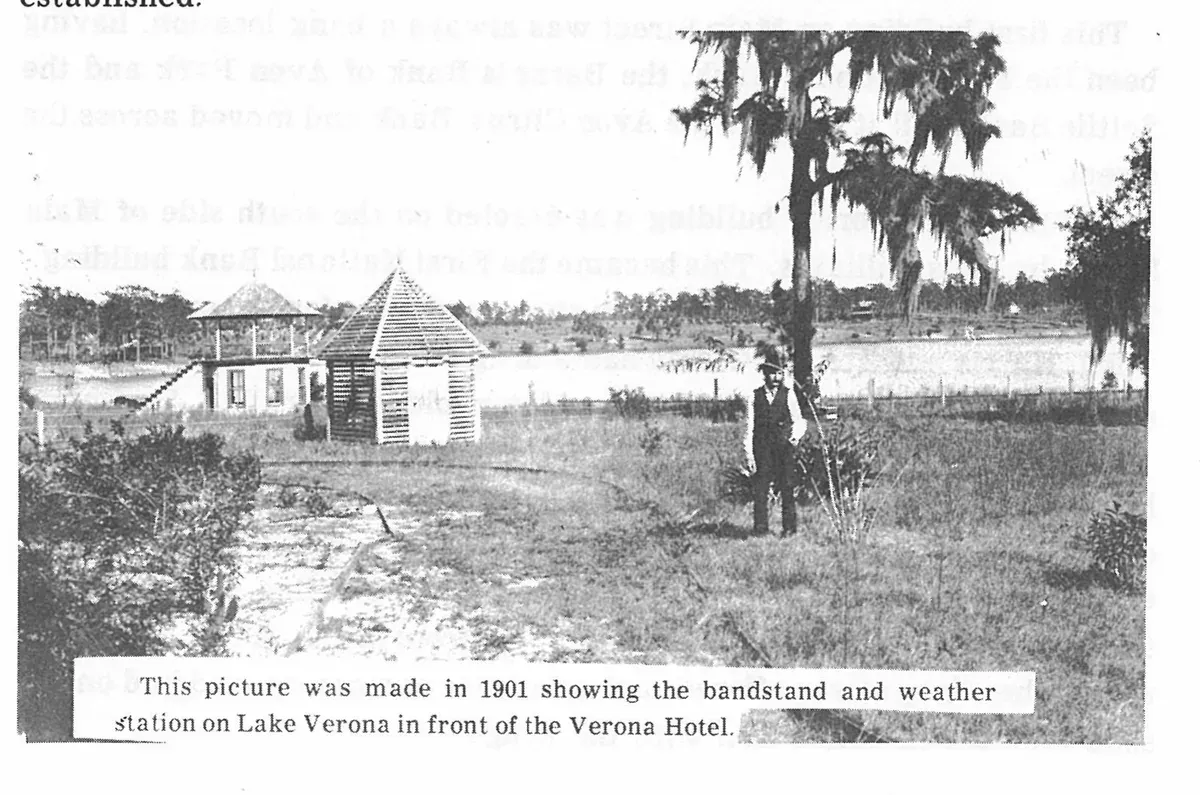
This picture was made in 1901 showing the bandstand and weather station on Lake Verona in front of the Verona Hotel. The First Hundred Years of Avon Park, Florida (1976), page 173. Avon Park Historical Society.[maxwell-1976]
The Town Council held an election for a vote to lay out plans for the Mall and approve a bond issue. The vote was 142 to 7 in favor of issuing $20,000 in bonds to pay for the widening of the street. The Reasoner Bros. Landscape artists were hired for $165 to lay out plans. The process began to get the wooden structures moved back. The right-of-way was secured, either by purchase or outright gift from the owner, and the buildings were either moved away or demolished.
C. S. Donaldson supervised the project, assisted by Linus H. Park, a local architect, and E. Phil Lacey, an engineer. Dr. Donaldson had been a world traveler, and he secured many rare and exotic plants and trees from foreign countries. He planted Jacaranda and Royal Poinciana trees, palms and azalias as well as many other shrubs.
Dr. Donaldson called himself an “amateur” rather than a botonist, but he was recognized throughout the nation among the leading naturalists. He had promoted the effort to get Highlands Hammock established as a State Park. He made a thorough study of the plant life and wrote a thesis on the plants in Highlands Hammock.
Dr. Donaldson was recognized as “The Founder of the Mall” and the Avon Park Garden Club erected an appropriate marker to his memory, on the Mall in front of the Jacaranda Hotel.
Dr. Donaldson served as Mayor of Avon Park for two years and after his retirement he made his life work the care of the plants on the Mall.
At first the plan for the Mall was to have it extend from the railroad East to Lake Verona. This was done during the 20’s, and later through the efforts of Henry West and other citizens, the Mall was completed West to meet the Highway 27 intersection, and street lights were installed.
The Mile Long Mall became the trademark of the City of Avon Park.
In 1922 the Town’s affairs were still managed by a Board of Trade which had been organized by Mr. King in 1897. Their meetings were called ‘smokers’ which makes one suspect that all the men smoked. These meetings were first held in the club house or Sargent’s Hall, later in the old post office, the Wray home, and the Brickel auditorium and in the Jacaranda Hotel when it was finished, until the new City Hall was completed in 1929.
The Ford Garage was near the intersection where the stop light is on Lake Avenue, and was owned by Oscar and Lamont Wolf.
The home of Fred and Cora Wray set amid 14 oak trees in the area where the same oaks stand today on the Mall in front of the Jacaranda Hotel. Both the Wray’s home and the garage had to be moved, as well as many other buildings, to make room for the double thoroughfare.
The City purchased the Wray home and used it for a time for official business. Col. J.M. Lee was the City attorney and Louise Brown (Armstrong) was the Clerk. She recalls that her salary was a large $60 per month.
C. E. Hobbs purchased the Ford Sales and Garage and moved into the brick building which is now occupied by Badcock Furniture store.
C.E. Lanier purchased the Ford business and moved it into the new building on the corner of North Verona Avenue and East Main Street, the present location of McCann & Sons Ford-Mercury Sales.
The first fire house was a small wooden building near where the Jacaranda Hotel now stands. In the early ’20s a new fire house was built at the end of South Butler Avenue.
The first town election was held May 23, 1913. Herbert A. Seaverns was elected Mayor and Ellis West was the Town Clerk. Members of the Town Council were W. O. Skipper, William A. King, C. F. Kellog, W. H. Daughtery and H. E. Godwin.
About 1918-19 the far-sighted men of Avon Park began to see the need for widening Main Street before permanent buildings were erected on the North side of the street. Also, more and better parking space was needed for the many automobiles that were coming into town. C. E. Lanier and Norton T. Smith were appointed to supervise the project of getting Main Street widened.
Many public meetings were held and many suggestions were made for having a park and what it should be called. Some suggested that it should be a Paeso. Others said it should be called “Crosby Park”, a fitting tribute to the founder. But finally it was chosen to be named “The Mall” in keeping with the English tradition of Avon Park, because of the many early settlers who were from England.
In 1919 the Brickel Building was erected on the corner opposite the First National Bank building.
Charles W. Pabor was the architect. Some of his other works were the High School, City Hall, Seaboard Railroad depot and the C.E. Lanier home.
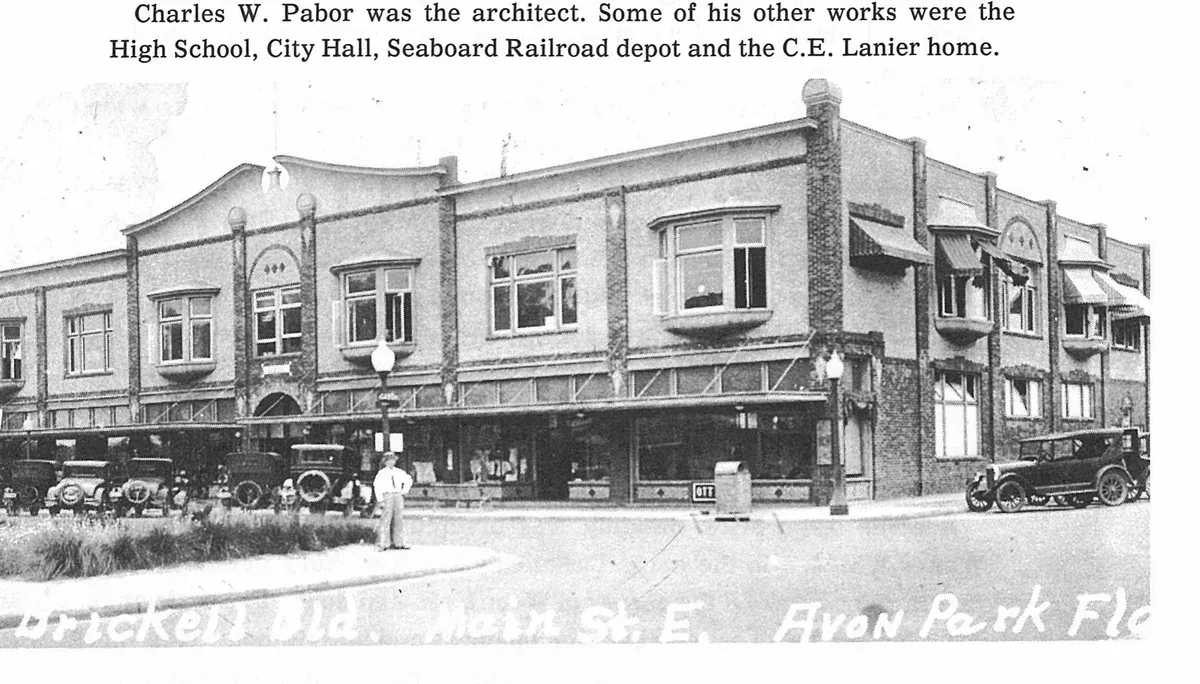
The First Hundred Years of Avon Park, Florida (1976), page 176. Avon Park Historical Society.[maxwell-1976]
The second floor had a large auditorium that was used for the Town Council meetings, lodge meetings and public dances. Offices spaces were occupied by Dr. A. H. Able, the town’s first dentist and the offices of S. C. Pardee and Mattie W. Tompkins, attorneys, as well as other professional people.
On the street level was a furniture store owned by Grover and H. Langford. This store burned and later Ott & Son moved their department store from the Whidden building. D. T. Lockett had a grocery store here, and the Davis 5 & 10 Cent Variety store was here. The Sappington Hardware, Delaney Hardware and now Rich’s Hardware store and Gibbs Gifts and Office Supply occupies the entire street level.
When the South Florida Junior College came to Avon Park in 1966 the City renovated the upstairs of the Brickel building to provide classroom and office space for the college until buildings were completed on the land that had been obtained for the college, on Highway 27, South of Avon Park.
During the “Roaring Twenties” the City had the first jail house which was a small wooden building. In 1923 the City contracted with Raab and Winters, to build a jail which was to be near the fire station on South Butler Avenue.
J. L. (Roy) Masters and Dick Keller had the Chevrolet Garage which was located on South Lake Avenue, near the Dr. W. C. Touchton and Dr. H. W. Coleman office building. Irvin H. Ford purchased the Chevrolet business and moved to its present location on West Main Street. His son, Donald, and wife, Clarice, continue to operate the I. H. Ford Motor Company selling Chevrolet and Oldsmobiles.
W. A. Wooten owned a Buick company which was located on North Forest Avenue where the Wells Paint shop now stands.
In 1925 T. J. McGinnis and Gilbert A. Stebbins operated a Hudson-Essex franchise on the corner of West Main Street and North Forest Avenue.
Another large brick building was erected on West Main Street by Walter Whidden in the early Twenties. This two-story building was of cream color brick on the corner of West Main and South Butler Avenue. Mr. Whidden had a private banking business and maintained a New York Stock Exchange daily report in his bank. The second floor was a hotel with a balcony extending over the sidewalk. During the Florida boom the
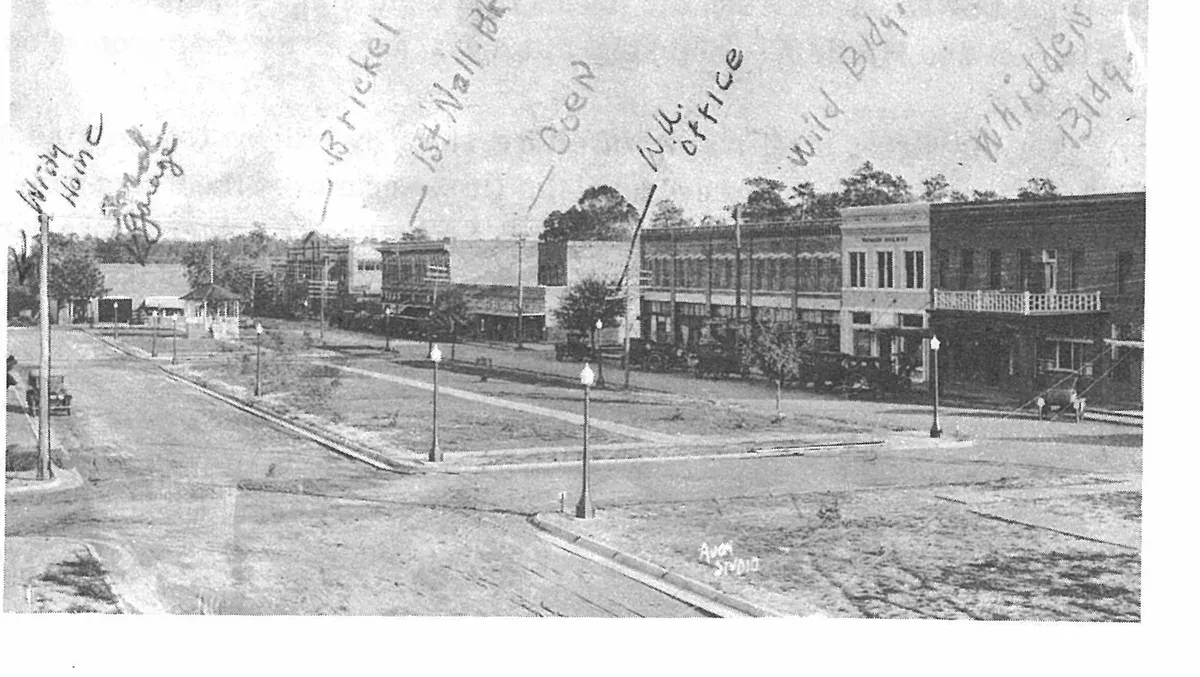
The First Hundred Years of Avon Park, Florida (1976), page 177. Avon Park Historical Society.[maxwell-1976]
hotel had efficiency apartments and rooms. Mrs. H. C. Bigbie operated the hotel for many years. During the depression rooms at this hotel could be had for $3.00 per week.
Max Wild built a two-story brick next to the Whidden building, to the corner of Forest Avenue. George Mostris had a fruit and vegetable stand on the corner and Mr. Wild did not enclose the corner until the entire building was completed. B. H. James Grocery, Clark’s Mercantile, Ott & Son Department store, Earnest Barshall’s Barber Shop, McCarthy Bakery, The Walliworks Grocery, Pearl Spinks 5 & 10, Phil Abrams Department store, Pete Boney’s and Red Carlisle’s Barber Shops, The Avon Park Times Printing shop, and Margaret Stewart’s Ladies Apparel were among the businesses in this block.
The Mostris Pool Hall was here during the Thirties.
Both the Whidden and the Wild buildings stood vacant much of the time until 1956 when Mr. and Mrs. Louis Swiston purchased the Whidden building and Dr. M. S. Michaels purchased the Wild building. The Swistons began to renovate and improve the entire block. Today the street level is occupied by the Highlands Paint Company, Joe’s Music store, Coker Fuel Company, Milton Gidden’s Barber Shop, Kwick Wash Coin Laundry, The Mushroom Jr. Apparel, a Christian Book Store, and Thomas Bakery and Coffee Shop.
The J. B. Coen family built a one-story brick structure next to the First National Bank building. The Western Union office occupied the West end of this building facing S. Forest Avenue. Miss Ida Skipper was the operator. She recalls the overload of work during the terrible 1928 hurricane, when so many people were drowned in the Moore Haven and Okeechobee flood. Tim Collins was sent as the assistant. He married Miss Skipper and they continued to operate the Western Union office after it was moved across the street into the Durrance block.
F. S. Jordon moved his jewelery business from a small frame building into the Coen building. Today Jordon & Son Jeweler is the oldest continuous business in the same location in Avon Park. Dale Jordon, a third generation son, continues the business.
The first jeweler in Avon Park was Mr. Hessler, who came in 1890 and opened his business in his home. His granddaughter, Miss Helen Tuten, recalls hearing her grandparents tell how they would take all of their money and jewelry with them if they went away from home even for a day, on a picnic. They carried their wealth in a small bag.
Other businesses in the Coen building over the years have been Ratcliff’s Red & White Grocery, Cliff Thomas Meat Market, A & P Tea Company, Jarrett’s Barber Shop, Eppersons Dry Goods, Latham’s Clothing store, T. J. Ward 5 & 10, Ben Franklin’s 5 & 10, Dr. Marshall Jordon, optometrist, Dr. Ronald C. Sevigny, optometrist and Missy’s Bootery. Raglsale Cleaners on South Forest Avenue, Olin Harris and Hall’s Cleaners all operated here.
In the early Twenties Clare Mann, a one-arm mechanic, operated a garage in a building that was located where the Avon Park Sun offices are now. J. Lawler Wells and Frank Welch were among the mechanics who worked for Mann. Lawler Wells established the Wells Motor Company and Frank Welch established the Ridge Green’s Fuel Company.
An old tin building on South Butler Avenue was where Mr. Boston had a movie house. The Methodist people held their first religious services in this building in 1914. Later it became a skating rink, a bowling alley, and Cox Pool Hall and Beer Parlor.
L. D. Robert’s Haberdashery and Pressing Club was near the corner of Butler Avenue. He sold to John Wright and today this is the site of the Wright’s Liquor and Package store and the Village Lounge. The Avon Park Sun occupies the corner of West Main Street and South Butler Avenue.
In 1926 C. P. Turner operated the Turner Hay, Grain and Feed Company. S. J. Pendleton purchased this business and continued it as a wholesale grocery. Today this building is occupied by the Bagwell Lumber Company.
The Jahna Concrete Company was established south of West Main Street and continues today.
The Palmer Rooming House on West Main Street was a landmark of earlier days that was torn down and replaced by Palmer Electric Company.
The Williams Boarding Home is remembered by many old-timers who rode the train into Avon Park and stayed overnight here because it was so close to the railroad track.
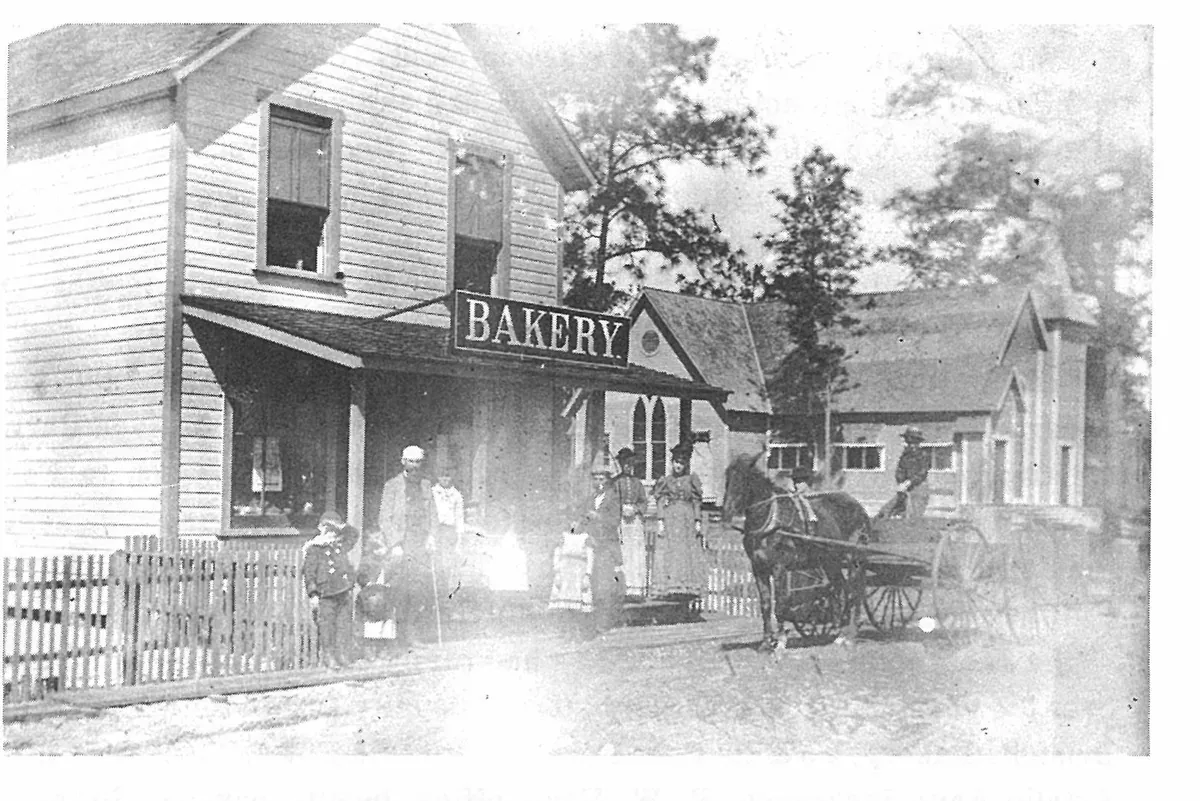
The Visel Bakery was located near the Congregational Church and the also the C. D. Noland Bottling Company was in this area. Some recall today how they went there to buy their bottled soda drinks. The First Hundred Years of Avon Park, Florida (1976), page 180. Avon Park Historical Society.[maxwell-1976]
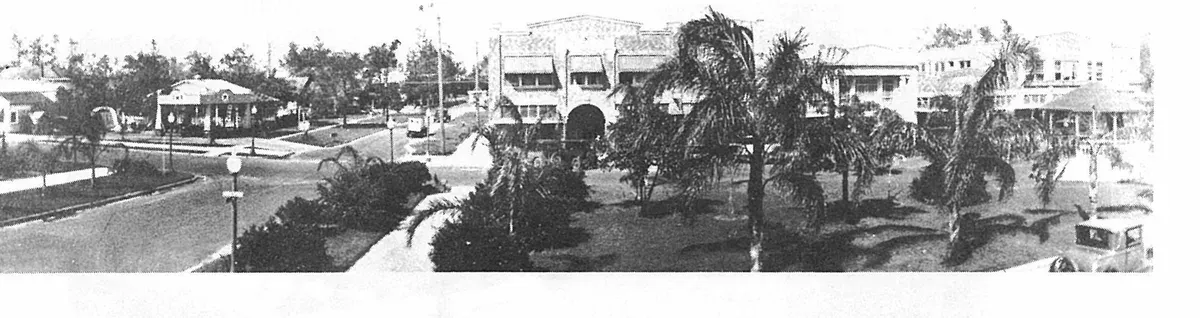
Durrance Block and Lawler Wells Filling Station on the corner. The First Hundred Years of Avon Park, Florida (1976), page 180. Avon Park Historical Society.[maxwell-1976]
“The Flaming Twenties”, as it was commonly referred to, was soon to come to an end, but not until Avon Park had enjoyed it for a season. In 1923 the bank deposits doubled and the post office receipts increased 33 per cent. In 1924 the realty transfers reached nearly a quarter of a million dollars for a fortnight (two weeks) period.
The Jacaranda Hotel was built and opened for business in 1926, after the Mall had been laid out.
Fred Smith , who bought out Capt. Rae’s hardware , moved into the Jacaranda building. Fred Smith had lived his entire life in Avon Park, starting his early business career driving a team and wagon to Fort Meade to haul groceries and hardware to Avon Park. At his retirement, the Smith Hardware was purchased by Charlie Metcalfe and son, Chuck, and they continue to operate the Metcalfe Hardware Company.
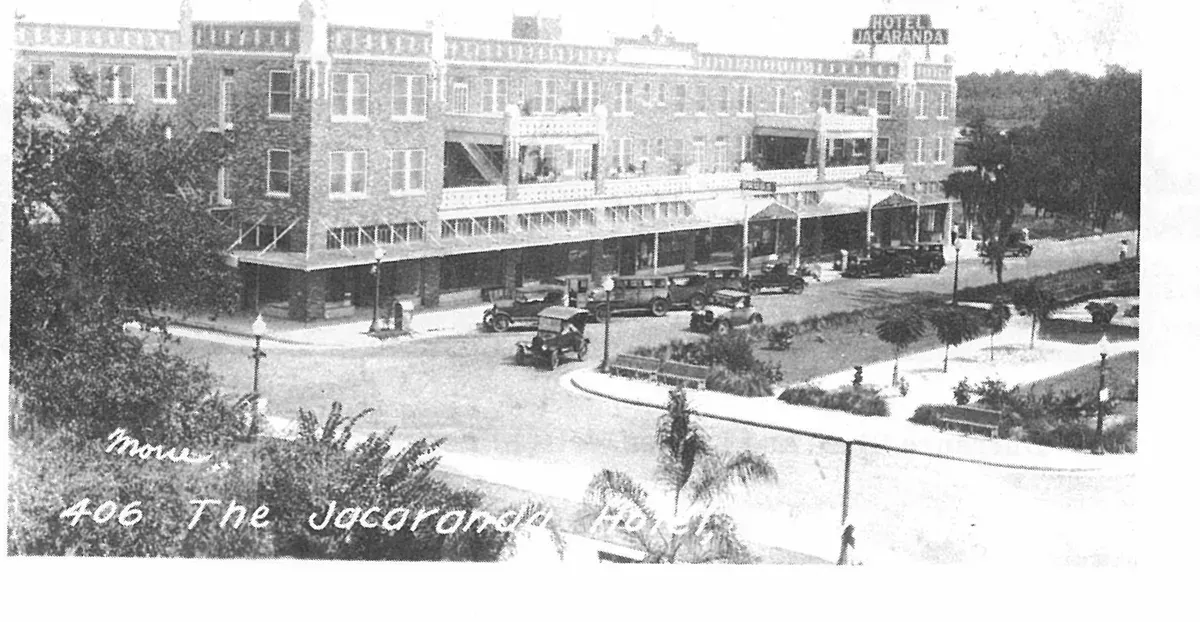
The First Hundred Years of Avon Park, Florida (1976), page 181. Avon Park Historical Society.[maxwell-1976]
The Jacaranda Hotel building has had many businesses come and go over the years, such as a grocery store, Thayer’s Drug Store, Katherine Bristol’s Bakery, a 5 & 10 Cent store, the Florida Power Corp. office, L. Estelle Fann Insurance, E. W. Hartt office, beauty parlors, Jimmy’s Flower Shop, The Thrift Shop and Hitchinson’s Citrus Nursery.
January 1, 1926 was an important date in Avon Park. An election was held, with a vote of 146 to 103 to abolish the Town of Avon Park and create the City of Avon Park by virtue of Chapter 10320 of the Laws of the State of Florida.
The Durrance Block was built in the early Twenties, which included all of the block between North Lake and Forest Avenues, The First Trust& Savings Company opened for business in 1926.
The Pittsburgh-Florida citrus offices were upstairs as were the offices of the Pine Ridge Provision Company. This was the Sam. P. Durrance meat packing company.
Kathryn Hughes Eddy and Fadelma Hagood conducted a business school which turned out many fine secretaries and bookkeepers for Avon Park.
In later years the office spaces were renovated and used for a hotel rooming house, operated by Maymie Lister Armistead as the Mary Ann Hotel. Later Bill and Minnie Duval operated the hotel as The Avalon Hotel. Mrs. Duval became Mrs. Charles Wesley and continued to keep the hotel for many years.
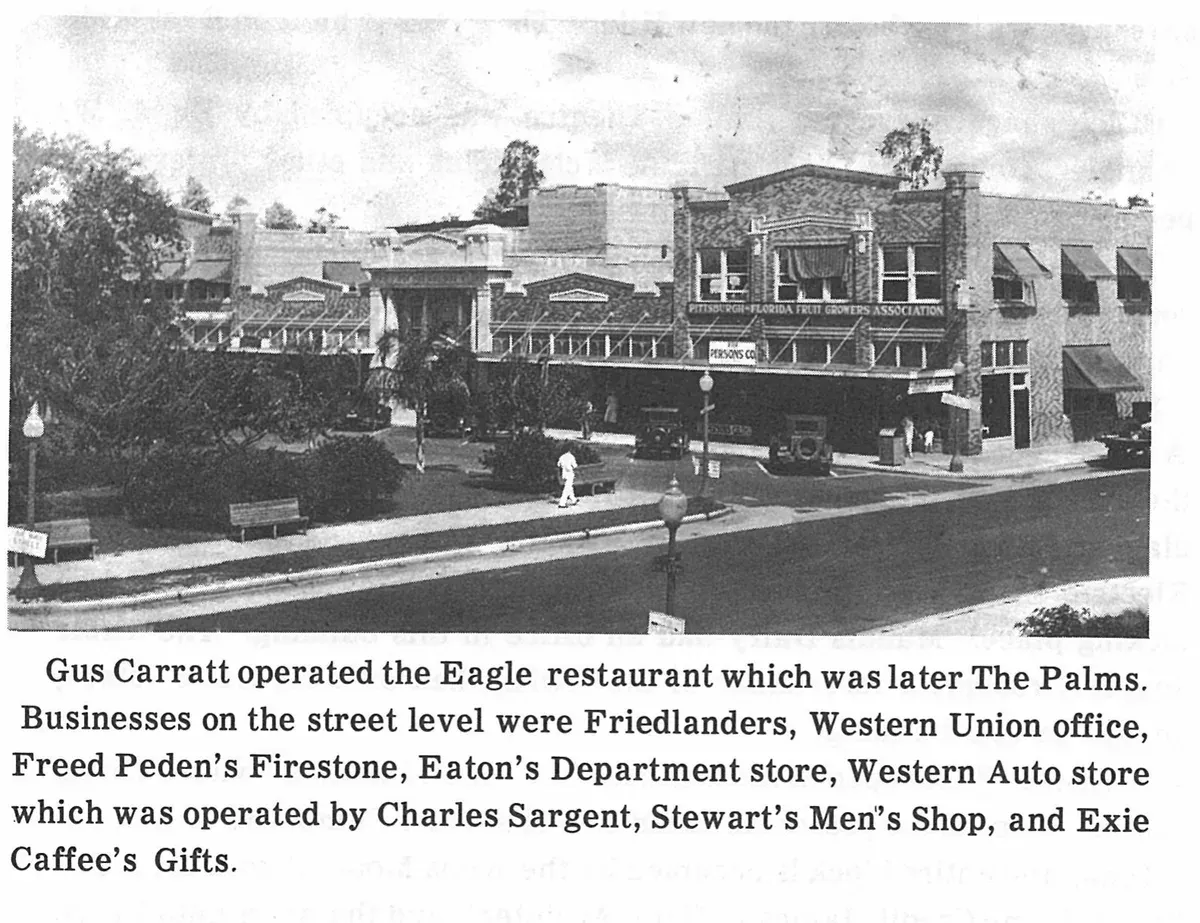
The First Hundred Years of Avon Park, Florida (1976), page 182. Avon Park Historical Society.[maxwell-1976]
Gus Carratt operated the Eagle restaurant which was later The Palms. Businesses on the street level were Friedlanders, Western Union office, Freed Peden’s Firestone, Eaton’s Department store, Western Auto store which was operated by Charles Sargent, Stewart’s Men’s Shop, and Exie Caffee’s Gifts.
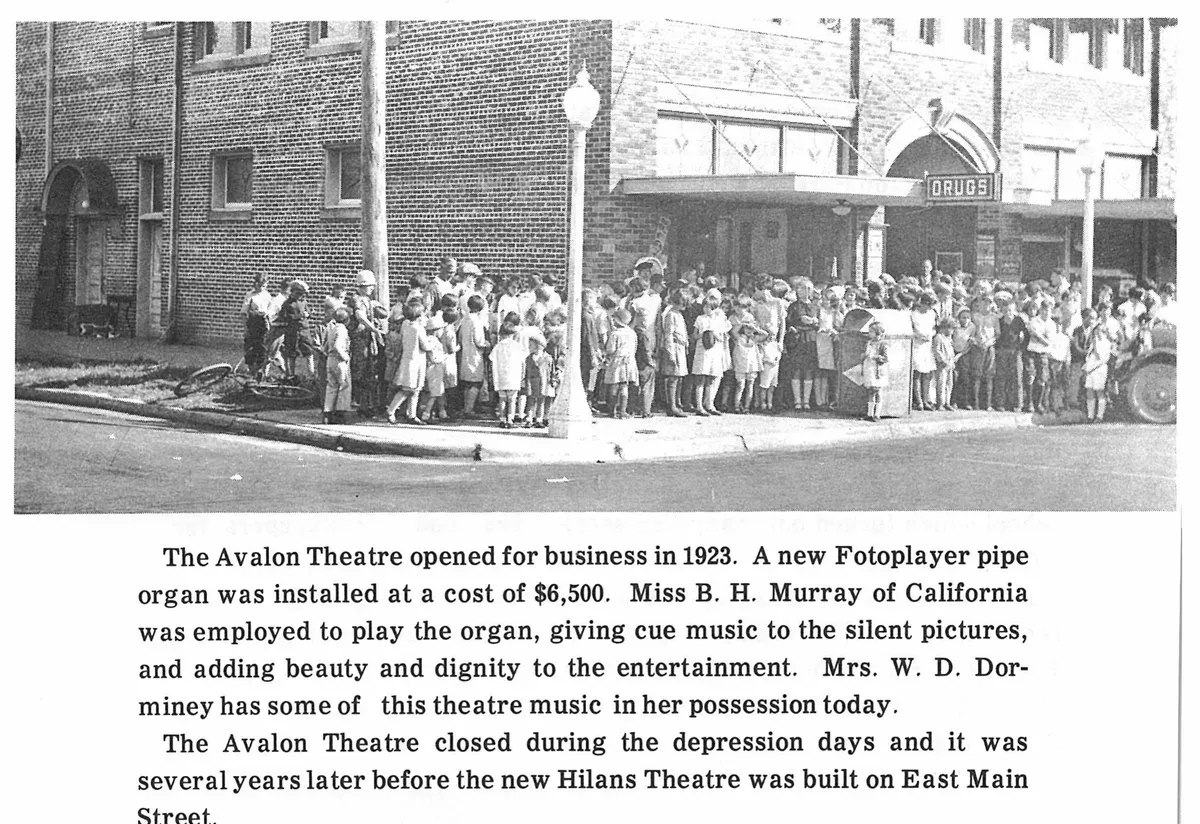
The First Hundred Years of Avon Park, Florida (1976), page 183. Avon Park Historical Society.[maxwell-1976]
The Avalon Theatre opened for business in 1923. A new Fotoplayer pipe organ was installed at a cost of $6,500. Miss B. H. Murray of California was employed to play the organ, giving cue music to the silent pictures, and adding beauty and dignity to the entertainment. Mrs. W. D. Dorminey has some of this theater music in her possession today.
The Avalon Theatre closed during the depression days and it was several years later before the new Hilans Theater was built on East Main Street.
Office space above the Avalon Theatre was occupied by Dr. I. W. Chandler, C. A. Clark, dentist, T. A. McNicholas and other professional people.
The entire Durrance Block of buildings was razed during 1960 to make room for the new Avon Citrus Bank building, drive-up windowsand a parking lot.
Small buildings made up the block between Forest and Butler Avenues. A small arcade or park was near the West end of the block. At the back of the arcade was the printing shop of the Avon Park Sun. The park was planted with palms and shrubbery. Facing the arcade was the Evers Electric shop, a photo shop, Alex Cafe and Johnny Rhor’s chicken picking place. Mandis Dairy had an office in this building. The Table Supply Grocery, a forerunner of the Kwik Chek or Winn Dixie store, opened in this building.
J. Lawler Wells opened his business in a small building with a filling station, which is the present location of Wells Motor Company.
Today the entire block is occupied by the Wells Motor Company, J & O Tailor, Home Credit, James A. Heim Architect, and the Avon Auto Parts.
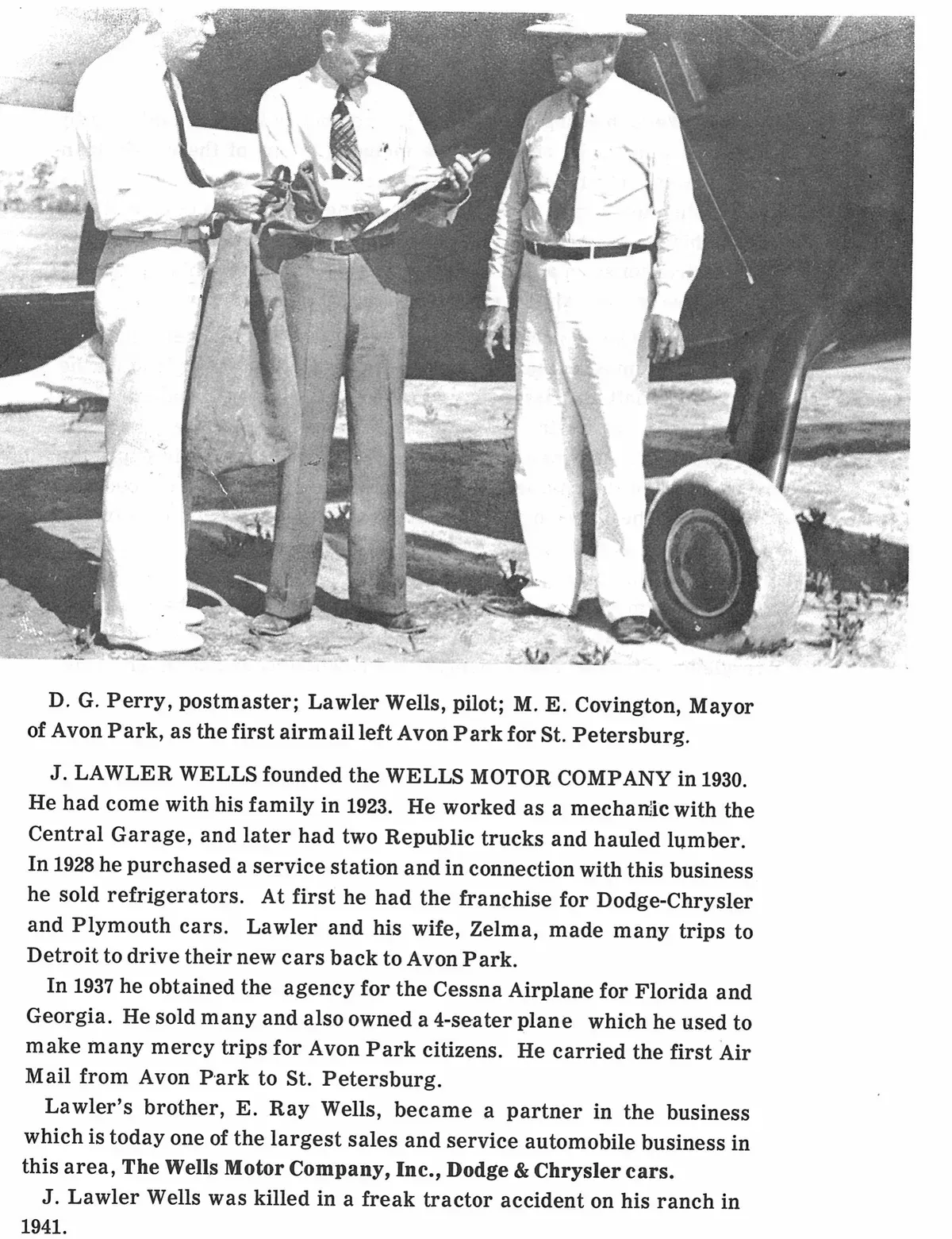
D. G. Perry, postmaster; Lawler Wells, pilot; M. E. Covington, Mayor of Avon Park, as the first airmail left Avon Park for St. Petersburg. The First Hundred Years of Avon Park, Florida (1976), page 184. Avon Park Historical Society.[maxwell-1976]
J. LAWLER WELLS founded the WELLS MOTOR COMPANY in 1930. He had come with his family in 1923. He worked as a mechanic with the Central Garage, and later had two Republic trucks and hauled lumber. In 1928 he purchased a service station and in connection with this business he sold refrigerators. At first he had the franchise for Dodge-Chrysler and Plymouth cars. Lawler and his wife, Zelma, made many trips to Detroit to drive their new cars back to Avon Park.
In 1937 he obtained the agency for the Cessna Airplane for Florida and Georgia. He sold many and also owned a 4-seater plane which he used to make many mercy trips for Avon Park citizens. He carried the first Air Mail from Avon Park to St. Petersburg.
Lawler’s brother, E. Ray Wells, became a partner in the business which is today one of the largest sales and service automobile business in this area, The Wells Motor Company, Inc., Dodge & Chrysler cars.
J. Lawler Wells was killed in a freak tractor accident on his ranch in 1941.
Lawler Wells’ hunting trips to the Everglades is still remembered by those who were lucky enough to be included in one of these. He transported some of the men in his plane. Others drove down in an automobile they named “Leaping Lena” and carried the guns and supplies. This car was a special combination of autos. The Model-A engine, Wofford transmission and a worm drive rear end made this car unique and capable of going almost anyplace in the scrub palmettos.
At one time, a small accident caused the hunting party to get separated and they spent most of the time looking for each other. After landing the plane, Lawler left his passenger and returned to pick up the others of the hunting party at their campsite and take them deeper into the Everglades. As the men boarded the plane, carrying their guns, the metal deflected the compass which caused the plane to get off course. Wells circled the plane until he ran out of gas and had to walk to an Indian camp for help. With the party being divided three ways, they spent about three days looking for each other.
Duncan Palmer is one of the last surviving members of these hunting parties and he can tell some interesting experiences of hunting in the Everglades when there was plenty of deer, wild turkey and other game.
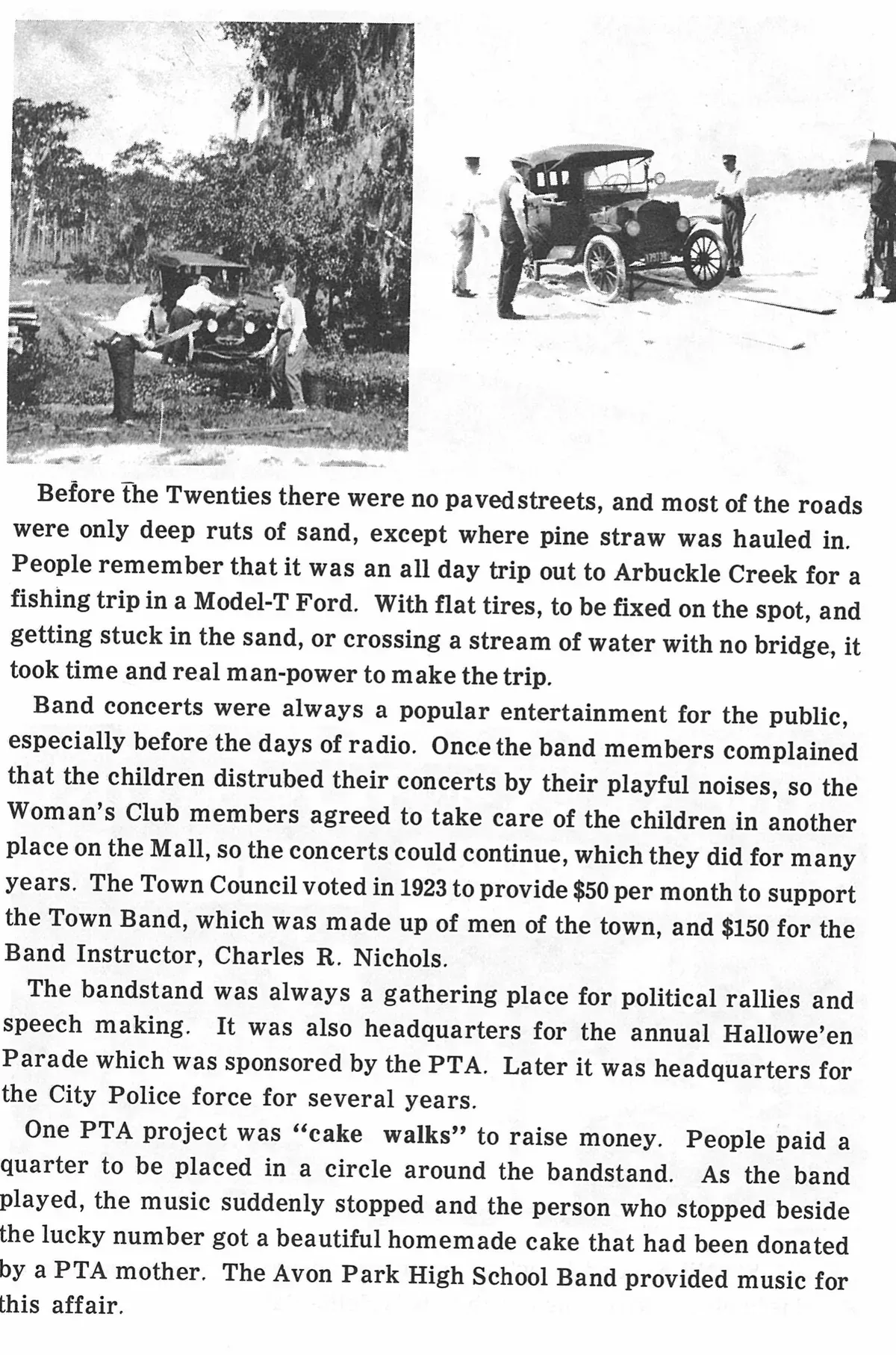
The First Hundred Years of Avon Park, Florida (1976), page 186. Avon Park Historical Society.[maxwell-1976]
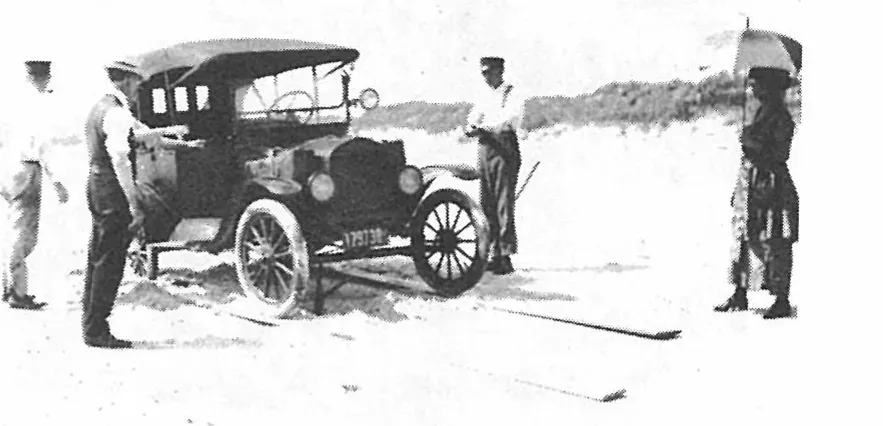
The First Hundred Years of Avon Park, Florida (1976), page 186. Avon Park Historical Society.[maxwell-1976]
Before the Twenties there were no pavedstreets, and most of the roads were only deep ruts of sand, except where pine straw was hauled in. People remember that it was an all day trip out to Arbuckle Creek for a fishing trip in a Model-T Ford. With flat tires, to be fixed on the spot, and getting stuck in the sand, or crossing a stream of water with no bridge, it took time and real man-power to make the trip.
Band concerts were always a popular entertainment for the public, especially before the days of radio. Once the band members complained that the children distrubed their concerts by their playful noises, so the Woman’s Club members agreed to take care of the children in another place on the Mall, so the concerts could continue, which they did for many years. The Town Council voted in 1923 to provide $50 per month to support the Town Band, which was made up of men of the town, and $150 for the Band Instructor, Charles R. Nichols.
The bandstand was always a gathering place for political rallies and speech making. It was also headquarters for the annual Hallowe’en Parade which was sponsored by the PTA. Later it was headquarters for the City Police force for several years.
One PTA project was “cake walks” to raise money. People paid a quarter to be placed in a circle around the bandstand. As the band played, the music suddenly stopped and the person who stopped beside the lucky number got a beautiful homemade cake that had been donated by a PTA mother. The Avon Park High School Band provided music for this affair.
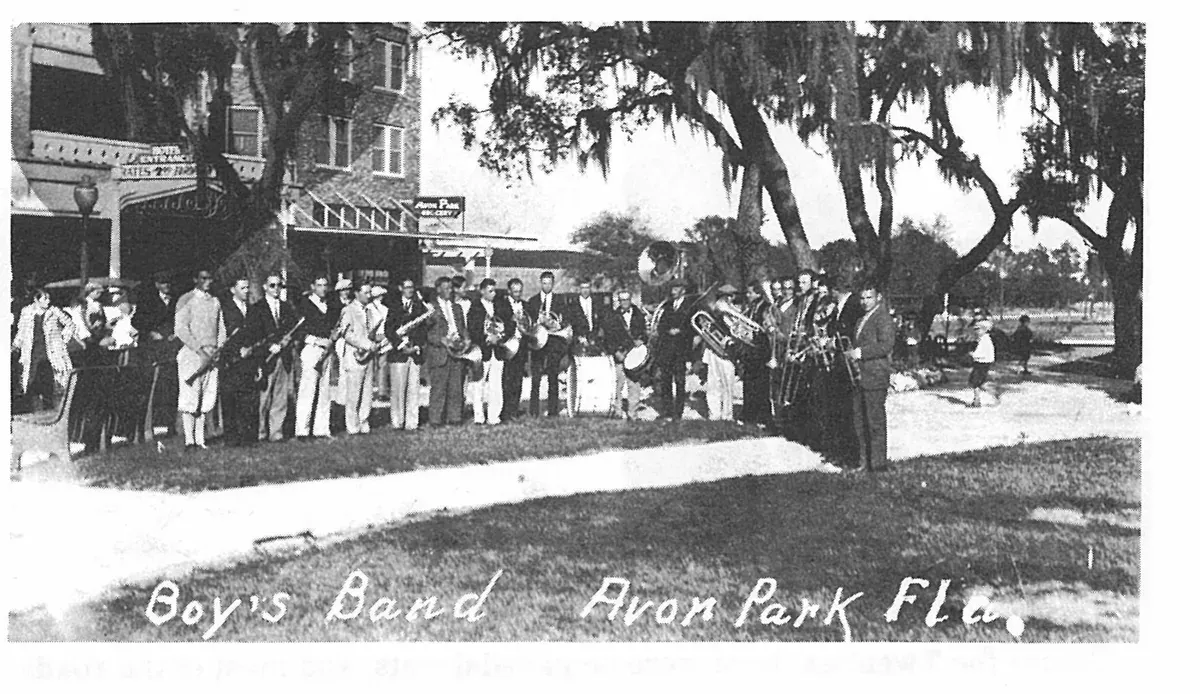
The First Hundred Years of Avon Park, Florida (1976), page 187. Avon Park Historical Society.[maxwell-1976]
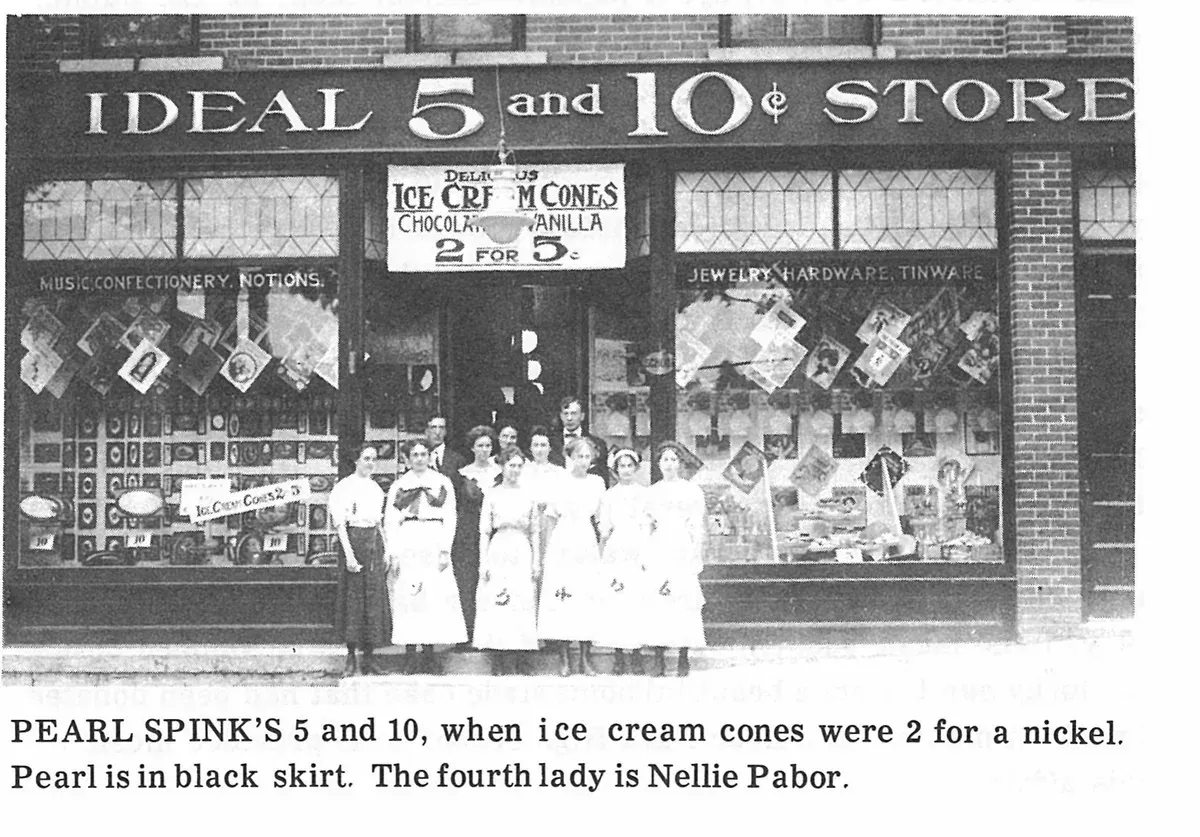
PEARL SPINK’S 5 and 10, when ice cream cones were 2 for a nickel. Pearl is in black skirt. The fourth lady is Nellie Pabor. The First Hundred Years of Avon Park, Florida (1976), page 187. Avon Park Historical Society.[maxwell-1976]
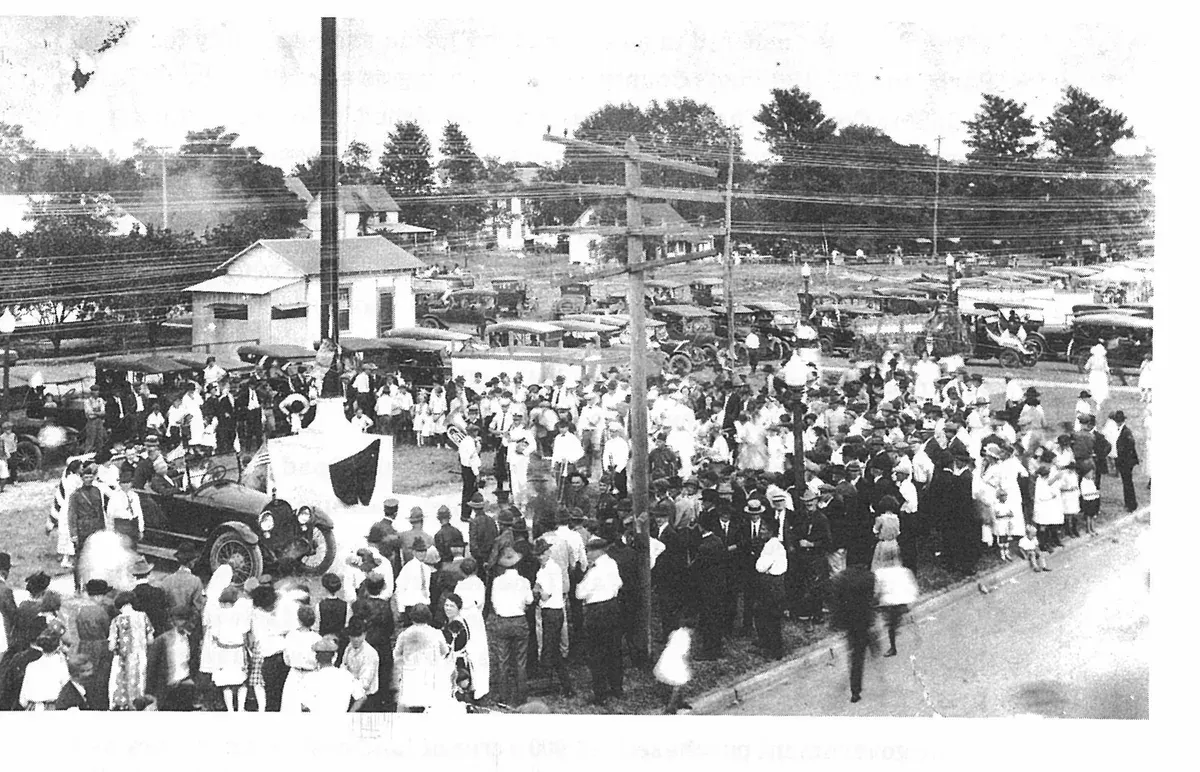
In 1922 Col. and Mrs. Davidson donated a flag pole to the City to be erected on the Mall. The 110 foot pole was dedicated on Nov. 11, 1922. The First Hundred Years of Avon Park, Florida (1976), page 188. Avon Park Historical Society.[maxwell-1976]
The Davidsons also left a trustfund to be used towards the building of a better road from Frostproof to Avon Park. At that time the only road was State Road No. 8 that came through Hillcrest, or grassy creek, north-east of Avon Park and down South Highlands Avenue a few miles, then made a direct turn east towards Sebring. This turn had caused some serious accidents and was known as “Dead man’s curve.”
The Kennedy Construction Company came to build the new road which is now known as Alt. State Rt. 17 South, to Sebring. Louie R. Marlin and Paul Rumpsa were among the men who came with the construction company and remained in Avon Park. Louie Marlin married Miss Mable Turner.
The Twenties ushered in a new era for Florida and especially for Avon Park. In 1923 Highlands County came into being as a result of the division of DeSoto County. The County seat was established in Sebring, which was a great disappointment to many Avon Park citizens, because Sebring had been established 25 years after Avon Park was founded.
In 1924 the “Real Estate Boom” was in full swing. On July 4, 1924 an estimated crowd of 5000 people gathered to celebrate in Avon Park.
With the influx of people in the 20’s, the city was expanding rapidly in all directions. With the new developments of the City’s water system, sewer lines, paving of streets and sidewalks, it was easy to imagine that prosperity was just around the corner.
The City had purchased land on the Wauchula Road and opened the Municipal Airport with official ceremonies February 5, 1939. J. S Francis delivered the dedicatory speech.
With the coming of World War II the airport served as a training field for hundreds of army aviation cadets who attended the Lodwick Aviation Military Academy here. The men were provided living quarters at the plush Highlands Lakes Hotel.
The government purchased 110,000 acres of land east of Avon Park and opened the Bombing Range. Several thousand men were stationed there during the war and many overflowed into the housing facilities of Avon Park.
Both of these activities helped to rejuvenate the life of Avon Park.
The war officially ended VE Day May 8, 1945. Following the close of World War II the Bombing Range became a bombing practice field for airmen from MacDill Air Field in Tampa, and continues as such today.
The State of Florida took over a portion of the Bombing Range to be used as a minimal security prison for the State, The Avon Park Correctional Institution.
The Bombing Range and the Correctional Institution have contributed a great deal to the economy of downtown Avon Park, as well as offering employment to many Avon Park citizens.
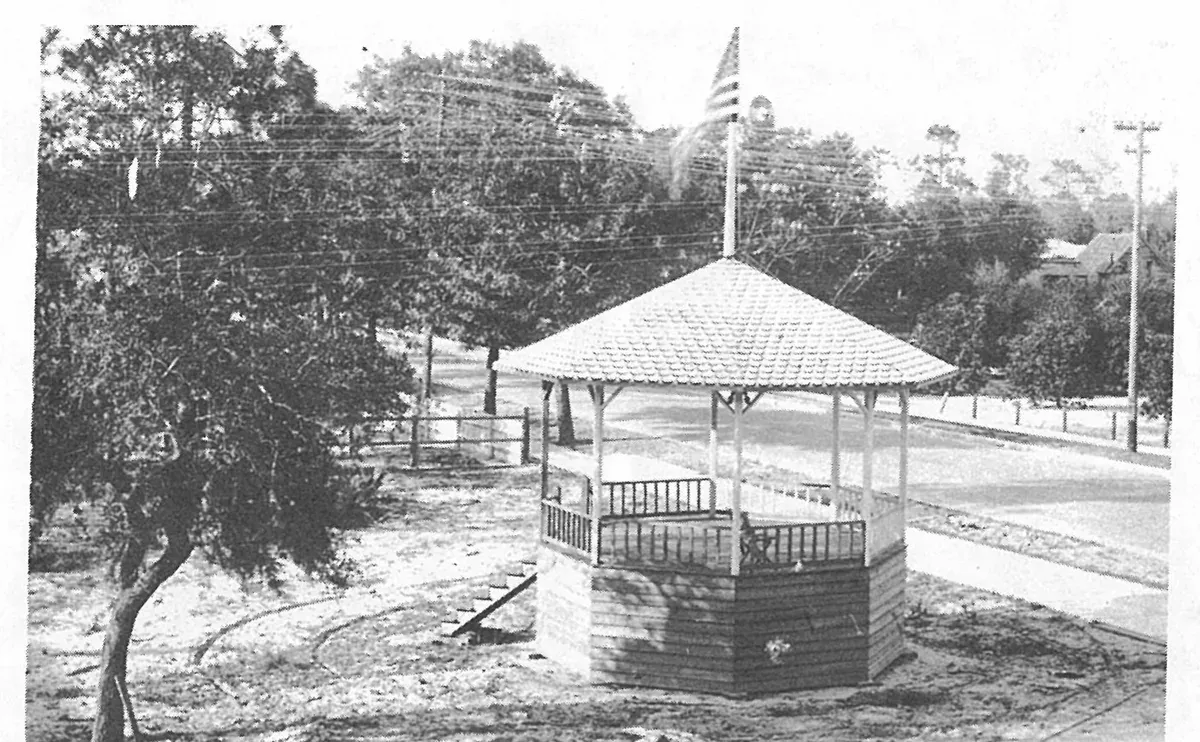
The bandstand after it was moved in 1912. The First Hundred Years of Avon Park, Florida (1976), page 190. Avon Park Historical Society.[maxwell-1976]
By 1970 the bandstand had been neglected for so many years that it was in need of a lot of repairs. The Old Settlers Association urged the City to preserve it. W. Cliff Thomas, one of Avon Park’s first citizens, headed a movement to collect enough money to restore the bandstand to its original condition.
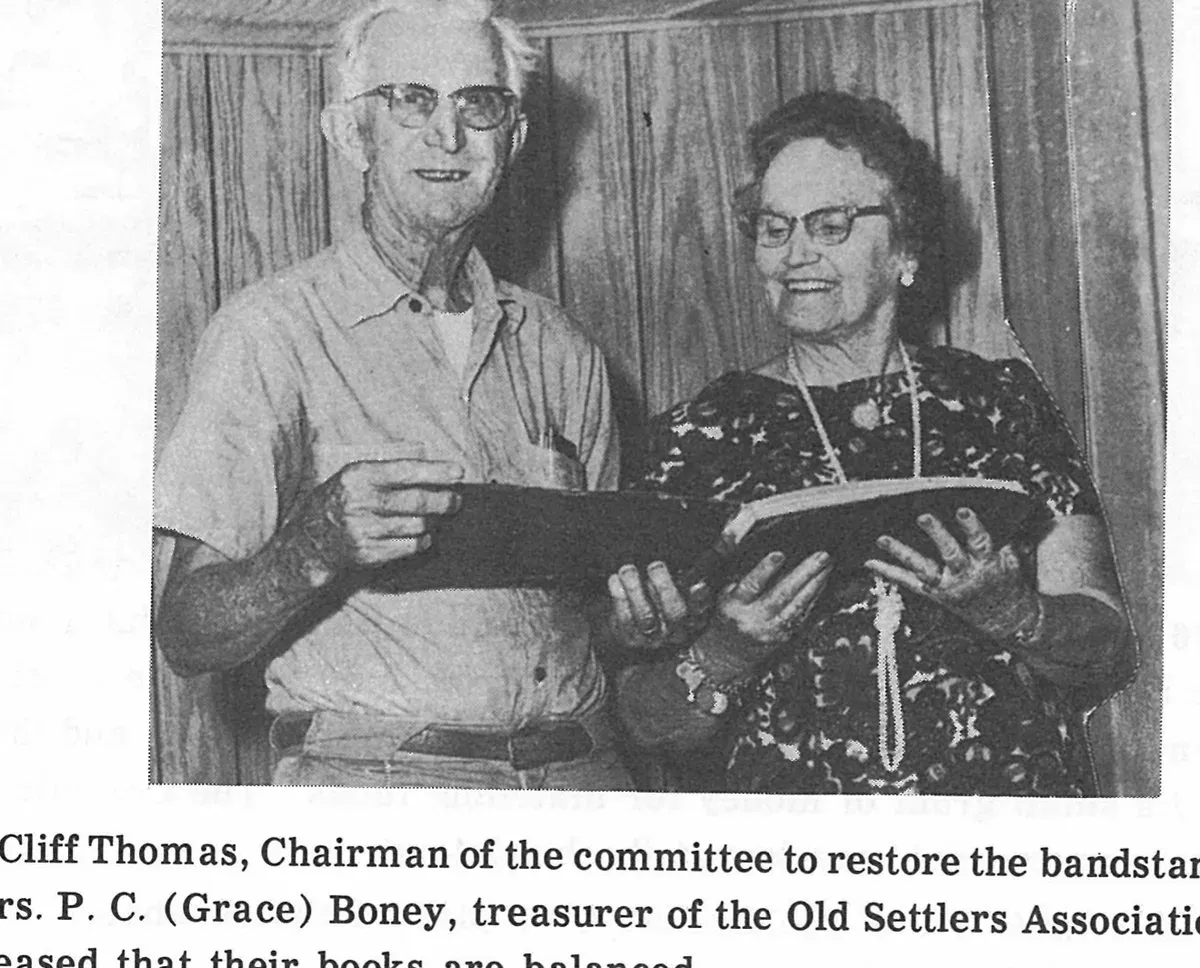
Cliff Thomas, Chairman of the committee to restore the bandstand, and Mrs. P. C. (Grace) Boney, treasurer of the Old Settlers Association, are pleased that their books are balanced. The First Hundred Years of Avon Park, Florida (1976), page 190. Avon Park Historical Society.[maxwell-1976]
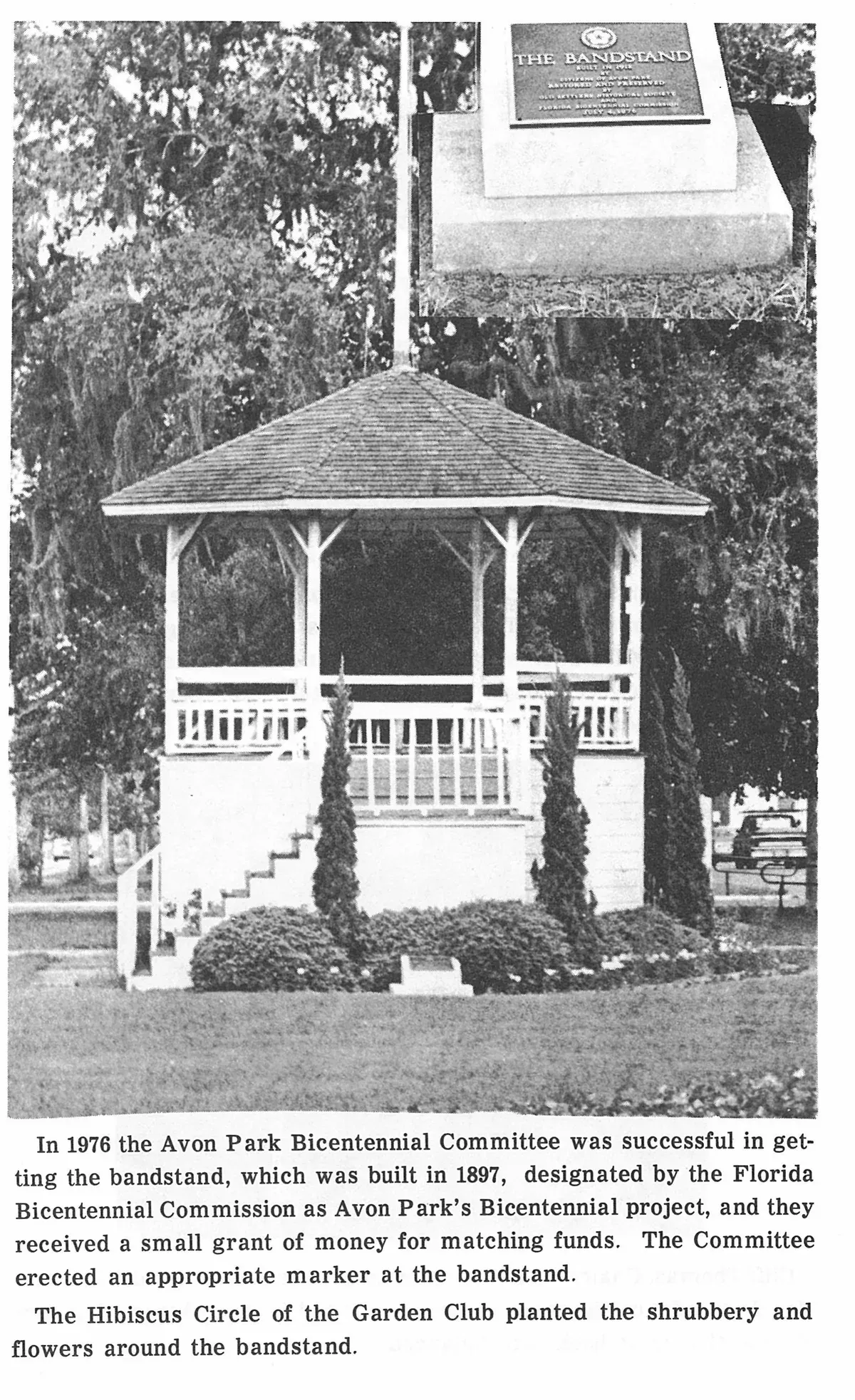
The First Hundred Years of Avon Park, Florida (1976), page 191. Avon Park Historical Society.[maxwell-1976]
In 1976 the Avon Park Bicentennial Committee was successful in getting the bandstand, which was built in 1897, designated by the Florida Bicentennial Commission as Avon Park’s Bicentennial project, and they received a small grant of money for matching funds. The Committee erected an appropriate marker at the bandstand.
The Hibiscus Circle of the Garden Club planted the shrubbery and flowers around the bandstand.
The history of Avon Park would not be complete without paying tribute to one of the grandest gentlemen who ever lived here, Marcus E. Covington, Mayor of Avon Park for 11 years. He served during the war when hundreds of men were stationed here, from all over the USA. Mayor Covington’s charm and hospitality influenced many of these people to return with their families after the war closed, to make their home in Avon Park.
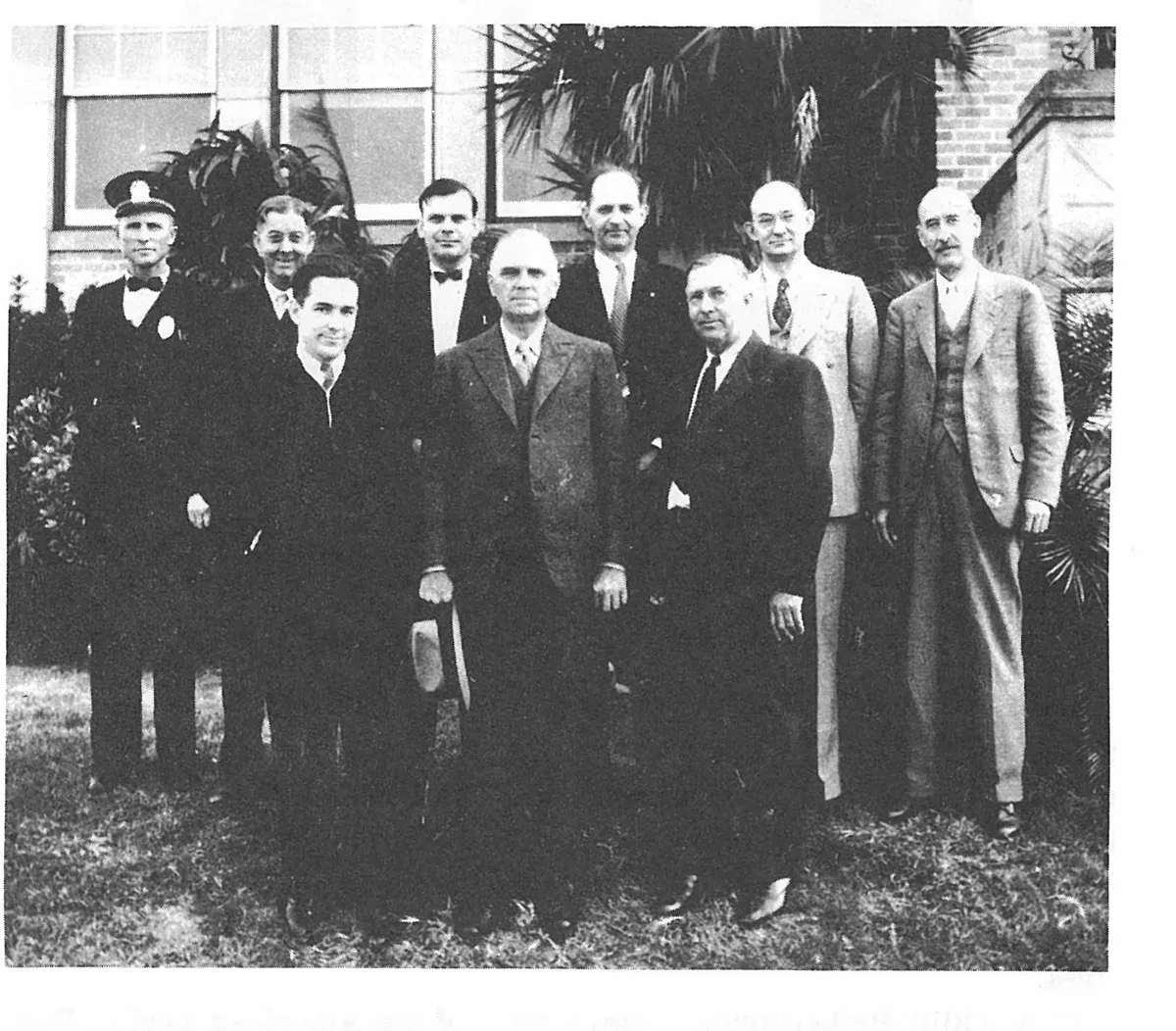
CITY CABINET MEMBERS: January 30, 1934. J. J. (Bob) Still, Police Chief; F. S. Jordon, Fred Smith, S. J. Pendleton, S. C. Pardee, City Attorney; W. T. Hall, Francis Shockley, City Clerk; Marcus E. Covington, Mayor; and J. L. Masters. The First Hundred Years of Avon Park, Florida (1976), page 192. Avon Park Historical Society.[maxwell-1976]
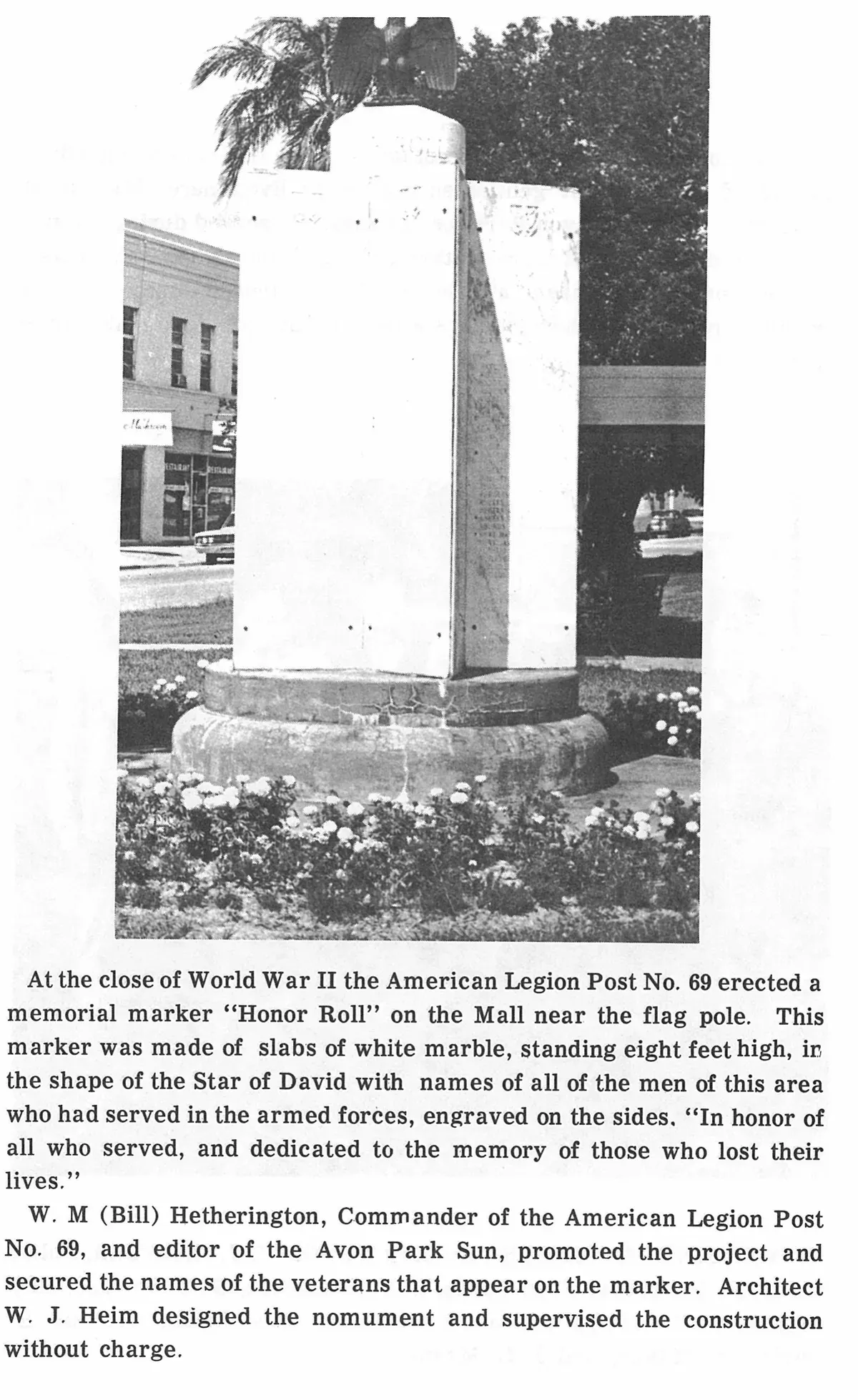
The First Hundred Years of Avon Park, Florida (1976), page 193. Avon Park Historical Society.[maxwell-1976] At the close of World War II the American Legion Post No. 69 erected a memorial marker “Honor Roll” on the Mall near the flag pole. This marker was made of slabs of white marble, standing eight feet high, in the shape of the Star of David with names of all of the men of this area who had served in the armed forces, engraved on the sides. “In honor of all who served, and dedicated to the memory of those who lost their lives.”
W. M (Bill) Hetherington, Commander of the American Legion Post No. 69, and editor of the Avon Park Sun, promoted the project and secured the names of the veterans that appear on the marker. Architect W. J. Heim designed the nomument and supervised the construction without charge.
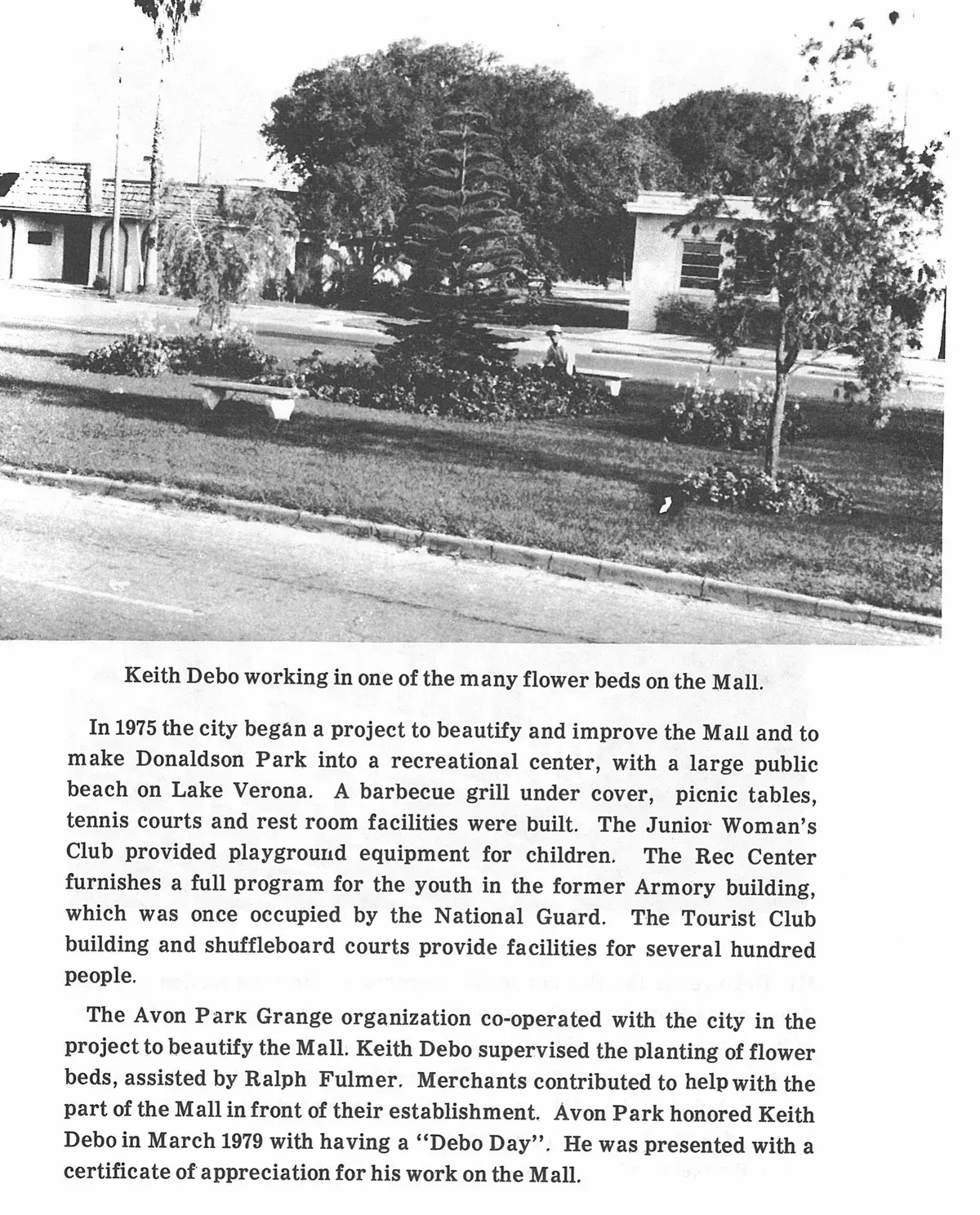
Keith Debo working in one of the many flower beds on the Mall. The First Hundred Years of Avon Park, Florida (1976), page 194. Avon Park Historical Society.[maxwell-1976]
In 1975 the city began a project to beautify and improve the Mall and to make Donaldson Park into a recreational center, with a large public beach on Lake Verona. A barbecue grill under cover, picnic tables, tennis courts and rest room facilities were built. The Junior Woman’s Club provided playground equipment for children. The Rec Center furnishes a full program for the youth in the former Armory building, which was once occupied by the National Guard. The Tourist Club building and shuffleboard courts provide facilities for several hundred people.
The Avon Park Grange organization co-operated with the city in the project to beautify the Mall. Keith Debo supervised the planting of flower beds, assisted by Ralph Fulmer. Merchants contributed to help with the part of the Mall in front of their establishment. Avon Park honored Keith Debo in March 1979 with having a “Debo Day”. He was presented with a certificate of appreciation for his work on the Mall.
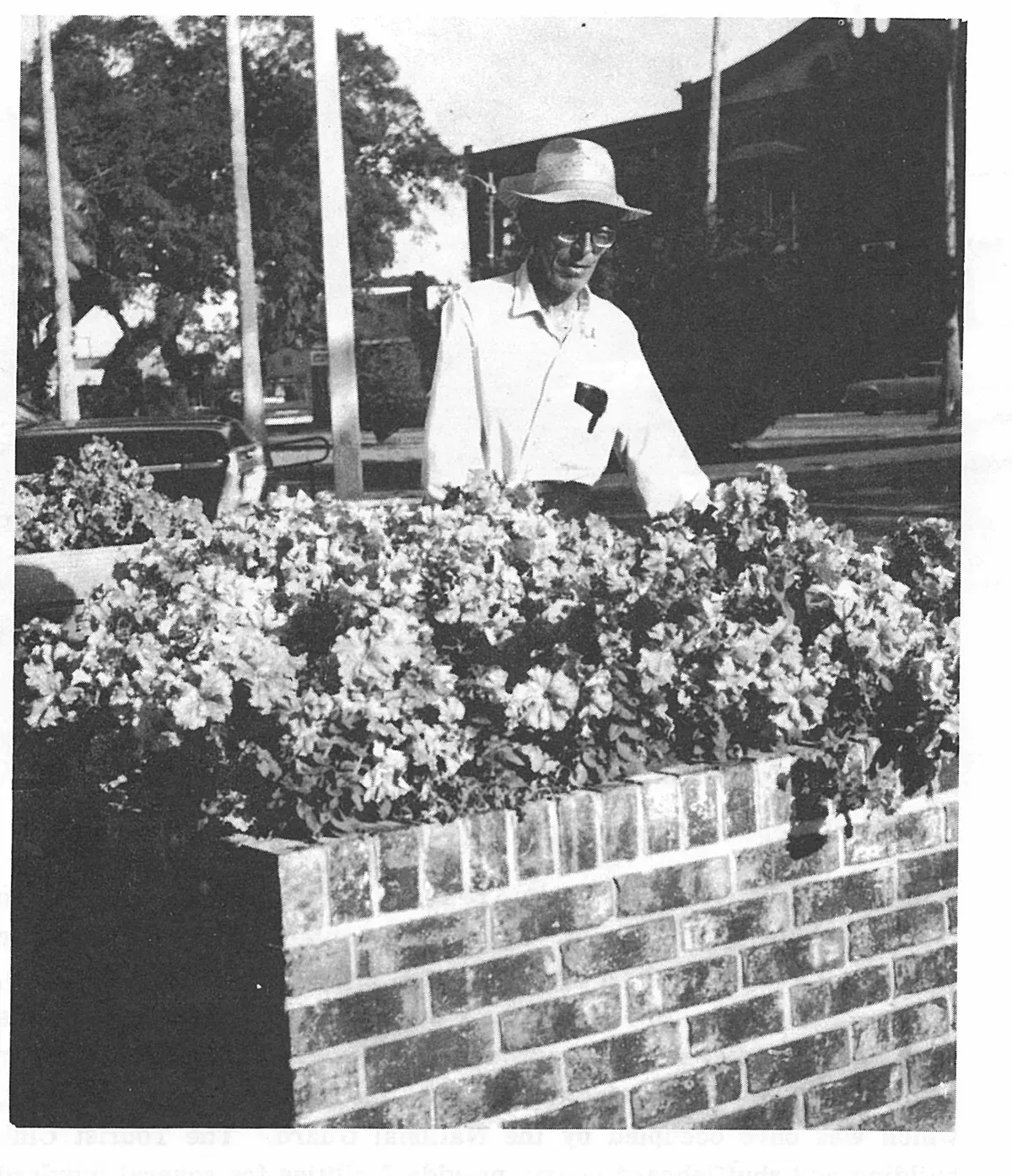
The First Hundred Years of Avon Park, Florida (1976), page 195. Avon Park Historical Society.[maxwell-1976] Mr. Debo tends the flowers in the planters at the intersection of Lake Avenue and Main Street. These eight planters and benches were installed with guard rails at the stop light for the pleasure and safety of pedestrians crossing the streets The cost for these planters and benches were included in the HUD program in which the City of Avon Park participated with the government in 1970.
The Brickel building can be seen in the background.
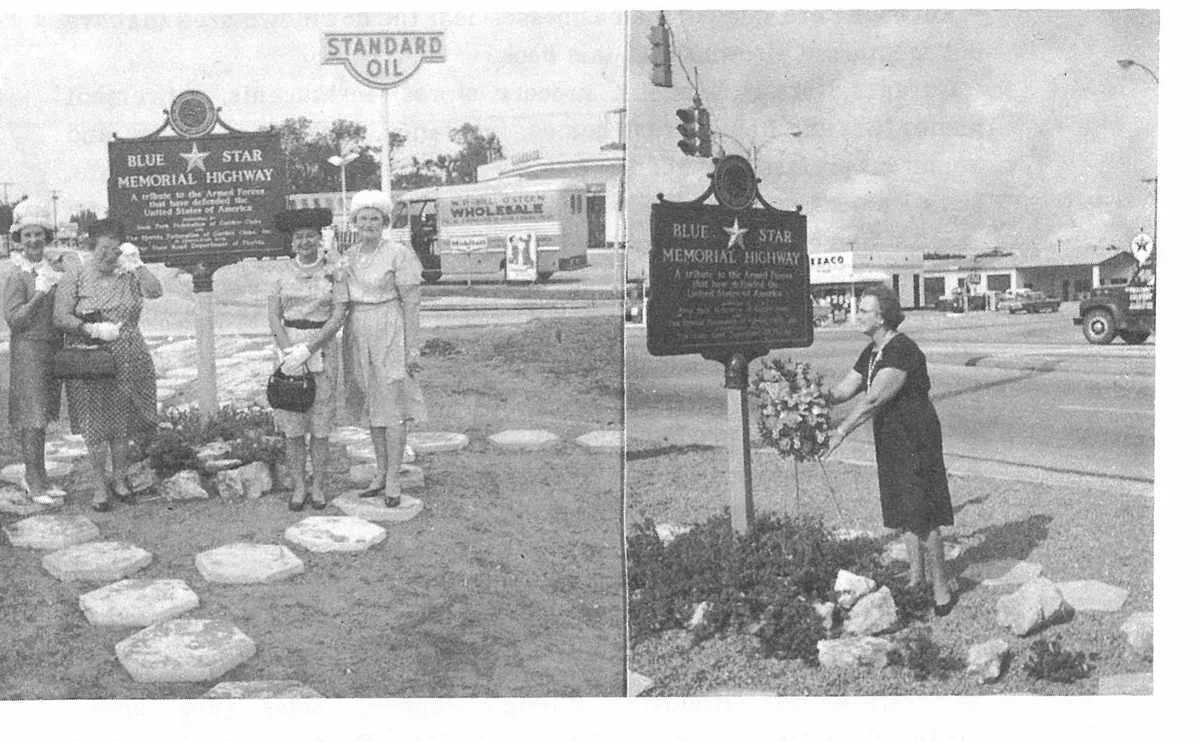
In 1965 the Garden Club erected a marker at the west end of the Mall designating Hwy 27 as a “Blue Star Memorial Highway,” honoring the Gold Star Mothers of Avon Park. The First Hundred Years of Avon Park, Florida (1976), page 196. Avon Park Historical Society.[maxwell-1976]
Pictured here is Rachael Wester, Mrs. Frank Hewlett, of Miami, President of Florida Federation of Garden Clubs, Bessie Decker and Mrs Sidney Davis, of Ft. Myers, District 9 Director; and Grace Boney.
When Henry Woodruff came to Avon Park in 1892 he wrote that he had discovered in Avon Park a “mythical Garden of Eden”. It is no myth today, because the Mall is a charming spot where friends can sit and relax and enjoy the beauty of nature, especially the beautiful flower beds that decorate the Mall.
Following are some of the businesses near the downtown area that are not mentioned elsewhere in this book.
Garages, service stations, grocery stores, restaurants, retirement homes, nursing homes, rest homes, insurance, real estate offices and numerous professional people. Eaton’s Department store, Western Auto, Park Pharmacy, Avon Wholesale Electric, Ridge Fuel, Health Foods, Stone’s Radio & TV, Fred & Bill’s Carpets, M-M Antiques, Palmer Electric, The Print Shop, The Cobbler’s Bench, Ridge Florists, Ridge Disposal, Weaver’s Wallpaper & Paint Center, The Florida Power Corp. office, Sterling Auto Parts, Royal’s TV & Appliance, Moseley’s Building Contractors, Kerckhoff Jeweler & Watchmaker, Cottage Craftiques, Sue’s Gift Shop, Turner Furniture, Jordan Floor Covering, Lane’s Record & TV, The Peoples Gas Company, Neisner’s Brothers, Schuler Land Surveyors, Whitmire Air Conditioning, Long’s AirConditioning, Green’s Surplus store, Hilltop Mower-Marine Sales-Service, Charlie’s Outboard, Highlands Aviation, Inc., Badcock Home Furnishing Center, Crabtree’s Landscape Nursery, Eckerd Drugs, People Gas System, Inc., WAPR Radio, Whitmire Air Conditioning, Golf and Tennis Pro Shop.
Wellcraft Marine, Highlands Building Supplies, Sides Auto Supply, Finders Cove Antiques, by Sue Hood, Avon Park Feed, Crews Equipment Company, and many other businesses in the shopping centers and on the outskirts of the City.
The J.C. Penny Company opened a large and modern store in the Avon Square Shopping center on January 12, 1977. J. C. Penny is one of the three largest retail stores in the nation. Manager, Earl Jackson, of the Avon Park store, made national fame for his unique method of opening the Avon Park store. He gave all of the Women’s Clubs in this area tickets to sell for a fashion show on the opening day. This brought 5000 people into the store during the viewing hours and also each club made a nice sum of money for their treasury.
E. A. DELANEY, SR.
E. A. DELANEY, SR. was perhaps the most un-pretentious and most prestigeous man ever to live in Avon Park. He served a total of 28 years as the Mayor of Avon Park.
Mr. Delaney was a member of the City Council when the new City Hall was first occupied in 1929. He was chairman of the Board of Directors of the First National Bank. He was superintendent of the Crate Mill as long as one operated in Avon Park. Scores of people looked to Mr. Delaney for counsel and guidance, and during the depression days his assistance to families was unmeasurable.
Mr. Delaney headed the drive assisting the Chamber of Commerce, to get the Walker Memorial Hospital established here, as well as the Florida Alcoholic Rehabilitation Center and the South Florida Junior College. He was instrumental in obtaining the Federal Housing Projects for Avon Park. People everywhere knew and respected Mr. Delaney’s opinion on business matters. He was named “Highlands County Man of the Year” in 1962.
Mr. Delaney came from Georgia to Avon Park in 1919, having come to Florida earlier. He married Miss Estelle Eugenia Butts, following the death of his first wife, Annie Clemmons DeLaney. The Delaney children are Cois Leroy (Jack), Mrs. Helen Lucenia Peeples, Edgar Azell, Jr., Leonard and Thevenow Harold Delaney, who was named for Harold Thevenow, shortstop player on the St. Louis Cardinals Baseball team.
Mr. Delaney celebrated his 87th birthday with all of his family together on December 7, 1978.
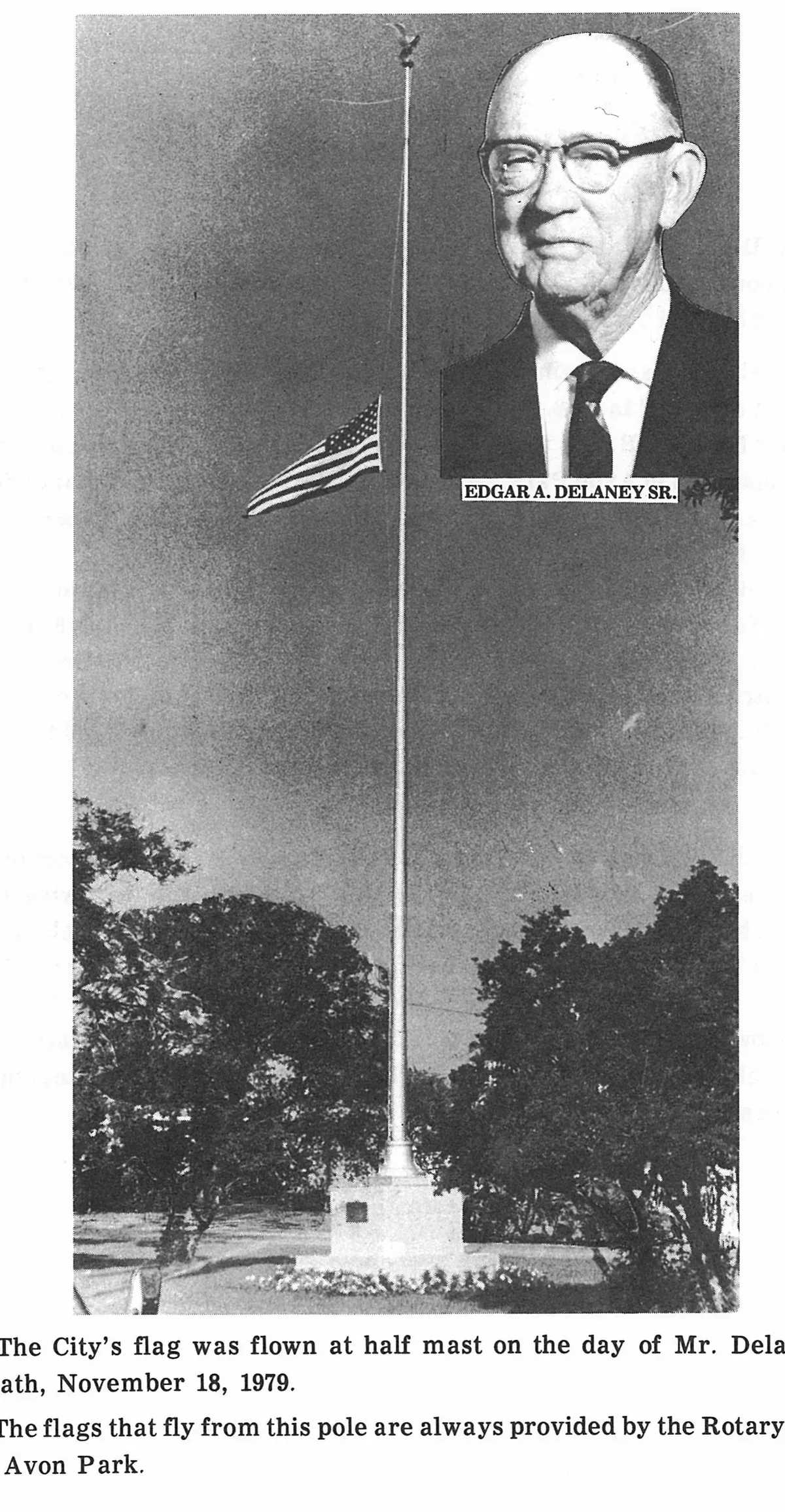
The City’s flag was flown at half mast on the day of Mr. Delaney’s death, November 18, 1979. The First Hundred Years of Avon Park, Florida (1976), page 199. Avon Park Historical Society.[maxwell-1976]
The flags that fly from this pole are always provided by the Rotary Club of Avon Park.
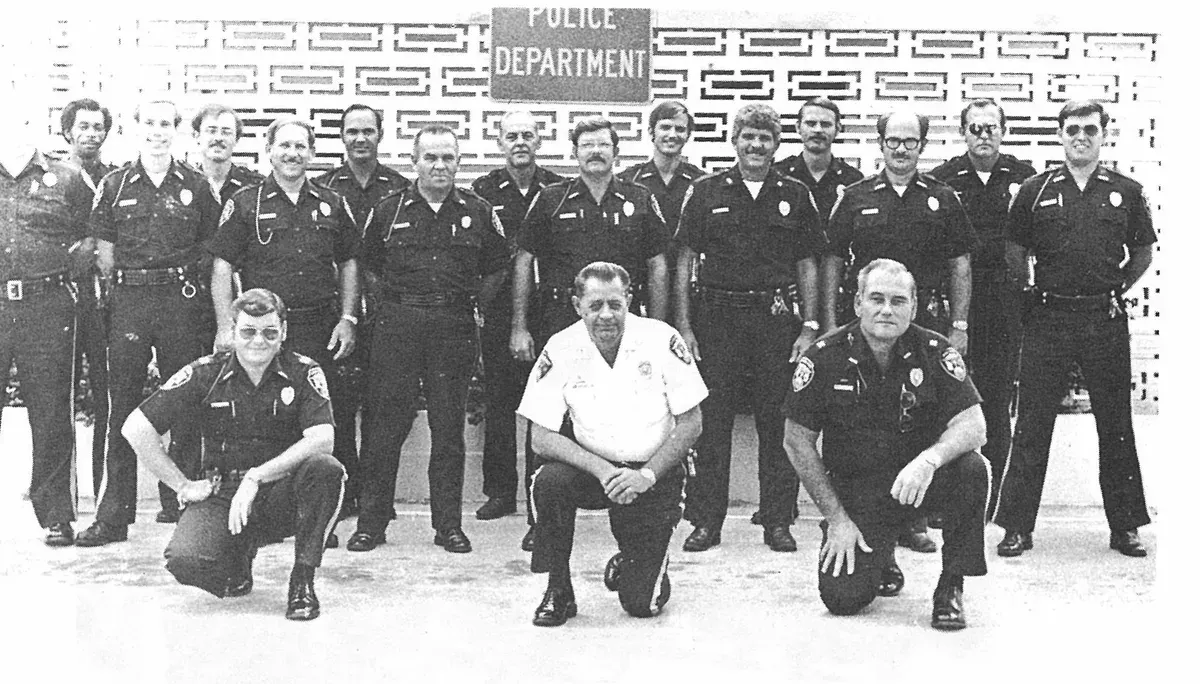
POLICE FORCE OF AVON PARK 1979-80. Captain, Robert Singletary, Chief, Robert Brooks and Captain, Frank Cratty. The First Hundred Years of Avon Park, Florida (1976), page 200. Avon Park Historical Society.[maxwell-1976]
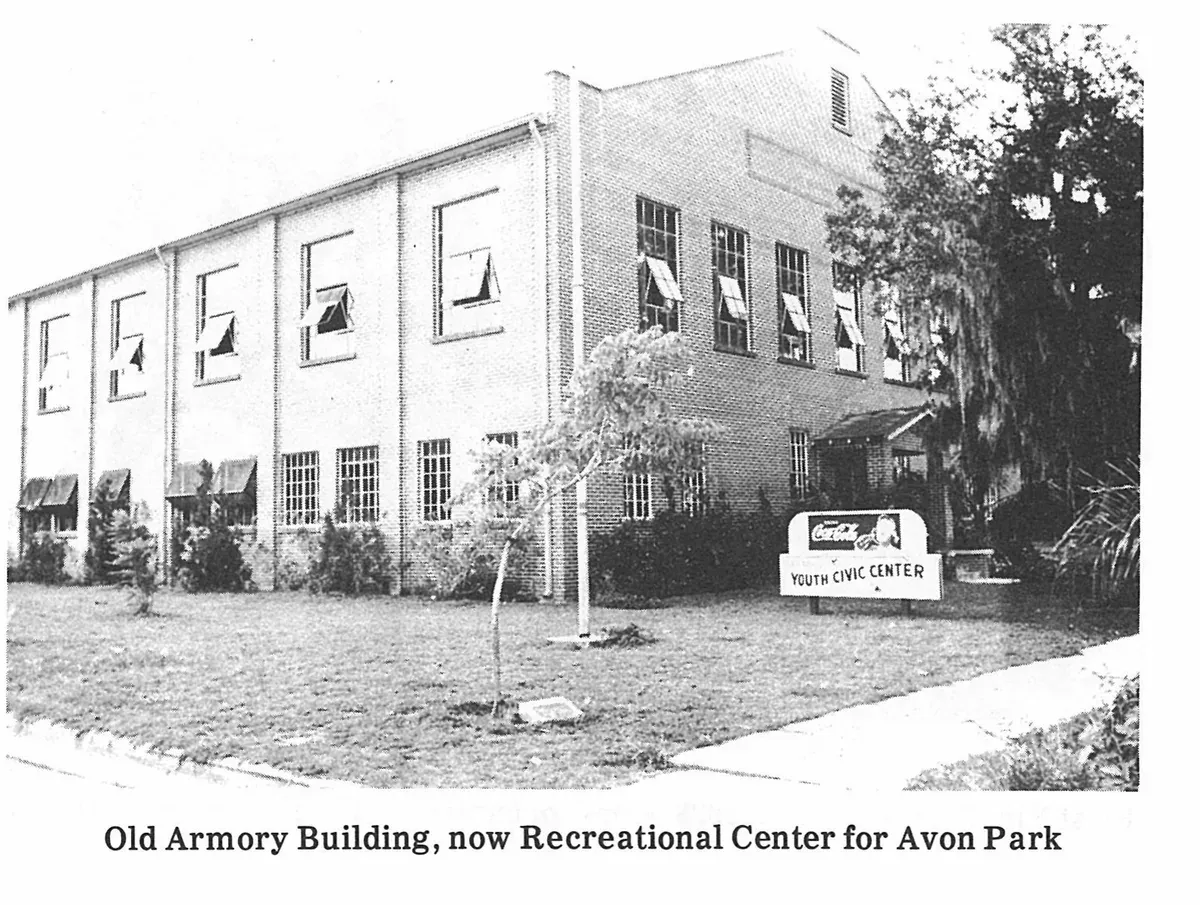
Old Armory Building, now Recreational Center for Avon Park. The First Hundred Years of Avon Park, Florida (1976), page 200. Avon Park Historical Society.[maxwell-1976]
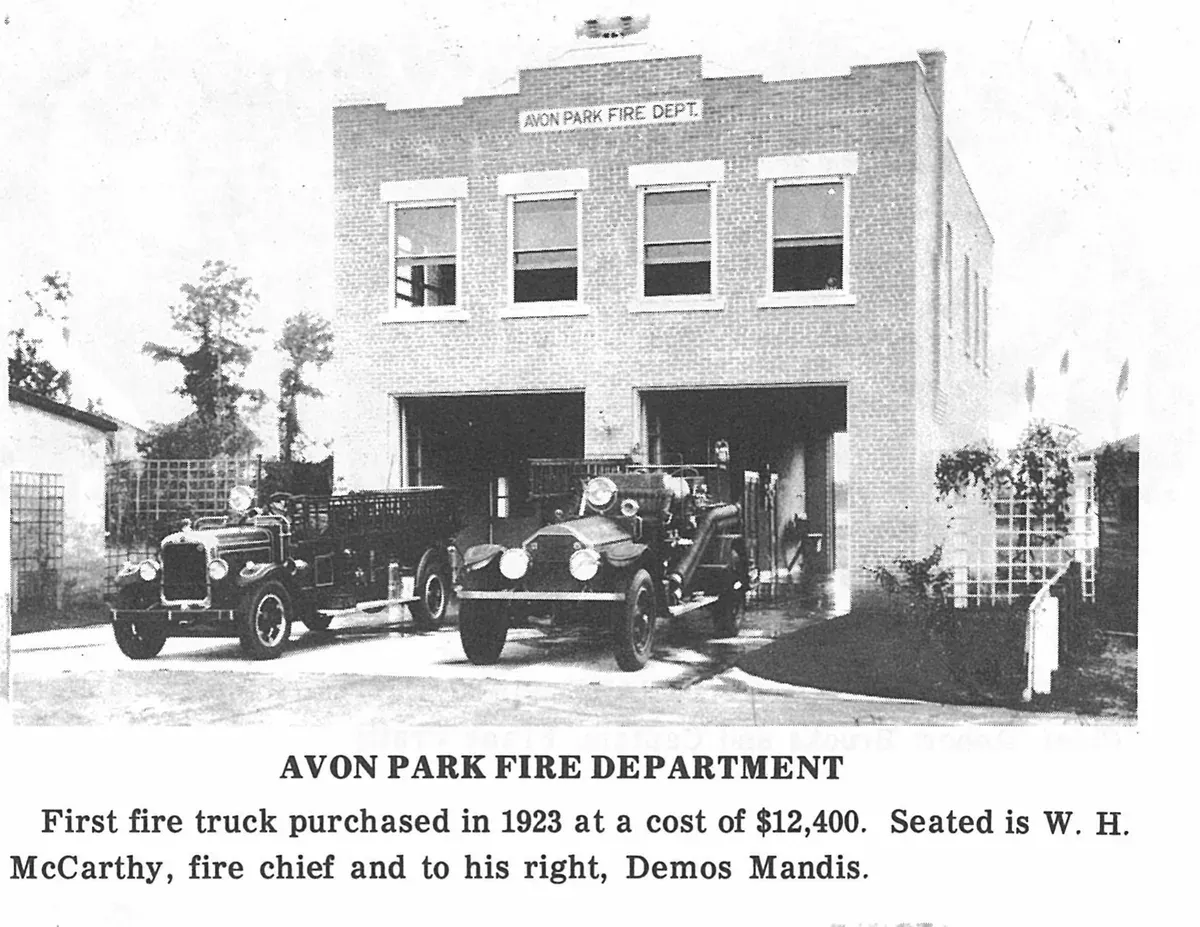
AVON PARK FIRE DEPARTMENT. The First Hundred Years of Avon Park, Florida (1976), page 201. Avon Park Historical Society.[maxwell-1976] First fire truck purchased in 1923 at a cost of $12,400. Seated is W. H. McCarthy, fire chief and to his right, Demos Mandis.
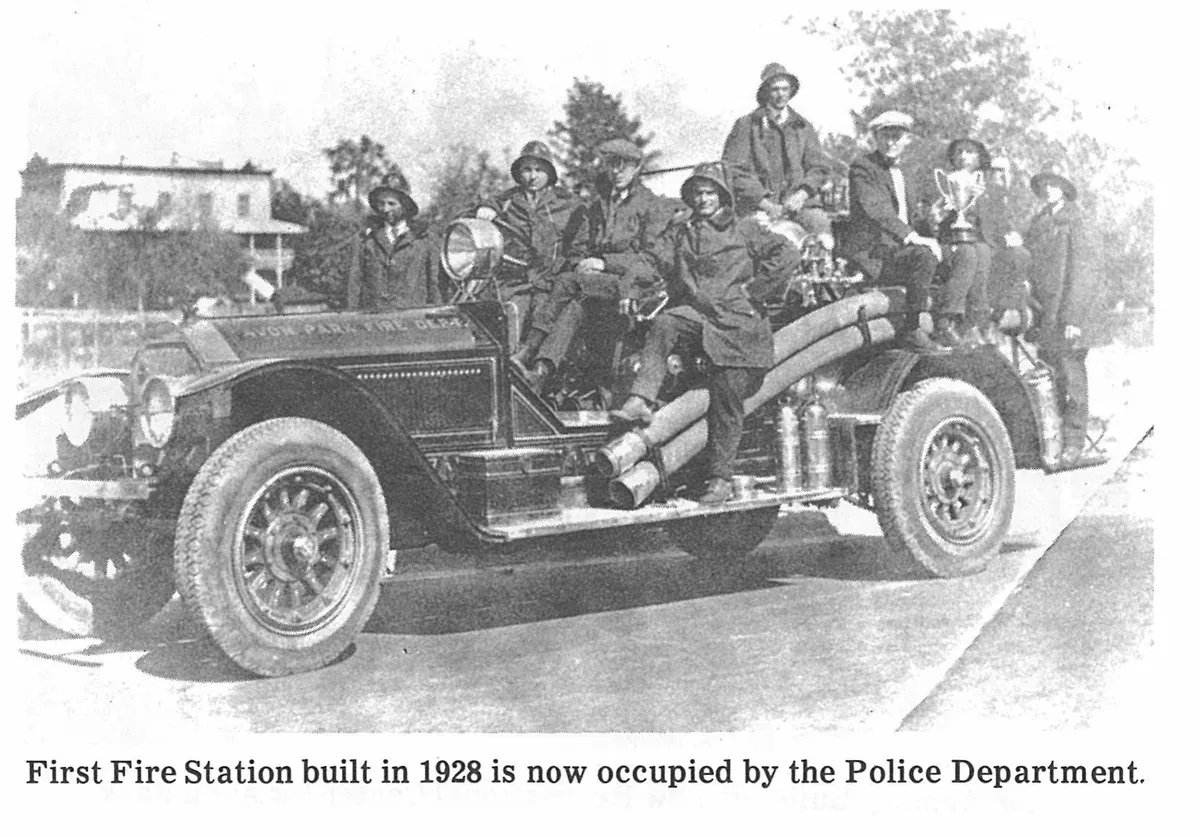
First Fire Station built in 1928 is now occupied by the Police Department. The First Hundred Years of Avon Park, Florida (1976), page 201. Avon Park Historical Society.[maxwell-1976]
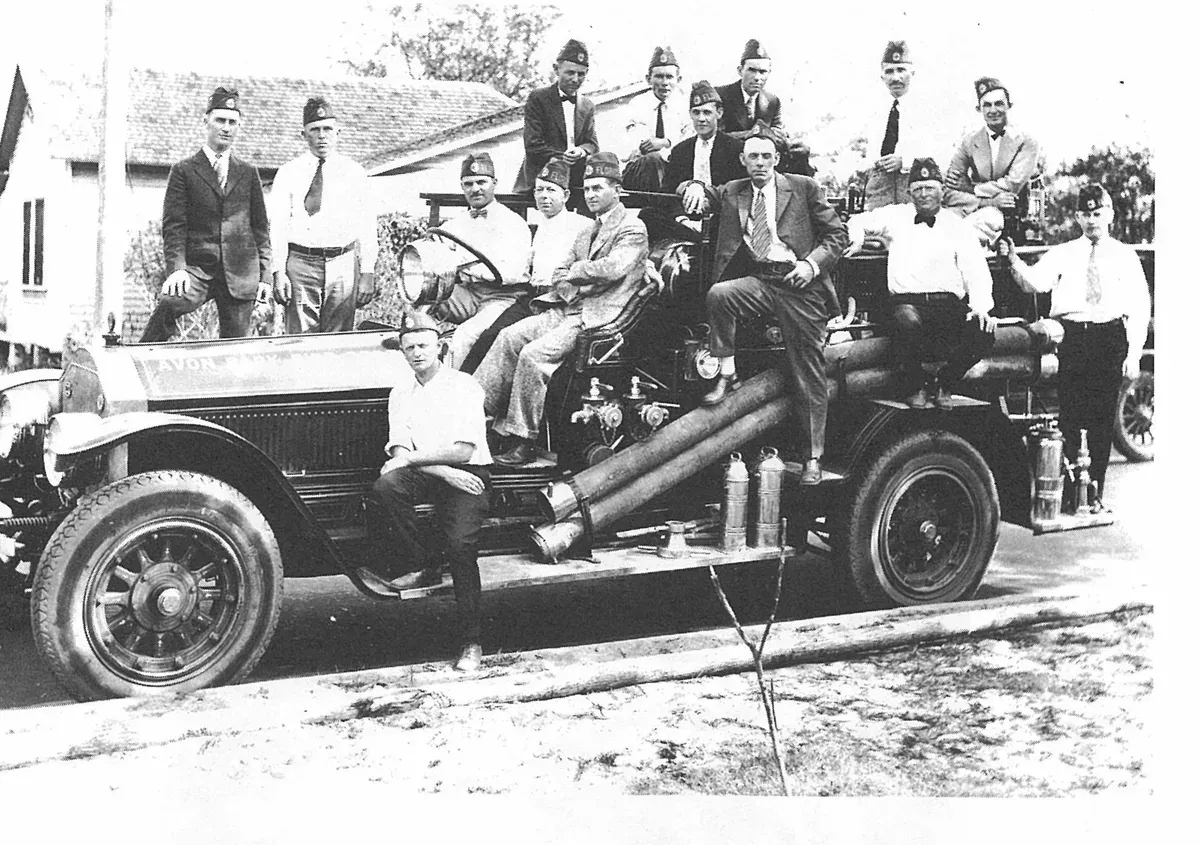
1927 Volunteer Firemen was the American Legion Post No. 69. The First Hundred Years of Avon Park, Florida (1976), page 202. Avon Park Historical Society.[maxwell-1976]
Bert Hathcox, H. M Wiggins, Lloyd Correll, Prof. R. T. Fairey, Mark Lance, Harry Davis, Fred Wild, Ed Welch, D. G. Perry, Mr. Goodrich, Bob Adams, Commander Harris, Glenn Spink, Louie Marlin and Mr. Quinn.
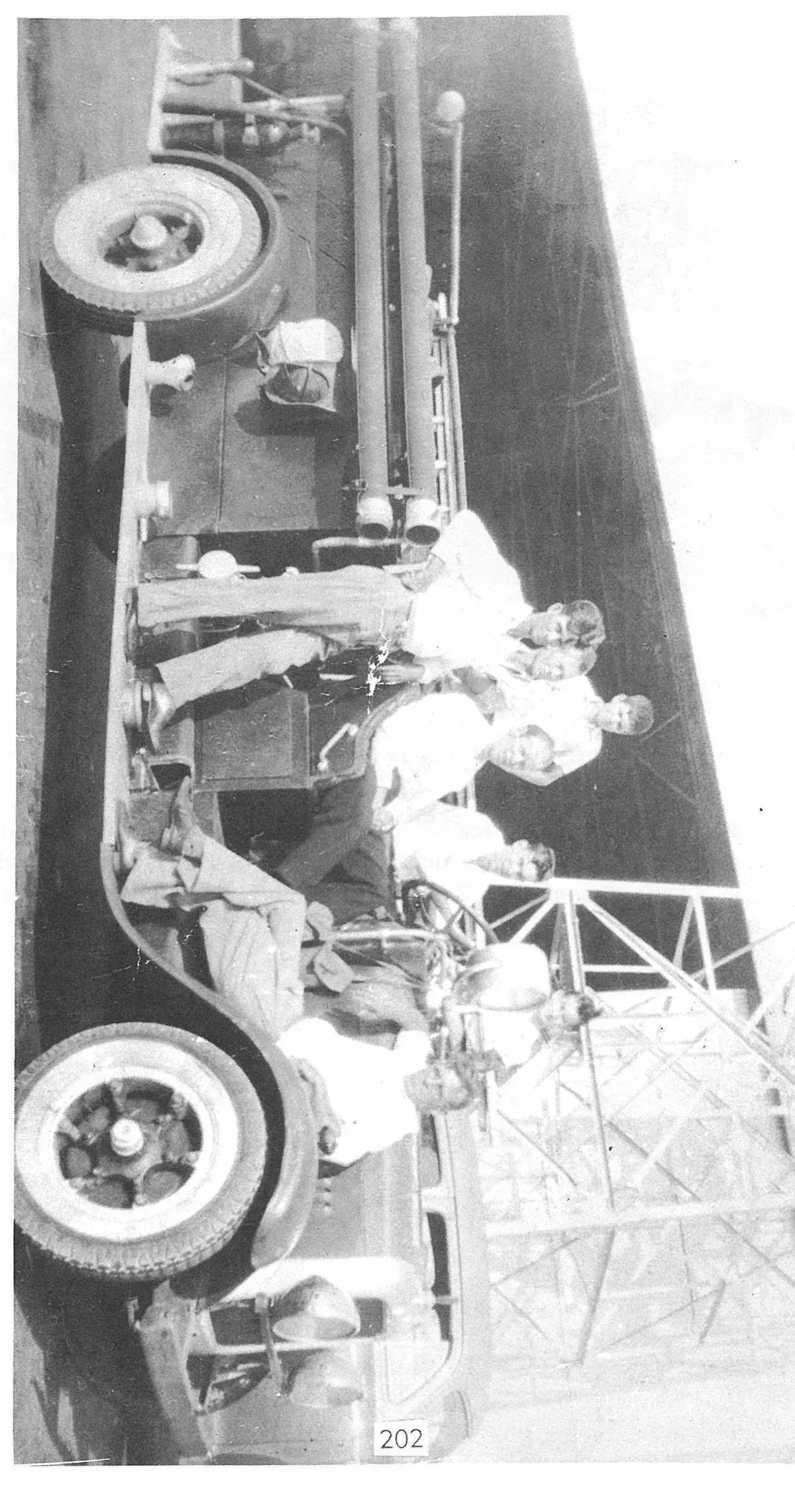
Standing back is Tommy Giddens, C. W. Watson, Pete Prevatt, Skit Martin, Mack Flowers, Charles Howze and George Prevatt. The First Hundred Years of Avon Park, Florida (1976), page 203. Avon Park Historical Society.[maxwell-1976]
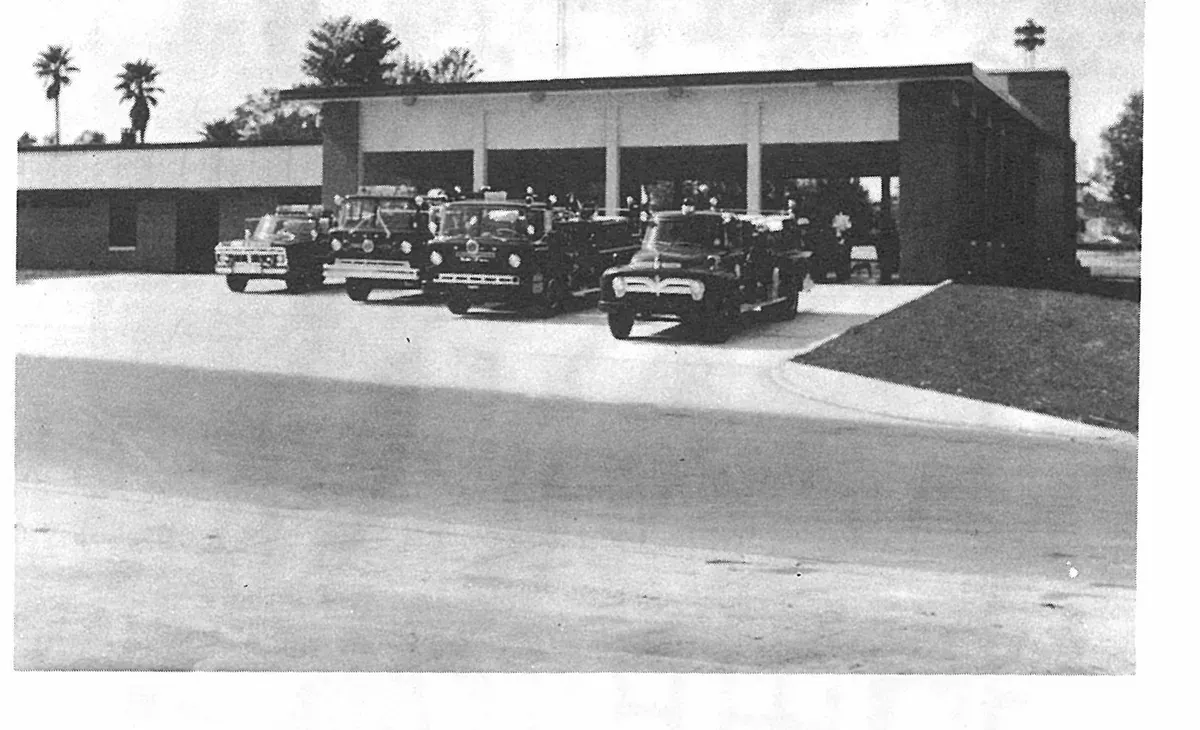
NEW FIRE STATION BUILT IN 1979.. The First Hundred Years of Avon Park, Florida (1976), page 204. Avon Park Historical Society.[maxwell-1976]
The Florida State Firemen’s Association, Inc. established headquarters here in 1970 and erected a beautiful brick building on Hwy 27 South of Avon Park. The Association has plans to build a State Fireman’s Museum here in the near future, according to Mack Flowers, Avon Park Fire Chief and President of the Firemen’s Association.
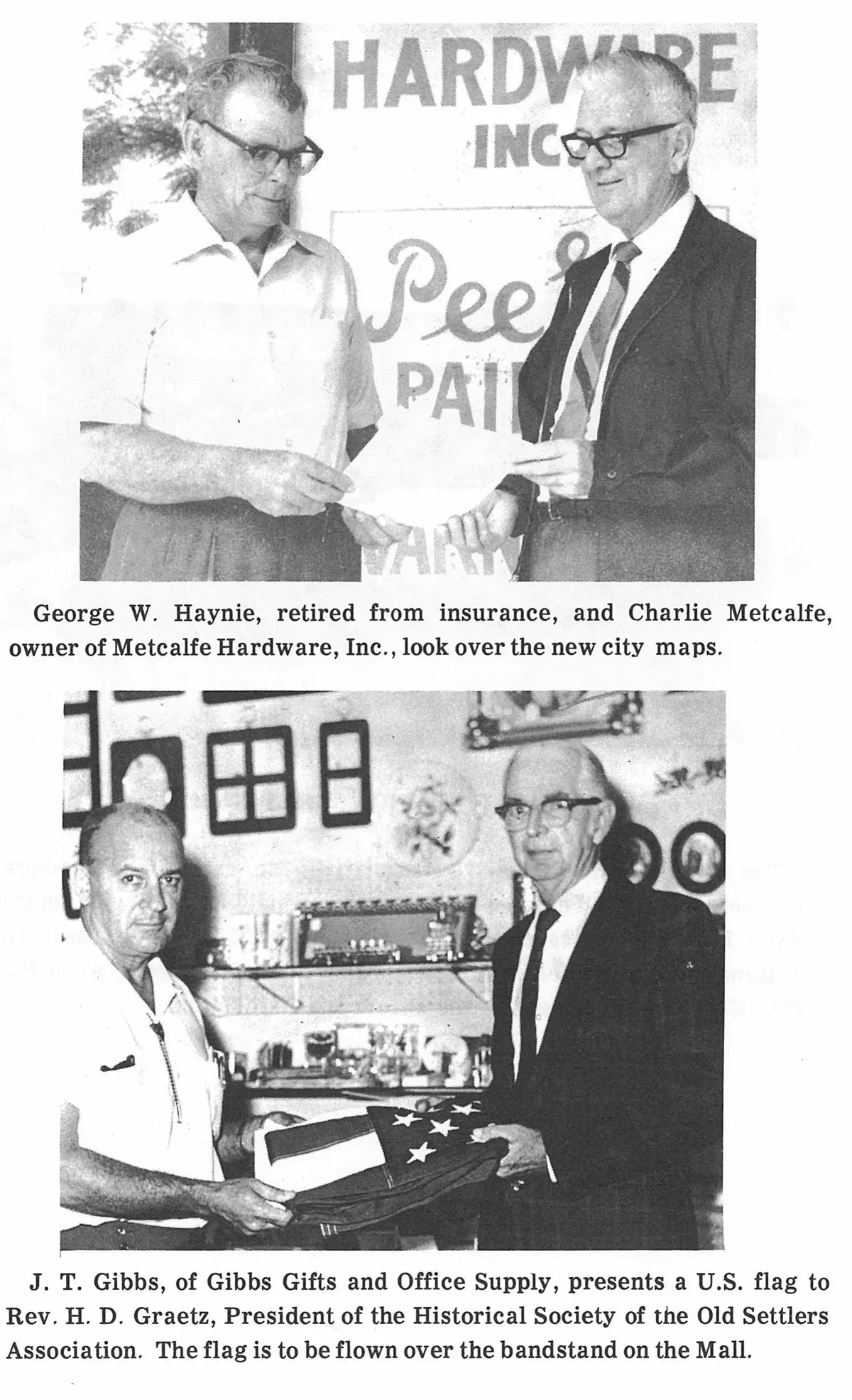
George W. Haynie, retired from insurance, and Charlie Metcalfe, owner of Metcalfe Hardware, Inc., look over the new city maps. The First Hundred Years of Avon Park, Florida (1976), page 205. Avon Park Historical Society.[maxwell-1976]
J. T. Gibbs, of Gibbs Gifts and Office Supply, presents a U.S. flag to Rev. H. D. Graetz, President of the Historical Society of the Old Settlers Association. The flag is to be flown over the bandstand on the Mall.
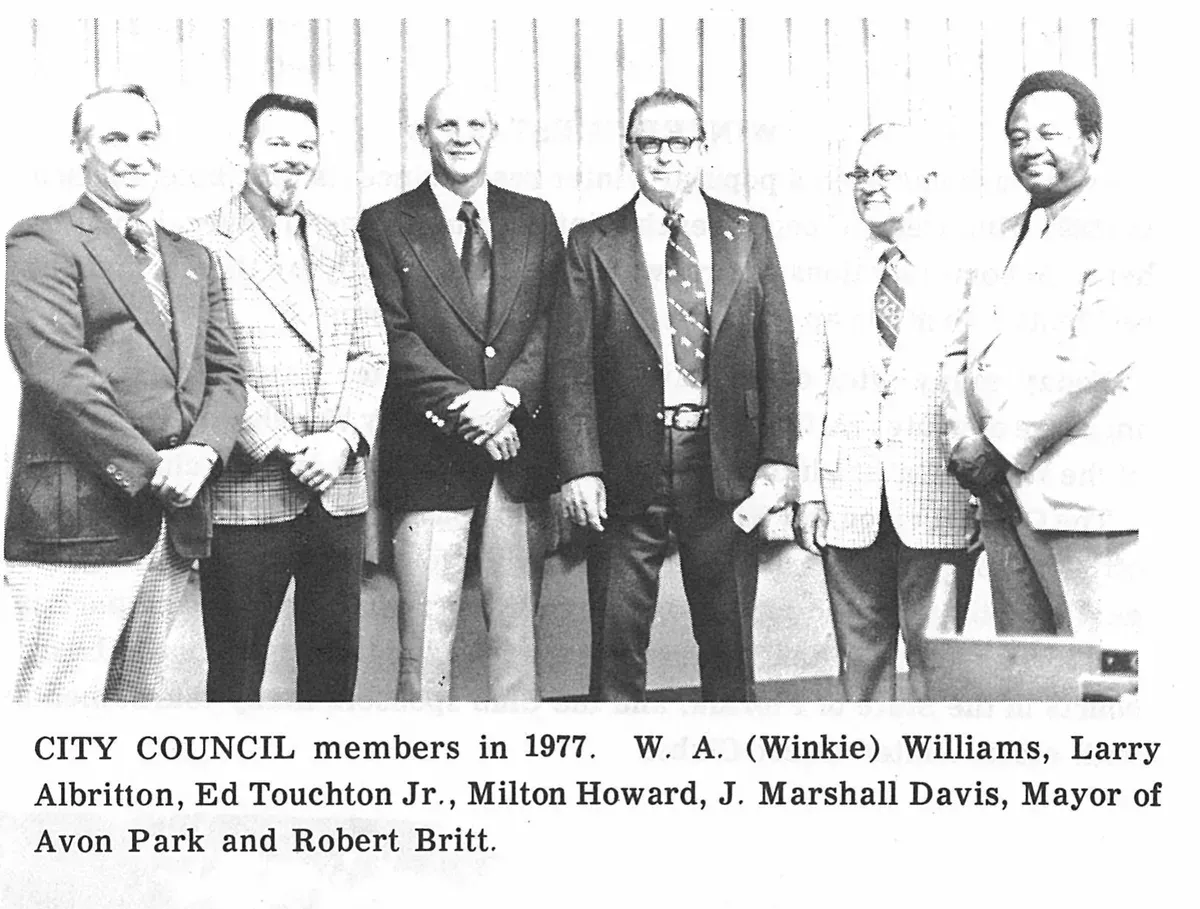
CITY COUNCIL members in 1977. W. A. (Winkie) Williams, Larry Albritton, Ed Touchton Jr., Milton Howard, J. Marshall Davis, Mayor of Avon Park and Robert Britt. The First Hundred Years of Avon Park, Florida (1976), page 206. Avon Park Historical Society.[maxwell-1976]
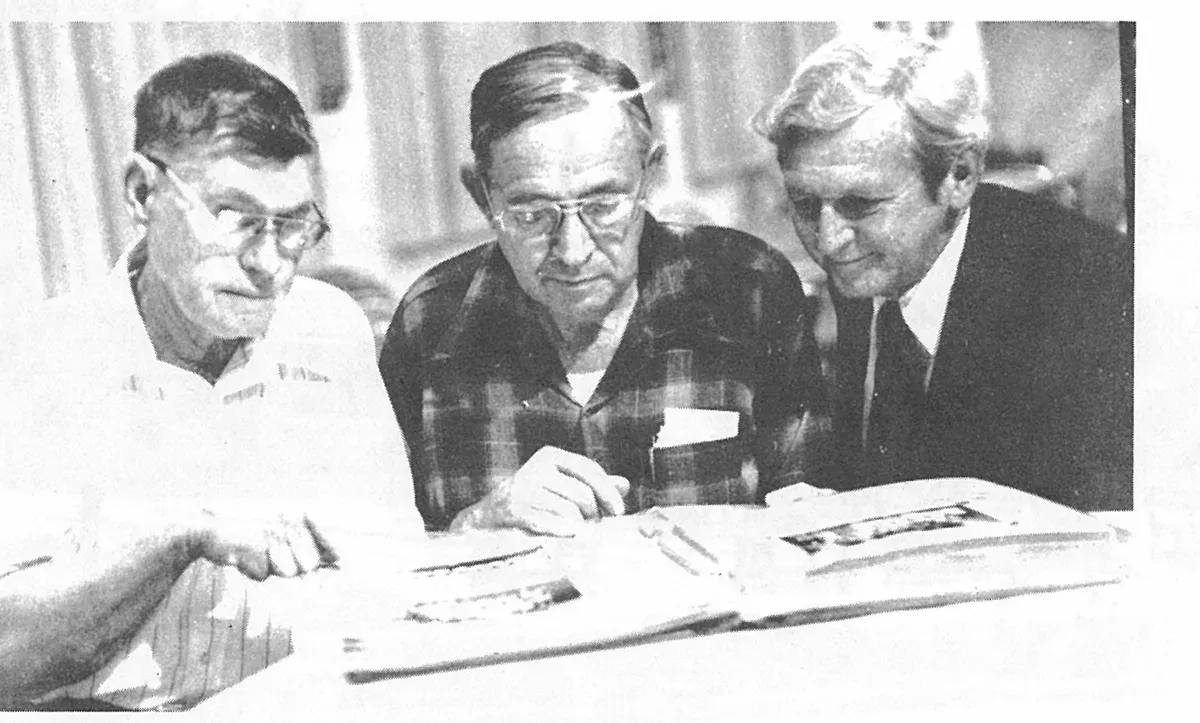
The First Hundred Years of Avon Park, Florida (1976), page 206. Avon Park Historical Society.[maxwell-1976]
D. M. Earnest, Fred Garrett and J. W. (Billy) Martin, looking over an old scrap book at the annual meeting of the Old Settlers Historical Society, November 2, 1977. Billy Martin is Tax Assessor of Highlands County. All three men are from pioneer families in Florida.
WINTER GUEST CLUB
Avon Park has been a popular winter resort since its first hotel opened in 1889. Hundreds of people each winter come to spend several months here. Accommodations at first were furnished mostly by the permanent residents who made apartments to rent in their homes .
Today many who come have purchased winter homes here. The increase of winter residents today is approximately 800 who are members of the Winter Guest Club, and many others who do not join the club.
The City provided the Winter Guest Club house for this group which was officially organized in 1937. During the winter months there is a great deal of activity at the club house, such as carry-in dinners, card parties and tournaments. The City has built for the Club the finest shuffle board courts in the State of Florida, and the Club sponsors many tournaments with other Winter Guest Clubs.
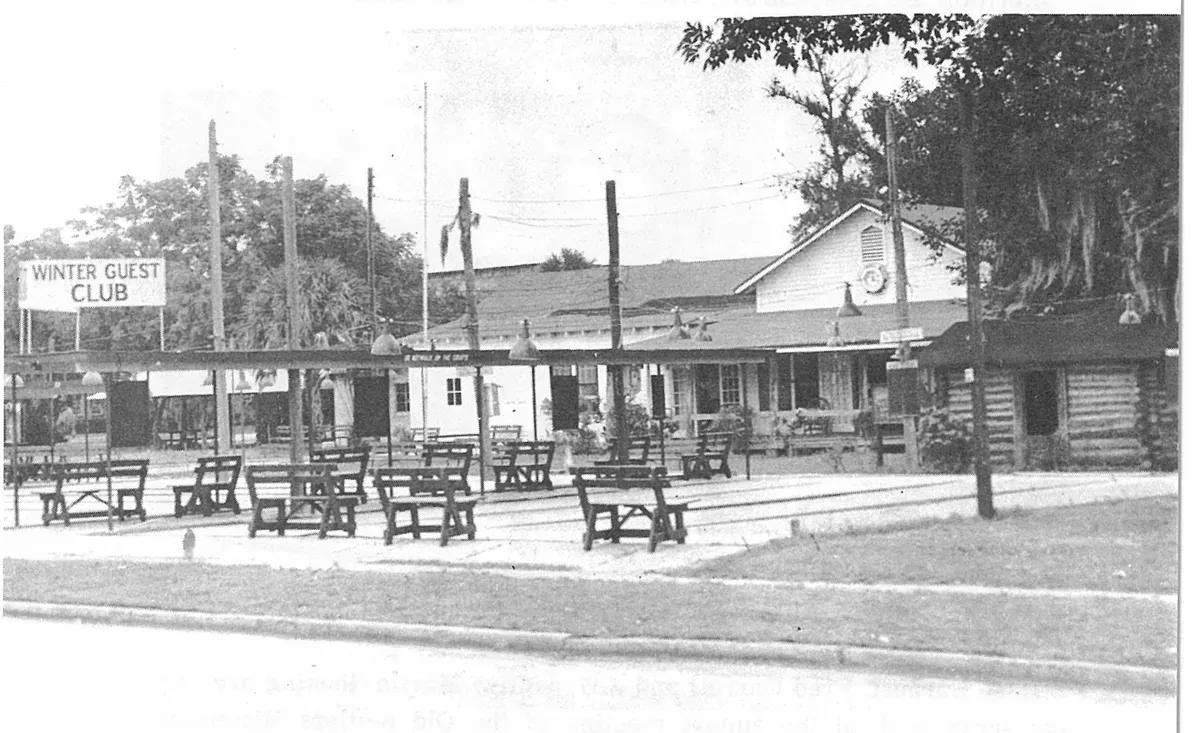
The First Hundred Years of Avon Park, Florida (1976), page 207. Avon Park Historical Society.[maxwell-1976]
EXCERPTS FROM MINUTES OF CITY COUNCIL MEETINGS 1920 through 1932 showing the growth of Avon Park during the Florida Boom Period. Finances were tight and there was a great deal of information about warrants, notes and bond issues to finance the construction of streets, sidewalks, sewers, parks and public buildings. Information submitted by Malcolm Crews, City Clerk. 12-1-1980
7-16-20…Election passed treet bonds to widen Main Street and establish parks. 1-4-22…Petition to move Band Stand 1 block to the West presented, no action 3-6-22…Dr. W. C. Touchton employed as Health Officer 3-8-22…$75,000 Bond Issue for opening, widening, grading and paving streets and establishing parks. 10-2-22…Offer of Col. R. P Davidson to donate monument & Flag pole to be located in south end of block with bandstand. 11-9-22…Resolution to pave north Main St. from Lake Ave. west to Railroad Ave. and intersections between Main and N. Main St. 2-5-23…Council voted $50.00 per month for Town Band. 5-7-23…Contract in amount of $1,325.00 with Winter and Raab to build Jail on Park Property at rear of Christian Church. 8-6-23…Fire Truck..Cost $12,400.00 10-31-23…Florida ICE AND Power Company agreed to make extensive improvements to town water system. 4-5-24…Florida Western and Northern Railroad Co. granted right to build railroad through Avon Park. 4-17-24…Garbage collection increased from once to twice weekly. 5-4-24…Scott Telephone Co. granted permission to trim trees. 6-2-24…First Fire Siren purchased, cost $480.50. 6-2-24…Railroad required to build a trestle over Castle. 9-3-25…New Charter for City approved by voters 146 to 103. 9-26-25…Agreed to build tents for tourists. 1-11-26…City Hall to be located in Brickell Building, Rent $50.00 month. 1-27-26…140 Whiteway lights $54.00 each per year. 1-27-26…Buy south 100 ft. of Lot 6, Blk 19, Sec. 22 from G. D. Godwin for $8,000.
2-3-26…Widen Lake Ave. from Pine St. to Church St. Cost, $4,631.00 2-10-26…R. A. Stamey appointed to arrange for building a room for the Fire Engine. 2-17-26…permit issued for Nazarene Church Building on East Canfield St. 2-17-26…Bond Issue of $375,000 authorized for sewage and site for municipal building. 3-17-26…Authorized to advertise for bids on grandstand at Ball Park. 3-31-26…Bid for 75 additional whiteway lights accepted $5,795.70. 4-6-26…Authorized financing of $185,000 for sewers, Cith Hall site $30,000, Parks $25,000, refunding bonds $25,000. Total $265,000. 4-21-26…Bid on Grandstand let to J. E. Lacey for $6,000. 5-26-26…Quit claim deed to Church of Christ authorized….100 Ft. on Walnut by 140 Ft., on Forrest Ave. 6-9-26…Passed ordinance borrowing $210,000 for sewers, $30,000 for City Hall, $115,000 for Parks. 10-6-26…Accepted proposal to drill 6” well to control level of Lake Verona. 11-5-26…Approved resolution extending North Main St. across A.C.L.R.R. 12-29-26…Approved building horseshoe court in park near Park Motor Company on Main St. Committee appointed on plans for a building by courts. 10-6-26…Approved resolution extending North Main St. across A.C.L.R.R. 12-29-26…Approved building horseshoe court in park near Park Motor Company on Main St. Committee appointed on plans for a building by courts. 1-26-27…Committee appointed to be in charge of Head Field while St. Louis Cardinals train. 2-1-27…Agreed to sell land and other concessions to Fla. Public Service Co. to build Power Plant. 2-2-27…Avon Park Hotel burned. 2-9-27…C. P. Anderson died. 6-6-27…New Charter for City passed by legislature. 6-8-27…Letter proposed City purchase land on Lake Verona for a park, cost $54,000.
12-23-27…Purchase of land on Laks Verona for Park approved..$45,000. 1928…City offices moved from Brickell Building to Jacaranda Arcade. 1-7-28…W. H. McCarthy elected Fire Chief. 3-21-28…Motions to erect City Hall, Fire Dept. & Jail. 8-1-28…Authorized Poinciana Masonic Lodge No. 227 to lay corner stone of City Hall. 8-28-28…C. R. Nichols employed as Avon Park Band Instructor for $150.00..Band Concerts to be every week. 12-5-28…Fire Station completed. 12-6-29…C. S. Donaldson submitted plans for 4 acre park on Lake Verona. 2-11-29…Mayor William King and Tax Assessor, Auditor and Comptroller Chester Arthur Crews killed by Seaboard Train. E. A. Delaney, Sr. became Mayor Pro-tem. 3-20-29…City Hall completed, cost $28,680.00. 4-2-29…C. S. Donaldson elected Mayor in special election. 9-26-29…Mark W. Lance appointed Tax Assessor for City. 9-26-29…Fred Durrance appointed comptroller 12-3-29…C. S. Donaldson elected Mayor, No opposition. E. A. Delaney, Sr. re-elected Council President. 1-6-32…Francis W. Shockley City Clerk
CHIEF OF POLICE CITY OF AVON PARK
1919 E. N. Dickerson, Town Marshall Resigned 7-7-19 C. E. Lee Appointed 7-7-19 C. E. Lee Resigned 10-20-19 E. N. Dickerson Appointed 10-20-19 E. N. Dickerson Re-elected 11-24-19 E. N. Dickerson Resigned 7-5-20 J. B. Williams 7-12-20 W. N. Fertic 11-29-20 L. M. Marsh 11-29-21 L. M. Marsh Re-elected 11-27-22 L. M. Marsh Re-elected 11-26-23 L. D. McGiboney 11-24-24 George Prescott June 1926-27 A. F. Helms 1928 George Prescott 1929 W. D. Adams 1932 J. J. “Bob” Still 1934 J. J. “Bob Still 1936 W. H. McCarthy 1938 Fire & Police Chief
MAYORS OF AVON PARK ELECTED
Herbert Seaverns May 23, 1913 R. W. Swearingen June 6, 1915 W. C. Touchton Jan. 7, 1918 William King Dec. 13, 1919 D. A. Sapp Feb. 6, 1922 T. J. McGinnis Apr. 2, 1922 G. L. Crews Jan. 1, 1924 William King Dec. 2, 1925 C. S. Donaldson Apr. 2, 1929 Marcus E. Covington Nov. 1, 1931 E. A. Delaney, Sr. Sept. 14, 1943 O. C. Wilkes Sept. 9, 1947 Wiley Sauls, Jr. Sept. 13, 1949 E. A. Delaney, Sr. Sept. 8, 1953 James M. Doerr Sept. 12, 1967 Robert J. Barben Sept. 9, 1969 J. Marshall Davis Sept. 4, 1972 David Barefield Dec. 4, 1980
Population of Avon Park 1886 8 1895 500 After the freeze 241 U.S. Census 1907-08 300 1920 890 1925 5000 1935 4667 1970 8100 1979 estimate 15,000
The advertisements placed in newspapers to bring people into Avon Park during the Boom Days surpassed anything that Mr. Crosby had published in 1886-96 in his promotion of this area.
Here are a few excerpts from ads appearing in The Highlands Pilot in the early 20’s:
The Seaboard Air Line Railroad came through Avon Park on the first trip January 1, 1925 and the schedule advertised “Avon Park is only 42 hours from Chicago and 44 hours from Boston.”
“New businesses set Avon Park in the limelight as a distributing center.”
“We are in a campaign to sell Florida to the people of America.”
“Nothing in Florida equals Avon Park, leading all the Ridge cities in building.”
“Scenic grandeur of the hills, groves, clear deep lakes is unsurpassed.”
The “Florida Boom” which had been in full swing began to wind down by 1925. However, Avon Park did not begin to feel any great decline in the business until the failure of The First National Bank in 1926. Suddenly it seemed the “boom days” were over and gloom set in. Another great exodus from Florida began. By 1930 the population of Avon Park had dropped from 5000 to less than 3000.
CHAMBER OF COMMERCE
In the summer of 1930 the Chamber of Commerce sponsored a big celebration in an effort to stimulate business. They had a downtown parade “Ushering in Prosperity” with a burial ceremony for Old Man Gloom. Col. J. M. Lee, Comptroller of the State of Florida and a former resident of Avon Park, and U. S. Senator Claude Pepper, were the speakers for the occasion. Results of the celebration were uncertain but Avon Park was never doomed to become the ‘ghost town’ that some had predicted it would be.
The Chamber of Commerce was a new name for the Board of Trade that had been in existence since the town was organized in 1886.
When the “Town of Avon Park” was changed to the “City of Avon Park” in 1926 the Chamber of Commerce was organized.
By 1939 the city business needed a ‘shot in the arm’ and the Chamber of Commerce needed to be revived. Business men met to see what could be done to stimulate some interest, under the direction of Walter S. Betts,
a relatively newcomer to the city, the Chamber was re-organized and began a program of boosting “Avon Park with the Mile Long Mall.”
A new charter was drawn up and those signing it were Betts, C. R. Ginn, R. R. Brown, C. E. Lanier, M. V. Pilcher, W. M. Reck, Frank Constine, J. Lawler Wells, J. P. Garber and C. E. Crabtree.
Mrs. Jerry Heim Mackey was the first elected executive director. Later Mrs. Anna Belle Worden was elected as the executive director. She has served in this capacity until the present time except for a few years when she was away from Avon Park. During this time Mrs. Larry Hooper served as the executive director.
The Chamber of Commerce has been behind every big movement to bring business into Avon Park, like obtaining the Walker Memorial Hospital, the Alcoholic Rehabilitation Center, the South Florida Junior College, to name only a few. The Chamber sponsors the annual Christmas parade and sidewalk sales and publishes many beautiful brochures and maps of the city for advertising.
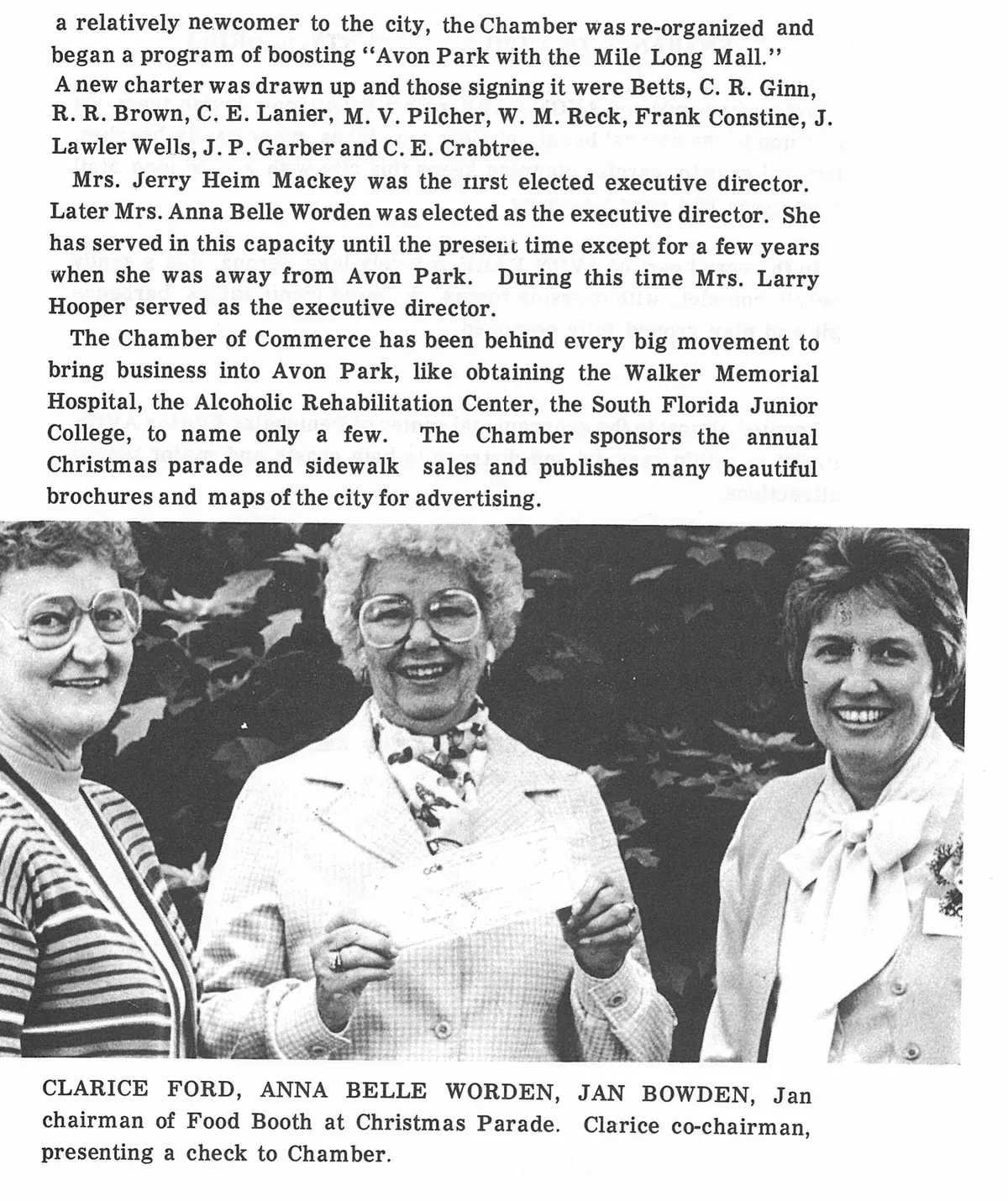
CLARICE FORD, ANNA BELLE WORDEN, JAN BOWDEN, Jan chairman of Food Booth at Christmas Parade. Clarice co-chairman, presenting a check to Chamber. The First Hundred Years of Avon Park, Florida (1976), page 214. Avon Park Historical Society.[maxwell-1976]
ENTRANCE TO HIGHLANDS COUNTY, FLORIDA
Nature has endowed AVON PARK with a beauty on a lavish scale. In addition to the natural beauty of clear blue lakes, white sandy beaches, tropical growth, careful planning keeps this city with a mile long Mall ever green and ever flowering
In the very heart of AVON PARK is lovely lake Verona, and a sandy beach, complete with dressing rooms, sheltered picnic tables, barbeque pit and play ground fully equipped.
Located almost in the geographical center of Peninsular Florida AVON PARK is within easy driving distance to both coasts and major tourist attractions.
HIGHLANDS COUNTY is the heart of the Citrus Belt, home of Highlands Hammock State Park, scene of the Grand Prix races, and the Placid Tower.
AVON PARK is the place where folks come to visit and remain to live.
City Air Port, located ¼ mile from city limits, concrete runways, lighted at night, public telephone.
FACTS ABOUT AVON PARK
LOCATED IN HIGHLANDS COUNTY, FLORIDA
Founded 1886
Population 10,000 15,000 trading area Altitude 145 feet Annual Rainfall 52” Mean Annual Temperature: 75.5 Taxes: 4 percent State Sales Tax, Food and Medicine Exempt
AVON PARK is centrally located just a short distance to Florida’s major cities and attractions. Distance to Cypress Gardens 39 miles, Diseny World 63 miles, Great Masterpiece, Passion Play and Bok Tower 25 miles, Busch Gardens 80 miles, Tampa 82 miles, Lakeland 60 miles, Orlando 78 miles, Miami 174 miles, Circus World 45 miles and Sea World 60 miles. Highlands Hammock State Park 8 miles.
Picnic area, City Recreation building with Recreation Director, Playground, well equipped and public beach in heart of city on shore of Lake Verona.
Recreation; Winter guest Club, Shuffleboard, Bowling, Water Skiing, Tennis Courts, Hand ball Courts, Swimming, Hunting, Fishing and 3 Golf courses.
28 lakes within a 3 mile radius.
Library, Modern Hospitals, Sanitarium, Fine Grade, Middle and High School, South Florida Junior College with 1500 seat Auditorium. 33 churches of all major denominations.
Write Avon Park Chamber of Commerce for descriptive literature.
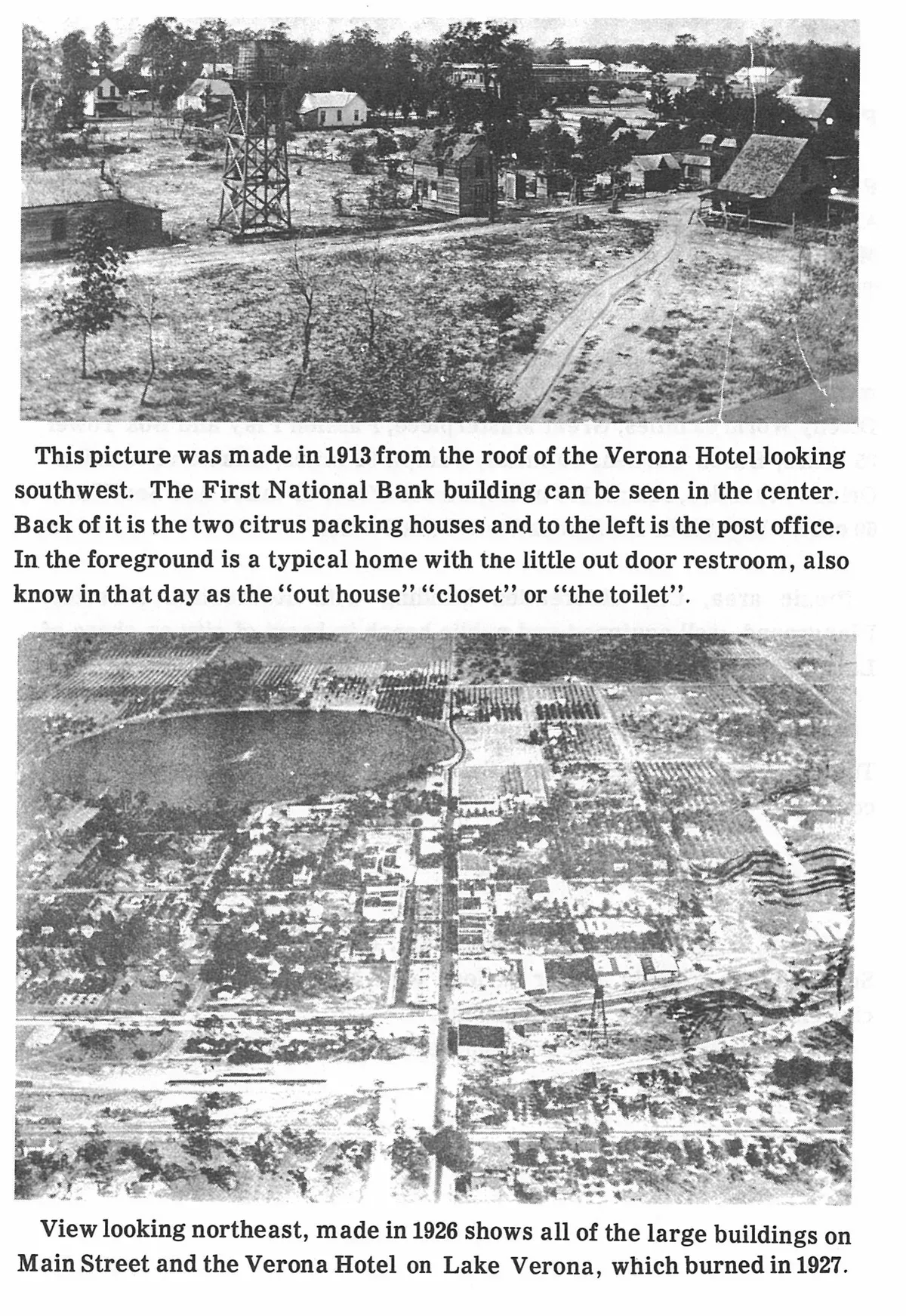
The First Hundred Years of Avon Park, Florida (1976), page 217. Avon Park Historical Society.[maxwell-1976]
This picture was made in 1913 from the roof of the Verona Hotel looking southwest. The First National Bank building can be seen in the center. Back of it is the two citrus packing houses and to the left is the post office. In the foreground is a typical home with the little out door restroom, also know in that day as the “out house” “closet” or “the toilet”.
View looking northeast, made in 1926 shows all of the large buildings on Main Street and the Verona Hotel on Lake Verona, which burned in 1927.
AVON PARK TODAY
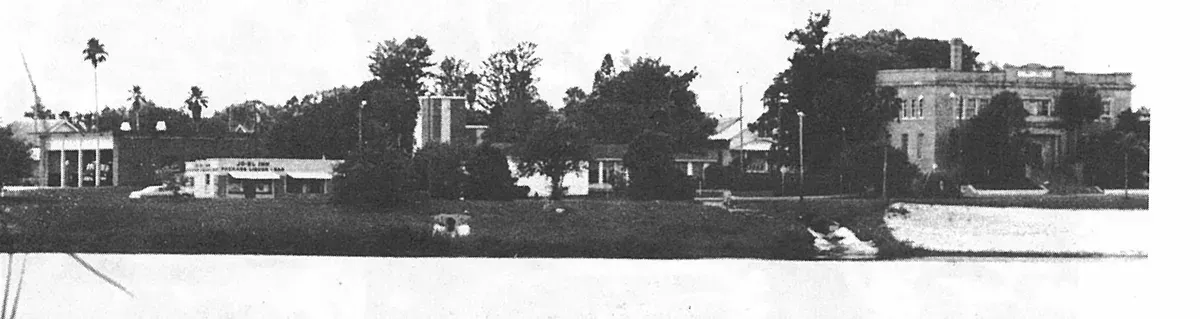
The First Hundred Years of Avon Park, Florida (1976), page 218. Avon Park Historical Society.[maxwell-1976]
Looking across Lake Verona shows the new Avon Park Fire Station and tower, the Library and City Hall. Milford Dilley recalls helping to build the City Hall in the Twenties. All cement was mixed by hand and the large stones that border the top of the building were all lifted with a pulley by hand, and swung into place by use of a triangular device.
Aerial views were made through the courtesy of Jimmy Renfro, owner and pilot of the airplane; Joe Johnston, Director of student personnel at South Florida Junior College and Lew Miller, photographers.
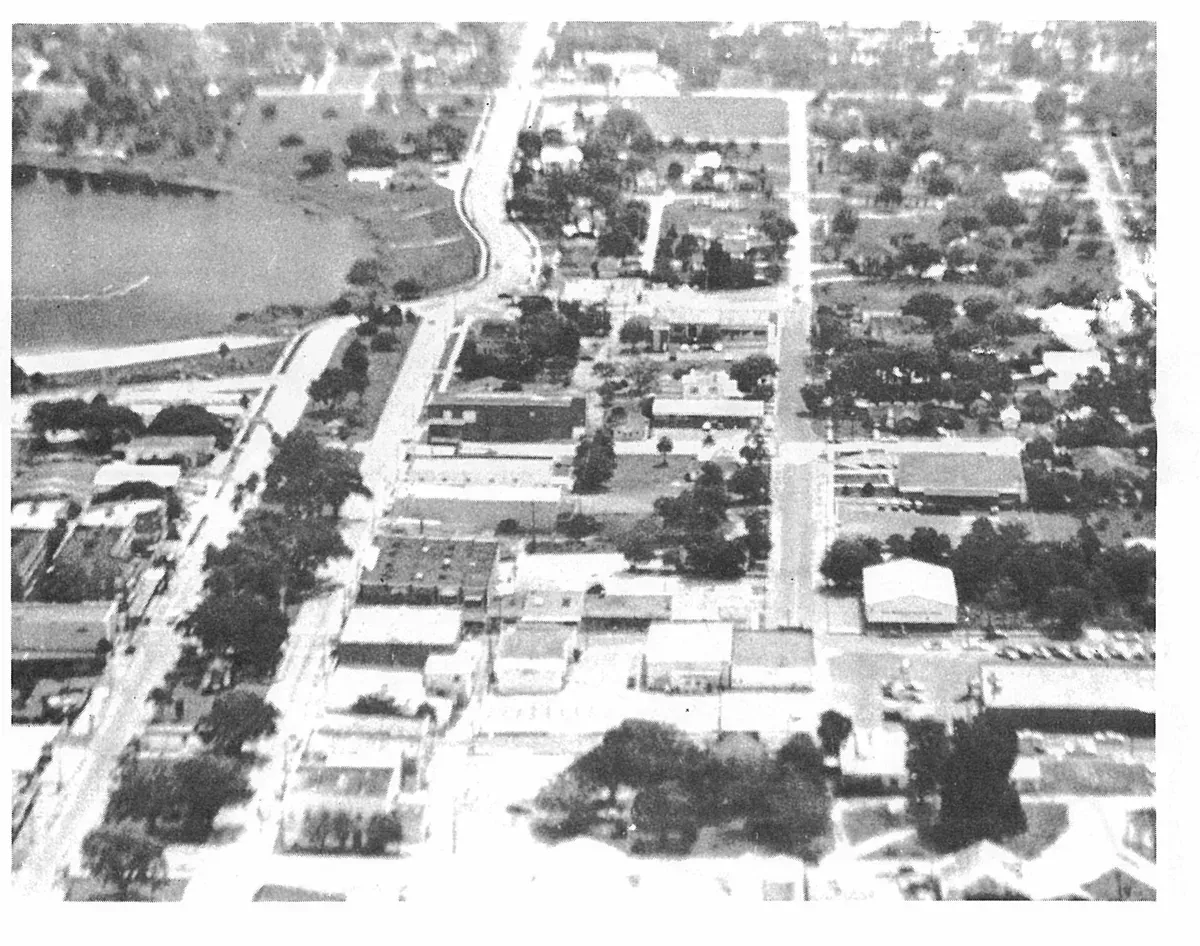
Aerial view of Avon Park downtown today, showing Lake Verona in the background. The First Hundred Years of Avon Park, Florida (1976), page 219. Avon Park Historical Society.[maxwell-1976]
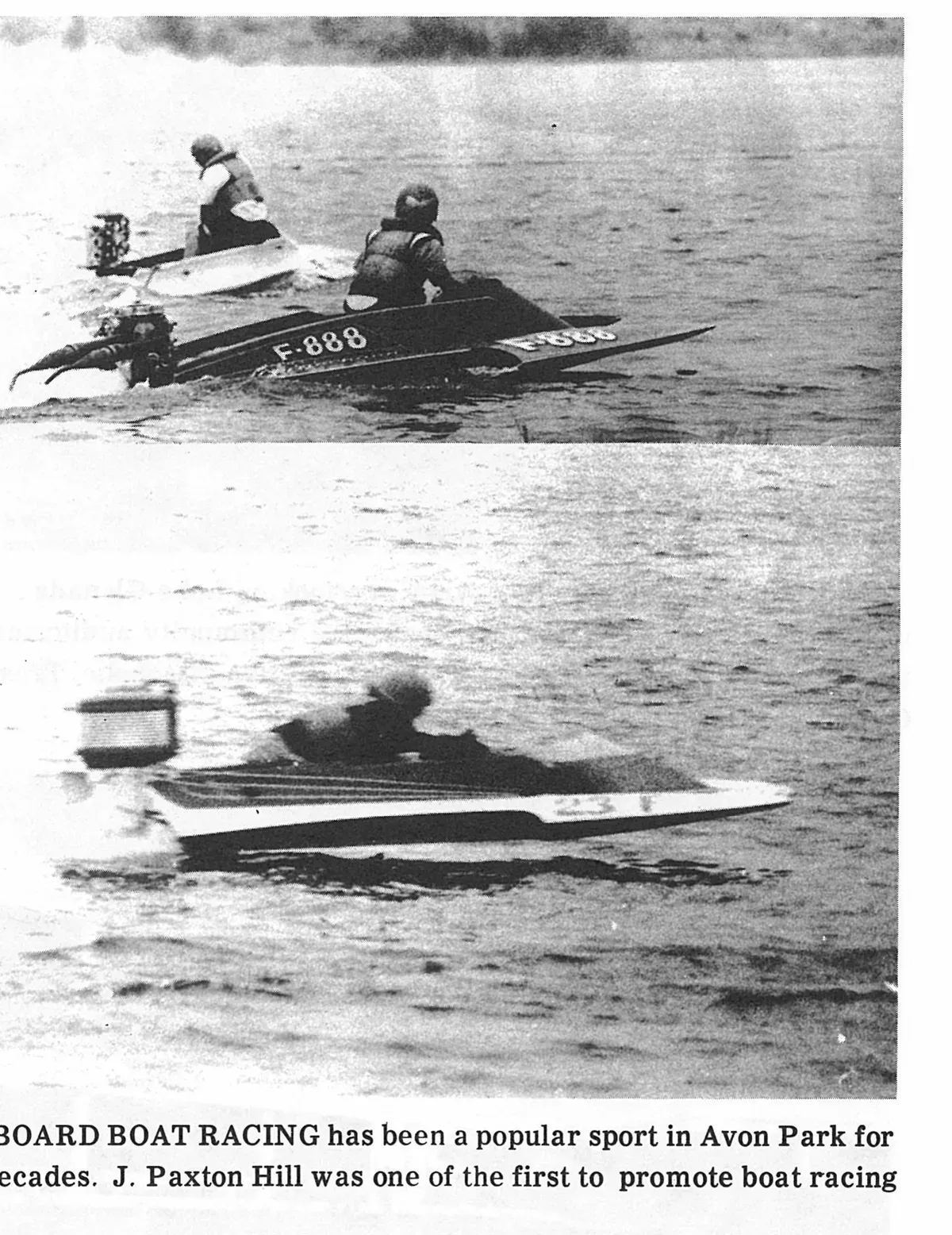
OUTBOARD BOAT RACING has been a popular sport in Avon Park for three decades. J. Paxton Hill was one of the first to promote boat racing here. The First Hundred Years of Avon Park, Florida (1976), page 220. Avon Park Historical Society.[maxwell-1976]
Norman Langston and Mack Flowers have been in charge of the racing for many years. Langston says that many national champions have run in Avon Park races, and that Lake Tulane is the most favored spot in Florida, if not in all of the United States. 290 entries provided two days of thrills of hydroplance racers for a large crowd of spectators in February 1979, with entries from as far away as Ontario, Canada.
The next race is scheduled for February 1-2-1980.
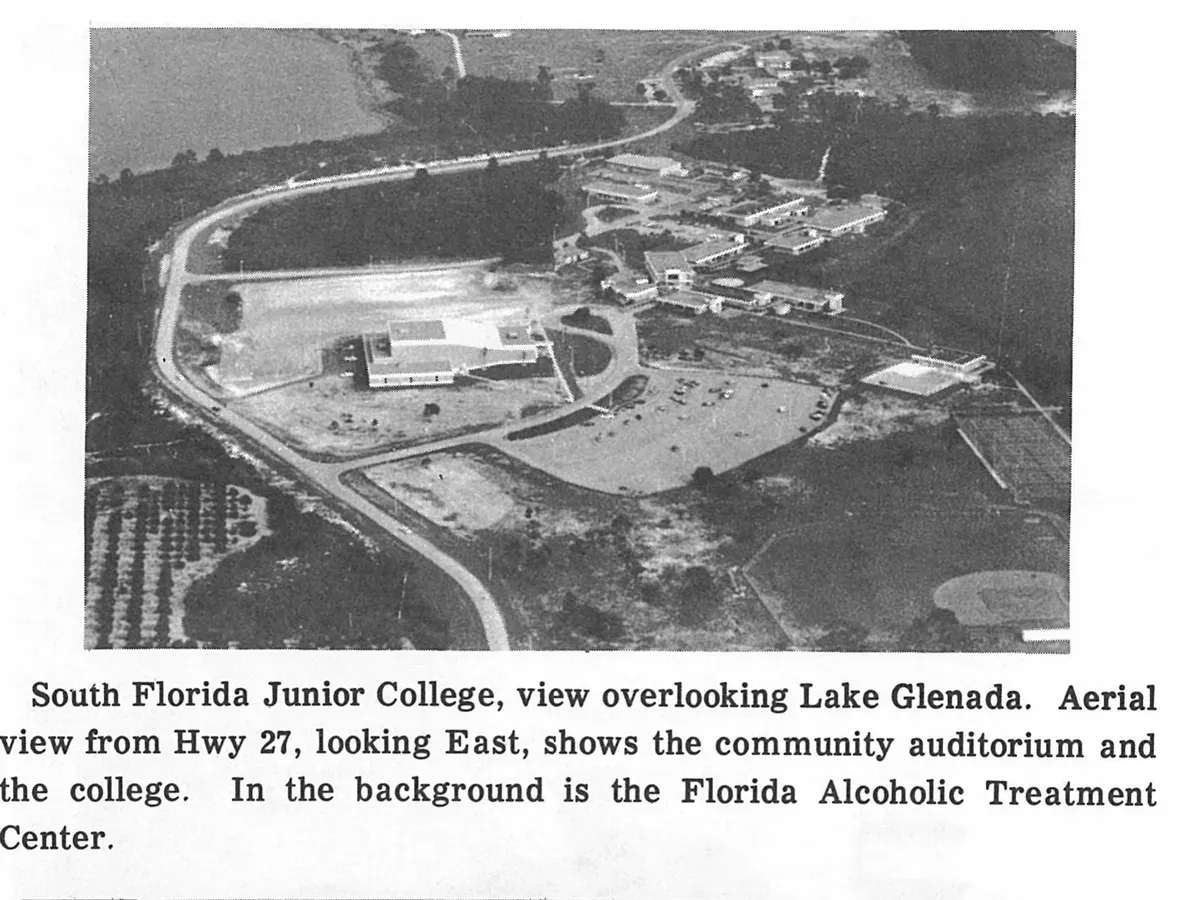
South Florida Junior College, view overlooking Lake Glenada. Aerial view from Hwy 27, looking East, shows the community auditorium and the college. In the background is the Florida Alcoholic Treatment Center. The First Hundred Years of Avon Park, Florida (1976), page 221. Avon Park Historical Society.[maxwell-1976]
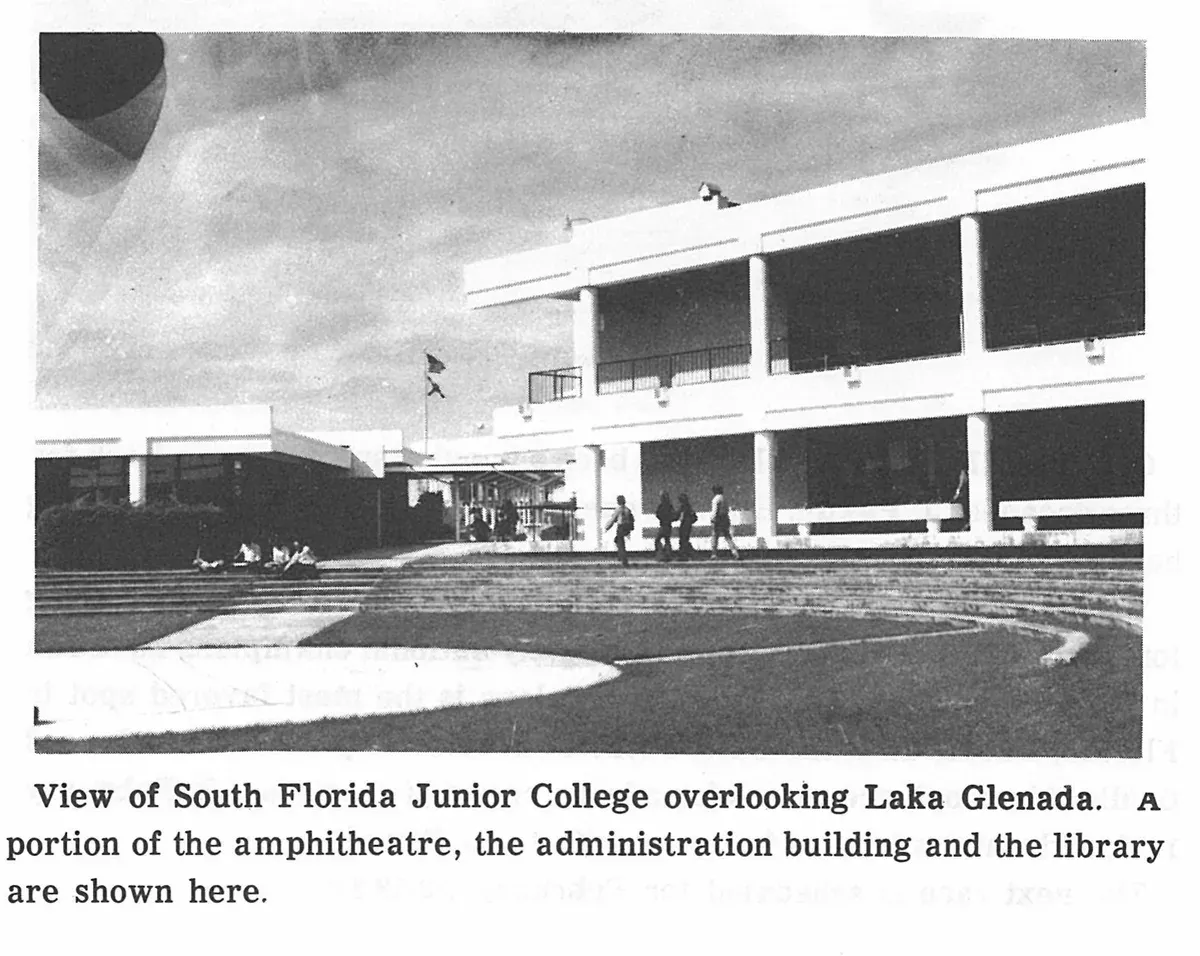
View of South Florida Junior College overlooking Laka Glenada. A portion of the amphitheater, the administration building and the library are shown here. The First Hundred Years of Avon Park, Florida (1976), page 221. Avon Park Historical Society.[maxwell-1976]
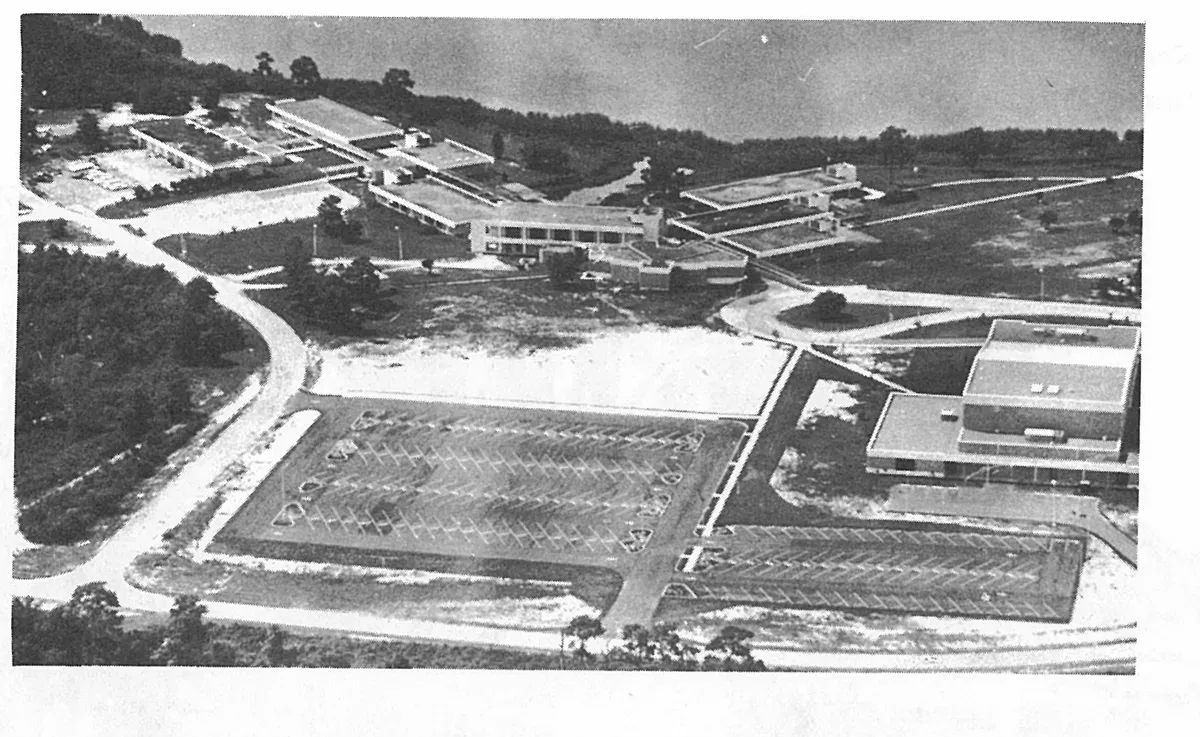
Looking southeast across the campus of South Florida Junior College. Parking spaces and Community Auditorium in the foreground. Lake Glenada in the background. The First Hundred Years of Avon Park, Florida (1976), page 222. Avon Park Historical Society.[maxwell-1976]
The South Florida Junior College opened in 1965 with classes being held in the Brickel building on Main Street. Dr. William A. Stallard was the first president. The Legislature designated the counties of Highlands, Hardee and De Soto to form the college. In 1970 classes were moved to the new campus.
Dr. Catherine P. Cornelius became the president in June 1984. The name was changed to South Florida COMMUNITY College (SFCC). Present enrollment of students is 15,000.
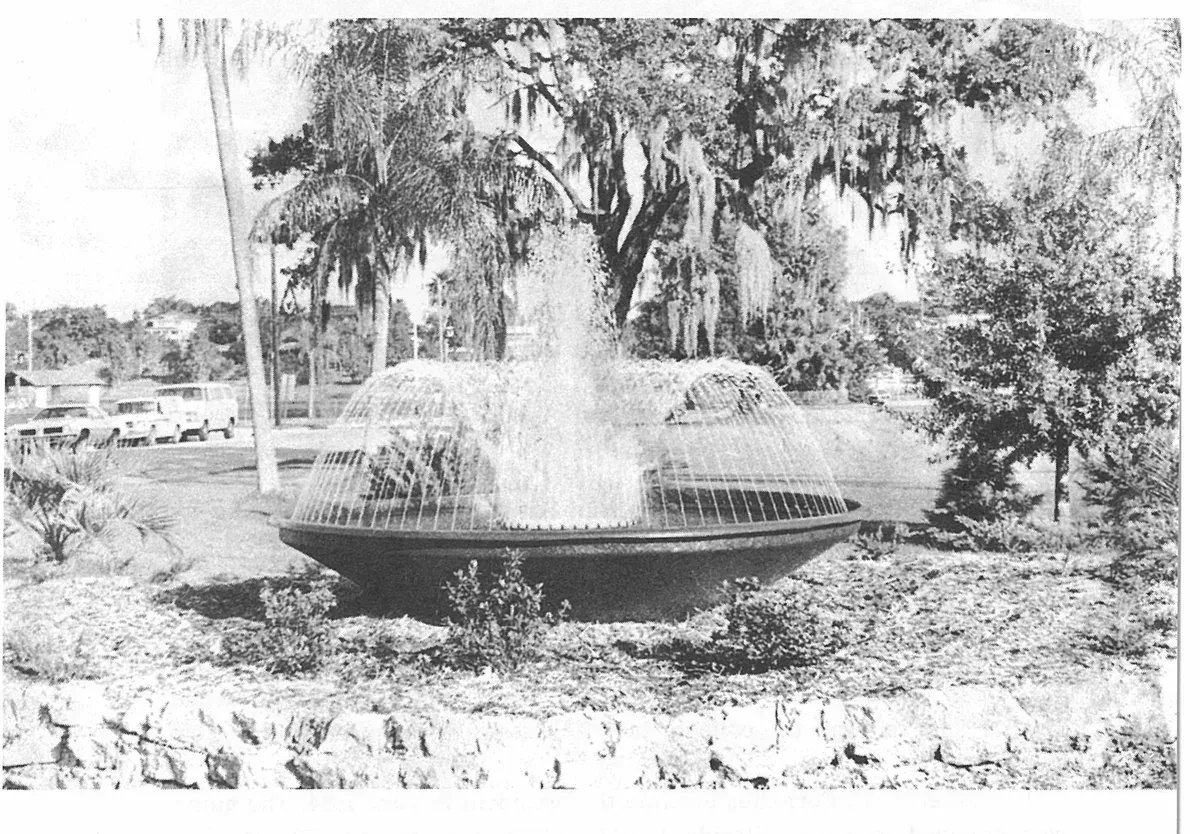
Newest addition to the Mall is this water fountain in front of Badcock Home Furnishing store. Tom Hardesty, photographer. The First Hundred Years of Avon Park, Florida (1976), page 223. Avon Park Historical Society.[maxwell-1976]
AVON PARK SCHOOL BUILDINGS TODAY
Lewis R. (Lew) Miller, photographer
AVON PARK HIGH SCHOOL
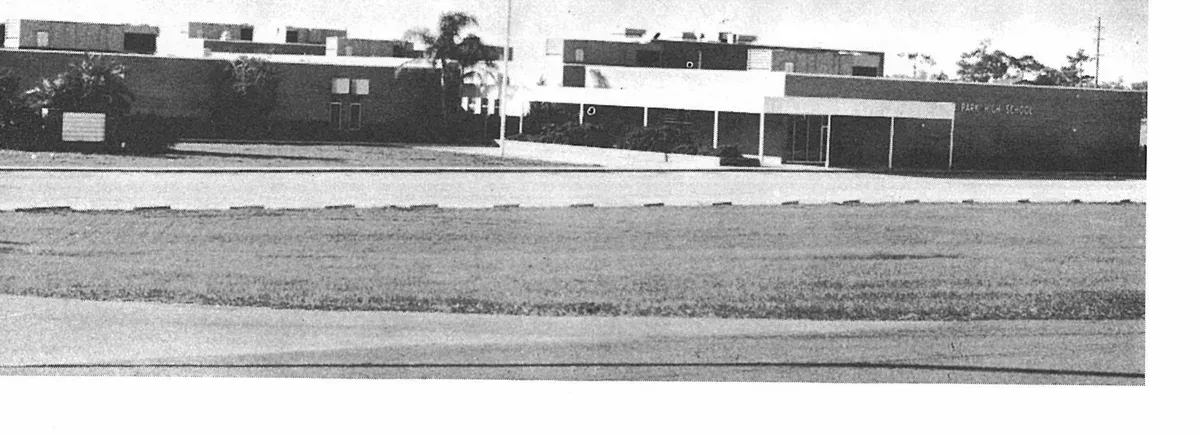
The First Hundred Years of Avon Park, Florida (1976), page 224. Avon Park Historical Society.[maxwell-1976]
The First Hundred Years of Avon Park, Florida (1976), page 225. Avon Park Historical Society.[maxwell-1976]
AVON PARK MIDDLE SCHOOL
Betty Amburn, photographer
The Middle School is the newest building of the Avon Park Schools, occupied in November 1979. This unusual structure has a cement embankment against three sides of the building which is to conserve energy for heating and cooling the rooms.
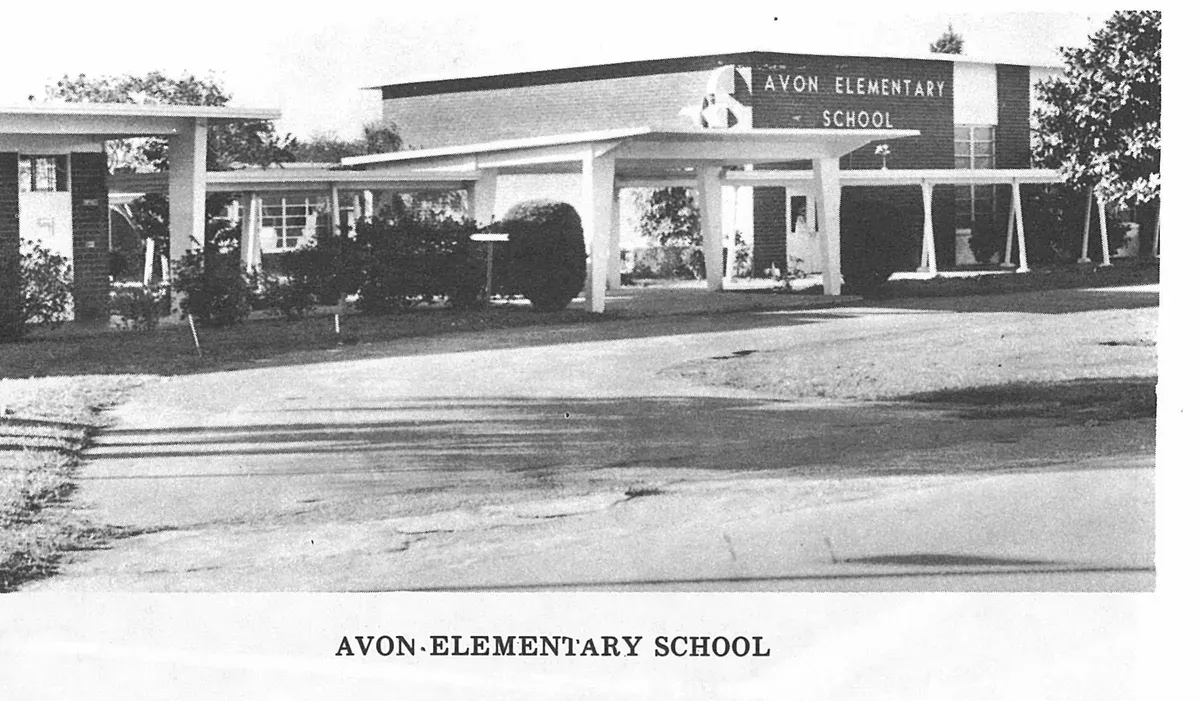
AVON·ELEMENTARY SCHOOL. The First Hundred Years of Avon Park, Florida (1976), page 226. Avon Park Historical Society.[maxwell-1976]
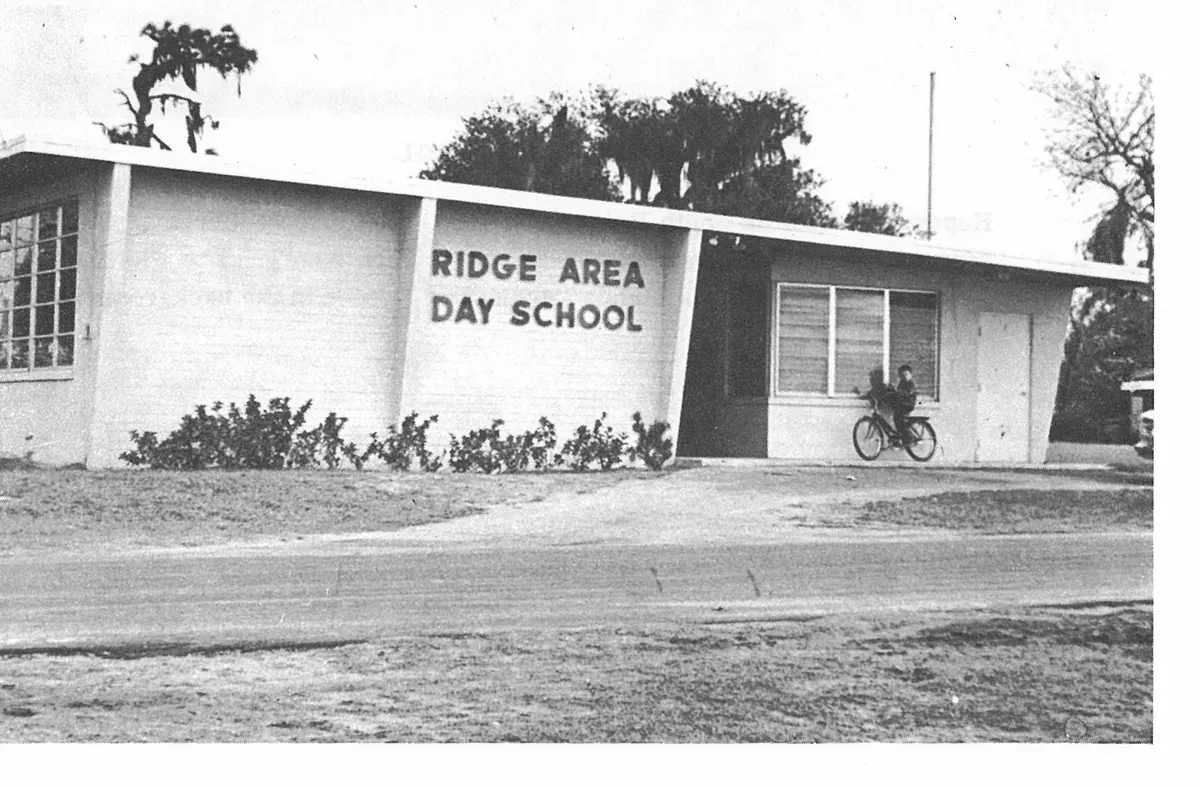
RIDGE AREA DAY SCHOOL. The First Hundred Years of Avon Park, Florida (1976), page 226. Avon Park Historical Society.[maxwell-1976]
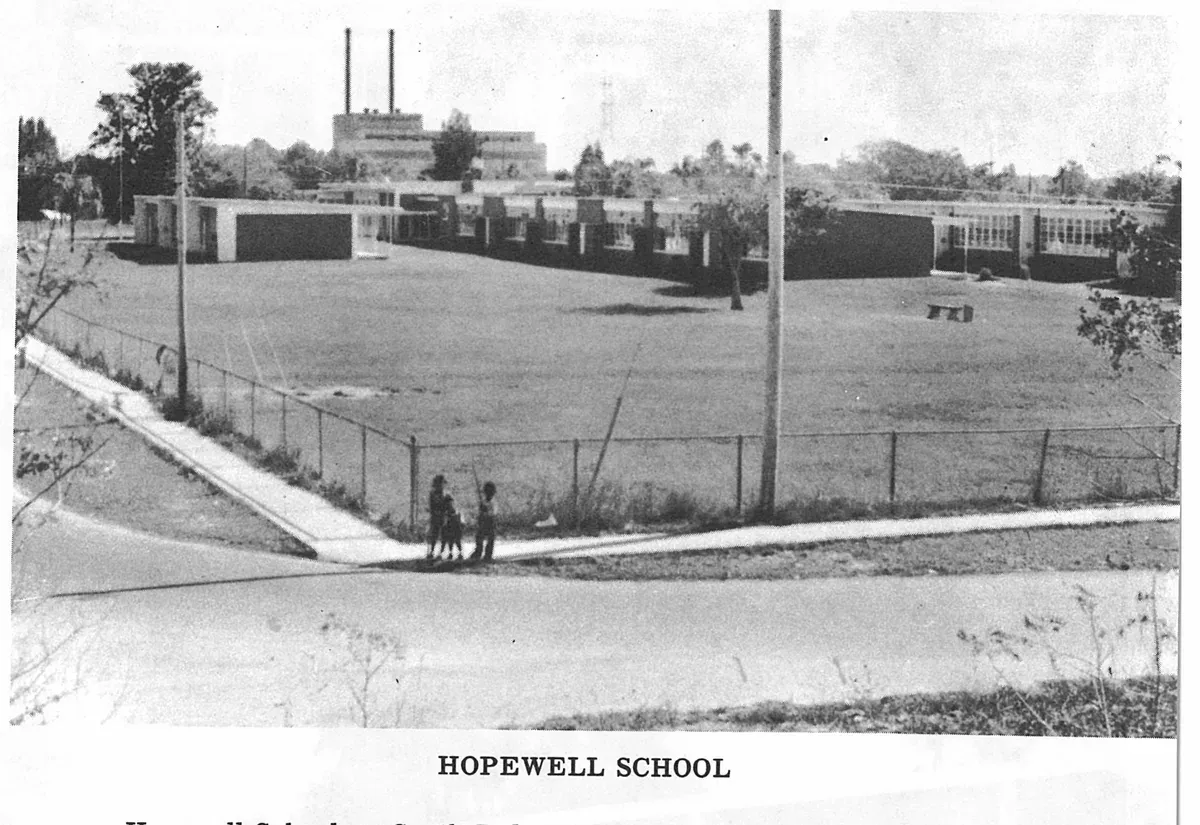
The First Hundred Years of Avon Park, Florida (1976), page 227. Avon Park Historical Society.[maxwell-1976]
HOPEWELL SCHOOL
Hopewell School on South Delaney Avenue. The three children at the corner of the fence are Levetria, Toni and Leon Kenry. The Florida Power Plant on South Highlands Avenue can be seen in the background.
The First Hundred Years of Avon Park, Florida (1976), page 228. Avon Park Historical Society.[maxwell-1976]
The home of Mr. and Mrs. C. R. Melear, built on the south side of Lake Lotela is one of the newest large homes in Avon Park. Designed for gracious living and entertaining, overlooking the lake. The First Hundred Years of Avon Park, Florida (1976), page 228. Avon Park Historical Society.[maxwell-1976] One of the main features of this home is the solar system which heats the enclosed swimming pool.
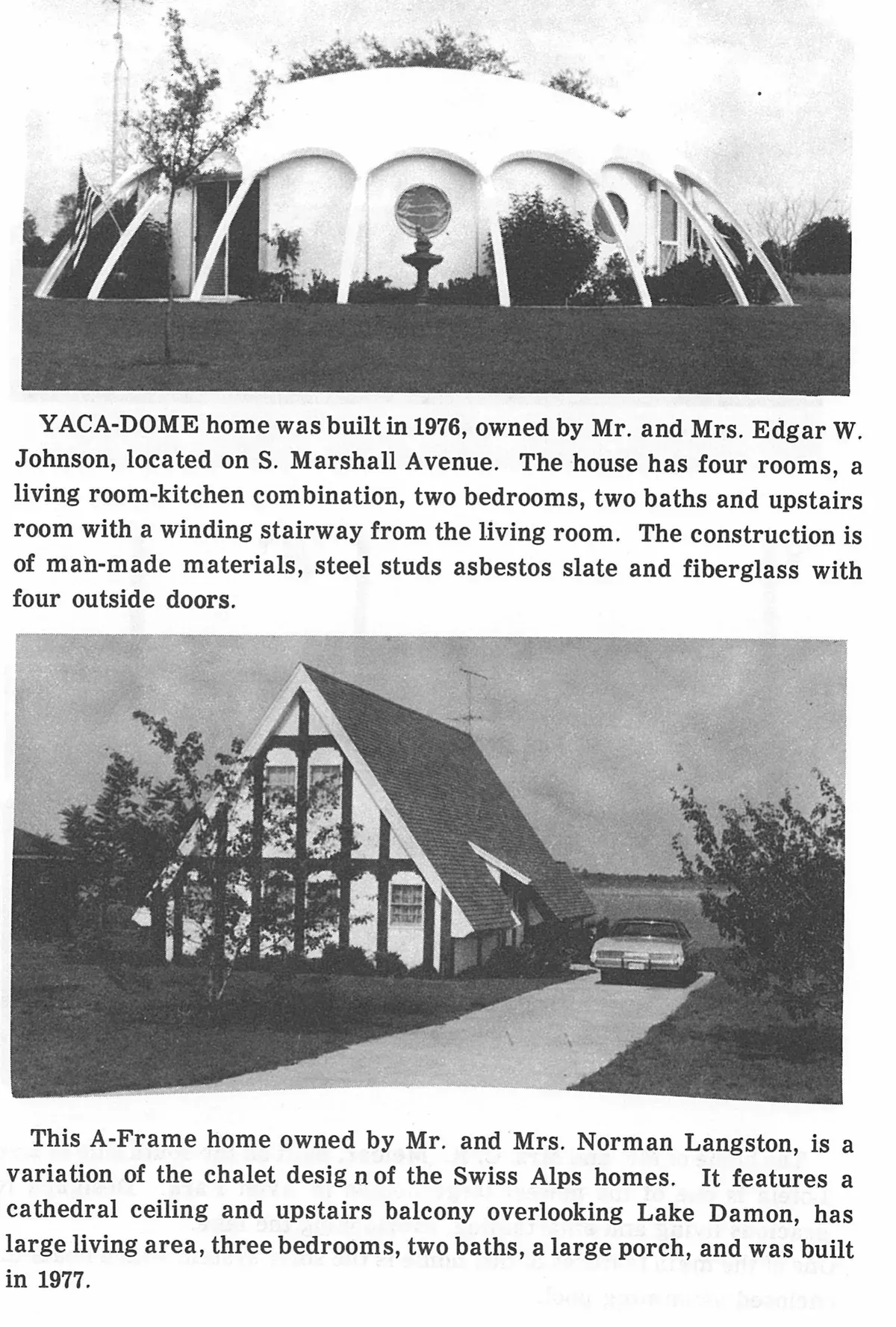
The First Hundred Years of Avon Park, Florida (1976), page 229. Avon Park Historical Society.[maxwell-1976]
YACA-DOME home was built in 1976, owned by Mr. and Mrs. Edgar W. Johnson, located on S. Marshall Avenue. The house has four rooms, a living room-kitchen combination, two bedrooms, two baths and upstairs room with a winding stairway from the living room. The construction is of man-made materials, steel studs asbestos slate and fiberglass with four outside doors.
This A-Frame home owned by Mr. and Mrs. Norman Langston, is a variation of the chalet design of the Swiss Alps homes. It features a cathedral ceiling and upstairs balcony overlooking Lake Damon, has large living area, three bedrooms, two baths, a large porch, and was built in 1977.
Newly elected Mayor, David Barefield, right, taking the Oath of Office from City Clerk, Malcolm Crews, January 2, 1980. The First Hundred Years of Avon Park, Florida (1976), page 230. Avon Park Historical Society.[maxwell-1976]
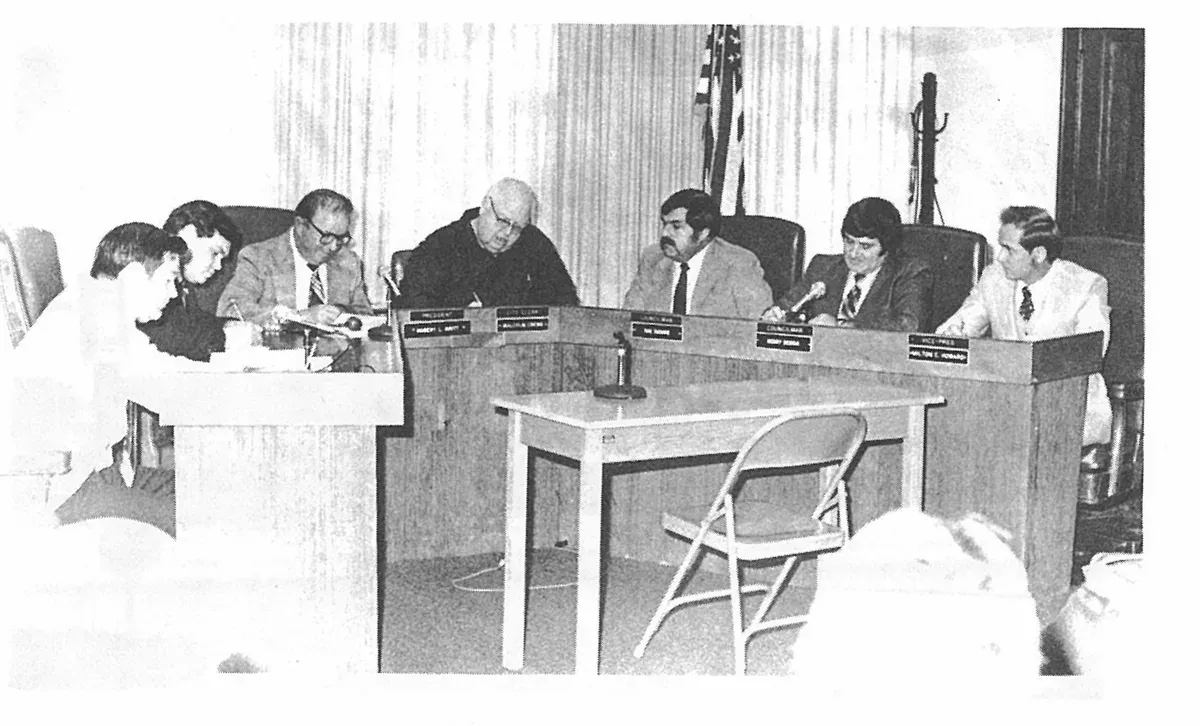
First Council meeting of the new City Council Left to right; Larry Albritton, Mayor David Barefield, Milton Howard, City Clerk Malcolm Crews, Tom Tataris, Paul Smith and Alex Whitbeck. The First Hundred Years of Avon Park, Florida (1976), page 230. Avon Park Historical Society.[maxwell-1976]
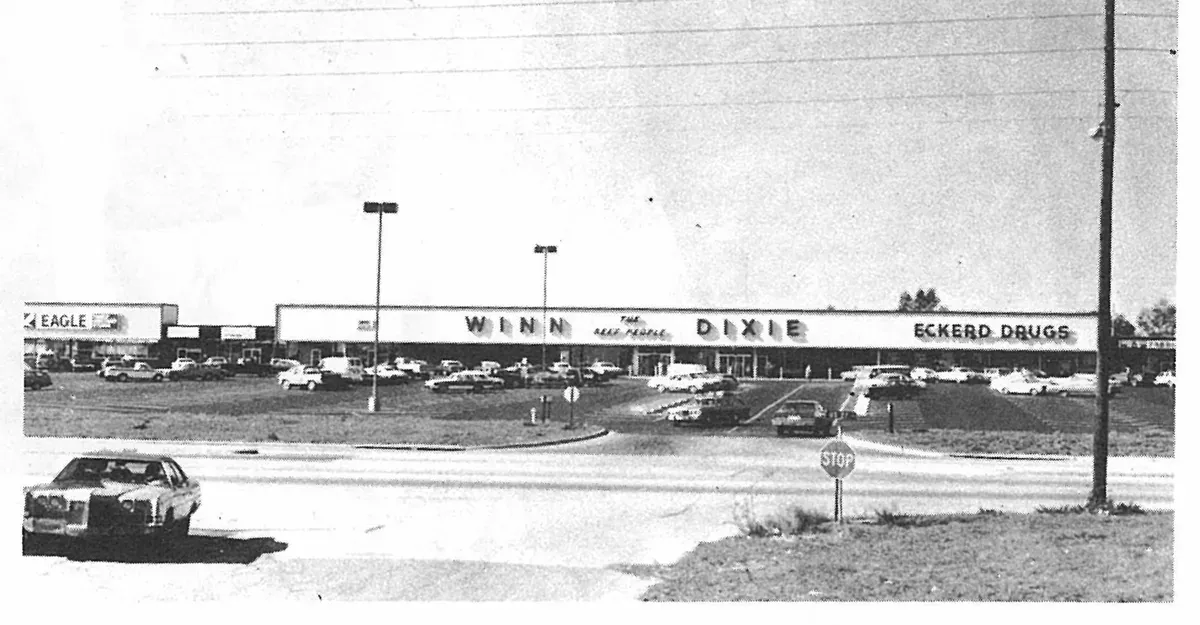
The First Hundred Years of Avon Park, Florida (1976), page 231. Avon Park Historical Society.[maxwell-1976]
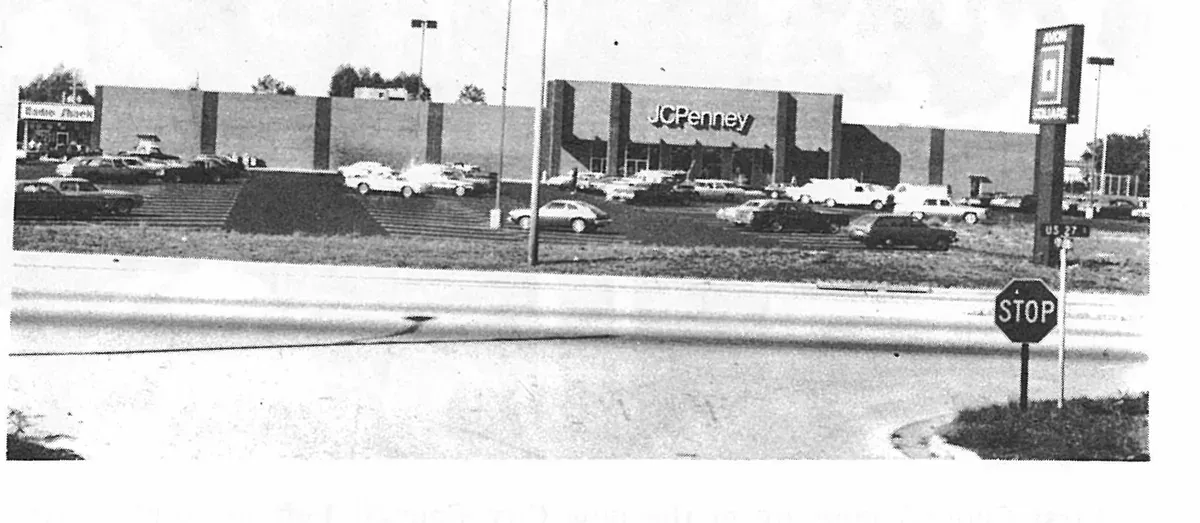
The First Hundred Years of Avon Park, Florida (1976), page 231. Avon Park Historical Society.[maxwell-1976]
AVON SQUARE SHOPPING CENTER
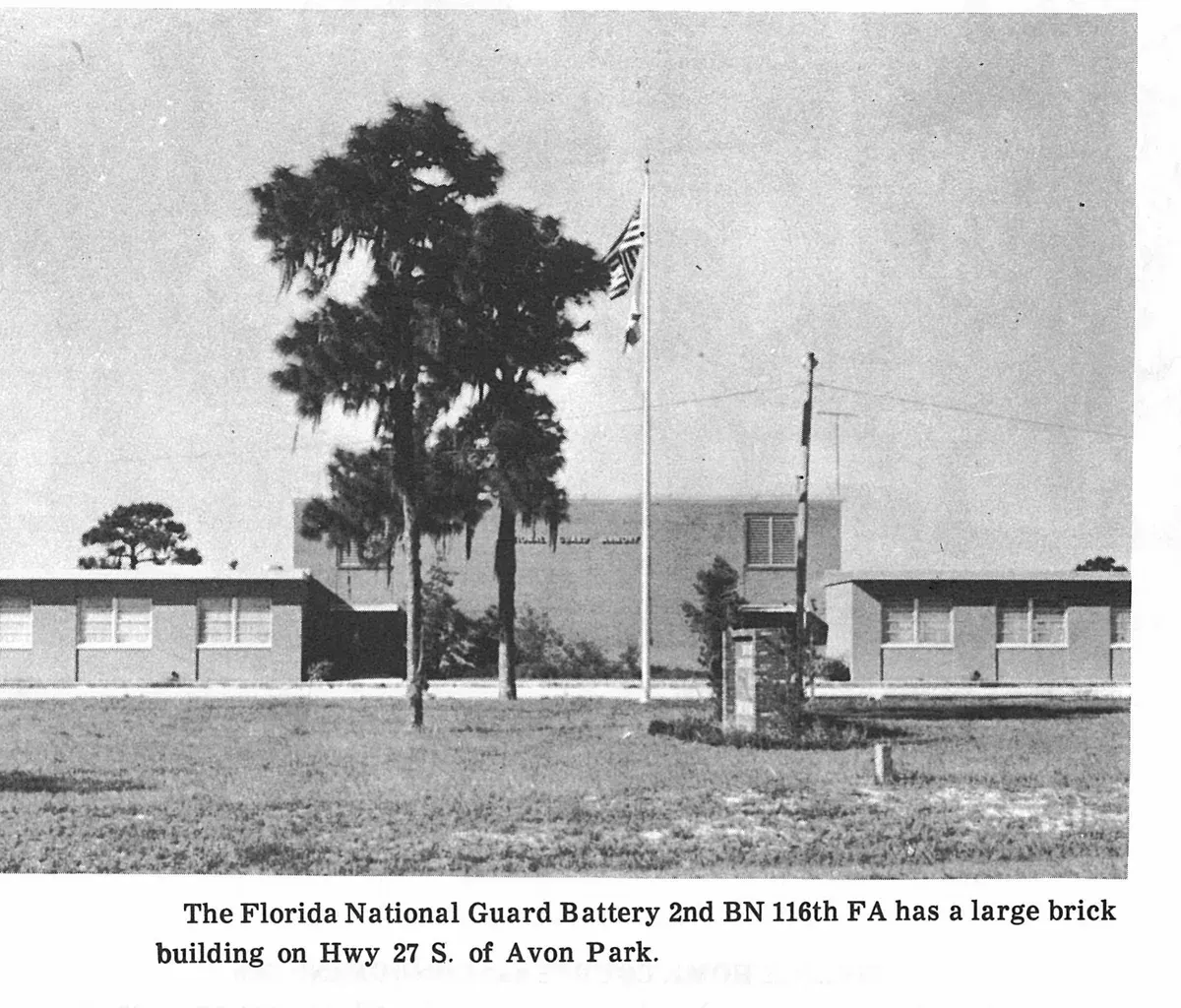
The Florida National Guard Battery 2nd BN 116th FA has a large brick building on Hwy 27 S. of Avon Park. The First Hundred Years of Avon Park, Florida (1976), page 232. Avon Park Historical Society.[maxwell-1976]
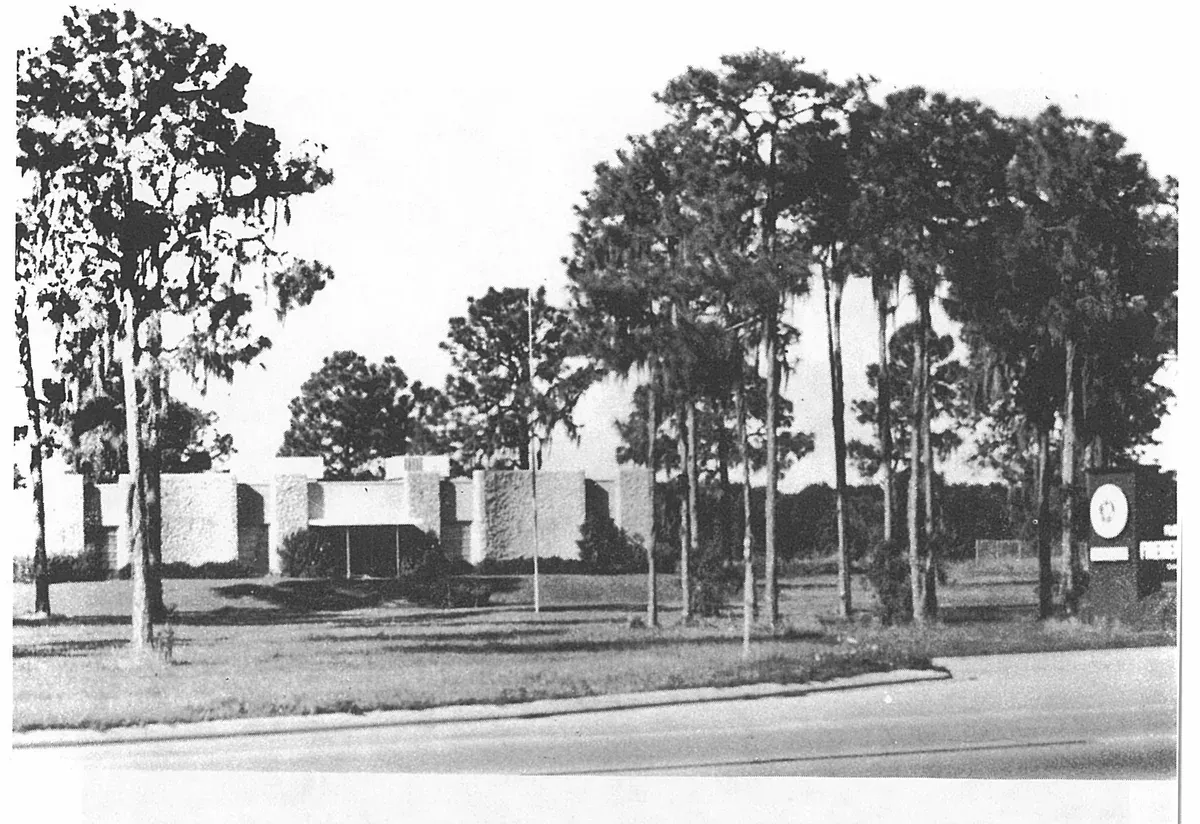
FLORIDA STATE FIREMEN’S HEADQUARTERS Hwy 27 South of Avon Park. The First Hundred Years of Avon Park, Florida (1976), page 233. Avon Park Historical Society.[maxwell-1976]
MOBILE HOME COURTS and CONDOMINIUMS
More than a dozen mobile home courts and trailer parks are located within the bounds of Avon Park. Each has a recreational center where the residents meet for community affairs.
Numerous condominiums offer a variety of living conditions for retired people.
Both government and private housing developments are being continually constructed here.
MOTELS AND RESTAURANTS
Fine motels and fine restaurants besides several of the popular short order eating places and the hotel dining room and the drug store lunch counter provide services for Avon Park residents
CIVIC CLUBS - LODGES - ORGANIZATIONS
THE WOMAN’S CLUB of Avon Park was organized and federated in 1919 when the Mothers Congress divided. The Congress later became the PTA (Parent-Teacher Association.) Mrs. Mae Walden, Mrs. W. M. Reck and Mrs. Cora Wray were among the founding members.
AMERICAN LEGION, HIGHLANDS POST No.69 was instituted in 1923, Mark W. Lance Post Commander, Judge D. V. Rouse, Vice-Commander, John H. Hood Adjutant, H. M. Wiggins, Finance officer, Harry Davis, Chaplain and W. L. Skipper, historian. The American Legion Auxiliary and the Eight & Forty are both active organizations. ROTARY CLUB of AVON PARK organized in 1924. Edward G. Todd is the sole surviving charter member. He was the first sergeant-at-arms and is a past president. BUSINESS WOMAN’S CLUB of Avon Park and JUNIOR WOMAN’S CLUB are both active organizations. Mrs. S. Y. (Sue) Moseley Jr. was honored to be elected Director of District Nine of the Junior Women for 1980-81.
AVON PARK GARDEN CLUB organized Jan. 15, 1946, federated 1947. officers, Mrs. W. H. Kempton, Pres., Mrs. P. L. Rumpsa, Vice-pres., Mrs. E. W. Hartt, Sec. Hibiscus circle organized in 1948, received permission from the State Road Department to landscape and maintain plantings at the roadside park on Hwy 27 S. of Avon Park. Through the efforts of Mrs. Charles Swartz , picnic tables were built with covers. ELEANOR SEAVERNS REBEKAH LODGE No. 65, named in honor of Mrs. Seaverns, whose husband, Herbert A. Seaverns, was the first elected Mayor of Avon Park. ODD FELLOWS HIGHLANDS LODGE No. 74, ORDER of the EASTERN STAR, LEIGH CHAPTER No. 85, KIAWANIS , THE LIONS CLUB, AND GRANGE No. 203 , are all active organizations. Blue Lodge AF&M Poinciana No. 227 meets in Avon Park. Highlands Chapter Royal Arch Masons and Knights Templar has merged with the Winter Haven Chapters. MASONIC LODGE: Holy Rood Commandery No. 27 was organized in 1920. SCOUTING for boys and girls has been maintained here, since the early Twenties.
REMEMBERING THE YESTERDAYS
Tents were used by the first settlers who came here until their log cabins could be built. Again in the Twenties when the building boom hit Florida and housing shortage forced families to live in tents, as they came looking for work, the City provided them with tents and memories of this experience lingers yet with some people.
The tent city was located between North Prospect and Summit Avenues. One large tent was erected for a community center, and individual families by the dozens lived in this tent city. Mr. and Mrs. H. L. Haynie and son, George, lived here until they purchased the Pryor house on North Lake Avenue. The L. E. Stewart family also lived here, and Mrs. Haynie and Mrs. Stewart became close friends and worked at the Jacaranda Hotel dining Room.
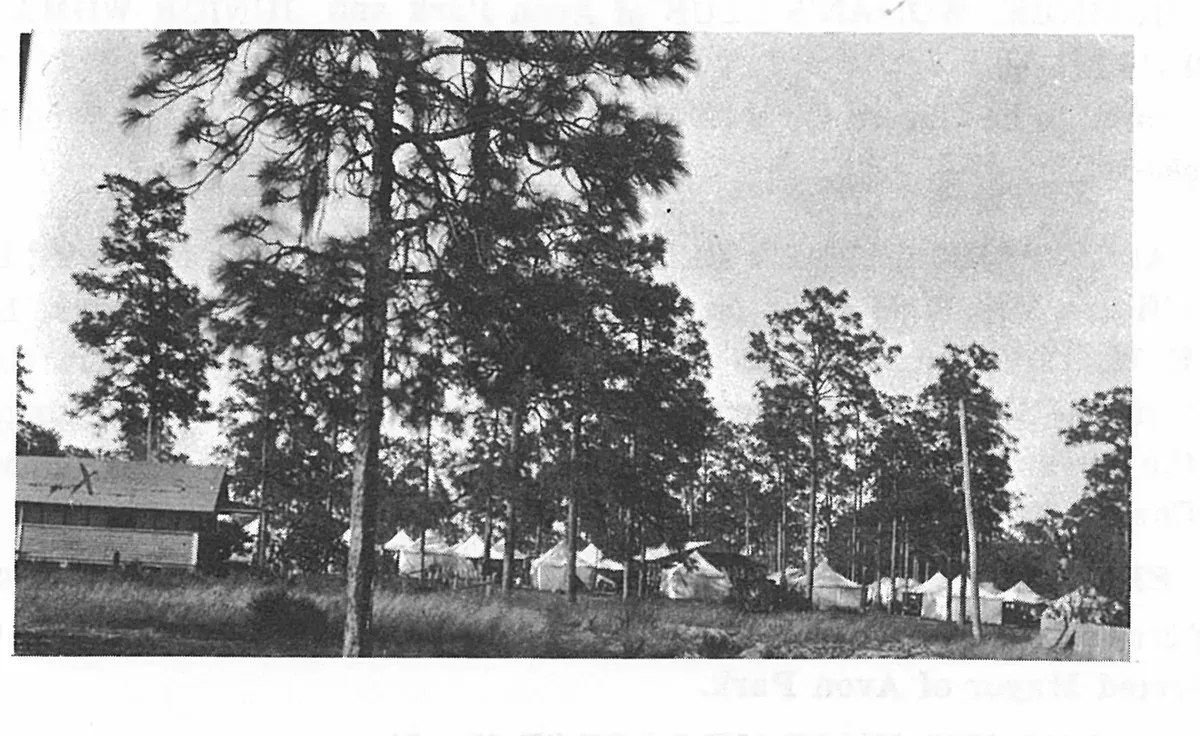
THE TOWNSEND SASH DOOR AND LUMBER COMPANY operated a business in Avon Park for more than 20 years. The First Hundred Years of Avon Park, Florida (1976), page 235. Avon Park Historical Society.[maxwell-1976] THE ENGLEMANN HATCHERY AND FEED STORE was owned and operated by Mr. and Mrs. Alfred Englemann for 27 years. Mr. Englemann pioneered in shipping baby chicks by Air Express to several foreign countries. The business was closed in the late Forties. Their only son, Alfred Englemann, Jr., became a Baptist minister. Hosecrafters, Inc. of North Carolina, operated a knitting mill here during the Sixties.
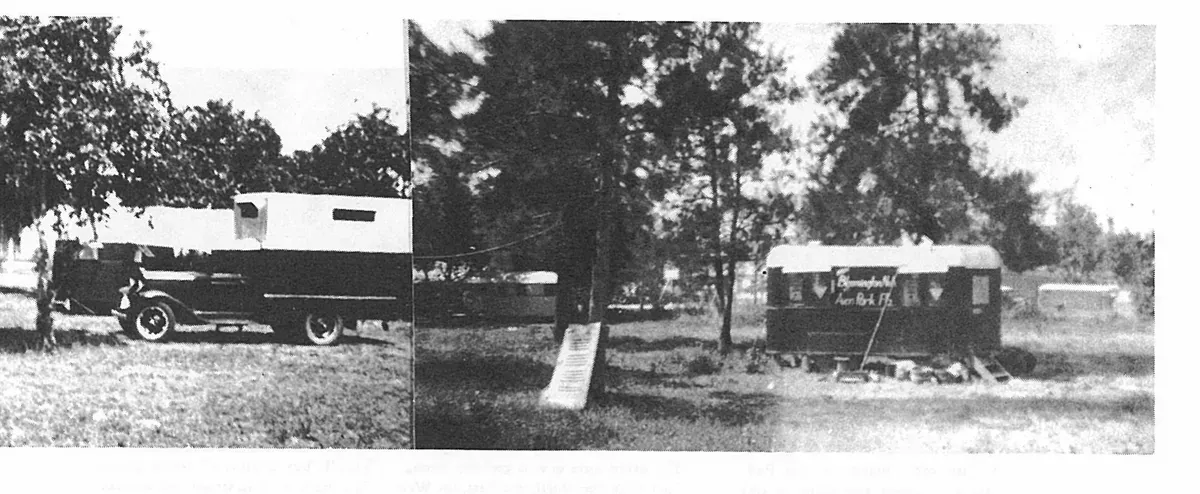
The First Hundred Years of Avon Park, Florida (1976), page 236. Avon Park Historical Society.[maxwell-1976]
During World War II the City provided a building in Donaldson Park for a recreational center for the military men, and also made spaces available for campers and trailers in Donaldson Park. This became the first trailer park in town. Later the building became Winter Guest Club house and the trailers were moved to other locations. Mr. and Mrs. L. C. Hooper and children, Larry and Judy, were among the families who lived in this trailer park.
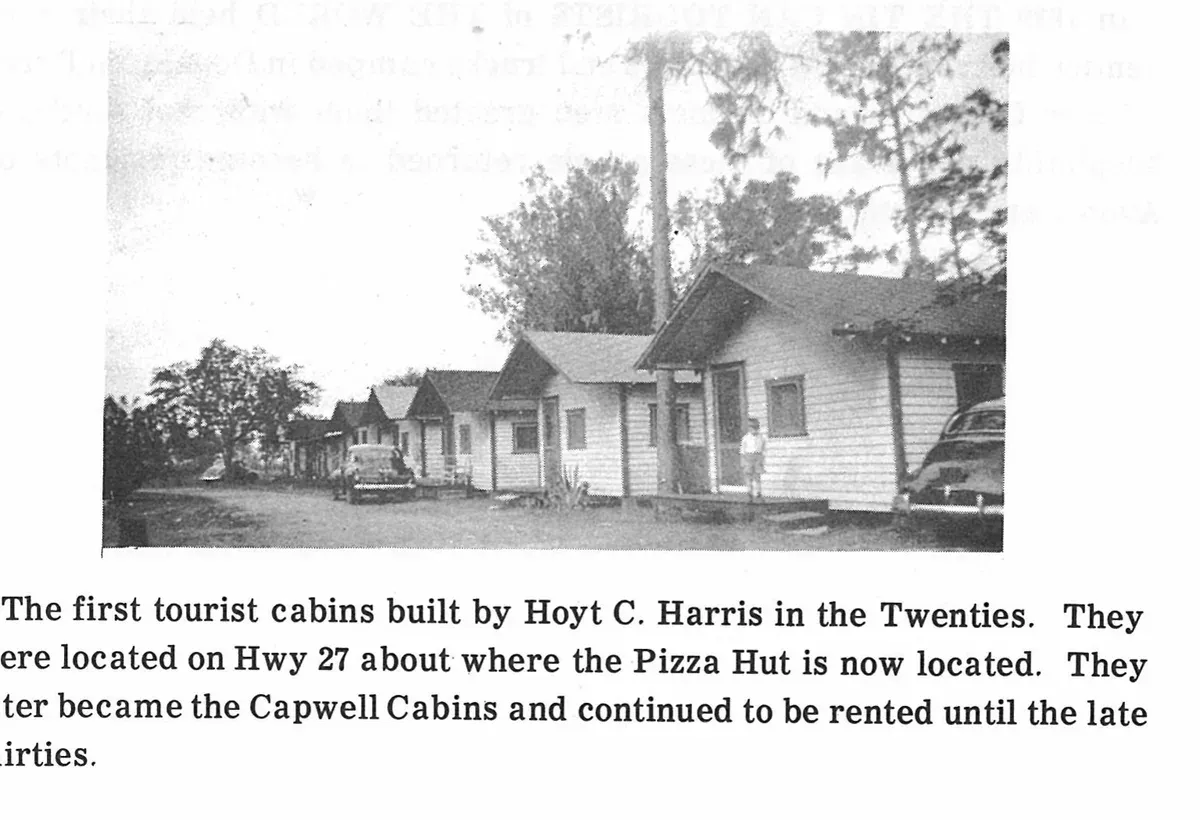
The first tourist cabins built by Hoyt C. Harris in the Twenties. They were located on Hwy 27 about where the Pizza Hut is now located. They later became the Capwell Cabins and continued to be rented until the late thirties. The First Hundred Years of Avon Park, Florida (1976), page 236. Avon Park Historical Society.[maxwell-1976]
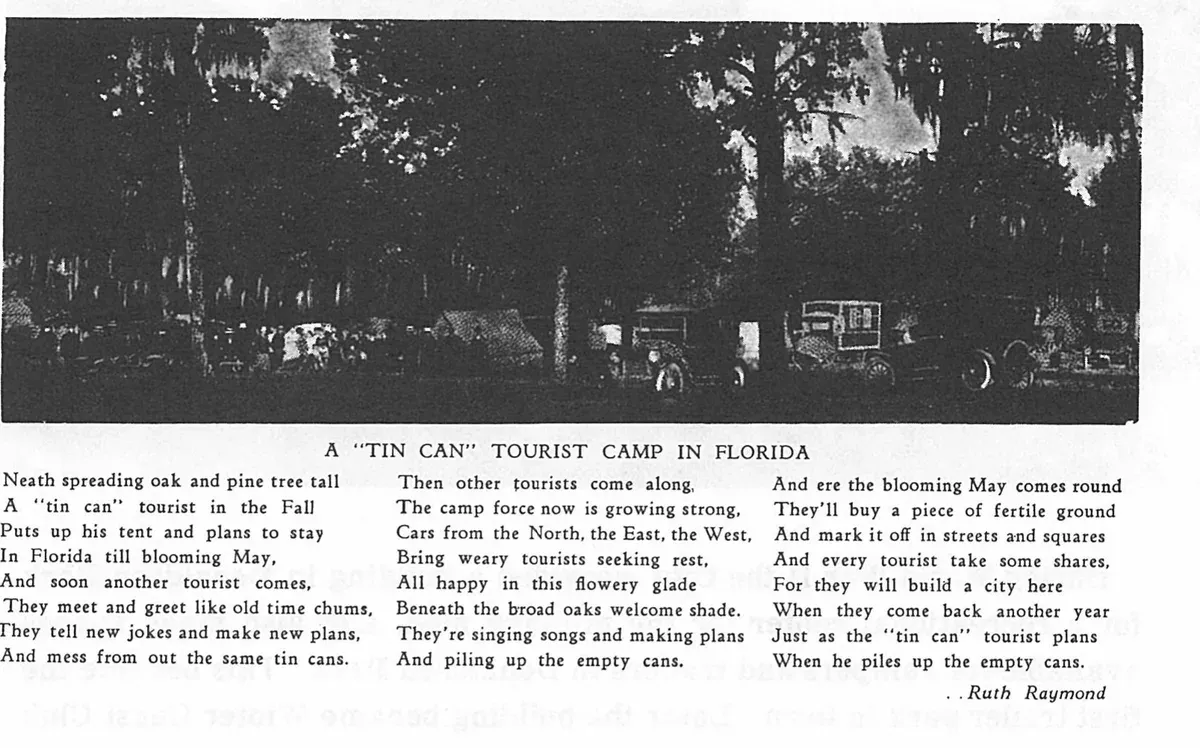
A “TIN CAN” TOURIST CAMP IN FLORIDA. The First Hundred Years of Avon Park, Florida (1976), page 237. Avon Park Historical Society.[maxwell-1976]
Neath spreading oak and pine tree tall A “tin can” tourist in the Fall Puts up his tent and plans to stay In Florida till blooming May, And soon another tourist comes, They meet and greet like old time chums, They tell new jokes and make new plans, And mess from out the same tin cans.
Then other tourists come along, The camp force now is growing strong, Cars from the North, the East, the West, Bring weary tourists seeking rest, All happy in this flowery glade Beneath the broad oaks welcome shade. They’re singing songs and making plans And piling up the empty cans.
And ere the blooming May comes round They’ll buy a piece of fertile ground And mark it off in streets and squares And every tourist take some shares, For they will build a city here When they come back another year Just as the “tin can” tourist plans When he piles up the empty cans.
. .Ruth Raymond
In 1939 THE TIN CAN TOURISTS of THE WORLD held their convention in Avon Park. 180 trailers and trucks camped in Donaldson Park. Mayor Covington and business men greeted them with real southern hospitality and many of these people returned to become residents of Avon Park in future years.
DAIRIES
The first dairies were small family operations. W. W. Sherertz and W. H. Kempton and W. O. Skipper were among the first to deliver milk to customers. The price of milk was .10 cents per quart, sour milk .05 cents. Demos Mandis established his dairy on the Wauchula Road, west of Avon Park in 1928, and continued operation for more than 20 years.
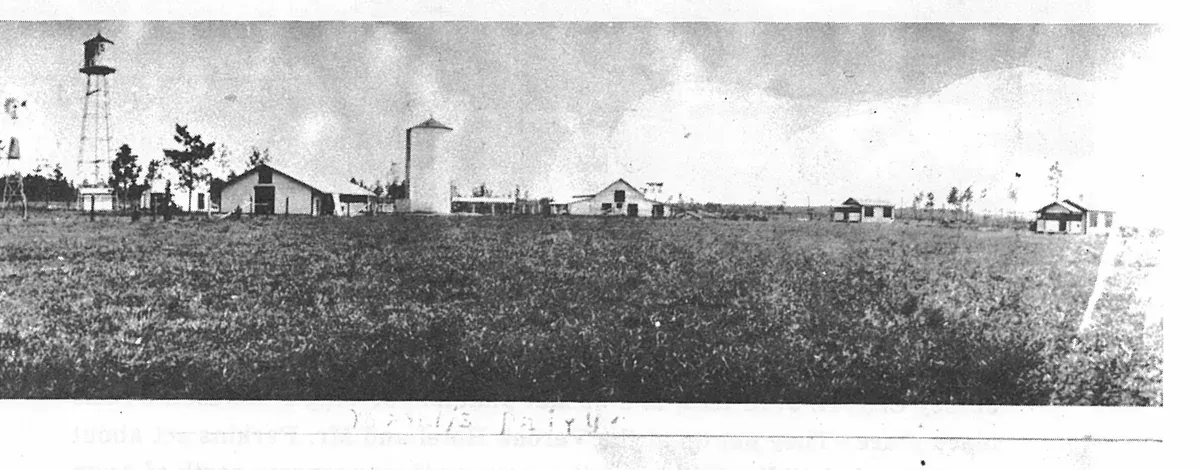
The First Hundred Years of Avon Park, Florida (1976), page 238. Avon Park Historical Society.[maxwell-1976]
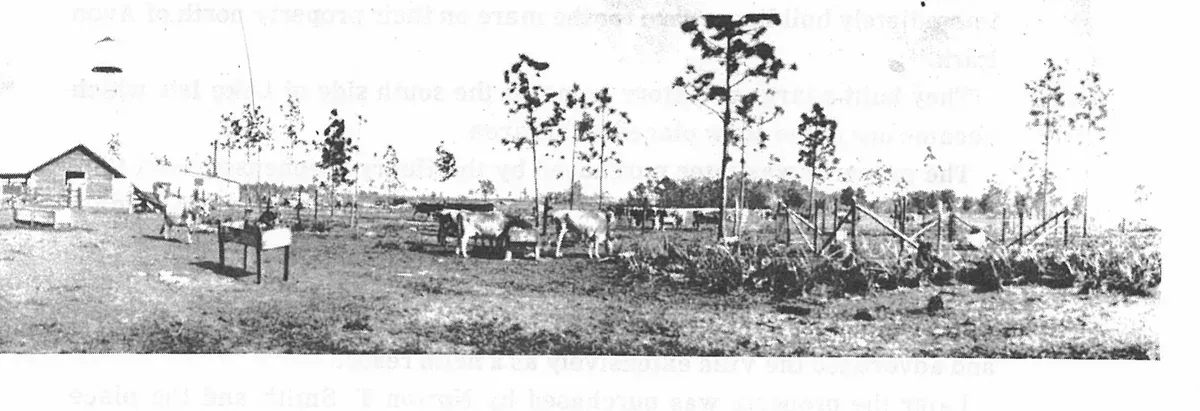
The First Hundred Years of Avon Park, Florida (1976), page 238. Avon Park Historical Society.[maxwell-1976]
Today’s dairies are ultra modern, with large herds of milk cows. The milk is transported out in tank cars to other cities. The C. R. Melear & Son Dairy, Hood’s, Pet Dairy, Group-Pet Inc., Borden, Inc., Dressel Dairy, and the A & W Dairy are all operating here, employing several hundred people.
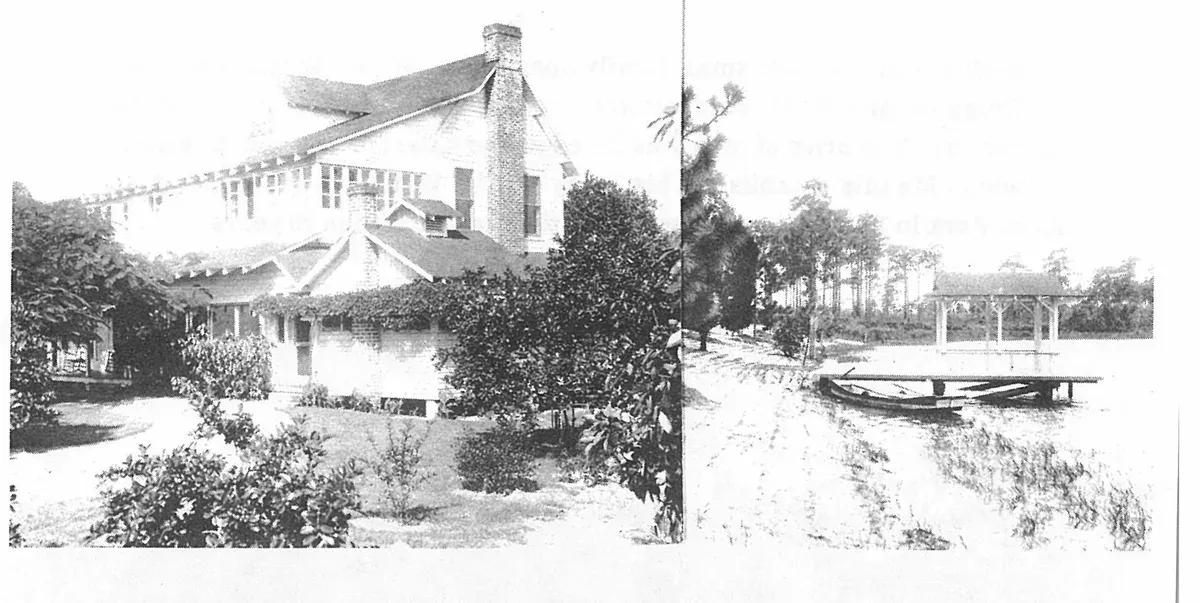
The First Hundred Years of Avon Park, Florida (1976), page 239. Avon Park Historical Society.[maxwell-1976]
RED TOP RANCH
Crosby reported, “Mr. and Mrs. Charles Perkins came down from Jersey City, N. J. in 1893, in a basket phaeton, driving a handsome little black mare. They put up at the Verona Hotel and Mr. Perkins set about immediately building a barn for the mare on their property north of Avon Park.”
They built a large two-story home on the south side of Lake Isis which became one of the show places of this area.
The property was later purchased by the Henry Stephensons and they entertained extensively at their home which they called “Lillydale Farm.”
About 1922 the place was operated as Dr. Mary’s Health Villa by Mary E. Coffin, M.D. and Ida B. Peffers, M.D. They mailed out a picture folder and advertised the Villa extensively as a helth resort.
Later the property was purchased by Norton T. Smith and the place was known as “Red Top Inn, or Red Top Ranch.
remembering the yesterdays, continued
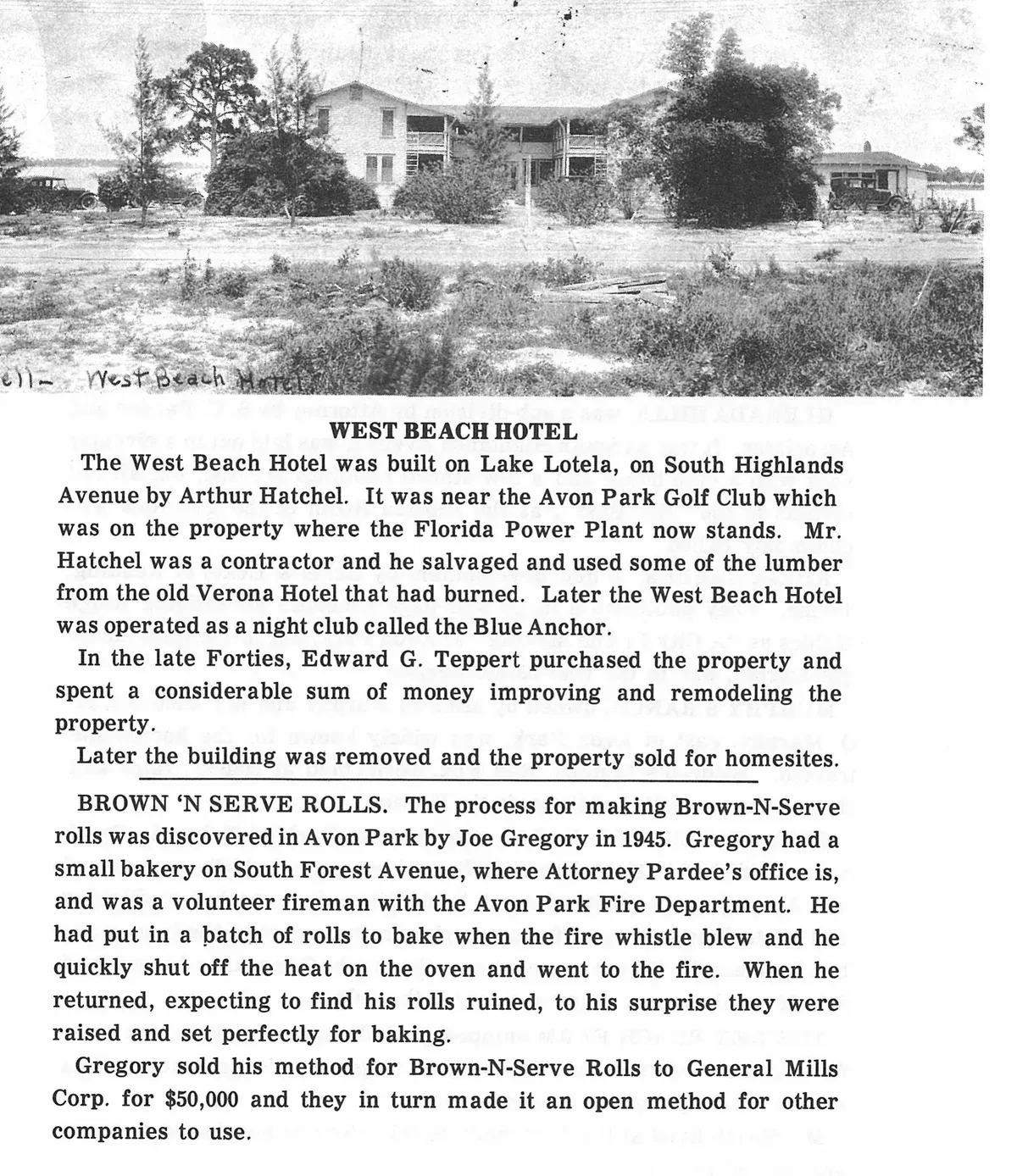
The First Hundred Years of Avon Park, Florida (1976), page 240. Avon Park Historical Society.[maxwell-1976]
WEST BEACH HOTEL
The West Beach Hotel was built on Lake Lotela, on South Highlands Avenue by Arthur Hatchel. It was near the Avon Park Golf Club which was on the property where the Florida Power Plant now stands. Mr. Hatchel was a contractor and he salvaged and used some of the lumber from the old Verona Hotel that had burned. Later the West Beach Hotel was operated as a night club called the Blue Anchor.
In the late Forties, Edward G. Teppert purchased the property and spent a considerable sum of money improving and remodeling the property. Later the building was removed and the property sold for homesites.
BROWN ’N SERVE ROLLS. The process for making Brown-N-Serve rolls was discovered in Avon Park by Joe Gregory in 1945. Gregory had a small bakery on South Forest Avenue, where Attorney Pardee’s office is, and was a volunteer fireman with the Avon Park Fire Department. He had put in a batch of rolls to bake when the fire whistle blew and he quickly shut off the heat on the oven and went to the fire. When he returned, expecting to find his rolls ruined, to his surprise they were raised and set perfectly for baking. Gregory sold his method for Brown-N-Serve Rolls to General Mills Corp. for $50,000 and they in turn made it an open method for other companies to use.
THE PINE RANCH PROVISION COMPANY was owned and operated by Sam P. Durrance as a wholesale meat company. Located on South Lake Avenue near the colored quarters, the slaughtering was done there and the meat stored in large coolers until picked up by truck. Hogs and cows were shipped in from North Florida to be butchered. Cliff Thomas worked at the wholesale house until he later opened his own meat market on Main Street.
PARADISE HILLS, a development by Stiles and Stiles of Boston, Mass. near the end of the Florida boom, hardly got any further than the planning stage. An 8-page folded brochure with a dozen handsome pictures of Avon Park, showing the location as the rolling hills overlooking Lake Pioneer and Lake Pythias, advertised this project.
GLENADA HILLS, was a sub-division by Attorney by S. C. Pardee and Associates. It was on South Highlands Avenue, was laid out in a circular park with a club house and a few stucco buildings erected, but all fell victims to the “Big Bust”, as the Florida Boom of the Twenties was commonly called.
RIDGE GABLES, a new development by Eckel & Eckel of Reading, Penna. They published a large four-page brochure advertising Ridge Gables as “A City In The Making” at Avon Park, but the making never got started, due to the real estate decline.
MURPHY’S RANCH, owned by Mildred Murphy and her husband, H. O. Murphy, east of Avon Park, was widely known for the horses she trained. Mildred’s famous, Red Fox, performed at rodeos, fairs and shows all over the United States in the Forties.
BRYANT’S CELERY FARM, east of Avon Park on Palmetto Creek was established in 1913 when G. L. Bryant homesteaded 160 acres of land which had large deposits of muck land. His unique method of ditching and controlling the water from a spring in the center of the land made him famous with the celery he grew on the muck. One season he received $18,000 for his 3 acres of un-cut celery in the field.
THE REX BEACH FARM shipped gladioli stems and bulbs from the farm to northern markets. He also grew vegetables for market until he turned his property into a cattle ranch.
Mr. Beach lived at the Jacaranda Hotel before he purchased property and moved to Sebring.
TRIVIA
According to the Guinness Book of World Records the largest pair of shoes ever made were for a Harley Davidson of Avon Park, Florida. His shoe size was number 42.
—0—
“The world’s first baby-sitter” title was claimed by Mrs. Eric Cheape, one of the settlers of Avon Park in 1895. She was employed at five cents per hour by Capt. Gray to care for his young daughter, Cora, who later became Mrs. F. E. Wray.
Son Prof. Sargent raised the hourly rate to ten cents and hired her to look after his daughter, Fannie, who later became Mrs. Fannie Reeves, (Mrs. Glenn Spink.)
Money talked even in those days. Mr. Smith soon raised the ante to 15 cents and Mrs. Cheape took over the duties as baby-sitter for his young son, Fred Smith.
—0—
In the early 90’s with only 108 citizens in the entire town, almost everyone gathered each time the mail arrived, via horseback. This was a main social event, and also a never to-be-forgotten event for those who were present when the big black bear wandered into town just as the mail arrived.
Also, this was not the only time that black bears wandered into the main part of town. Here is a picture of young Edward Touchton, son of Dr. W. C. Touchton, about 1917, sitting on a dead bear with his play gun.
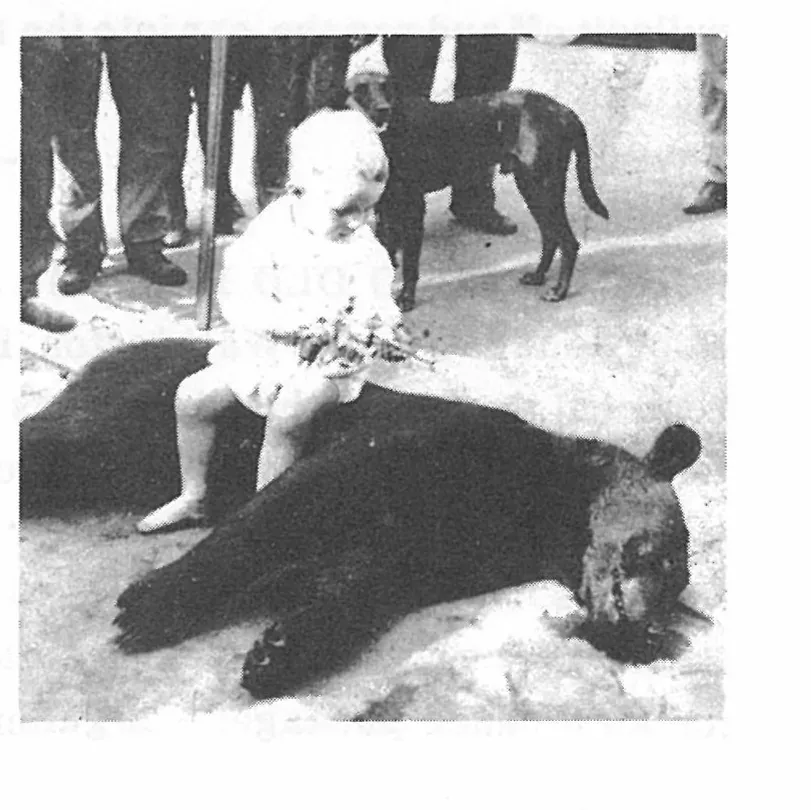
—0—. The First Hundred Years of Avon Park, Florida (1976), page 242. Avon Park Historical Society.[maxwell-1976]
TRIVIA
In 1888 Mr. King and Charles Krause surveyed the road to Zolfo to determine the distance. They tied a rag to the felly (spoke) of the wagon wheel and Krause drove the team while King counted the revolutions of the wheel. Measuring the circumference of the wheel they calculated the distance to be 22 miles to Zolfo from Avon Park.
—0—
The William J. Langford family came from Georgia and settled in the Fort Meade area. He was the grandfather of Lola (Mrs. Steve Roberts.) Mr. Langford traded one of his team of oxen for enough orange seed to plant a grove. His seedling orange grove became on the finest in the entire area.
—0—
Charles A. Zimmerman of Sebring recalls that his family came when he was a child, and his father moved a house from Lake Angelo over to near where the Pinecrest Hotel is now. His father cut logs to make rollers for underneath, and with ropes they made a cam-stock, using a tree to anchor, a mule to pull the house. They could make about 500 feet each day.
—0—
When the Palmer family arrived from Kentucky in 1912, he purchased one of the first automobiles in Avon Park. Once he took his wife for a ride downtown and became excited and forgot how to stop the car. He shouted “Woah, Woah,” and pulled back on the steering wheel so hard that he pulled it off and ran the car into the horses’s watering trough at the livery stable.
—0—
IN THE GOOD OLD DAYS Mr. and Mrs. W. R. England and son, Bobby, made a trip to Washington, D. C. in their new Buick, July 1930. He reported the cost of the trip for gas and oil $22.19, hotel and meals $33.11, tolls, misc., and personal $12.33, a total cost for the trip $66.63.
At that time sirloin steaks sold for .29 per pound, butter .28 cents, coffee, .26 cents, sugar .05 cents, bread .05 cents a loaf, eggs .29 cents a dozen. Corn flakes were the only dry cereal on the market and sold for .08 cents for an 8 ounce package. 10 gallons of gas was $1.00 plus a quart of oil.
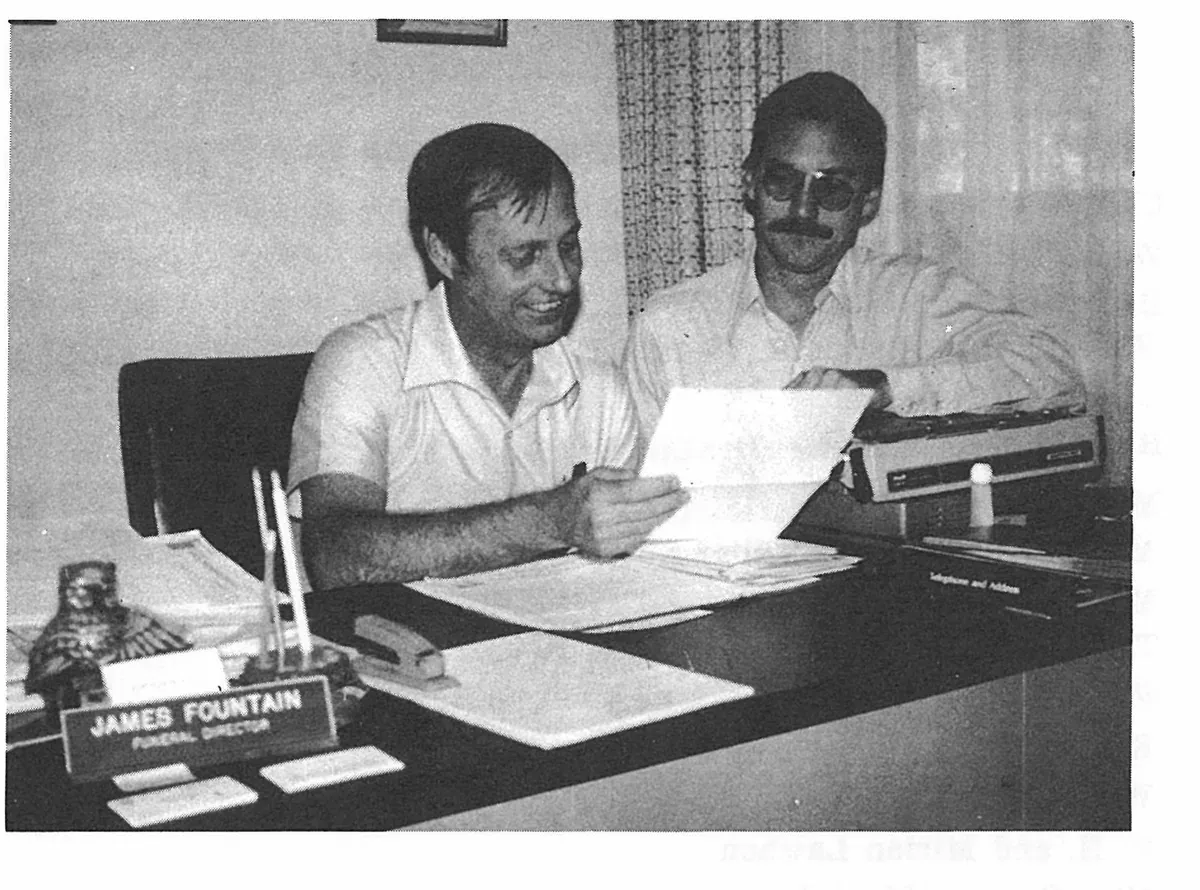
The First Hundred Years of Avon Park, Florida (1976), page 244. Avon Park Historical Society.[maxwell-1976]
Robert W. Burkhart, President of The Historical Society of the Old Settlers Association, Inc. and James Fountain, Treasurer of the organization, checking the list of Sponsors for the publication of this history book “The First Hundred Years of Avon Park.”
SPONSORS who paid for the publication of this book
- HISTORICAL SOCIETY of the OLD SETTLERS ASSOCIATION
- THE CITY OF AVON PARK
- SEBRING HISTORICAL SOCIETY
- AVON CITRUS BANK
- HIGHLANDS COUNTY BANK OF AVON PARK
- Mrs. W. C. Touchton
- Mrs. Helen Holcomb Prior
- Mrs. Walter S. Betts
- Mrs. Wm B. Bradshaw
- Margaret Tompkins Hammond
- Carrie (Caroline Skipper) McGiboney
“The First Hundred Years of Avon Park.”
- Clifton A. and Kathleen B. McClelland
- W. M. (Bill) and Hettie Hetherington
- Betty and John Barberee
- Mr. and Mrs. Claude R. Chamberlain
- Laura V. Neubauer
- Rev. Sam H. and wife, OraLee Bradshaw Millsaps
- Mr. and Mrs. C. E. (Charles and Helen) Dissinger
- Mrs. S. E. (Mattilee Tillis) Booth
- Mr. and Mrs. Ted J. Ward
- Thomas H. Maxwell Jr. and wife, Betty.
- Walter R. Day Jr. and wife, Jane Maxwell Day
- Kenneth C. McGraw and wife, Leoma Claire
- Wm S. (Steve) and Margo E. Maxwell
- R. H. and Mirian Lawhon
- Mrs. George (Mae) Langman
- Miss Ida B. (Daisy) Smith
- Mrs. Wayne W. Radcliffe
- I. H. FORD MOTOR COMPANY CHEVROLET-OLDSMOBILE
- Mr. and Mrs. C. E. (Elton and Norma) Crews
- C. ELTON CREWS, INC.
- Ross C. and Pauline G. Bigbie
- Laurita and Rudolph E. Conoley
- Memorial to Mr. and Mrs. A. E. Conoley 1912
- Mrs. E. W. (Vivian P.) Hartt
- Mr. and Mrs. Frank E. (Mildred) Waddell
- Mrs. D. G. (Eunice W.) Perry
- I. H. Ford
- Mrs. C. H. Shepherd
- Miss Millie Pearson
- Lewis R. Miller
- A. Milford and Bertha L. Dilley
- Edgar P. and Alma P. Smoot
- Memorial to Margaret Fee Duggan by J. R. Duggan Jr. and sons, Rober
- Robert D. and Helen K. Young and Michae
- C. R. and Helen A. Ginn
- HIBISCUS CIRCLE of the Avon Park Garden Club
- Oscar F. and Sybil Laye
- J. W. (Billy) Martin
- Mr. and Mrs. A.P. (Allen and Iris) Cook
- Mr. and Mrs. A. J. (Alton and Hallie) Wetmore
- AMERICAN LEGION AUXILIARY Highlands Unit No. 69
- Mrs. H. E. (Bertha) Barker in memory of husband, H. E. (Gene) Barker
- Dr. and Mrs. William A. Stallard
- CARLTON MELEAR & SON DAIRY, INC.
- Guy L. and Bessie Decker
- ELEANOR SEAVERNS REBEKAH LODGE No. 65
- George and Eunice Haynie
- In memory of Andrew W. Miracle by wife, Theda, and children Andy, Billie and Margaret
- THE WOMAN’S CLUB OF AVON PARK
- AVON AUTO PARTS, INC.
- Mr. and Mrs. Norman Langston
- Memorial to R. A. Carver by wife, Sarah E., (Mrs. R.A. Carver)
- JAHNA CONCRETE COMPANY
- Judge Mervin Rehrer and wife, Katie, Marcia, James and Laurie
- BADCOCK HOME FURNISHING CENTER
- WELLS MOTOR COMPANY DODGE-CHRYSLER
- Memorial: Mayor E. A. DeLaney Sr. by wife, Stella, and son, Jack and wife, Clarice
- Charles G. and Marion Metcalfe, Charles Jr. (Chuck) and wife, Evelyn
- GIBBS GIFTS AND OFFICE SUPPLY Jean and J. T. Gibbs
- Ronald Wilbur (Ronnie) and Lois Sachsenmaier, Stacia, Nicole and Heidi
- Fred and Maryanne Reddick, Holly Reddick Ward and Candy Reddick
- Memorial: Hubert Bussard by wife, Emma (Mrs. Hubert Bussard) and
- The Avon Park Grange 203 Peggy (Mrs. Bill Elwell)
- Memory of my father, W. D. “Duke” Thompson, by Norma Jean Jordan and family
- BAGWELL LUMBER COMPANY, Inc.
- Ben T. and Margaret P. Stewart
- THE BUSINESS WOMAN’S CLUB
People Who Came BEFORE The Twenties
- ABLE, Dr. A. H. and wife, Lula, came from South Carolina. Their daughters are Mrs. Alta Rhea Peeples and Lucille (Mrs. Francis Shockley).
- ADAMS, Mr. and Mrs. D. H. came from Arkansas and settled in the Wauchula area, later coming to Avon Park. One son, Elvis and one daughter, Mrs. Clyde L. (Gladys) Hill.
- ANDERSON, C. Parke came with his parents, Mr. and Mrs. A. V. Anderson from Pennsylvania. He married Miss Beatrice (Bea) Bass. Their daughter is Mrs. C. L. (Arden) Sutherland.
- BALDWIN, The Cyril Baldwin family came from Arcadia when Highlands County was organized after the division of DeSoto County into the five counties. He built the large two-story home on North Highlands Avenue, which later became the home of Dr. H. W. Coleman’s family.
- BELIN, C. “Josh” Belin and family came in the early days. They had two sons, Cleland B. (Bud) and two daughters, Carol and Mrs. Allie Lee Riggs.
- BARNETT, Mr. and Mrs. Charles R. came from Mississippi. Their only daughter is Mamie (Mrs. L. R. Humphries).
- BENNETT, Richard Cooper and wife, Isabell Hydecker, came from Akron, Ohio. Daughter, Mary Edith, married Max Wild. Other children were Jesse Richard, Clarence David and Fannie.
- BENNETT, Jesse married Annabel Ellis. Their children are William Ellis (Bill), David Richard, Lillian Aurelia, who married Orville Brown and Charles Harmon. After Annabell’s death, Jesse married Annye Skipper Pounds. She had two children, Patti and Paul Rounds.
- BENNETT, William (Bill) married Sue Cooper. Their son, Gary, married Lynn Douglass and daughter, Gail, married Doug Stone.
- BONEY, Peter C. married Grace Miller of Wauchula. Children are Olin Clane, Norris Stokes, Weita Louise (Mrs. Charles Davis) ıd Anna Dee (Mrs. Bobby Harden Shaw).
- BRYANT, Calvin Oak married Miss Nellie Armitage of British Hondurous. Their children are Calvin Jr., Tommy, Anita (Mrs. T. J. Medrek), and Earnest.
- CLEMENTS, Charlie and Lena Clements’s children are Evelyn (Mrs. Ike Hart), Mrs. Jane C. Hudson, Cecil, Mrs. Mary C. Norris and John R. Clements. Ike and Evelyn Hart’s son, Howard, lives in Avon Park.
- CONOLEY, Mr. and Mrs. A. E. came from North Carolina. He was the first agent at the Atlantic Coast Line Railroad. Son, Rudolph, and daughter, Myrtle, (Mrs. Frank C. Gager)
- CORRELL, The Lloyd Correll family came from Indiana. Children are Mrs. Jean Hill, Mrs. Darlene Baucam, Frances, Albert, Billy, Jimmie and Mrs. Katie Harm.
- COVINGTON, Marcus E. and wife, Edna, came from Georgia. Their sons Marcus E. Jr. and Peyton. Mr. Covington was Mayor of Avon Park for 12 years. Mrs. Covington was active in civic and club affairs.
- CROSS, Mr. and Mrs. J. Gordon Cross came from Georgia.
- CRUMLEY, Mrs. Lucy G. and daughter, Ruby, came from Tennessee. Ruby married Mel Bass and later B. G. Carlson.
- DELANEY, The Bob Delaney family came from Georgia. Their children are Mrs. Edna Mae Leighton Cox, Maude (Mrs. Lloyd Tomlinson) and R. P. Delaney.
- DICKINSON, Mr. and Mrs. E. N. came in 1912. Children are Ethel, Alex, Joe, Virginia and Iris. Ethel married R. J. Rutherford, Virginia married Mr. Arnold and Iris married Mr. Lassiter.
- DILLEY, Milford married Miss Bertha Lockett. Their children are Margaret (Mrs. Joe Kinsey Jr) and Roland L. (Pickle) who married Miss Mary Blair.
- DOUGLAS, Henry and Stella, both native Floridians had three daughters, Bonnie Jaunita and Melba, who married Robert Barringer, sheriff of Highlands County for several years.
- DRAWDY, Will and family came in 1917. Their two daughters were Alvina (Mrs. W. Cliff Thomas) and Mrs. Wilma Altman. After Mr. Drawdy’s first wife died he married Miss Ruth Cook. They had one son, Sherman.
- DURRANCE, Mr. and Mrs. S. P. were among the pioneer families. Their children are Fred, Dorothy, Rodney, Sam P. Jr., and Brents.
- DYER, Mr. and Mrs. J. Lawton had only one daughter, Mrs. Glenn (Irene) Leverette.
- ELLENBERGER, Mr. and Mrs. I.C. and daughters, Helen (Mrs. C.E. Dissinger) and Mrs. Elizabeth Sullivan, came from Pennsylvania.
- FARNELL, Mr. and Mrs. D. B. came fron England. Their only son, Ivor, married Miss Marcia Weisheyer.
- FOLSOM, Mr. and Mrs. C. C. and children are Bernice (Mrs. Lee Shivers), Mary Lee (Mrs. Carl Butler) and Josephine (Mrs. J. B. Martin).
- FOLSOM, Mr. and Mrs. Carl and children are Annie Merle, R. T. and Mrs. Steve Joiner.
- FRIZZELL, B. A. and family included Winnie (Mrs. J. Lawton Dyer), Mrs. Vernie Fortner, Vernon Ellis and R. J. (Fox) Ellis.
- GINN, Mr. and Mrs. C. R. Ginn had children Annie (Mrs. Ray Grover), C. R. Jr., Reba (Mrs. Harry Leard), Hartwell and Edith (Mrs. Carl Sexton.)
- GODWIN, Eb and wife, Jennie, were native Floridians. They had no children.
- GODWIN, George D. and wife were pioneer residents. One son, George D. Jr., and two daughters Mrs. O’Cona Foxworth and Mrs. Wava Howard. Mrs. George Godwin, Sr. will celebrate her 95 birthday on December 6, 1979. She is believed to be the only lviing charter member of the Union Congregational Church and the First Baptist Church of Avon Park.
- GODWIN, George Jr., married Miss Edith Carlton of Alabama. Their children are Georgiann and Howard.
- GRICE, Marion H. and wife, Audrey, had one son, Kenneth, and a daughter, Mrs. Harry Simmons. Mr. Grice was county commissioner for Highlands County for many years.
- GRIFFITH, Edward Norton, son of a Methodist minister came from New Jersey. He was a building contractor and a noted artist. He exhibited and sold many of his oils through the Society of Independent Artists of New York City. Mrs. Griffith’s sister, Miss Esther Neeley, lived with them, as well as a cousin, Miss Claire Vanderwend. Claire married Floyd We lls. Their children are Mike, Kim and Sherry (Mrs. Dale Smith).
- GUNTER, C. L. Gunter family moved from the Berea settlement in 1893. He had a grocery store and also worked for Dr. McCartney at the Verona Hotel. One son, Henry (Gube) operated the first taxi service in the city. Daughters were Ethel, Ira and Betty McGiboney Hardee.
- HARDIN, Mr. and Mrs. Harvey were both native Floridians. Children are Ike, Allie (Mrs. Albert Cain), Bobby and Ethelle (Mrs. Richard Church).
- HARRIS, R. I. came from Georgia as one of the early promoters of Avon Park. He married Miss Martha Lewis of Fort Meade.
- HART, Noah L. and family came from Tennessee. Son, Gordon, and brothers are Talmadge of Zolfo Springs, L. D. Hart and one sister, Mrs. Audrey Grice.
- HART, Howard, son of Ike and Evelyn Clements Hart, married Miss Betty Lipham. Both Howard and Betty are native Floridians. They have two daughters, Frances and Virginia (Jenny).
- HARTT, Mr. and Mrs. S. Y. Hartt came from Nebraska in 1918. Sons were Earl and Paul and daughters were Julia (Mrs. Charlie Moffett) and Lois (Mrs. Freddie Keune). Earl W. and wife, Vivian, also came in 1918. Their children are Sanford, and Jane. Jane married Robert J. Bob Barben. The Hartt family has always been in citrus, ranching and banking business.
- HAYNIE, Mr. and Mrs. H. L. and son, George, were originally from Canada. Mr. Haynie was a carpenter. George was in citrus harvesting, at one time on the police force, and later in life had an insurance business. He married Eunice Campbell.
- HAZEN, Webster D. came from New York in 1911 and worked at the Verona Hotel. He returned to New York and in later years came back to Avon Park and married Mrs. Irma O. White. They operated the Hazen Studio.
- HEAD, Charles R. and wife. Ola L. were both from Pennsylvania, and active promoters of Avon Park. She was the postmaster for 12 years. Head Baseball Field is named in honor of Col. Head. Their sons are William J. (Jack) and Richard S., and one daughter, Yvonne.
- HEAD, W. J. (Jack) and wife, Mildred, owned the Badcock Furniture store. One son, Jack, Jr., and one daughter, Blue, who married Fred Monstdeoca.
- HEIM, William J. and family came fron Pennsylvania. Thier children are James A., Jerry (Mrs. Bill Mackay), Miss Verna Heim, Ralph and Billy. James A. married Miss Ruby Bennett. After her death he married Mrs. Gertrude Oxley of Charleston, W. Va. William J. was an architect and designed many of the buildings downtown, including the Jacaranda Hotel. His son, James, joined the business and it became the Heim & Heim Architects.
- HESSLER, The Hessler family came in 1893 by ox-cart from Fort Meade. Daughters are Mrs. Alice M. Tuten and Mrs. Emma J. Carlson. Mr. Hessler had the first jewelery business here, with the store in his home. Mrs. Hessler was a seamstress and did upholstry and made funeral wreaths. She canned jellies and preserves, and made items of dried palm fronds to sell. She also worked at the packing house to help educate her daughters. She was a good carpenter and designed the floor plan that Max Wild used for several of the houses he built.
- HILL, Clyde L. and wife, Gladys, had one son, Dolan.
- HILL, The John Hill family were native Floridians. Children are Bethel, Abbie, (Mrs. Allison Story); Horace, James, Ned, Mrs. Dorothy Williams, Mrs. Roger (Roxie) Newsome, Mrs. Linton (Katie) Lewis.
- HILL, Mr. and Mrs. J. B. Hill came from Tennessee. Their children are Irma (Mrs. Wm E. McCullough), Eloise (Mrs. E. E. Sharpe), Travis Kelton and Benjamin Keith (Benny). Eloise and Eddie Sharpe’s children are Edward E., Jr., Thomas Joseph, Gwendolyn K. (Mrs. John Hafford) and Tania Stacey (Mrs. Roger Marrow).
- HUEBNER, Mr. and Mrs. M. G. and daughter, Jane, came from N.Y. Jane married E. Ray Wells.
- HUNT, Mr. and Mrs. (Lonnie and Esther) son Denzil and daughter, Mrs. Gorda Petty.
- HUTCHINSON, J. Perdue, T. Ardus and Joseph W. Hutchonson, a pioneer family lived in the Turkey Creek area and came to Avon Park in 1912.
- JACKSON, Mr and Mrs. Harry Jackson came from Ohio. They reared a nephew, Harry Chadwick. An aunt, Mrs. Helen Arnsman, spent winters with the Jackson Family. Mr. and Mrs. Earl Jackson (Edna) came later.
- JORDON, F. S. brought his family in 1919. He opened a jewelery store in a small wooden building on the west side of the Main Street. Later he moved into the Coen building, where the business continues today. Sons are Paul, James W., a retired educator, having served in Hillsborough and Duval Counties; Dr. Marshall C. who married Miss Pauline Williford and Paul, who married Miss Elizabeth Lane, whose parents, the William I. Lanes, had come in 1920 and opened a meat market.
- A grandson, Dale Jordon, continues the Jordon & Son Jewler business. He married Miss Betty Bowyer of Detroit, Mich. Their granddaughter, Rebecca Ann Selph, is a 4th generation Jordon born in Avon Park.
- KELSEY, George A. Kelsey’s family came to Highlands County in 1913. He married Miss Imogene Payne of Sebring. They moved to Avon Park in 1951. Their daughters are Mrs. Anibel Tyrrell and Sandra (Mrs. R. D. (Dick) Reddick, Jr.) and one son, Stanley.
- KIRKLAND, The Kirkland family moved from Kirkland, Georgia in 1900. Sons are Malcolm, J. E., and Mannin, who married Miss Vera Knowles. Mannin’s children are Wallace, Karen and Kathy. Mannin and Vera have operated the Kirkland’s Market for more than 30 years.
- KOPTA, Frank came from Chicago to Bradenton and later to Avon Park.
- KOPTA, Mrs. Verella Bryant is a native Floridian. Children are Frank Ernest, Duane, Rose Marie (Mrs. Corbin Molesworth), Lorraine (Mrs. Gordon Spaulding) and Frances (Mrs. George W. Boney).
- KRAUSE, Charles was born in Germany. Came to Avon Park in 1888 and married Miss Frances Silcox. She was a mid-wife and delivered babies for families living in this area and she also worked in the Kissimmee Valley and Zolfo Springs areas.
- LANDER, Mrs. Mamie S. Lander, whose husband was Dr. Henry Lander, became one of Avon Park’s noted women. She was the Right Worthy Grand Secretary of the Order of Eastern Star, and lived at the OES World Headquarters in the old Perry Belmont Mansion in Washington, D. C. until her retirement in 1973. Their only son is David Lander.
- LaFLAM, Fred LaFlam, a French Canadian, came in 1910. He married Miss Lennie Jacobs, a native Floridian, who was born in the Berea community. Their sons are Phillip, Alfred, Francis, Alton, Leslie and Jack, and one daughter, Evelyn (Mrs. Woodrow Morrison).
- LANDRESS, Mr. and Mrs. J. T. were both from pioneer families. Sons are Robert, Scott, Tom, Merle and J. T., who is the Tax Collector for Highlands County.
- LAWHON, Mr. and Mrs. Samuel H. came from Kansas. Son Raleigh, married Miss Miriam Wood, and son, Curtis, married Miss Elena Leighton.
- LOCKETT, David T. and family owned and operated the first grocery store, known as the commissary, in the Crate Mill Section. Their children are Irene (Mrs. Curtis S. English), Bertha, (Mrs. Milford Dilley), Lester, Norwood and Audrey (Mrs. A. J. Turner).
- MANN, Clare E. came from Michigan in 1901. He married Miss Helen I Smith, whose family had come from Iowa. The Mann’s children are Jennie Belle (Mrs. Irwin Spurlock), Mrs. Harriett M. King, and Mrs Daisy Ivel Davi, and one son Melvin.
- MARSHALL, The Henry Marshall family’s children are Ruby, (Mrs. Charles Grant), Charles who married Billy Dean Tyus, Walter, who married Verlyn J. C., Mrs. Emily Roan Hopson, Mrs Myrna Johns Cobb, Gordon who married Carolyn Rewis and later Joann Iseman and Mrs. Shirley Baucom.
- McCLELLAND, John Henry and wife, Donna, came in 1914. He was a building contractor for many of the original buildings in Avon Park. Later he became a Baptist minister. He helped to organize the Southside Baptist Chruch and served as pastor for eight years. McClelland children are Genevieve, (Mrs. Louis B. Kolb), Ret. Lt. Col. Clifton McClelland USAF and Lt. Col. Harold McClelland, USAF.
- MYERS, The W. P. Myers family came to Florida from Indiana in 1907. They moved to Avon Park in 1914, coming from Lakeland in a covered wagon. They homesteaded a tract of land north of Avon Park between Lake Isabelle and Lake Pythias. Their daughters, Alma (Mrs. L. S. Moody), Sadie (Mrs. Raeburn L. Brown) and Miss Mildred Myers. Sadie and Mildred taught school in Highlands County. Mildred retired after 48 years in the Avon Park school system.
- PALMER, R. E. and wife, Annie L. came from Bowling Green, Kentucky in a covered wagon, arriving in 1912. Their children are Beasley (Mrs. Jack Stall), Maude L. and Duncan Palmer.
- PENDLETON, Mrs. and Mrs. S. J. daughters are Ruth (Mrs. Elmer (Al) Taylor) and Tommy Lou ((Mrs. J. L. Green). He had the Pendleton Wholesale Grocery Company.
- PIETY, H. T. and family came in 1900. Children are Wallace E., Marcus H. who married Helen DeShong, John Douglas Early, Mary Jane (Mrs. Bill Davis) and Jo Ann (Mrs. Bill Burch). Marcus and Helen Piety own The Print Shop.
- PRESCOTT, James R. and Angie Prescott were pioneers in Florida. Their children are William Hiram, Murrell and James R.
- PRESCOTT, William Hiram and wife had two daughters, Cunthia (Mrs. James Fountain) and Susan (Mrs. Jimmy Willis).
- PRESCOTT, Murrel’s children are Penny, Patricia and Andy.
- RECK, Mr. and Mrs. William M. Reck came from Rock Island, Ill. with daughter, Winifred, and son, Herbert F. Winifred married Edward G. Todd, who had come from Pittsburgh in early ’20s. Mr. Reck was active in politics, citrus and civic affairs. He headed the effort to get Highlands County organized from the division of DeSoto County. Mrs. Reck was one of the founders of the PTA, the Woman’s Club and the Avon Park Library.
- RECK, Herbert and Letta’s children are Letta (Mrs. Max Brunk), Herbert, Jr., William Rylan (Bill), Josephine and John Hamilton.
- RAWLINGS, Mr. and Mrs. W. S. came from Virginia. Son, Lusby and one daughter, Elizabeth, who married Otto Foster,
- RHYMES, The Cab Rhymes family came in 1910 from the Kissimmee Valley area. They had thirteen children. Their son, Rufus, and family live in the same house which his father built. His children are, Alva, and Mrs. Elaine King. His granddaughter, Sandie (Mrs. Robert Everett) and husband and their young son, Jimmy Wayne, Jr., also live in this house, making the fourth generation of Rhymes living here. Other children were Lee L. Raymond, Gertrude (Mrs. George Butts), Herman and Edith (Mrs. Willard Melvin).
- RAYMOND RHYMES had three children, Mrs. Mary Lois Roberts who, later became Mrs. Dale Landres, Lance and Pam.
- ROBERTS, S. E. and wife,Lola, were pioneers. Their children are Wendell, Francis, Mildred, and Mrs. Anna Dee Church Catanzaro.
- ROBERTS, Steve and Nell, owners of the Ridge Florists and Ridge Disposal. He is chairman of the Highlands County School Board. Their only son is Steve, Jr. (Buzzie).
- ROBERTS, The Will Roberts family include Desmond, Honey Sue, Dot, Aubrey, and Wilma.
- ROWLAND, Thomas Rowland came from England to the United States in 1911. Later to the Kissimmee area where he was a school teacher, and later to Avon Park. Children are William T. and Ann, who married Edward Carter.
- RUTHERFORD, Ray and Ethel, had to sons, William E. and Edgar.
- RUTHERFORD, Mr. and Mrs. Walter Rutherford
- SHERMAN, Charles D. and family came from New York in 1918. Mrs. Sherman (Alice) was a teacher and librarian in the Avon Park Schools. Their daughter, Mrs. Betty Sullivan and sons are Dr. Charles D. Sherman and Ens. Lt. Edward Sherman.
- SMITH, Fred M. born in Avon Park May 18, 1891. Married Miss Ruby Bass. Their son is Nelson and daughter, Mrs. Patricia Brotherton.
- SMITH, C. Victor, came in 1898. Son is Clarence Victor.
- SPINK, Mr. and Mrs. A. M. Spink came from Michigan. Their son, Lou and wife, Pearl, had a Ten Cent store on Main Street. Son Glenn, married Fannie Sargent Reeves. Daughter, Ada, married Harry Dilley. Harry and Ada’s sons were Raymond and Milford Dilley.
- STODDEN, Mr. and Mrs. R. H. came from Michigan in 1912. Mr. Stodden was head of the Avon Park Exchange after William A. King. The Stoddon’s only son is Richard H. (Dick), and he married Miss Myra McCabe.
- THOMAS, W. Cliff married Miss Alvena Drawdy, daughter of Mr. and Mrs. W. A. Drawdy, joining two pioneer families. Their children are W. P., Gene Tommy and Billy. After Alvena’s death Cliff married Mrs. Ruth Casey, who has one son, Jerry.
- TODD, Edward G. came from Maryland and married Miss Winifred Reck. Mr. Todd was active in civic affairs and Boy Scouting. He was head of the Gulf Scout Council for many years. Winifred was a community leader and she headed the drive to get the new library built in Avon Park. Their children are Herbert, who married Miss Betty Touchton, the daughter of Dr. and Mrs. W. C. Touchton, which joined two of the original families of Avon Park; Howard, Norman and Donald.
- TOMLINSON, The Naan Tomlinson family was among the first settlers in this area. They reared a large family in an area East of Avon Park that became known as “Tomlin Gully.” One of their sons, Henry, reared his family in Tomlin’s Gully. His children are James Naan (Jim), Edna (Mrs. Jack Prescott); Lloyd, Grady who married Betty Schaffer; Woodrow, Jaunita (Mrs. Perry Boyd) and Alma (Mrs. Fox Ellis).
- TOMLINSON, James Naan (Jim) married Miss Louise Bell of Kentucky. Their two sons are James LeRoy and Robert Naan (Bobby). James LeRoy married Miss Carolyn East. They had a son, Jamie and daughter, Thea.
- TOUCHTON, Dr. W. C. and wife , Hattie Green, came from Georgia in 1915. He was the first resident physician in Avon Park and served as Mayor for one term. Their sons are Walton C. Jr., and Edward G. and one daughter, Betty (Mrs. Herbert Todd).
- TOUCHTON, Edward married Miss Mary Jane Sundstrum and their children are Ed Jr., Carol and Patricia. Ed Jr. continues to operate the family Touchton Drug Store.
- TURNER, Mr. and Mrs. T. P. came from Missouri. Sons are Bert, George and Harry. Daughters are Mary (Mrs. Pat Pollock), Myrtle (Mrs. Jack Tyre), and Hilda (Mrs. Bruce Behal).
- TUTEN, Mrs. Alice M. had one son, Jesse Walker Jr. (Junior) and one daughter, Miss Helen M. Tuten.
- VIALKIATIS, Joseph V. Was born in Lithuania and his family came to America and settled in Pennsylvania. They came to Florida and homesteaded near Crane Pond, which was east of Avon Park. Their children are Anna, Helen, Mary (Mrs. Paul Smith), Agnes (Mrs. Norman Scott), John and Paul.
- WALDEN, Mrs. May Walden and husband (Kerr) arrived in 1913. Their only daughter is Mrs. M. Maxon Moore of Glen Ellyn, Ill. Mrs. Walden was a civic leader, one of the founders of the Old Settlers Association, which later became the Historical Society of Avon Park.
- WARD, W. F. Ward and wife, Annie Belle Gardner, came in 1917. Their only son, George Franklyn, continues to operate the Ward’s Nursery which Mr. Ward developed into an acreage of citrus nursery of more than 500 acres. The W. F. Ward Foundation was established in 1958 to provide scholarships for agricultural students at three different colleges. The Ward family donated land and helped establish the Ridge Area Day School in Avon Park for handicapped children.
- WARD, G. Franklyn and wife, Mary Ellen, have two daughters, Debbie (Mrs. William Hileman), Marcia, and one son, Bobby Ward.
- WELCH, Frank Welch came in 1918 from Tennessee, later returned to bring his wife to Avon Park. Their children are Dorothy (Mrs. Ernest Childers), Mae, Clarabel, Mrs. Helen Albright, Franklin, who married Judy Thompson, and Glenn, who married Miss Maurine Draughn.
- WELCH, Ed joined his brother here and they opened the Green’s Fuel, or Ridge Fuel Company in 1935. His wife, Freda, worked in the post office for many years.
- WEAVER, Mr. and Mrs. E. C. Weaver’s children are Mrs. Barbara Sachsenmaier. Mrs. Gwendolyn Bailey, Mrs. Martha Thompson and one son, Emmet C. Jr. Mrs. Marion Duckett.
- WEISHEYER, Theo and wife, Emma H., came from New York, daughters are Marcia (Mrs. Ivor M. Farnell) and Dorothy (Mrs. Harmon Atkins).
- WILD, Max Wild came from Switzerland in 1892 and first to Avon Park in 1895. He married Miss Mary Edith Bennett. Their children are Miss Caroline Wild, Mrs. A. L. Cobb, Mrs. Lige Tackett, Henry Wild and Fred Wild, who served as Highlands County School Superintendent for 25 years.
- WILLIAMS, J. Kyle came in 1914 and married Ella Coker. Their children Eloise married Charles L. Doss and Kylene married Bill Thompson.
- WOLFF, Mr. and Mrs. Lucien Alexander Wolff came from Mississippi in 1912. Their children are Oscar E. Wolff, who served as Sheriff of Highlands County from 1929 to 1932, Mrs. Gertrude Connell, Mrs. Dido Appel, Mrs. Shirley Thompson, Mrs. Sheba Feagin, whose husband, Luther, was the manager of the first electric plant in Avon Park, and their younger son, La Monte Wolff.
- WOLFF, Mr. and Mrs. Oscar Wolff built a large two-story home overlooking Lake Verona on the north side, presently owned by Mr. and Mrs. Otto Foster. The Wolff’s two daughters are Mrs. Mary W. Rodgers and Louise (Mrs. DeWitt Story). DeWitt Story had come to Florida as a small child from Nebraska with his mother.
- WOODRUFF, Eugene, Mr. and Mrs. had two daughters, Mrs. Alice McCarthy and Mrs. Laura Thorpe.
- WOODRUFF, Mr. and Mrs. Harry came from Benton Harbor, Mich. in 1893. Their one son, Robert, became president of the Erie Railroad Company. Two daughters were Sara and Margaret. Margaret married Mr. Boardman and had one son, Phillip. She later married Demos Mandis and they had a son, Walter, and a daughter, Peggy, who married John Cabaris.
People Who Came DURING the Twenties
- ADAMS, R.L. and wife, Lib, had one son, R.C. and a daughter, Virginia, who married Bob Henderson.
- ADAMS, R.C. married Miss Frances Philpot. Their children are Jan and Cherie.
- ALBRITTON, Maurice and wife, Nancy’s children are Danny, Gene and Robin.
- ALBRITTON, Larry married Miss Betty Sue Mills. Their children are Secara and Desmond.
- ALBRITTON, Ed and wife, Johnny Ruth, had Keith, Cecelia and Greg.
- BARKER, Mr. and Mrs. H.E., (Gene) came in ’20’s. Their daughter is Janette (Mrs. William Hood) and son, Harold.
- BENNETT, A.H. and wife, Mignyon, had a daughter, Ruby, who marries James A. Heim, and Martha, who married Doris J. Hart. Sons are Ray and Roy.
- BENNETT, Mr. and Mrs. Will came from Georgia. Sons are William, Carey and Jimmie.
- BIGBIE, Ross C. and wife, Pauline, came from Georgia. Children are Paul, Conrad, Joyce (Mrs. James P. Kelley), Eugene who was appointed by Gov. Bob Graham to fill and unexpired term as Highlands County’s Commissioner from District One.
- BIGBIE, H.C. and wife, Clara came from Georgia. Daughters are Oleata (Mrs. D.H. Hair), and Sybil (Mrs. Robert Padelford) whose children are Robin, Betty, Allen, Robert and Penny.
- BOOTH, Edwin S. married Miss Mattilee Tillis. Their only daughter is Carmen (Mrs. Joe Quintana).
- BRIDGES, J.O. and wife, Lillian, came from Kentucky. Only daughter Barbara Jean married Donald Bowers.
- BROWN, Raeburn L. married Miss Sadie Myers. They had one daughter, Susan Jane (Mrs. Bernard J. Gusefski) They have Steve, Tommy and Elizabeth.
- CARNES, Mr. and Mrs. William came from Georgia. Their children are J.H., Viola (Mrs. J.M. O’Hern), Charlie, Lillian (Mrs. J.L. Scott), Alex, Inez (Mrs. Hugh Smith), The Rev. Lester Carnes, and Lenora (Mrs. James Woodfield).
- CARVER, Mr. and Mrs. R.A., native Floridians, established the Carver Candy-Jelly & Souvenir Shop. Later the Carver’s Plastic Corp., now owned and operated by their son, Weyman S. Carver.
- CHANDLER, Dr. I.W. and family came from Georgia. Their daughter are Elizabeth and Virginia, who married W.R. Carter.
- COOK, Mr. and Mrs. Allan P. Sons; Walter, Norman and Rev. Robert Cook, a Baptist minister and one daughter, Marilyn (Mrs. Malcolm Miller).
- CREWS, Arthur L. Crews and wife, Florence, and children, Arthur, Jr., Malcolm and Genevieve (Mrs. George T. Bowers)
- COEN, Mr. and Mrs. J.B. Coen, and J.B. Coen, Jr., and wife, Elsie, came in 1921. Daughters are Mrs. Gaile Benson and Mrs. Mary E. Williams.
- COTHRAN, Mrs. Zona Cothran’s children were Carl, James, Wylie, Oren, and Mrs. John Shivers.
- COTHRAN, James Wylie married Lucille Williams. Their children are James Wylie Jr. (Jimmy), Judy Ann (Mrs. Don Laycock).
- DEMOREST, A.A. married Florence Edith Sherman. Their daughter, Winifred Carol, married Murray C. (Tad) Whitehurst, who became a Baptist minister. Mrs. Demorest is now Mrs. Jessee F. Ray.
- DISSINGER, Col. and Mrs. C.E. and two daughters, Mary Patricia (Mrs. Robert B. Tully) amd Helen Elizabeth (Betsy) Mrs. C.F. Holden, Jr., who later married Dr. H.W. Coleman.
- DERKMAN, The Derkman family migrated from Germany to New York state. Their son, Charlie and his wife, Mary, came to Florida in 1927. Their sons are Oren, who married Miss Blonnie Gilliard, and Richard who married Miss Lucy Derkman; and a daughter, Mrs. Thelma Waldron-Warren (Mrs. James D.).
- DORMINEY, Mr. and Mrs. W. D. came from Georgia. He was associated with Avon Park banks for several years and was also a partner in the Smith Hardware Company. Later moved to Dade County where he was in banking. The daughters are Mrs. Frances Wiggins and Sujette (Mrs. David Lanier).
- ELDER, The Wiley Elder family came from Georgia. Children are Hope, Faith, Ernest, Gladys, Rafel, Alton, Dick, Joe Lee, James, Ellis (Pig), Grace and Lucille.
- HOPE ELDER’S children are Leland Frank, Mrs. Imogene Hart, Jack, Edsel and Kenny Wayne (Sam), who married Miss Roberta Padgett.
- ELLIS ELDER’S children are Barbara Sue, who married Dr. Phil Williams and Martha Jane, who married Wendell (Winkie) Williams.
- GRACE ELDER married Spencer Pickett. Their children are Lucile Trice and Patricia Starling.
- FAITH ELDER married a Mr. Harris. Their sons are James Milton and Robert Edward.
- GLADYS ELDER married Hines Clinton Rutledge. Their daughters are Evelyn Nell, Helen Mae and Hildred Hines.
- RAFEL ELDER’S daughter is Mrs. Ruth Tomek and one son, James.
- ALTON ELDER’S daughters are Mrs. Geraldine Fields and Mrs. Naomi Lawson.
- JOE LEE ELDER’S children are Betty Jo, Terry Lee, Wanda, Patricia, Steve and Dennis.
- ELLIOTT, The Abe Elliott family came from Georgia. Their children are Raymond, Jesse, Vance, Claude and Mrs. Sadie Whitehurst, and Mrs. Ruby McClelland.
- ELWELL, A. McKee and wife, Florence, came from Pennsylvania. He was an accountant with the Pittsburgh-Florida Citrus office. Their sons are George, Harry, John and William (Bill).
- FELKNOR, Roy A. Felknor came from Tennessee. He was associated with the Sappington Hardware Company and later the owner until his retirement. He married Miss Ruth Elizabeth Smith. Their children are Thomas Roy, Dennis Lee and Alice Felknor.
- FORD, Irvin H. came with his family from Kentucky. He owned the I. H. Ford Motor Company, which sells Chevrolet automobiles. His son, Donald married Miss Clarice Skipper and daughter, Mrs. Betty Rose Cruse Johnston.
- FORD, Lawrence came from Indiana in 1905. He married Miss Mildred Groover, who had come in 1920 from Alabama. Her sister, Mrs. Annie G. Crawford Janke, makes her home with the Fords. Lawrence is retired from The Florida Power Corp. and Mildred was assistant to Dr. W. C. Touchton for many years.
- FOSTER, Mr. and Mrs. M. M. Foster came from South Carolina. Their children are Anna, who married Everett L. (Bud) Roberts, J. B., Henry, Fred, Marion, David, Raleigh, Otto and Jack. Mr. Foster celebrated his 104th birthday in July 1979. Otto Foster married Miss Elizabeth Rawlings.
- GARBER, J. Paul and wife, Elizabeth, came from Washington, D. C. He was named Highlands County’s most outstanding citizen in 1948. Their son is J. Paul, Jr., and daughter, Gloria who married James L. Hetherington. Following Mr. Garber’s death, Elizabeth married Paul Zuck. Elizabeth’s parents, the Rev. and Mrs. Samuel Brumbaugh, celebrated their 72nd wedding anniversary here.
- GARRETT, Ephriam and wife, Rachael came to Avon Park from Oklahoma in 1921 with their young son, DeWitt. Another son, Walter B. came in ’23 and Albert, the oldest son, came in 1924, with his wife, Bertha and their seven children. In 1931 a daughter, Mrs. Edgar Sheumacker, came with her husband. They had three children, Glen, Lucille and Leon.
- Albert and Bertha’s children are Fred, Floyd, Dorothy, Bessie, Ray and Ralph, Alberta, Frieda and Harold.
- Albert Garrett celebrated his 90th birthday in ’79, and lives in Interlachen, Florida.
- Fred Garret’s wife, Mary, retired in October, 1979 from a banking career.
- GASTER, Herman came from Georgia, married Miss Mildred Dunn. Daughters are Guelda (Mrs. Thomas Glanton) and Torista (Mrs. Don Moscheb.)
- GASTER, Gordon, children are Louise, Blanchard (Josh) and Gordon Devon, who is Director-Advisor for a stock brokerage company.
- GERRARD, Mr. and Mrs. C. H., Mr. and Mrs. R. A. Gerrard, George and Ralph came from Kentucky.
- GIDDENS, Mr. and Mrs. Thomas came from Georgia with their eight children. John and Wilbur are the only ones living in Avon Park.
- GIDDENS, John married Miss Opal Dunn. Their only son is John Jr. John Jr. and wife, Kay, have three sons, Mike, John III and Bradford.
- GIDDENS, Wilbur married Nora Albritton Flowers. Their children are Mrs. Margie Flowers Ellerbe, Mack Flowers, who is the fire chief of Avon Park, Mrs. Wilma G. (Melvin Kangeter), Thomas, Jerry and Nancy Giddens (Mrs. J. W. Hodge).
- GILLIARD, Mr. and Mrs. G. W., Children, Lloyd, Cecil, Bill, J. C., Mrs. Oren (Blondie) Terkman, and Mrs. Murdock (Florence) Talley.
- GINN, C. R. married Miss Helen Ames. Their daughters are Mrs. Nancy (J. Don) Williams and Mrs. Elizabeth (Betsy) Smith Casentino.
- GOUGH, Ed W. and wife, Lula, came from Virginia. Their daughters are Virginia (Mrs. R. W. Callis) and Mrs. June Cooper.
- GREEN, Mrs. Louisa Green came to Avon Park in 1925 with her family. She was a native Floridian. Children are Holland, Marvin, Ellis, who worked with the fire department for many years, Mrs. Dorothy Willis, Willa Mae, Mrs. Estelle Jones and Mrs. Pauline Bigbie.
- GUERNDT, Mr. and Mrs. Charles came from Wisconsin. They had one son, Harold F. and a daughter, Dorothy, who married Durrah Martin.
- GUERNDT, Harold F. married Miss Hazel Overstreet. Their son is H. Fred and daughter, Cheryl Lou, married John Dunning.
- GUERNDT, Fred married Miss Myrtice Lola Smith. Their children are Charles and Karla.
- HARRIS, Charles H. and wife, Ida, came from Georgia. They had only one son, Charles.
- HARRIS, Jesse and wife, Hattie, came from Georgia. Their children were Ellie (Mrs. Clyde Davis), Walter, Gertrude (Mrs. Monstdeoca Craft), Jesse Lee (Jay), and Mrs. Martha Smith.
- HARRIS, Mr. and Mrs. Hoyt C. Harris built cabins for rent during the Twenties. Later these became the Capwell Cabins. Son, Ken F. Harris had the first super market in Avon Park, and the first soft ice cream, called Frosties. He delivered ice cream on his three-wheel motorcycle.
- HARRIS, Ken F. and Helen L. had two daughters, Roberta (Mrs. Mack Flowers), and (Mrs. Nancy Blalock-Taylor). Nancy’s daughter is Connie Blalock and son Danny Taylor.
- HARRISON, George L. and Sara Reeves Harrison had one daughter, Sara Leslie (Salie) who married Nick Florano, and one son, Michael L. who married Janis April Adams. They had a daughter, Leigh. Later Michael married Dr. Lorraine Comanor whose daughters are Christine and Katherine.
- HENDERSON, Bob and Virginia’s children are Ginniebeth and Sam.
- HOOD, John H. married Miss Lillian Dilley. Their children are Harry and Winifred (Winnie), who married Cecil Skipper and William (Bill).
- HOOD, Bill and Jeannette had one son, Dennis.
- HOOD, Dennis J. married Miss Olivia Diaz. Their children are Justin, Darin and Christin.
- JARRETT, Mr. and Mrs. Roy C. had one son, Roy C. Jr., and one daughter, Helen (Mrs. John Funk).
- KELLER, Mr. and Mrs. H. E. had one son, Robert T. (Bobby).
- KEMPTON, Mr. and Mrs. W. H. came from Connecticut. Children are Mrs. Alice Bradley, Mrs. Katherine Stone, Mrs. Ruth McClanahan and one son, Charles P. Kempton.
- KNOWLES, A. O. married Miss Monette Crutchfield of Sebring. Their daughter is Helen (Mrs. Robert D. Young) and a son, Wayne, who married Miss Sandra Weaver.
- LAMB, Johnie T. Lamb was the grandson of a native Floridian and his wife, Elizabeth Coram, was also from a pioneer Florida family. Their three sons are, John Edward, Coram and Royal G. Lamb.
- LANCE, Mark was reared by Mr. and Mrs. Henry Stephenson. Mark became Brig. General of the National Guard, of Florida. The National Guard Armory building in St. Augustine is named in his memory as the Florida Commander of the National Guard.
- LANDRESS, Mr. and Mrs. J. T. had five sons, Robert, Scott, Tom, Merle and J. T., and three daughters, Hettie, Selina and Joyce.
- LANDRESS, Robert and wife Ruby have six children, Wenona (Mrs. Ellis Watson), Mildred, Iris (Mrs. Bill Rutherford), Richard, Jacuelyn and Phil.
- LANDRESS, Scott and Ruby had one son, Dale.
- LANDRESS, Tom and Bea, children are Betty, Lavon (Darrell), and Vivian.
- LANDRESS, Merle and Agnes had Patricia and Mike.
- LANDRESS, J. T. and Evelyn had Diane (Mrs. Dewayne Lemler), Gene and Craig.
- LANIER, Vernon married Ms. DeRehta Alderman. Their children are Claire and Henry.
- LANIER, David Fredrick married Miss Sujette Dorminey. They have two sons, William Fredrick (Rick) and James Dorminey (Jim).
- LAWHON, Raleigh and Miriam’s son is the Rev. Charles Henry Lawhon, with the Baptist Mission Board. Their daughter, Dorothy married the Rev. Gene Clark, both are missionaries to Tokyo, Japan. Daughter, Barbara, married Gerald Wicker and daughter, Margaret, married James P. Turnbull.
- LEE, Col. and Mrs. J. M. Lee came from Georgia. He was one of the most outstanding leaders of the Twenties, being elected as the State Comptroller and went to Tallahassee in 1932, where he served until his death. Children were Lora, Edna Mildred and Jimmie.
- LEE, Mr. and Mrs. Pate Lee were originally from Virginia. Came to Avon Park from Alabama. Children are Cathleen, J. W. Claude and Josephine (Mrs. Fred Renfro).
- LOOMIS, Mr. and Mrs. E. P. came from Tennessee. Their daughters are Patsy, who married Neil Robinson, now retired U.S. Army Colonel, and Marguerite, who married William H. Bewick.
- MARTIN, B. F. and wife, Minnie, came from Georgia. Their sons are C. B., and Billy, who is Highlands County Tax Assessor. Daughters are Lutrell (Mrs. Poli Smith), Kitty Lou (Mrs. Devon Reddick), Mrs. Dicksie M. Jett and Evelyn (Monk) Mrs. Julius Blake.
- MARTIN, J. W. (Billy) son is Joseph W. Jr. (Joey) and daughter Judy, (Mrs. Jim Riley).
- MARTIN, Durrah married Miss Dorothy Guerndt. Their children are Peggy (Mrs. Jim Sizemore), Patsy (Mrs. Danny Butler), and one son, Virgil, who married Miss Vivian (Bibi) Dean.
- MARTIN, William Houston (Willie) and wife, Callie, came from Georgia. Their sons are Purdie, Skit, J. B. and Durrah.
- MARTIN, W. P. and wife Fannie, Their son is Eugene and daughter Mildred (Mrs. Charles M. Bonnett).
- MASSEY, R. S. (Bob) and brother, Kermit L. and sister, Gussie, came from Georgia. Bob was a policeman and constable for the Avon Park district.
- McCABE, Mr. and Mrs. R. M. McCabe had one daughter, Myra, who married R. H. (Dick) Stodden.
- McNICHOLAS, Thomas A. McNicholas was an attorney. His family came from Georgia. Children are Mrs. Martha (A. C. Wester, Jr.), Mrs. L. C. Davis and Miss Mary McNicholas.
- McFARLAND, W. W. McFarland was the Coastline Agent for many years. The family was originally from Ohio. Of their five children only one lives in Avon Park, who is Paul Allen.
- McFARLAND, Paul A. married Miss Lora Clement of South Carolina. Their children are Paul A. Jr., Clement Allen and John David.
- McGIBONEY, Love Dean, of Quitman, Ga. married Miss Caroline (Carrie) Skipper. They had two duaghters, Mamie Marie, who died at 10 months and Willa Pearl, who married Robert Padgett.
- McGIBONEY, Guy married Betty Gunter. They had one son, Guy, Jr.
- MOTT, Mr. and Mrs. Homer L. came to Avon Park in late Twenties. Their two daughters are Sheila (Mrs. Dwight Mullen) and Janice (Mrs. James Faubion).
- NORRIS, Mr. and Mrs. C. D. Norris came from Georgia. Their son, John Daniel (Dan) was on the crew that went down with the sinking of the submarine “Thrasher” in 1960. Other children are Virginia Leona, who married Leslie Crews, Mrs. Cecelia Ann Rhodes and Mrs. Sarah Melissa Williams.
- OVERSTREET, Mr. and Mrs. A. W. came from Georgia. Their daughters are Mrs. Arthur Shaw, Mrs. C. A Stimson, Mrs. W. D. Hazen and Mrs. Harold F. Guerndt.
- PARDEE, Stephen Colquitt and wife, Helen, had one son, S. Colquitt Jr., They came from Maryland. Colonel Pardee, as he was affectionately known by his friends, opened a law office and he served 17 years as the city attorney.
- PARDEE, S. Colquitt Jr. and wife, Anne, had one son, William (Bill). Colquitt is a lawyer and Anne operates the Holiday Ranch Mobile Home Park.
- PARTEN, Mr. and Mrs. William (Willie) came from Georgia. Their children are Carrie Bell (Mrs. Vernon Waters), Emma Lou (Mrs. Willis Rigdon), Georgia (Mrs. Ben Austin), James, who married Miss Myrtle Jarvis, and Dora (Mrs. Preston Owens).
- PATE, Mr. and Mrs. J. H. and family came from Georgia. Children are Floyd, Corine (Mrs. Conner Jowers), Gladys (Mrs. T. J. McGinnis), Ruby (Mrs. Lawrence Bodkin), Evelyn (Mrs. Darwin Stoll), Grady, Hubert and Lawrence P. (Gator) Pate. Mr. Pate’s sisters, Mary and Louise, came at the same time. Mary married L. P. Childers. They had one son, John, and a daughter, Mrs. Betty Heckard, whose children are Robin and Jeff.
- PEARCE, Mr. and Mrs. Jim Pearce came from Alabama. Their children are James Lee (Jimmy) and Mrs. Mary Alice Holbrook-Wright. Her children are Anthony Randall and Melissa Leigh. Jimmy married Miss Delores Martin. They had one son, James Jeffry.
- PETERS, L. G. came from Wisconsin with his parents at an early age. His wife is from Georgia. Their children are Christine (Mrs. Robert Nicoli), Barbara (Mrs. Tony Martenez) and Glenn.
- REDDICK, Henry W. and family came from Georgia. Children are Mary (Mrs. E. L. Bell), Emma Grace (Mrs. Mem Weir), Richard Devon, Mrs. Virginia Simeneta, Fred, Hazel (Mrs. Mallory Tillis), Hilda (Mrs. Cladue Toaurd), Dr. Marvin J. Reddick, a dentist and Doris (Mrs. Earnie Hiller).
- REDDICK, Fred married Miss Maryann Davidson, their daughters are Miss Candy Reddick and Holly (Mrs. John Ward).
- REDDICK, Devon married Miss Kitty Lou Martin. Their children are Richard D. and Mrs. Devorah Valentine. Following Kitty Lou’s death, Devon married Miss Mary Jean Richardson of Mississippi.
- REED, Mrs. Mary Johnson Reed’s daughters are Mrs. Dorothy J. Rogers Hand, Mrs. Alyne Metcalfe and Mrs. Nellie Mosely.
- ROBERTS, Mr. and Mrs. L. D. had one daughter, Bootie.
- ROAN, Mr. and Mrs. Doyle Roan were Florida pioneers. Their children are Doyle, Jr., Thresa (Mrs. Henry Sellers), and Mildred (Mrs. Josh Gaster). Thresa’s daughter is Mrs. Margaret McAfee. Mildred’s children are Wanda Whitaker, Eugene Martin and Dale.
- ROGERS, M. L. Rogers family came from Georgia. Children are Mrs. Mattie Lee Fowler, Mrs. Ruby Alexander, Mrs. Georgia Belle Sapp, Mrs. Thelma Louise Polk, Ralph, Jack, and one grandchild Retha Mixon.
- SACHSENMAIER, Bill and Barbara had two sons, Fred and Ronald. Ronald married Miss Lois Brooker. Their daughters are Stacy, Nicole and Heidi.
- SACHSENMAIER, Mr. and Mrs. Henry F. came from Philadelphia, with their son, Wilbur (Bill) and daughter, Muriel. Bill married Miss Barbara Wever. Their sons are Ronnie and Freddie and a daughter, Mrs. Eileen S. Martin.
- SAPPINGTON, Mr. and Mrs. R. S. had only one son, Roger, who is now a minister of the Church of the Brethren, and a teacher at Bridgewater College, Virginia.
- SAULS, Wiley T. and family came from Georgia. Their son, Wiley T. Jr., was mayor of Avon Park for four years. Other children are William H., Frank W., Mrs. Juanita Stuart, Mrs. Sara Williams and Miss Sylvia Sue Sauls.
- SHEPHERD, Mr. and Mrs. Charles Shepherd, daughters, Charlotte and Shirley and son Charles L. (Bud) came from Pennsylvania. He was with the Pittsburgh-Florida Citrus office and Mrs. Shepherd was principal of the Crate Mill School and later Assistant principal of the Elementary School. Mrs. Charlotte Smith, and Shirley (Mrs. Rex Furr), both are school teachers.
- SHEFFIELD, John married Miss Betty Farmer. Their children are Mrs. Patricia Peterson, Mrs. Gloria Droit, one son, John, and Anne who married Ken Case. Later in life, Betty married Ralph Graham.
- SHERERTZ , Mr. and Mrs. W. W. Sherertz were among the early settlers of Avon Park. Children are Elizabeth (Mrs. W. H. Kempton), and Josephine (Mrs. Samuel Luce), and son Walter Sherertz and daughter Harriett (Mrs. Lewis Paige).
- SKIPPER, Cecil married Miss Winifred Hood. Their children are Suzanne and Craig.
- SKIPPER, Clinton ’s children are Cecil, Clara, Clarice Virginia (Mrs. Donald K. Ford).
- SMITH, Charles E. and wife, Gladys, had one son, Charles E. Jr., and one daughter, Peggy Jo (Mrs. James McEwen). Gladys worked in the postoffice for several years.
- SMITH, Mark married Clara Edith Skipper. Their children are Margaret Ann (Mrs. Harold E. Henderson), Mary Louise (Mrs. J.F. Cini), and Wendel Mark.
- SMITH, Wendell M. married Wilma Joan Carnes. Their children are Marilyn Sue, Winston Mark and Kim.
- SPURLOCK, E. H. and family had five girls and four boys. Those who live in Avon Park are Thomas Edward who married Miss Mel Stewart. The Stewart children are Robert, Larry and Stanley, who married Miss Linda LaFlamm. George Russell (Russ) married Miss Versie Williams and their children are Mrs. Norma D’Antonia and Mrs. Edna Myrle Conolly. James R. (Doc) married Betty Lou Carter and their children are Mrs. Betty Horne and James R. (Rudy) Jr. Larry married Betty Mae Rogers and their children are Lorrane, Leland, Larry and Debbie.
- SPURLOCK, Rev. William Spurlock’s family came in 1928. He married Miss Maxine Crawford. Their children are Allen Earl and Cynthia Kay. He is a minister of the Nazarene Church.
- STEBBINS, Gilbert A. and wife, Pearl Stebbins had sons, Holland and Gilbert A. Jr., and daughter, Mary Lydia (Mrs. Earl Bozeman). After Mrs. Stebbin’s death, he married Mrs. Arthur (Florence) Crews, whose husband had been killed in the auto train accident with Mr. King. Her children are Arthur, Jr., Malcolm and Genevieve (Mrs. George T. Bowers).
- STUCKEY, Mr. and Mrs. David Stuckey. Wife, Loca, was a school teacher. He was a barber.
- STILL, The J. J. Still family are Florida pioneers. Their children are Mrs. Verlie Grantham, Mrs. Vera Moore, Mrs. Vicie Basemore Lamb, Virgal and J. C. Still.
- THOMPSON, W. D. (Duke) and wife, Lois Holmes Thompson, were both from pioneer families. Their children are William (Bill) Thompson, Norma Jean (Mrs. James Jordan), Donald and Lois Ann (Mrs. Jim Miller).
People Who Came DURING the Twenties
- THOMPKINS, Miss Mattie came with her sister, Miss Kate Thompkins, in 1925 from Washington, D.C. She was a graduate of Washington College of Law. She was the first woman lawyer in Highlands County and the only woman to be elected to the City Council. Before her retirement she gave generously of her time and to many civic projects.
- TURNBULL, James P. married Miss Margaret Lawhon. Children are Sarah (Mrs. T. Andrew Hunter), Patricia Ann (Mrs. Clark Jackson), Janice (Mrs. Steve Walker), Jimmy Lawhon, Raleigh, Margaret Jane, Thomas Oakley, Nancy and Robert.
- WATSON, Mr. and Mrs. Henry L. Watson’s children are Hazel, who married Charles Woodrow, Cheryl, who married Boyd Seymour, Charles, Terry, Edward, Michael and twins Wesley and Leslie, and Reggie.
- WESTER, Mr. and Mrs. A.C. came from New York. Their only son, Albert, Jr. married Miss Martha MicNicholas. Al and Martha’s children are Judy (Mrs. Rance Rewis, Jr.), Linda (Mrs. Johnie Elder), Bud and Tommy.
- WELLS, J. Lawler and wife, Zelma, established the Wells Motor Company. Their daughters are Betty Jo (Mrs. Frank Camp, Jr.) and Marjorie (Mrs. Charles O. Locke III).
- WELLS, E. Ray Wells married Miss Jane Heubner. Their sons are Lawler M. who married Betty Lou Baughn, Kenneth R. who married Peggy Williams and Stanley, who married Kay Davis.
- WILCOX, Mr. and Mrs. J.C. came from North Carolina. Children are Lib (Mrs. R.C. Adams), Dot Wilcox McLaughlin, Flo (Mrs. J.F. Norman) and Clarence Wilcox,
- WILLIAMS, The Fitzhugh Williams family migrated from Georgia and Alabama to become Florida’s pioneer families. Their daughter Eunice, married Dr. D.G. (Doug) Perry, who was from Monticello. He was a druggist at the Touchton Drug Store and later became postmaster of Avon Park to serve 25 years before his retirement.
- Another daughter, Gussie Mae, married C.C. (Chick) Bever, who founded the B&B Grocery Stores, which were later to become the U-Save Grocery.
- Other children are John, Blanche (Mrs. Elbert Scarborough), Fitzhugh (Doc), Jr., and Lois (Mrs. Joseph Craig).
- WINDHAM, W. Clfford (Bill) had one sister, Ethel.
People Who Came AFTER The Twenties
ADAMS, J. Morris II was reared in Sebring. Mrs. Adams came from Texas. Their son is Morris III and daughter is Lark. Morris Adams II served two terms in the Florida State Legislature and was also a County Commissioner in Highlands County. It was during his term in Tallahassee that the Legislature approved the South Florida Junior College to be located in Avon Park.
ATKINS, Mr. and Mrs. J. S. Atkins came from Georgia. Their children are J. S. Jr., Harmon, Mrs. Doris Smith, Mrs. Wyolene Carson, Mrs. Glennie Bussell and Mrs. Charlotte Laycock. Harmon married Miss Dorothy Heubner.
ATKINS, Harmon and Dorothy’s family is Quentin Wayne and Sharmon Marcia who married Allen Shaffer Duhm.
BARBEN, Robert J. married Miss Jane Hartt. He was a Lt. instructor in the USAF World War II, and served as Mayor of Avon Park for two terms, and has been a member of the Florida Citrus Mutual Board. The Barben children are Anne (Mrs. Michael Furr), Robert H., Jane Elizabeth (Mrs. Michael Cassaras), Mary Melinda, John and the twins, William and Patricia.
BARBEREE, John E. and wife, Betty Bush, are both from pioneer Florida families. They moved from the Berea community. Their children are Lee and Catherine, both graduates of APHS and Cathy was salutatorian of the class of 1979.
BAGWELL, Mr. and Mrs. Thomas W. Bagwell came from North Carolina. Their sons are Michael, Gary and Keith.
BAREFIELD, David married Miss Janice Mills. Their children are Sabrina and Sharla. David was elected as MAYOR of Avon Park and began his term January 1, 1980, as the youngest man ever to serve in this office.
BETTS, Walter S. and wife, Jane P. and daughters came from New York. Nancy married Hue Nunnallee, Barbara married Nels Kluberg. A neice, Mary Jane Sundstrum, made her home with the Betts family. She married Ed Touchton, Sr.
BOOTH, N. Hugh Booth married Miss Dorothy Robinson, both are from native Florida families. Their children are Steve and Susan (Mrs. Joe Twombly).
BRYANT, Horace L. and Mrs. Bryant’s daughters are Mrs. Helen Gibbs-Gutman and Margaret (Mrs. Jim Bachtell).
BUSSARD, Mr. and Mrs. Hubert Bussard had one daughter, Peggy, who married Bill Elwell.
CAIN, Albert came from Alabama. He married Miss Allie Hardin.
CARTER, Edward T. came from Georgia. He married Ann Rowland. Their children are William E. (Chip), Travis Blaire, Walter Dewitt and Dedra. Mr. Carter is the editor and publisher of The Avon Park Sun.
CLARK, Dr. A. R. Clark family came from North Carolina. He was a dentist. Children are Mrs. James Simpson and two sons, Henry D. and Gene A. Clark.
COLLINS, The Collins family came from South Carolina, and homesteaded near Punta Gorda, later coming to Avon Park. Children are Jewell (Mrs. Kelly McClure), Jack E., Leslie, Julius, Lillis Mae (Mrs. James Wynn), Charlie, who married Miss Margaret Baker and Bobby Jo. There are eleven grandchildren in the Collins family.
CREWS, C. Elton Crews’ family came from Georgia and settled in Hardee County. He and wife, Norma, came to Avon Park with their children, Clifton E., Jr., Harriett Mae and Robert, who married Amanda Maness.
CREWS, Malcolm married Miss Betty G. Lanier. Their sons are Dennis Mark and Keith Knight. Malcolm serves as City Clerk, a position he has held for 16 years, and a position his father, Arthur Crews had when he was killed with Mr. William A. King in 1929.
CREWS, The Walter Crews family were Florida pioneers. Their children are Joe Leslie, Gordon Wesley and Donahue Ward. Leslie married Miss Virginia Norris.
COX, Mr. and Mrs. B.A. came from Georgia. Their son B. A. Jr., married Miss Gladys Fortner. Their other son was James.
COX, Mr. and Mrs. B.A. Cox Jr. have five children, Sharon, Diane, twins Debroa and Delories, and a son, B.A. (Bert) III.
people who came AFTER the twenties, continued
DAVIS, J. Marshall and family came in 1937. Children are James L., M. Rene’ and Gloria who married Virgil Tondee Jr., Mr. Davis has served as Mayor of Avon Park for three terms. After his wife, Lois, passed away he married Mrs. Katie Wickham of North Carolina.
DECKER, Guy L. and wife, Bessie, came from Pennsylvania.
DUGGAN, Jack R. married Miss Mary Fee of Fort Pierce. They moved here from Lakeland. Their sons are Robert and Michael.
EARNEST, David Milton (D. M.) and wife, Beulah, both from pioneer families. Sons are Lt. Col. Olin Lee and Benjamin.
ELLIOTT, Claude came from Georgia. He married Miss Doris Grice of Hardee County. Their children are Anna Jean (Mrs. Muirel Prescott), Pauline (Mrs. Densby Jackson), Norman, Mrs. Carolyn McLeod, Judy, (Mrs. James Morris) and Violet (Mrs. Wayne Singletary).
FLOWERS, Mack and Roberta’s children are Susan (Mrs. William Walker), David, who married Nelda Strenth and Deborah Ann (Mrs. Scott Gregg).
FORD, Donald married Miss Clarice Skipper. Their children are Steve, Conna and Darwin.
GIBBS, James Terry, Jr. (J. T.) and wife, Jean came from Kentucky. Their children are James Terry III, Bretta Ann, Charlotte Jean and o one granddaughter, Kimberley Zoe Gibbs.
GORE, Mr. and Mrs. James M. came from North Florida. Sons are Ernest and James Frankoin and one daughter, Pearl who married Mack Trammel.
GREEN, Earl H. and Mrs. Green came from Lake Wales. He opened the Green’s Surplus Store. Children are Richard Earl (Rick) who continues the store and Dara Ellen (Mrs. Robert Wade Campbell).
GRIFFIN, Willard came from Georgia, married Miss Thelma Thompson. Their children are Lynelle (Mrs. Lykes Collier), Linda (Mrs. Reese Parrish) and Doyle, who married Miss Lynn Cravens. The Griffin’s grandchildren are Dwayne Debra. Maresa and Matthew.
HAGAN, Ben and wife Gladys, were pioneer Floridians, but came into Avon Park in Thirties. She operated the Jacaranda Beauty Shop. Children are Lawrence Jerome (Sonny) and Mrs. Lucille Childs and Murray Elks.
HALL, Mr. and Mrs. I. L. and son, Robert (Bobby) and daughter, Elizabeth (Mrs. Scanlan) came in late Thrities. He was a citrus fruit buyer.
HALL, Dr. Raymond A. married Carol Burton. Their children are Vesta Lee, George Alan, and Heather Lynn.
HALL, Virgil L. and Mrs. Hall come from Georgia and Alabama. Their sons are Virgil Lee, Jr., Robert and Dr. Raymond Hall.
HARTT, Sanford and Mrs. Hartt’s sons are Steven, Jarvis, who married Miss Laurie Peterson, Gregory, who married Miss Gail Newsome, Ralph and Fred.
HARDIN, Louise, married Alex Bond and their children are Larry, Jimmie Alice and F. Bond. She later married Harvey Hardin and had a daughter, Barbara, who married Bud Ward.
HARRISON, Mr. and Mrs. T. G. Harrison came from Georgia. Their daughter, Barbara Jean married John Paul Garber, Jr. and daughter, Vicki, married Tommy Flowers.
JAHNA, Fred Jahna’s father was originally from Bohemia (Czechoslavakia). His mother was from Tennessee. Fred Walter was born in Sarasota, Florida. He married Miss Fidelia Varn of Ft. Meade. Their children are Fred W. Jr., Fidelia (Mrs. Bruce Bennett), Candis Lynn, David Varn, Farris Kevin Wenzle, Noel Clyde, William Albert and Joseph Conley.
people who came AFTER the twenties, continued
JACKSON, D. L. and Myrtle Lee Jackson came from Alabama. Their children are Densby R., who married Pauline Elliott; Mortimer who married Nancy Grantham; Sara Nell, (Mrs. Jerry Houpe); Joe Wylie; Dorothy (Mrs. Bobby Johnson); Ronnie L., who married Louise Bennett; Billie, who married Sandra K. Lightsey; Clark, who married Patti Turnbull; Sheila S., (Mrs. Jim Locke) and S. Nan (Mrs. Ricky Runner).
JOHNSON, J. A. (Jimmie) and Julie. He was an inspector for the Department of Agriculture. Both from pioneer families. Daughters are Leila Nora (Mrs. John Carter Adams, Jr.) and Anne (Mrs. Archibald Caleb Lineberger Fountain). Jimmie opened Flamingo Air Service in 1945 and was sales manager for the South, avaocdos and flowers out of Cuba.
KING, Dr. Samuel A. King and wife, Pat, are among the longest resident physicians of the city. Their children are Bruce, and Sally Beth (Mrs. Jerry Greenway).
KING, Clarence F. had one son, Donald, who lives in Hawaii. He served on city council for several terms. Clarence married Miss Mary Lee Gary, who retired as vice-president of the Avon Citrus Bank.
KING, Robert Rutledge II, and wife Mary Anna, came from South Carolina. Their children are Mary (Mrs. Robert Gary Sullivan), Ann (Mrs. Joseph Payne Milton), Robert R. III and Miss Elizabeth B. King. The Sullivans have four children, The Miltons have three and Robert III has two children.
LAYE, Oscar F. and wife Sybil, moved to Avon Park from Sebring, Their children are Nina (Mrs. Charles Seibold), Ronnie who married Lynda Williams, and Donald, who married Linda Hebenthal.
LEE, Robert E. (Bob) came from South Dakota. He and wife, Velma, have two daughters, Sharon (Mrs. Danny Timlake) and Susan (Mrs. Ricky Dick).
LOGAN, Charles W. Logan family came from Virginia. Their only son, James, is technical manager for the New York Studio Network Operations of American Broadcasting Company.
MANN, Mr. and Mrs. Melvin Mann have three children Debbie, Brenda and Melvin Jr.
MARTIN, T. O. Martin and wife, Belle, were native Floridians. Their daughter, Connie, married Jack O. Witt, who became a Methodist minister and son, Rev. Dean Martin, is a Methodist minister. They have two other daughters
MCCONNELL, L. J. family came from Alabama. Children are Grace (Mrs. Donald E. Correll), J. Wayne, Ruby, (Mrs. Jim Lanier), B. G. and J. C. McConnell.
METCALFE, Charles G. and wife, Marion, came with son, Charles G. (Chuck) and daughter, Cinthia (Cindy). Mr. Metcalfe was District Manager for the Florida Citrus Exchange in Atlanta and Buffalo, N. Y. He later bought out the Smith Hardware Store and he and Chuck operate the store. Cindy married John Gross.
MILLS, Mr. and Mrs. Virgil and children: Jimmy, Wynona (Mrs. Mitchell Harper, Betty Sue (Mrs. Larry Albritton), and Janice Faye (Mrs. David Barefield).
MIRACLE, Andrew W. and wife, Theta, had two sons, Andrew W. Jr., William Dunavent (Bill) and a daughter, Margaret Lynn. Andy was a retired U.S.A.F. Lt. Col. He served one term as School Superintendent for Highlands County and also was a High School teacher in Avon Park.
MOSELEY, Mrs. Susie Lynn Moseley came from Georgia with her daughters, who are Mrs. Mollie Waters, Mrs. Elizabeth Mackintosh and Miss Marjorie Moseley, and sons, E. C. and S. Y. Moseley. S.Y. (Sol) married Miss Jurelle Clarke of Georgia. Sol was a contractor and builder and his son S.Y. (Sol) Junior, is following in his father’s business.
MOSELEY, Mr. and Mrs. S. Y. had two children, S. Y. Jr., who married Miss Sue O’Steen; and Martha Ann, who married Rev. Gary A. Pendrak, serving as a chaplain at Fort Bragg.
people who came AFTER the twenties, continued
O’HERN, The O’Hern family came from Goergia. Children are Cleve, Jerry, Irene (Mrs. L. D. Peters) and Mrs. D. L. Watson.
PADGETT, Robert Lansing (Bob) was a marine bomber pilot in World War II. He married Miss Willa Pearl McGiboney. Their children are Robert L. (Lanse) II, who married Miss Charlene Burrescia. They have two sons, Robert L. III and Charles Anthony (Tony). The Padgett’s daughter is Carolyn Ryals.
PEREZ, Mr. and Mrs. J. A. came from Tampa. Joe is a certified public accountant. Their children are Barbara, Rev. Joe A. Perez III, Patsy (Mrs. George Parnell) and Lewis. Barbara married Wayne Cribb. Their children are Nanci Fawn, Philip W. Jr., Vivian Elizabeth (Vidi) and Catherine Joanna.
REHRER, Mervin came from Pennsylvania and married Ms. Katie Bilbee. Their children are Marsha who married Rene- Davis, James and Laurie who is to become the bride of Steven Readout. Mervin Rehrer was Avon Park City attorney for four years and he served 16 years as the Judge of Highlands County. During his terms the Juvenile and Probate Courts were also under his jurisdiction.
RENFRO, L. A. came from Tennessee. His wife, Anita, came from St. Louis, Mo. They have two sons, Tommy and Jimmy. Their son, Thomas J. (Tommy) married Barbara Tuskey.
RENFRO, Wm M. came from Tennessee. He married Marie Childs of Alabama. Their daughters are Mrs. Dorothy Stokes-Johnson and Martha (Mrs. James D. Waldron).
RICH, Earl and his mother, Mrs. Dessie Rich, came in 1942. The Rich families had come from North Carolina and homesteaded in the Manatee River area. Earl is Clerk of Highlands County Circuit Court, having been elected in 1961 and before his election he served as the deputy clerk for 12 years. Their children are Richard Travis (Rickey), Rita Garen (Mrs. Sean Murphy), and Randall Eugene (Randy).
SEIMS, Mr. and Mrs. Roy E. had two sons, Jack and Steve and a daughter Joan.
SCOTT, The C. L. Scott family came to Avon Park from N. Florida. Children are Andrew Russell, Myrtice Virginia (Mrs. L. George), Curtis Thomas, Mrs. Carolyn Dickson, Betty June (Mrs. J. D. Mitchell), Henry Lee, James R., Eddie Allen, William Jesse (Bill), Noel Stephen and David L.
STEWART, Ben T. came from Georgia, married Miss Margaret P. Stewart. They have one daughter, Mrs. Mary Lou Bueche, and granddaughter, Mary Margaret.
SMITH, Herbert I. and sister, Miss Ida B. (Daisy) came from Green Bay, Wisc. in 1937. Miss Daisy celebrated her 96th birthday August 16, 1979.
STILL, Virgal and Myrl had two daughters, Mrs. Clara Jo Pipkin and Mrs. Shirley Curl, and one son, Max.
STILL, J. C. married Miss Letha Young, their children are Mrs. Delores Respass, Mary Sue and Melvin.
SUGGS, Mr. and Mrs. M. T. Suggs came with son, Morris Jr., and twin daughters, Beth and Jane. Mrs. Suggs was a high school teacher and he sold insurance.
STOKEY, Milton F. and wife, Catherine, came from Long Island, N. Y. He was Chairman of Jury Commission for Highlands County. Their daughter is Dolores, who married Dr. T. B. Cornell and sons Milton Jr., and Jeffery.
TONDEE, Virgil and wife, Pauline, came from Georgia with their son, Virgil, Jr. and daughter Patricia. Virgil married Gloria Davis and Pat married Mr. Woodyard.
people who came AFTER the twenties, continued
TRESCOTT, Stanley Webb and wife, Eleanor, came from New York with their children, Larry, Jamie, Bruce, Lindy, Timothy and Anita. Stan is a bee keeper. Eleanor is now retired as a school librarian from the Highlands County School system. She helped to proof read and edit portions of this book, the history of Avon Park.
WARD, Ted J. and wife, Thelma, and sons, Ted W. and Jack, came from Illinois. Mr. Ward was a merchant and realtor. Ted W. is a professor of education in the Institute of International Studies at Michigan State University, and has traveled extensively and authored several books. Jack and family live in Atlanta where he is in real estate business.
WOODRUFF, Mr. and Mrs. Robert were transferred here with the Florida Power Corp. They have one daughter, Norma.
WHITCOMB, M. G. and wife, Kathleen, and sons, Glenn, Jr., Robert and Donald were were transferred here with the Department of Agriculture. He was supervisor of District Four, Inspection Division. Kathleen had a kindergarten for 22 years. Son, Donald is a minister of the Congregational Church.
WHITEHURST, Willis’ children are Vivan (Mrs. Earl Rich), James Edward, Jimmy Willard, Sarah, Charles and Mrs. Velma Hill.
WILHITE, A. B. and wife, Ann spent 34 years in the public schools of Highlands County. Twenty-four of these in Avon Park system. One son, Lt. Col. James, married Miss Sandra Williams.
WILLIS, Willie E. and wife, Bessie Willis came from Georgia. Their children are Carrie (Mrs. Jack O’steen), Mr. Wilma Spradley, Edward, Louise, Marvin and Norman. Mr. Willis was head of the City Water Department for 40 years.
WORDEN, Harold F. and wife, AnnaBelle, and son, Harold C. (Bud) and daughter, Martha Elaine came in late Thrities. He was manager of the Citrus Exchange and later district manager for the Fl orida Citrus Exchange. Daughter, Elaine, married John Wilson. Bud marrief Mary Lucille Morgan of Sebring. Anna Belle is the executive director of the Chamber of Commerce, a position she had held for more than twenty years.
WRIGHT, John C. Wright’s family was a native Florida family. Mrs. Wright (Lena) came from Georgia. Their children are Sammie (Mrs. Buford Long), Nancy (Mrs. Bruce Ingram), Miss Martha Wright and John C. Jr.,
YOUNG, Robert Donald came from Albama. He married Miss Helen Knowles. Their children are Teresa Joan (Mrs. Thomas Scott Whidden), Robert W. Jr. and Mrs. Debra Jean Stephens. Bob is Avon Park Postmaster.
ZIEGLER, Mr. and Mrs. John Zeigler came from Pennsylvania. He is head of the City of Avon Park’s work force. Children are Anna, who married Frederic Balt, Margaret, Johnnie, Bobby and Frances.
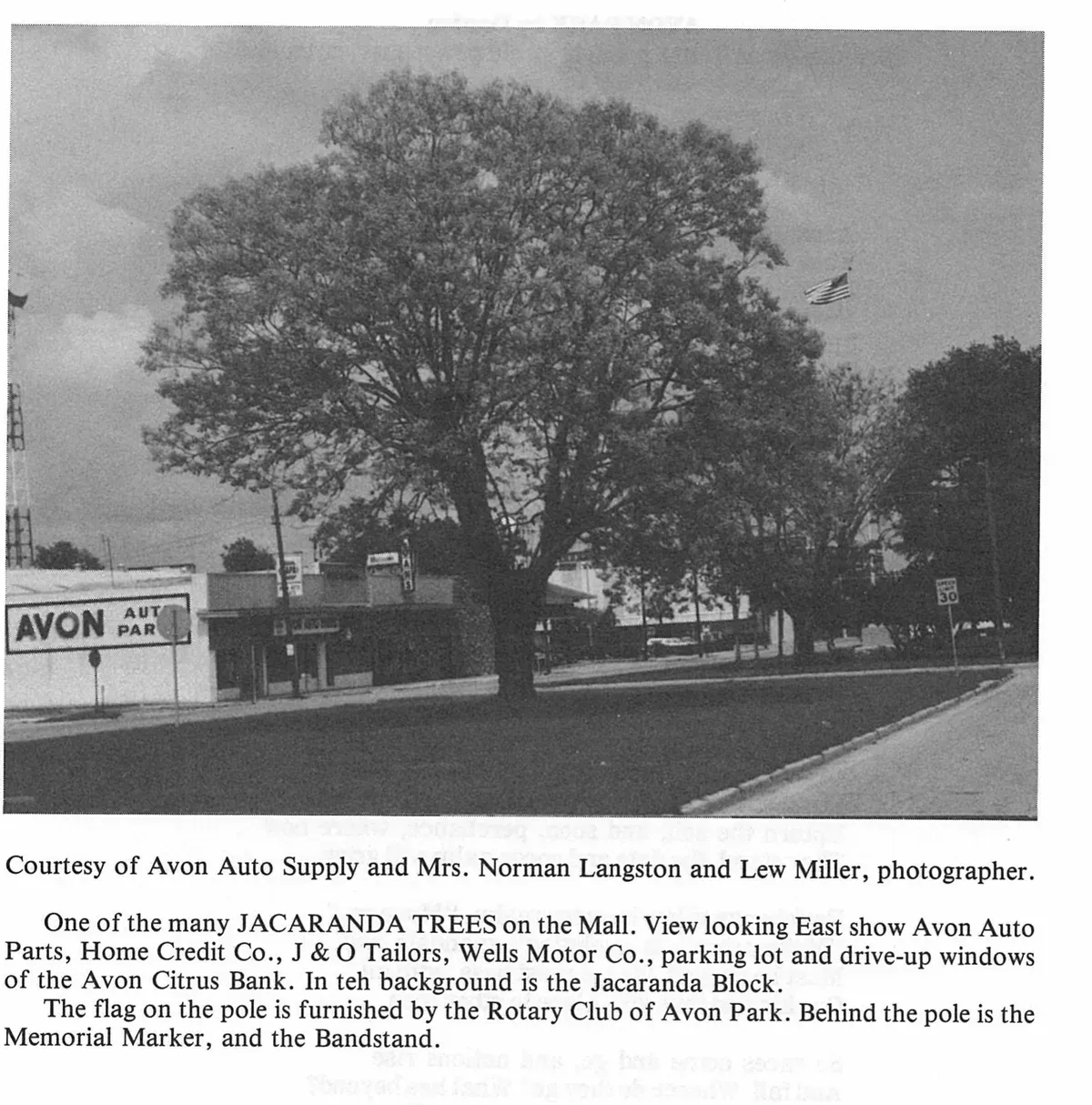
Courtesy of Avon Auto Supply and Mrs. Norman Langston and Lew Miller, photographer. The First Hundred Years of Avon Park, Florida (1976), page 266. Avon Park Historical Society.[maxwell-1976]
One of the many JACARANDA TREES on the Mall. View looking East show Avon Auto Parts, Home Credit Co., J & O Tailors, Wells Motor Co., parking lot and drive-up windows of the Avon Citrus Bank. In teh background is the Jacaranda Block. The flag on the pole is furnished by the Rotary Club of Avon Park. Behind the pole is the Memorial Marker, and the Bandstand.
Mr. Luther Octavos Feagin moved from Polk County to Avon Park wit his wife, Queen Sheba Wolff Feagin and four of their children. Two sons, L.O. Jr., and Frank and two daughters, Thelma and Wassie Lee. They moved in 1912 or 1913. Mr. Feagin built the first electric light plant, water and ice service. Mrs. Feagin read the light and water meters. He later sold the business to the Stuarts of Bartow. Their home is still there at 301 N. Verona Avenue, Avon Park. There were no light, running water or indoor bathrooms in the home before they moved there. Mrs. Feagin’s parents were Mr. & Mrs. Lucien Wolff. They called Mr. Wolff “Dad”. They moced to Avon Park sson after the Feagin family did. They first lived at West Main and North Lake Avenue, near where the Jacaranda Hotel was built. Later they moved to a home on the northeast side of Lake Verona/East Circle Street, and that home is still there. Mr. Lucien Wolff helped start the first Church of Christ. They held services in the old school house. Later is was bought and torn down and a new building was erected.
AVON PARK by Danton
(Selected lines from a poem in an old newspaper, circa 1890)
Avon Park Thou queen of fair DeSoto’s broad domain, I haste to greet once more thy loved and long Familiar scenes, and add a single leaf Unto the chaplet that adorns thy brow.
How calm these woods where fragrant pines fill All the air with odors sweet, and healthful too,
Thy beauteous lakes, of pure cerulean hue, Like sapphires set ‘mid gently rolling hills, From their blue depths, reflect in all their charm, The brilliant frescoes of the sky, and all The emerald setting fair that skirts their shores O lakes and woods, and flowering meads, I love Your shores and shades, your calm retreats, your long Sequestered walks, apart from haunts of men But all these scenes will change er long, when I No more shall greet these lofty pines with bright Green crowns, these oaks, moss clad and gray, For settlers’ ax will lay them low, his plow Upturn the soil, and soon, perchance, where now They stand, the date and cocoa palm will grow.
For change is law in every realm, “Move on,” “Make room”, is evolution’s mandate and Must be obeyed. We too must pass, with all Our kin and thus give place to other men.
So races come and go, and nations rise And fall. Whence do they go? What lies beyond? Ah, who can answer that? May we so live, So round our lives with deeds of love to God And men, that when our summons comes to join The long procession to the tomb, we shall Be well prepared to enter higher spheres.
BIBLIOGRAPHIC INFORMATION
OCALI COUNTRY, KINGDOM OF THE SUN, History of Marion County, Florida by Eloise Robinson Ott and Louis Hickman Chazel
HISTORY OF EARLY ENGLEWOOD by Mrs. Josephine O. Cortes
FLORIDA: Its Scenery, Climate and History by Sidney Lanier, 1878
FLORIDA PHOSPHATE INDUSTRY by Arch Fredric Blakey
PHOSPHATE COUNTRY by Charlton W. Tebeau
THE NATIONAL EXPERIENCE by John M. Blum
LIGHTNING IN THE SUN by Al Patson, 1974
MILLS MEMORIAL LIBRARY, Rollins College, Winter Park, Florida
MIDDLE GEORGIA HISTORICAL SOCIETY, Sidney Lanier Museum Macon Georgia
STATE LIBRARY OF FLORIDA, Archives Building, Tallahassee, Florida
AVON PARK LIBRARY, Avon Park, Florida
CONTENTS
- Dedication — Page 7
- Preface — 8
- Author — 9
- Acknowledgement — 10
- Introduction to Avon Park and Background — 13
- Early History of Avon Park’s Founder — 17
- Crosby’s Discovery and Description — 21
- The Kings, Dewey and Others — 30
- The Verona Hotel — 40
- Crosby’s Home and Grave Monument — 55
- Telephones — 81
- Post Office — 83
- Electricity — 86
- Funeral Homes — 94
- Newspapers — 88
- Poinsettia Hotel — 96
- Churches — 101
- Schools — 112
- Railroads — 123
- Banks — 129
- Sawmills and Crate Mills — 71
- Citrus — 141
- Jacaranda Hotel — 147
- Coca Cola — 157
- Highlands Lakes and Walker Memorial Hospital — 160
- Lake Byrd Lodge — 166
- Pinecrest Hotel — 167
- Main Street “The Mall” Downtown Avon Park — 168
- AVON PARK TODAY — 217
- Remembering the Yesterdays — 235
- Trivia — 241
- SPONSORS — 243
- Jacaranda Tree — 262
- AVON PARK by Danton — 263
- people who came BEFORE DURING and AFTER the twenties — 246 -264
- Bibliographic Information — 267
References
- maxwell-1976 — Leoma Bradshaw Maxwell. The First Hundred Years of Avon Park, Florida. 1976. Held at the Avon Park Historical Society Depot Museum, Avon Park, Florida
Where this comes from
- Evidence
- single-source — One source. Treat as reported, not established.
- Review
- unverified — Drafted from sources but not yet checked by a volunteer.
- Rights
- society
Sources
- Leoma Bradshaw Maxwell, The First Hundred Years of Avon Park, Florida (Held at the Avon Park Historical Society Depot Museum, Avon Park, Florida) (1976) · book
Something here wrong, or incomplete? The Society would rather know. Tell a volunteer.
Have a question about this record?