Early Settlers and Pioneers of Avon Park (1885–1900)
According to Leoma Bradshaw Maxwell’s historical documentation in The First Hundred Years of Avon Park, Florida [maxwell-1976], the pioneer era of Avon Park (1885–1900) was defined by homesteaders who traveled by ox-cart, wagon, and horseback into the pine wilderness of southern Florida, living in canvas tents while clearing land and erecting hand-hewn log cabins.
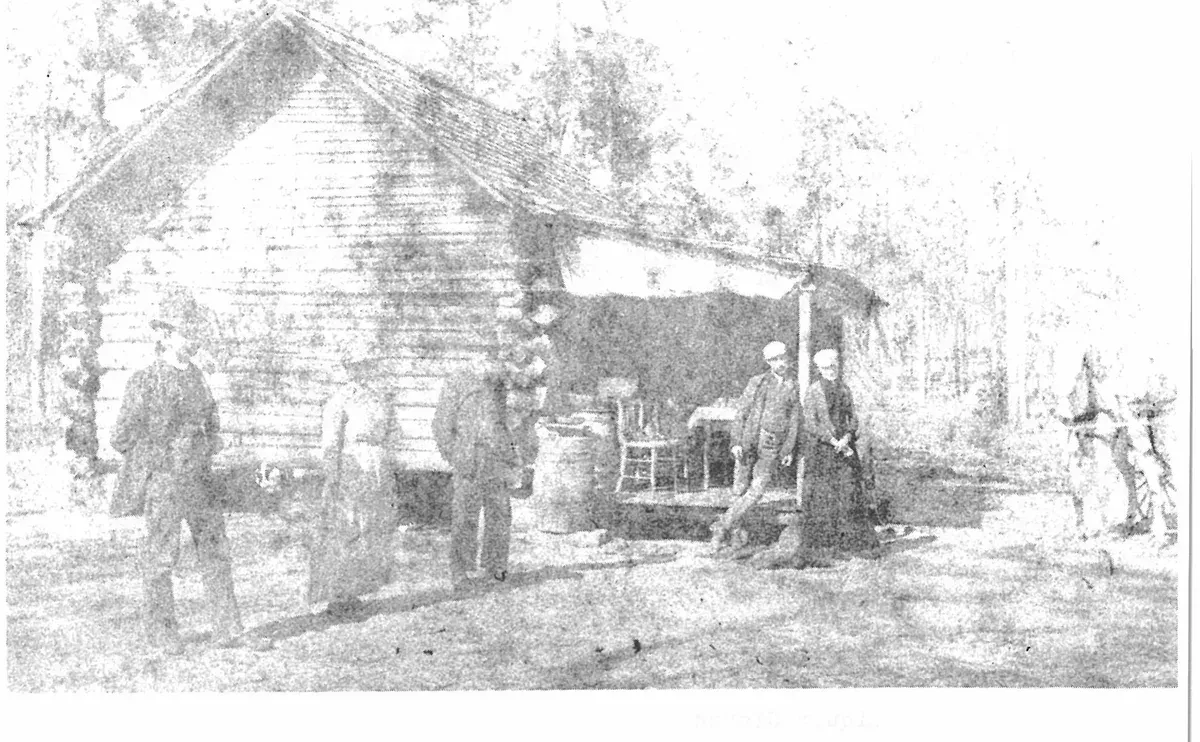
The first log cabin built on Lake Tulane by William A. King in 1886.[maxwell-1976]
The First Arrival: Mary and A. B. Dewey
In the winter of 1885–1886, an elderly homesteader named A. B. Dewey entered Oliver M. Crosby’s Jacksonville office, stating:
“I was the first settler in my county, Kansas, and I would like to be the first settler in your Avon Park. I have a carload of two horses, four cows and goods on the way here now.” [maxwell-1976]
Crosby instructed William A. King to meet Dewey at Fort Meade and guide his entourage to Township 33. On July 12, 1888, Crosby executed a warranty deed conveying ten acres on the north shore of Lake Tulane to Mary A. B. Dewey for $1.00 in recognition of Dewey being the first arrival to buy land [maxwell-1976]. Although Dewey’s livestock suffered from acclimating fevers and he eventually relocated, Dewey taught the town’s very first school class in a log cabin on Lake Tulane in 1886 [maxwell-1976].
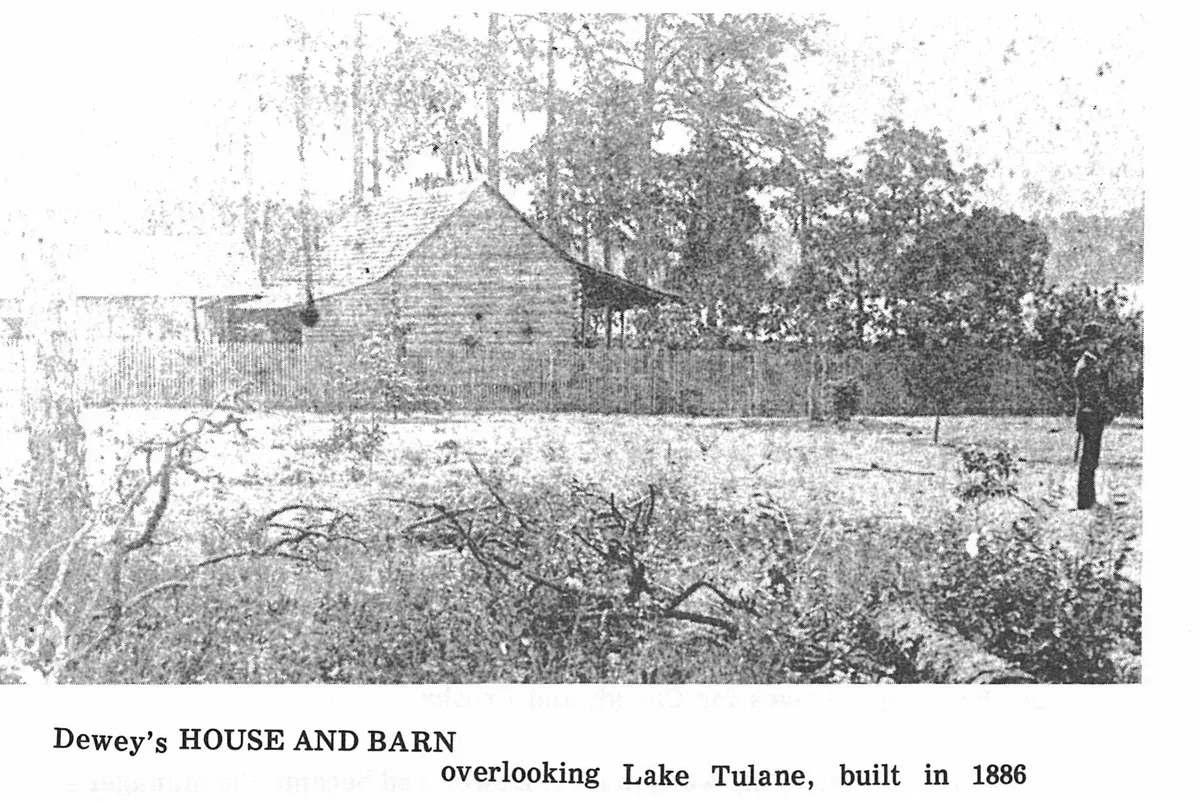
Dewey’s house and barn overlooking Lake Tulane, constructed in 1886.[maxwell-1976]
William A. King and Mary Chinn King
William A. King of Birmingham, England, and his wife Mary Chinn King of Stratford-on-Avon were the first permanent, long-term settlers of Avon Park [maxwell-1976]. King met Crosby in London during the summer of 1885 and sailed to America, working initially in the Belleview orange groves before arriving in Avon Park on February 9, 1886, to serve as superintendent of development.
Mrs. King arrived on May 6, 1886, accompanied by two Scottish cousins, Johnstone and MacGregor [maxwell-1976]. For months, they lived in tents near Lake Tulane while building log dwellings and entertaining prospective land buyers who had traveled from northern states.
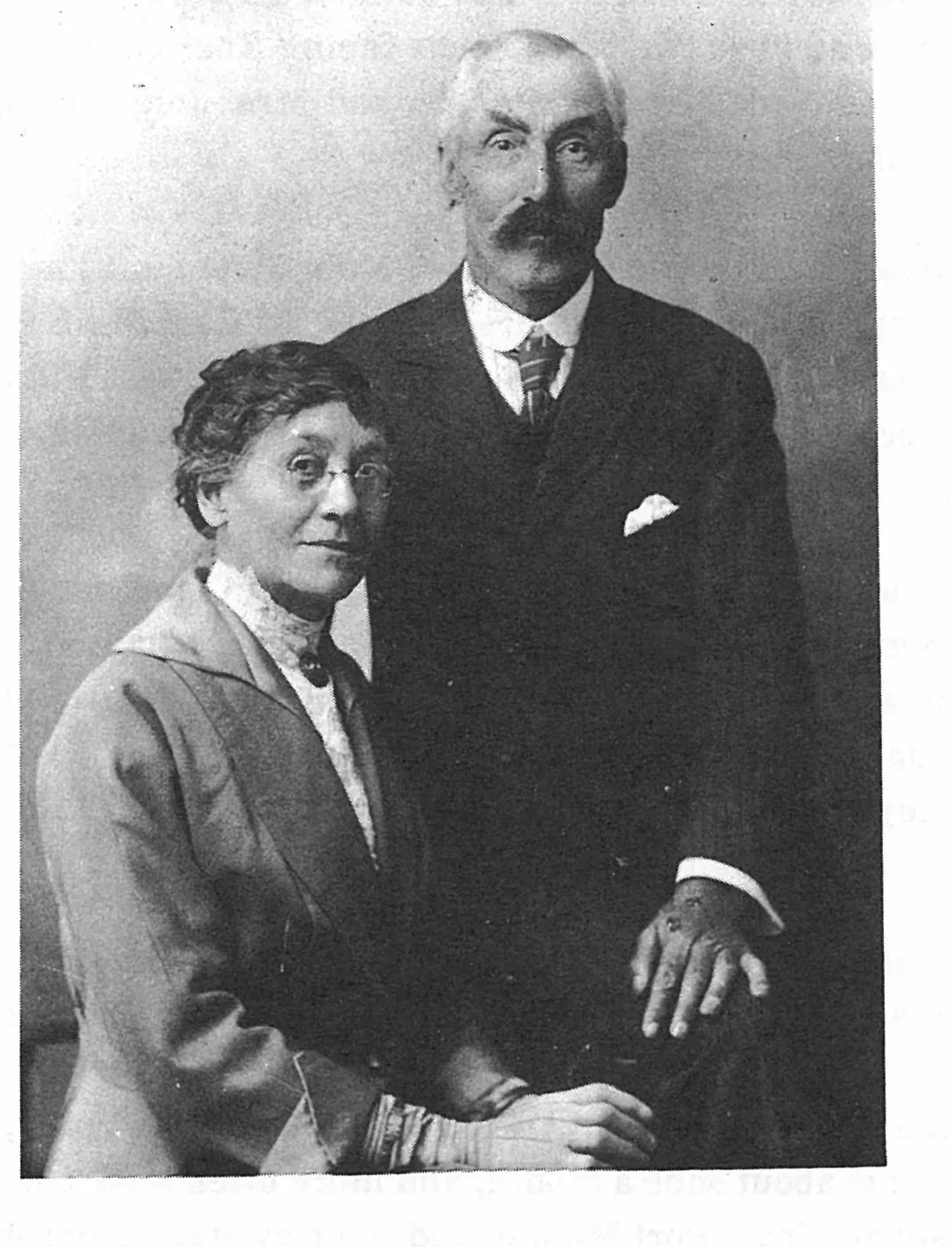
Mr. and Mrs. William A. King celebrating their 25th Wedding Anniversary at the Verona Hotel on April 30, 1906.[maxwell-1976]
The Kings played an indispensable leadership role in the settlement:
- Town Naming: Mrs. King suggested the name “Avon Park” in place of “Lake Forest” in 1886 [maxwell-1976].
- Public Service: William King served as postmaster (1888), DeSoto County Commissioner, Chairman of the Highlands County Commission (1921), and Mayor of Avon Park (1919–1922 and 1925–1929) [maxwell-1976].
- Citrus Leadership: King organized and managed the Avon Park Citrus Exchange, the town’s first citrus packing house, in 1893 [maxwell-1976].
- Civic Standing: Mrs. King was the first woman to register to vote in Avon Park on September 10, 1921, following ratification of the Nineteenth Amendment, and was revered by the community as “The Mother of Avon Park” [maxwell-1976].
On February 11, 1929, Mayor King and City Clerk Arthur Crews were tragically killed when their vehicle was struck by the northbound Seaboard Orange Blossom Special at the railroad crossing [maxwell-1976]. Both men lay in state in the newly completed City Hall on East Main Street as the entire town went into mourning.
Pioneer Families and Landmarks
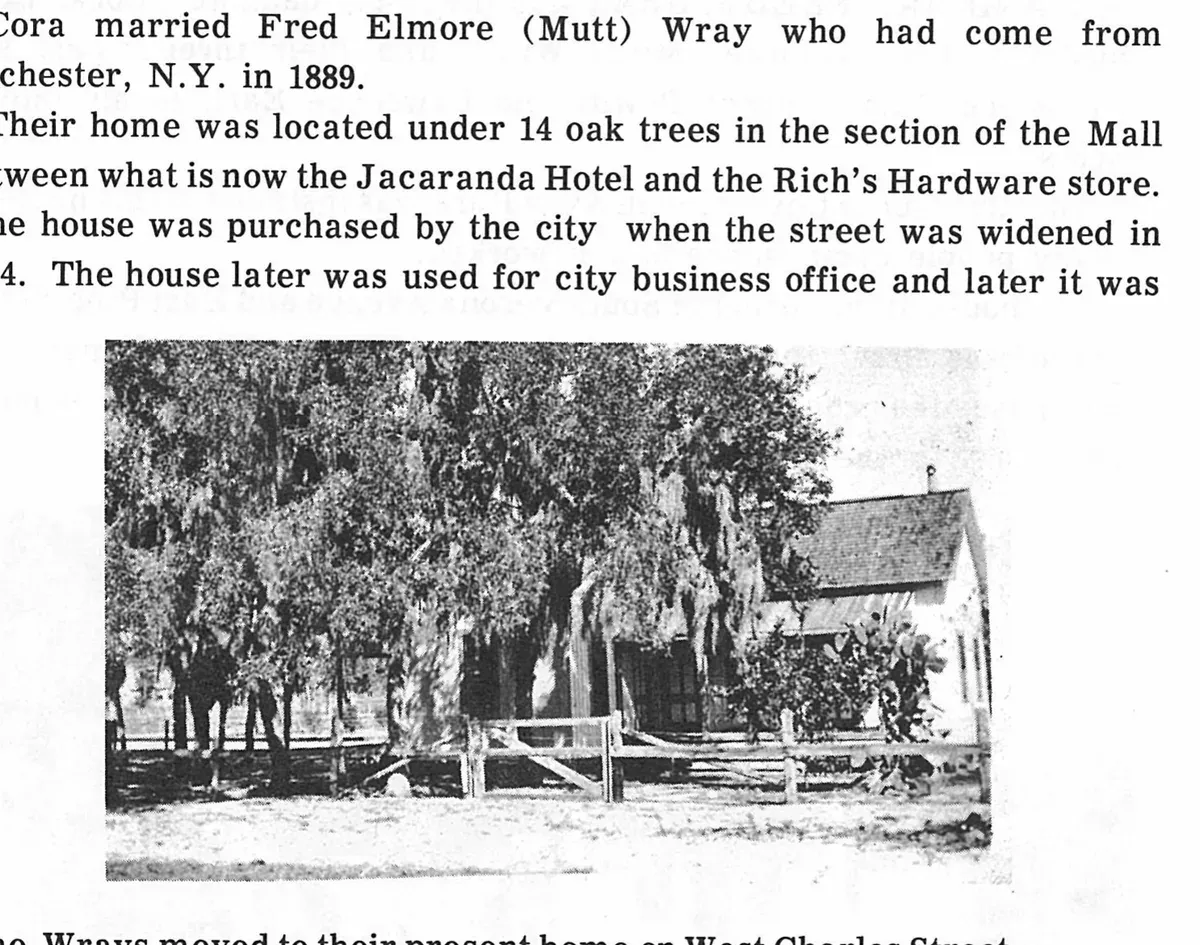
The historic home of Fred Elmore Wray and Cora Gray Wray, under the oak trees on the Mall.[maxwell-1976]
Numerous early pioneer families contributed foundational institutions to Avon Park:
- The Dilley Family: Harry and Ada Dilley arrived from Michigan in 1905 with children Lillian, Raymond, and Milford [maxwell-1976]. When their young son Raymond suffered from severe dropsy and a heart condition, Dr. Mary McCartney administered battery-powered electric shock treatments and medical care at the Verona Hotel that restored his health [maxwell-1976].
- Cora Gray Wray: Arriving with her father Fred J. Gray in November 1903 by covered wagon over pine-needle trails, Cora Gray married Fred Elmore (Mutt) Wray [maxwell-1976]. Their home on the Mall featured Avon Park’s first indoor flush toilet. Cora Wray became the premier historian of the Old Settlers Association, preserving albums, letters, and records of the pioneer generation [maxwell-1976].
- William E. Pabor: Arriving in 1892 from Colorado, Pabor founded the Lake Pabor Pineapple Colony, served as poet laureate of the Florida Press Association, and published The Lake Pabor Pineapple and The Pineapple Gazette [maxwell-1976].
- The Shockley Family and Bunbury House: In 1908, the Reverend James B. Shockley and Sarah Woodyard Shockley purchased the 60-acre Bunbury estate on Lake Pythias, built in 1889 by J. H. Nettleton for Lord and Lady Bunbury of England [maxwell-1976]. Their son Byrum Shockley became a renowned citrus scholar and co-founder of the Old Settlers Association.
- Other Pioneer Figures: Early registers record government surveyor H. H. Penrose, German-born surveyor Charles Krause, the Irish Byrd brothers (for whom Lake Byrd is named), merchant Tobe Henry, storekeeper and banker B. F. West, hotel builder J. H. Nettleton, Herbert A. Seaverns (first elected mayor in 1913), and the Canfield, Coy, Clark, and Hetherington families [maxwell-1976].
References
- maxwell-1976 — Leoma Bradshaw Maxwell. The First Hundred Years of Avon Park, Florida. 1976. the-first-hundred-years-of-avon-park_leoma-bradshaw-maxwell_1976.md
Where this comes from
- Evidence
- single-source — One source. Treat as reported, not established.
- Review
- unverified — Drafted from sources but not yet checked by a volunteer.
- Rights
- society
Sources
- Leoma Bradshaw Maxwell, The First Hundred Years of Avon Park, Florida (Held at the Avon Park Historical Society Depot Museum, Avon Park, Florida) (1976) · book
Something here wrong, or incomplete? The Society would rather know. Tell a volunteer.
Have a question about this record?